microtubule associated protein tau
Last updated 12 Apr 2023
Meets Patient’s editorial guidelines
- DownloadDownload
- Share
- Language
- Discussion
- Ask Patient
- Audio Version
- Add to preferred sources on Google
The MAPT gene provides instructions for making a protein called tau. This protein is found throughout the nervous system, including in nerve cells (neurons) in the brain. It is involved in assembling and stabilizing microtubules, which are rigid, hollow fibers that make up the cell's structural framework (the cytoskeleton). Microtubules help cells maintain their shape, assist in the process of cell division, and are essential for the transport of materials within cells.
Video picks for GenesVideo library
Normal function
The MAPT gene provides instructions for making a protein called tau. This protein is found throughout the nervous system, including in nerve cells (neurons) in the brain. It is involved in assembling and stabilizing microtubules, which are rigid, hollow fibers that make up the cell's structural framework (the cytoskeleton). Microtubules help cells maintain their shape, assist in the process of cell division, and are essential for the transport of materials within cells.
Six different versions (isoforms) of the tau protein are produced in the adult brain. The isoforms vary in length from 352 to 441 protein building blocks (amino acids). A region of the protein called the microtubule-binding domain, which is the part of the protein that attaches (binds) to microtubules, also varies among the isoforms. In three of the isoforms, the microtubule-binding domain contains three repeated segments. In the other three isoforms, this domain contains four repeated segments. Typically, the brain has approximately the same amount of three-repeat isoforms and four-repeat isoforms. This balance appears to be essential for the normal function of neurons.
Conditions referring to this gene or chromosome
Other names
DDPAC
FLJ31424
FTDP-17
G protein beta1/gamma2 subunit-interacting factor 1
MAPTL
MGC138549
microtubule-associated protein tau
MSTD
MTBT1
MTBT2
neurofibrillary tangle protein
paired helical filament-tau
PHF-tau
PPND
PPP1R103
TAU
TAU_HUMAN
Patient picks for Genes

Senior health
Can taurine supplements slow ageing?
Scientists are studying a supplement that could help people live longer - and the ingredient, called taurine, just might extend lifespans by an extra seven to eight years. But don't part with your money just yet. Experts don't know how taurine supplements effect humans. To separate fad from fact, we explore the current evidence for this potential elixir of youth and demystify the health implications of taurine in energy drinks.
by Amberley Davis

Kidney and urinary tract
Proteinuria
Proteins are molecules that are found in almost every part of the body, including in the blood. The kidneys normally have a filter which stops protein from entering the urine, except in very tiny amounts; however, kidney problems can cause higher levels of protein to be found in the urine.
by Dr Doug McKechnie, MRCGP

Diet and nutrition
How a protein-packed breakfast can boost your health
When we think of breakfast, we often picture a bowl of cornflakes with milk. While it’s a classic morning staple, it might not be the most effective way to start your day, as it lacks protein. Adding more protein to your breakfast can boost your energy levels and help keep you feeling full for longer.
by Victoria Raw
Healthy living
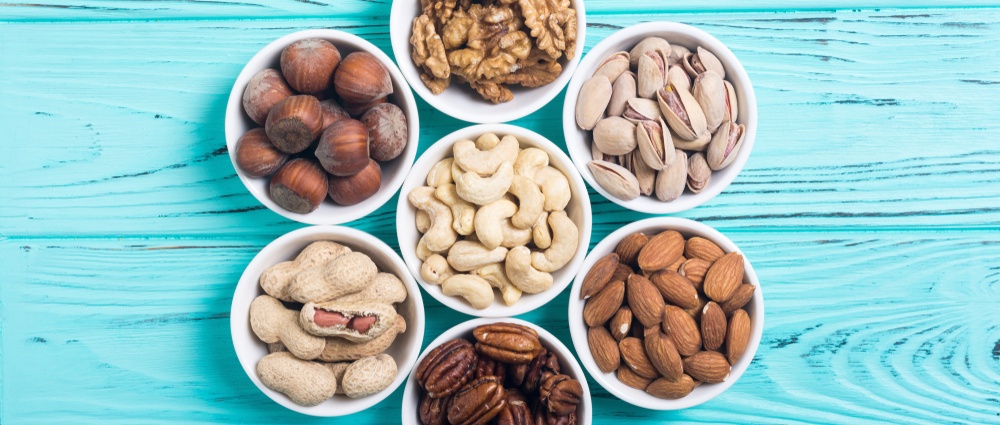
8 high-protein nuts to boost your strength
Packed with protein, delicious, easy to eat, and versatile - nuts are a great source of fuel for people building their fitness and strength. But not all nuts are created equal, which is why we count down the top eight nuts you should eat while strength training and serve these up with tasty recipe ideas.
by Lynn Stephen

Diet and nutrition
10 sources of plant-based protein for bone health
Plant-based diets are growing in popularity. People choose this way of eating for various reasons - to boost their health, help animals, and protect the environment. But switching to a plant-based diet may mean you're missing out on vital, bone-friendly nutrients. One of these is protein.
by Victoria Raw
Healthy living
Natural protein verses protein powder: which is better for strength training?
Consuming enough protein is essential for building strong muscles. Protein powder shakes are not a complete replacement for natural protein sources found in your food. However, you may consider supplementing your diet and strength-training regime with protein shakes. Before you decide if this is right for you, there are several benefits and considerations to take into account.
by Amberley Davis
Related patient information and medicines
Patient information leaflet
Causes of memory loss and dementia
It is thought that the... So, doing things such as reading regularly, quizzes, crosswords, memorising plays or poetry, learning new skills, etc, may help to keep your memory in good shape. Who gets dementia. It is estimated that in 2019, there were almost 885,000 people aged 65 years and over living with dementia in the UK. By 2040 this number is.

Patient information leaflet
Throat cancer
(The throat is usually sprayed with a local anaesthetic before use of a nasal endoscope, so that the procedure i... Dr Krishna Vakharia, 16th October 2023 The National Institute for Health and Care Excellence (NICE) has recommended that a person should receive a diagnosis or ruling out of cancer within 28 days of being referred urgently by their.

Patient information leaflet
BRCA genes
There are a few known gene changes (mutations) that can increase the risk of certain cancers, and tests available for some of them, including BRCA1 and BRCA2 gene mutations. The BRCA1 and BRCA2 genes normally protect against certain cancers, particularly breast cancer and ovarian cancer. If there is a mutation in one of these genes then this may.
Patient information leaflet
Proteinuria
Proteins are molecules that are found in almost every part of the body, including in the blood. The kidneys normally have a filter which stops protein from entering the urine, except in very tiny amounts; however, kidney problems can cause higher levels of protein to be found in the urine. What is proteinuria. Proteinuria means that there is an.

Patient information leaflet
Genetic testing
Genetic testing is a type of medical test that identifies changes in chromosomes, genes or proteins. Genetic tests examine a person's DNA in a variety of ways to assess a person's genetic health. They are all designed to identify a particular gene that may cause a genetic disorder. We all have 46 chromosomes in our cells. Chromosomes are made from.
Patient information leaflet
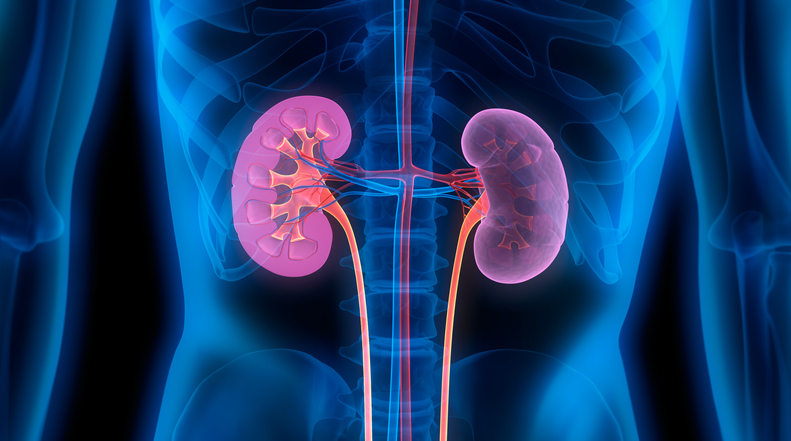
Chronic kidney disease
Feeling sick. If the kidney function declines to stage 4 or 5 then various other problems may develop - for example, anaemia or an imbalance of calcium, phosphate and other chemicals in the bloodstream. These can cause various symptoms, such as tiredness due to anaemia, and bone thinning ( osteoporosis Osteoporosis ) or fractures due to calcium.
Further reading and references
- microtubule associated protein tau; MedlinePlus, National Library of Medicine.
- Baker M, Litvan I, Houlden H, Adamson J, Dickson D, Perez-Tur J, Hardy J, Lynch T, Bigio E, Hutton M. Association of an extended haplotype in the tau gene with progressive supranuclear palsy. Hum Mol Genet. 1999 Apr;8(4):711-5. doi: 10.1093/hmg/8.4.711.
- Conrad C, Andreadis A, Trojanowski JQ, Dickson DW, Kang D, Chen X, Wiederholt W, Hansen L, Masliah E, Thal LJ, Katzman R, Xia Y, Saitoh T. Genetic evidence for the involvement of tau in progressive supranuclear palsy. Ann Neurol. 1997 Feb;41(2):277-81. doi: 10.1002/ana.410410222.
- Goedert M. Tau protein and neurodegeneration. Semin Cell Dev Biol. 2004 Feb;15(1):45-9. doi: 10.1016/j.semcdb.2003.12.015.
- Hutton M, Lendon CL, Rizzu P, Baker M, Froelich S, Houlden H, Pickering-Brown S, Chakraverty S, Isaacs A, Grover A, Hackett J, Adamson J, Lincoln S, Dickson D, Davies P, Petersen RC, Stevens M, de Graaff E, Wauters E, van Baren J, Hillebrand M, Joosse M, Kwon JM, Nowotny P, Che LK, Norton J, Morris JC, Reed LA, Trojanowski J, Basun H, Lannfelt L, Neystat M, Fahn S, Dark F, Tannenberg T, Dodd PR, Hayward N, Kwok JB, Schofield PR, Andreadis A, Snowden J, Craufurd D, Neary D, Owen F, Oostra BA, Hardy J, Goate A, van Swieten J, Mann D, Lynch T, Heutink P. Association of missense and 5'-splice-site mutations in tau with the inherited dementia FTDP-17. Nature. 1998 Jun 18;393(6686):702-5. doi: 10.1038/31508.
- Lee VM, Goedert M, Trojanowski JQ. Neurodegenerative tauopathies. Annu Rev Neurosci. 2001;24:1121-59. doi: 10.1146/annurev.neuro.24.1.1121.
- Ludolph AC, Kassubek J, Landwehrmeyer BG, Mandelkow E, Mandelkow EM, Burn DJ, Caparros-Lefebvre D, Frey KA, de Yebenes JG, Gasser T, Heutink P, Hoglinger G, Jamrozik Z, Jellinger KA, Kazantsev A, Kretzschmar H, Lang AE, Litvan I, Lucas JJ, McGeer PL, Melquist S, Oertel W, Otto M, Paviour D, Reum T, Saint-Raymond A, Steele JC, Tolnay M, Tumani H, van Swieten JC, Vanier MT, Vonsattel JP, Wagner S, Wszolek ZK; Reisensburg Working Group for Tauopathies With Parkinsonism. Tauopathies with parkinsonism: clinical spectrum, neuropathologic basis, biological markers, and treatment options. Eur J Neurol. 2009 Mar;16(3):297-309. doi: 10.1111/j.1468-1331.2008.02513.x.
- Nicholl DJ, Greenstone MA, Clarke CE, Rizzu P, Crooks D, Crowe A, Trojanowski JQ, Lee VM, Heutink P. An English kindred with a novel recessive tauopathy and respiratory failure. Ann Neurol. 2003 Nov;54(5):682-6. doi: 10.1002/ana.10747.
- Pastor P, Ezquerra M, Tolosa E, Munoz E, Marti MJ, Valldeoriola F, Molinuevo JL, Calopa M, Oliva R. Further extension of the H1 haplotype associated with progressive supranuclear palsy. Mov Disord. 2002 May;17(3):550-6. doi: 10.1002/mds.10076.
- Rademakers R, Melquist S, Cruts M, Theuns J, Del-Favero J, Poorkaj P, Baker M, Sleegers K, Crook R, De Pooter T, Bel Kacem S, Adamson J, Van den Bossche D, Van den Broeck M, Gass J, Corsmit E, De Rijk P, Thomas N, Engelborghs S, Heckman M, Litvan I, Crook J, De Deyn PP, Dickson D, Schellenberg GD, Van Broeckhoven C, Hutton ML. High-density SNP haplotyping suggests altered regulation of tau gene expression in progressive supranuclear palsy. Hum Mol Genet. 2005 Nov 1;14(21):3281-92. doi: 10.1093/hmg/ddi361. Epub 2005 Sep 29.
- Spillantini MG, Van Swieten JC, Goedert M. Tau gene mutations in frontotemporal dementia and parkinsonism linked to chromosome 17 (FTDP-17). Neurogenetics. 2000 Mar;2(4):193-205. doi: 10.1007/pl00022972.
- van Swieten J, Spillantini MG. Hereditary frontotemporal dementia caused by Tau gene mutations. Brain Pathol. 2007 Jan;17(1):63-73. doi: 10.1111/j.1750-3639.2007.00052.x.
Share your thoughts or experiences with others in our patient communities.
Simple access to trusted treatments and health services online.
Common conditions
Get help with common conditions through the NHS, without a GP appointment.





Sign up to the Patient newsletter
Your weekly dose of clear, trustworthy health advice - written to help you feel informed, confident and in control.
By subscribing you accept our Privacy Policy. You can unsubscribe at any time. We never sell your data.