mechanistic target of rapamycin kinase
Last updated 2 Aug 2023
Meets Patient’s editorial guidelines
- DownloadDownload
- Share
- Language
- Discussion
- Ask Patient
- Audio Version
- Add to preferred sources on Google
The MTOR gene provides instructions for making a protein called mTOR. This protein is found in various cell types throughout the body including brain cells. It interacts with other proteins to form two distinct protein groups, called mTOR complex 1 (mTORC1) and mTOR complex 2 (mTORC2). Both of these complexes transmit signals that direct the cells' function. Signaling through mTORC1 and mTORC2 regulate protein production, which influences cell growth, division, and survival. This mTOR signaling is especially important for growth and development of the brain, and it plays a role in a process called synaptic plasticity, which is the ability of the connections between nerve cells (synapses) to change and adapt over time in response to experience. Synaptic plasticity is critical for learning and memory.
Video picks for GenesVideo library
Normal function
The MTOR gene provides instructions for making a protein called mTOR. This protein is found in various cell types throughout the body including brain cells. It interacts with other proteins to form two distinct protein groups, called mTOR complex 1 (mTORC1) and mTOR complex 2 (mTORC2). Both of these complexes transmit signals that direct the cells' function. Signaling through mTORC1 and mTORC2 regulate protein production, which influences cell growth, division, and survival. This mTOR signaling is especially important for growth and development of the brain, and it plays a role in a process called synaptic plasticity, which is the ability of the connections between nerve cells (synapses) to change and adapt over time in response to experience. Synaptic plasticity is critical for learning and memory.
Conditions referring to this gene or chromosome
Other names
FK506 binding protein 12-rapamycin associated protein 2
FK506-binding protein 12-rapamycin complex-associated protein 1
FKBP-rapamycin associated protein
FKBP12-rapamycin complex-associated protein 1
FLJ44809
FRAP
FRAP1
FRAP2
mammalian target of rapamycin
mechanistic target of rapamycin (serine/threonine kinase)
RAFT1
rapamycin and FKBP12 target 1
rapamycin associated protein FRAP2
rapamycin target protein 1
RAPT1
serine/threonine-protein kinase mTOR
SKS
Patient picks for Genes

Senior health
What not to say to someone who is dying
If a friend or family member is given a terminal diagnosis, it's natural to want to support them. But many of us are scared of saying the wrong thing. We look at potential pitfalls.
by Gillian Harvey

Women's health
Endometrial hyperplasia
Endometrial hyperplasia is a thickening of the womb (uterus) lining. The womb lining is called the endometrium. Hyperplasia means over ("hyper" in Latin) growth ("plasia" in Latin).
by Dr Philippa Vincent, MRCGP

Preventative health
Repulse Monkey - Half Step
Repulse Monkey – Half Step involves a gentle backward step combined with a flowing arm movement that extends and retracts. It promotes balance, coordination, and awareness of controlled retreat.

MSK
Harmonising the Qi
In pulsing or harmonising the Qi, the arms float in front of the chest as the knee bends and the hips draw back on an inhale. Then as you breathe out, the crown of the head lifts, the arms drop and the knees move towards straight. This form helps support the liver meridian and can help release feelings of frustration.

MSK
Two Hands Support the Heavens
Stand with your feet about hip-width apart and your knees soft. Let your arms rest by your sides. On an inhale, float both hands up the centre of the body until they reach collarbone height. Here, interlace your fingers, turn the palms outward, and extend the hands upward, lengthening through the sides of the body as though gently supporting the heavens. As you exhale, release the arms outward and down, softening the shoulders and letting the breath fall naturally. After a few rounds, you can add an optional lift of the heels as the hands extend upward, creating a sense of lightness and rising energy. This form is said to support the Triple Heater (San Jiao) — recognised as an organ system in Chinese medicine and thought to correspond to the body’s connective tissue networks, describing the body’s three energetic centres that help harmonise breathing, digestion, and overall vitality.

Bones, joints and muscles
Scoliosis and kyphosis
Scoliosis is a back condition that causes the (back) spine to curve to the side - either left or right. Most cases develop in children between the ages of 9 and 14 years during the growth spurt of puberty. Scoliosis is usually mild and needs no treatment. For more severe cases treatments include specific exercises, a back brace or occasionally surgery to straighten the spine. A very pronounced front-to-back curve is called a kyphosis, which does not usually need treatment.
by Dr Colin Tidy, MRCGP
Related patient information and medicines

Patient information leaflet
Mouth cancer
Diagnosing mouth cancer Your healthcare professional may suspect mouth cancer if you have a lesion in your mouth (such as a sore, an ulcer or a lump) which has not healed for 3 wee... Dr Krishna Vakharia , 16th October 2023 The National Institute for Health and Care Excellence (NICE) has recommended that a person should receive a diagnosis or.

Patient information leaflet
Kidney cancer
The mos... If kidney cancer is diagnosed at an early stage, there is a good chance of a cure. A description of what kidneys are and how they work is at the bottom of this article. What is kidney cancer. There are several types of kidney cancer but over 9 out of 10 kidney cancers are "renal cell cancer". This is sometimes called renal.
Patient information leaflet
Pituitary gland disorders
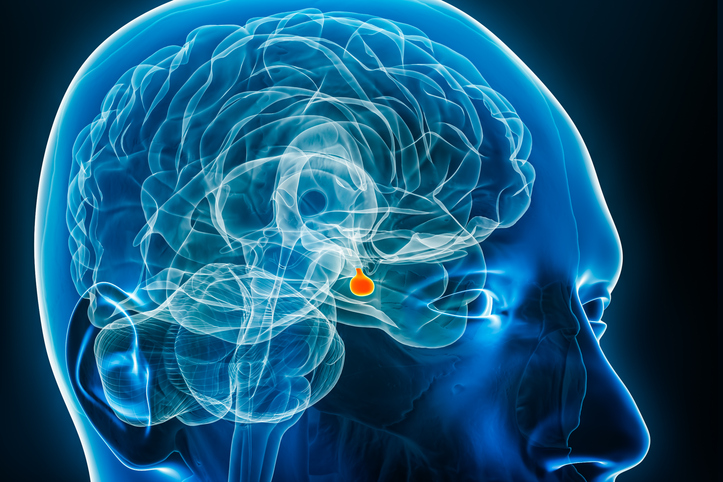
This leaflet gives a brief overview of the pituitary gland and the hormones it makes. The pituitary gland is found at the base of the brain and is 'pea-sized'. The pituitary gland is an overall controller of a number of other glands in the body, overseeing the function of these organs through hormones. Some of the pituitary gland disorders.
Patient information leaflet
Biological medicines for rheumatoid arthritis
Biological medicines are a newer type of medicine, used to ease the symptoms of rheumatoid arthritis and reduce the damaging effect of the disease on the joints. They are usually prescribed when you have tried older medicines called disease-modifying antirheumatic drugs (DMARDs) and these have not worked so well. If a biological medicine is going.

Patient information leaflet
Primary liver cancer
It is not likely to be curative for primary liver cancer but may shrink the tumour down to slow the progression of the disease. There are new medicines being developed for the treatment of liver cancer. For example, sorafenib is a type of medicine called a multi-targeted kinase inhibitor. It interferes with the growth of cancer cells. National.

Patient information leaflet
Mastocytosis and mast cell disorders
If the condition is severe, surgery to remove the spleen (splenectomy), medicines that have an effect on the immune system (such as interferon), bone marrow transplant or... Dr Sarah Jarvis , 28th September 2021 Midostaurin for treating advanced systemic mastocytosis The National Institute for Health and Care Excellence (NICE) has brought out new.
Further reading and references
- mechanistic target of rapamycin kinase; MedlinePlus, National Library of Medicine.
- Gordo G, Tenorio J, Arias P, Santos-Simarro F, Garcia-Minaur S, Moreno JC, Nevado J, Vallespin E, Rodriguez-Laguna L, de Mena R, Dapia I, Palomares-Bralo M, Del Pozo A, Ibanez K, Silla JC, Barroso E, Ruiz-Perez VL, Martinez-Glez V, Lapunzina P. mTOR mutations in Smith-Kingsmore syndrome: Four additional patients and a review. Clin Genet. 2018 Apr;93(4):762-775. doi: 10.1111/cge.13135. Epub 2018 Feb 13.
- Hoeffer CA, Klann E. mTOR signaling: at the crossroads of plasticity, memory and disease. Trends Neurosci. 2010 Feb;33(2):67-75. doi: 10.1016/j.tins.2009.11.003. Epub 2009 Dec 4.
- Jhanwar-Uniyal M, Amin AG, Cooper JB, Das K, Schmidt MH, Murali R. Discrete signaling mechanisms of mTORC1 and mTORC2: Connected yet apart in cellular and molecular aspects. Adv Biol Regul. 2017 May;64:39-48. doi: 10.1016/j.jbior.2016.12.001. Epub 2017 Jan 4.
- Lim JS, Kim WI, Kang HC, Kim SH, Park AH, Park EK, Cho YW, Kim S, Kim HM, Kim JA, Kim J, Rhee H, Kang SG, Kim HD, Kim D, Kim DS, Lee JH. Brain somatic mutations in MTOR cause focal cortical dysplasia type II leading to intractable epilepsy. Nat Med. 2015 Apr;21(4):395-400. doi: 10.1038/nm.3824. Epub 2015 Mar 23.
- Mirzaa GM, Campbell CD, Solovieff N, Goold C, Jansen LA, Menon S, Timms AE, Conti V, Biag JD, Adams C, Boyle EA, Collins S, Ishak G, Poliachik S, Girisha KM, Yeung KS, Chung BHY, Rahikkala E, Gunter SA, McDaniel SS, Macmurdo CF, Bernstein JA, Martin B, Leary R, Mahan S, Liu S, Weaver M, Doerschner M, Jhangiani S, Muzny DM, Boerwinkle E, Gibbs RA, Lupski JR, Shendure J, Saneto RP, Novotny EJ, Wilson CJ, Sellers WR, Morrissey M, Hevner RF, Ojemann JG, Guerrini R, Murphy LO, Winckler W, Dobyns WB. Association of MTOR Mutations With Developmental Brain Disorders, Including Megalencephaly, Focal Cortical Dysplasia, and Pigmentary Mosaicism. JAMA Neurol. 2016 Jul 1;73(7):836-845. doi: 10.1001/jamaneurol.2016.0363.
- Moller RS, Weckhuysen S, Chipaux M, Marsan E, Taly V, Bebin EM, Hiatt SM, Prokop JW, Bowling KM, Mei D, Conti V, de la Grange P, Ferrand-Sorbets S, Dorfmuller G, Lambrecq V, Larsen LH, Leguern E, Guerrini R, Rubboli G, Cooper GM, Baulac S. Germline and somatic mutations in the MTOR gene in focal cortical dysplasia and epilepsy. Neurol Genet. 2016 Oct 31;2(6):e118. doi: 10.1212/NXG.0000000000000118. eCollection 2016 Dec.
- Moosa S, Bohrer-Rabel H, Altmuller J, Beleggia F, Nurnberg P, Li Y, Yigit G, Wollnik B. Smith-Kingsmore syndrome: A third family with the MTOR mutation c.5395G>A p.(Glu1799Lys) and evidence for paternal gonadal mosaicism. Am J Med Genet A. 2017 Jan;173(1):264-267. doi: 10.1002/ajmg.a.37999. Epub 2016 Oct 18.
- Nakashima M, Saitsu H, Takei N, Tohyama J, Kato M, Kitaura H, Shiina M, Shirozu H, Masuda H, Watanabe K, Ohba C, Tsurusaki Y, Miyake N, Zheng Y, Sato T, Takebayashi H, Ogata K, Kameyama S, Kakita A, Matsumoto N. Somatic Mutations in the MTOR gene cause focal cortical dysplasia type IIb. Ann Neurol. 2015 Sep;78(3):375-86. doi: 10.1002/ana.24444. Epub 2015 Jul 3.
Share your thoughts or experiences with others in our patient communities.
Simple access to trusted treatments and health services online.
Common conditions
Get help with common conditions through the NHS, without a GP appointment.





Sign up to the Patient newsletter
Your weekly dose of clear, trustworthy health advice - written to help you feel informed, confident and in control.
By subscribing you accept our Privacy Policy. You can unsubscribe at any time. We never sell your data.