nuclear receptor binding SET domain protein 1
Last updated 8 May 2023
Meets Patient’s editorial guidelines
- DownloadDownload
- Share
- Language
- Discussion
- Ask Patient
- Audio Version
- Add to preferred sources on Google
The NSD1 gene provides instructions for making a protein that functions as a histone methyltransferase. Histone methyltransferases are enzymes that modify structural proteins called histones, which attach (bind) to DNA and give chromosomes their shape. By adding a molecule called a methyl group to histones (a process called methylation), histone methyltransferases control (regulate) the activity of certain genes and can turn them on and off as needed. The NSD1 enzyme controls the activity of genes involved in normal growth and development, although most of these genes have not been identified.
Video picks for GenesVideo library
Normal function
The NSD1 gene provides instructions for making a protein that functions as a histone methyltransferase. Histone methyltransferases are enzymes that modify structural proteins called histones, which attach (bind) to DNA and give chromosomes their shape. By adding a molecule called a methyl group to histones (a process called methylation), histone methyltransferases control (regulate) the activity of certain genes and can turn them on and off as needed. The NSD1 enzyme controls the activity of genes involved in normal growth and development, although most of these genes have not been identified.
Conditions referring to this gene or chromosome
Other names
androgen receptor-associated coregulator 267
ARA267
histone-lysine N-methyltransferase, H3 lysine-36 and H4 lysine-20 specific
NR-binding SET domain containing protein
NSD1_HUMAN
nuclear receptor-binding Su-var, Enhancer of zeste and Trithorax domain protein 1
SOTOS1
Patient picks for Genes

Diet and nutrition
How a protein-packed breakfast can boost your health
When we think of breakfast, we often picture a bowl of cornflakes with milk. While it’s a classic morning staple, it might not be the most effective way to start your day, as it lacks protein. Adding more protein to your breakfast can boost your energy levels and help keep you feeling full for longer.
by Victoria Raw
Healthy living
8 high-protein nuts to boost your strength
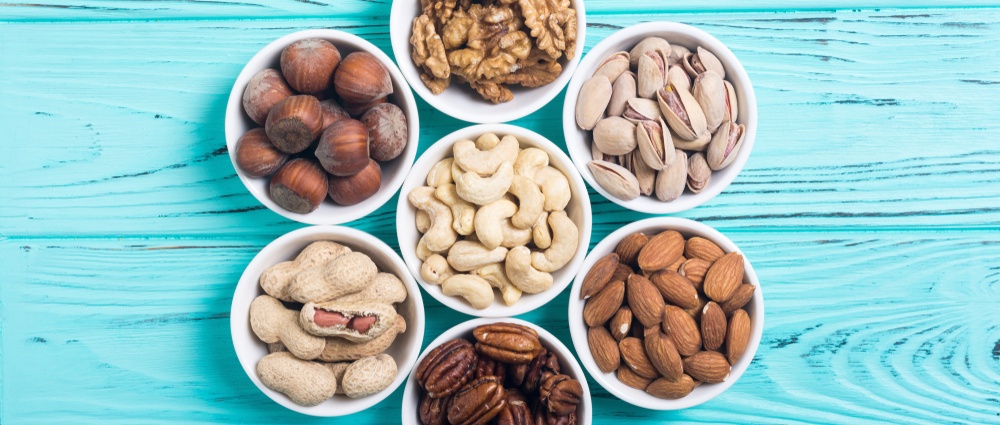
Packed with protein, delicious, easy to eat, and versatile - nuts are a great source of fuel for people building their fitness and strength. But not all nuts are created equal, which is why we count down the top eight nuts you should eat while strength training and serve these up with tasty recipe ideas.
by Lynn Stephen

Diet and nutrition
10 sources of plant-based protein for bone health
Plant-based diets are growing in popularity. People choose this way of eating for various reasons - to boost their health, help animals, and protect the environment. But switching to a plant-based diet may mean you're missing out on vital, bone-friendly nutrients. One of these is protein.
by Victoria Raw

Kidney and urinary tract
Proteinuria
Proteins are molecules that are found in almost every part of the body, including in the blood. The kidneys normally have a filter which stops protein from entering the urine, except in very tiny amounts; however, kidney problems can cause higher levels of protein to be found in the urine.
by Dr Doug McKechnie, MRCGP

Diet and nutrition
Plant-based proteins could help prevent high blood pressure
Eating a greater amount of minimally processed plant-based proteins - such as beans, nuts and lentils - may lower your chance of developing high blood pressure, according to new research.
by Laura Williamson
Healthy living
Natural protein verses protein powder: which is better for strength training?
Consuming enough protein is essential for building strong muscles. Protein powder shakes are not a complete replacement for natural protein sources found in your food. However, you may consider supplementing your diet and strength-training regime with protein shakes. Before you decide if this is right for you, there are several benefits and considerations to take into account.
by Amberley Davis
Related patient information and medicines

Patient information leaflet
Throat cancer
(The throat is usually sprayed with a local anaesthetic before use of a nasal endoscope, so that the procedure i... Dr Krishna Vakharia, 16th October 2023 The National Institute for Health and Care Excellence (NICE) has recommended that a person should receive a diagnosis or ruling out of cancer within 28 days of being referred urgently by their.

Patient information leaflet
Nephrotic syndrome
Nephrotic syndrome is a condition where the 'filters' in the kidney become 'leaky' and large amounts of protein leak from the blood into the urine. The main symptom is fluid retention (oedema) which is mainly due to the low protein level in the blood. Various diseases can cause nephrotic syndrome, some more serious than others. Nephrotic syndrome.

Patient information leaflet
The immune system
This leaflet gives a brief overview of the immune system and how it works. A person with a weak immune system might have difficulty fighting off infections. In autoimmune diseases the body is unable to tell what is its own and what is foreign, so it attacks itself. Autoimmune diseases can attack any part of the body - eg, type 1 diabetes.

Patient information leaflet
Cataracts
If left untreated it can lead to total loss of vision (blindness). Key points A cataract is when the lens inside your eye becomes cloudy, making your vision blurry and causing glare, faded colours, and trouble seeing in bright or dim light. It usually affects older people and is a normal part of ageing. It is caused by the gradual breakdown of.

Patient information leaflet
Coombs test
A Coombs test is a type of blood test. It is named after the person who invented it, Dr Robin Coombs. There are two types of Coombs test. What is a Coombs test. The two types of Coombs test are as follows: The direct Coombs test involves looking directly at red blood cells found in a sample of blood. The direct Coombs test is sometimes called the.
Patient information leaflet
Proteinuria
Proteins are molecules that are found in almost every part of the body, including in the blood. The kidneys normally have a filter which stops protein from entering the urine, except in very tiny amounts; however, kidney problems can cause higher levels of protein to be found in the urine. What is proteinuria. Proteinuria means that there is an.
Further reading and references
- nuclear receptor binding SET domain protein 1; MedlinePlus, National Library of Medicine.
- Berdasco M, Ropero S, Setien F, Fraga MF, Lapunzina P, Losson R, Alaminos M, Cheung NK, Rahman N, Esteller M. Epigenetic inactivation of the Sotos overgrowth syndrome gene histone methyltransferase NSD1 in human neuroblastoma and glioma. Proc Natl Acad Sci U S A. 2009 Dec 22;106(51):21830-5. doi: 10.1073/pnas.0906831106. Epub 2009 Dec 14.
- Faravelli F. NSD1 mutations in Sotos syndrome. Am J Med Genet C Semin Med Genet. 2005 Aug 15;137C(1):24-31. doi: 10.1002/ajmg.c.30061.
- Jaju RJ, Fidler C, Haas OA, Strickson AJ, Watkins F, Clark K, Cross NC, Cheng JF, Aplan PD, Kearney L, Boultwood J, Wainscoat JS. A novel gene, NSD1, is fused to NUP98 in the t(5;11)(q35;p15.5) in de novo childhood acute myeloid leukemia. Blood. 2001 Aug 15;98(4):1264-7. doi: 10.1182/blood.v98.4.1264.
- Kudithipudi S, Lungu C, Rathert P, Happel N, Jeltsch A. Substrate specificity analysis and novel substrates of the protein lysine methyltransferase NSD1. Chem Biol. 2014 Feb 20;21(2):226-37. doi: 10.1016/j.chembiol.2013.10.016. Epub 2014 Jan 9.
- Kurotaki N, Imaizumi K, Harada N, Masuno M, Kondoh T, Nagai T, Ohashi H, Naritomi K, Tsukahara M, Makita Y, Sugimoto T, Sonoda T, Hasegawa T, Chinen Y, Tomita Ha HA, Kinoshita A, Mizuguchi T, Yoshiura Ki K, Ohta T, Kishino T, Fukushima Y, Niikawa N, Matsumoto N. Haploinsufficiency of NSD1 causes Sotos syndrome. Nat Genet. 2002 Apr;30(4):365-6. doi: 10.1038/ng863. Epub 2002 Mar 18.
- Lucio-Eterovic AK, Singh MM, Gardner JE, Veerappan CS, Rice JC, Carpenter PB. Role for the nuclear receptor-binding SET domain protein 1 (NSD1) methyltransferase in coordinating lysine 36 methylation at histone 3 with RNA polymerase II function. Proc Natl Acad Sci U S A. 2010 Sep 28;107(39):16952-7. doi: 10.1073/pnas.1002653107. Epub 2010 Sep 13.
- Ocansey S, Cole TRP, Rahman N, Tatton-Brown K. Sotos Syndrome. 2004 Dec 17 [updated 2025 Jun 5]. In: Adam MP, Bick S, Mirzaa GM, Wallace SE, Amemiya A, editors. GeneReviews(R) [Internet]. Seattle (WA): University of Washington, Seattle; 1993-2026. Available from http://www.ncbi.nlm.nih.gov/books/NBK1479/
- Pasillas MP, Shah M, Kamps MP. NSD1 PHD domains bind methylated H3K4 and H3K9 using interactions disrupted by point mutations in human sotos syndrome. Hum Mutat. 2011 Mar;32(3):292-8. doi: 10.1002/humu.21424.
- Qiao Q, Li Y, Chen Z, Wang M, Reinberg D, Xu RM. The structure of NSD1 reveals an autoregulatory mechanism underlying histone H3K36 methylation. J Biol Chem. 2011 Mar 11;286(10):8361-8368. doi: 10.1074/jbc.M110.204115. Epub 2010 Dec 31.
- Tatton-Brown K, Douglas J, Coleman K, Baujat G, Cole TR, Das S, Horn D, Hughes HE, Temple IK, Faravelli F, Waggoner D, Turkmen S, Cormier-Daire V, Irrthum A, Rahman N; Childhood Overgrowth Collaboration. Genotype-phenotype associations in Sotos syndrome: an analysis of 266 individuals with NSD1 aberrations. Am J Hum Genet. 2005 Aug;77(2):193-204. doi: 10.1086/432082. Epub 2005 Jun 7.
- Tatton-Brown K, Rahman N. The NSD1 and EZH2 overgrowth genes, similarities and differences. Am J Med Genet C Semin Med Genet. 2013 May;163C(2):86-91. doi: 10.1002/ajmg.c.31359. Epub 2013 Apr 16.
- Wang GG, Cai L, Pasillas MP, Kamps MP. NUP98-NSD1 links H3K36 methylation to Hox-A gene activation and leukaemogenesis. Nat Cell Biol. 2007 Jul;9(7):804-12. doi: 10.1038/ncb1608. Epub 2007 Jun 24.
Share your thoughts or experiences with others in our patient communities.
Simple access to trusted treatments and health services online.
Common conditions
Get help with common conditions through the NHS, without a GP appointment.





Sign up to the Patient newsletter
Your weekly dose of clear, trustworthy health advice - written to help you feel informed, confident and in control.
By subscribing you accept our Privacy Policy. You can unsubscribe at any time. We never sell your data.