phosphofurin acidic cluster sorting protein 1
Last updated 18 Aug 2020
Meets Patient’s editorial guidelines
- DownloadDownload
- Share
- Language
- Discussion
- Ask Patient
- Audio Version
- Add to preferred sources on Google
The PACS1 gene provides instructions for making a protein called phosphofurin acidic cluster sorting protein 1 (PACS1). The PACS1 protein is found in a complex network of membranes known as the trans-Golgi network, which sorts proteins and other molecules and sends them to their intended destinations inside or outside the cell. Within the trans-Golgi network, this protein helps transport certain molecules and proteins. The PACS1 protein is most active during development before birth.
Video picks for GenesVideo library
Normal function
The PACS1 gene provides instructions for making a protein called phosphofurin acidic cluster sorting protein 1 (PACS1). The PACS1 protein is found in a complex network of membranes known as the trans-Golgi network, which sorts proteins and other molecules and sends them to their intended destinations inside or outside the cell. Within the trans-Golgi network, this protein helps transport certain molecules and proteins. The PACS1 protein is most active during development before birth.
Conditions referring to this gene or chromosome
Other names
cytosolic sorting protein PACS-1, human
FLJ10209
KIAA1175
PACS-1
phosphofurin acidic cluster sorting protein 1, human
Patient picks for Genes

Healthy living
8 high-protein nuts to boost your strength
Packed with protein, delicious, easy to eat, and versatile - nuts are a great source of fuel for people building their fitness and strength. But not all nuts are created equal, which is why we count down the top eight nuts you should eat while strength training and serve these up with tasty recipe ideas.
by Lynn Stephen

Diet and nutrition
10 sources of plant-based protein for bone health
Plant-based diets are growing in popularity. People choose this way of eating for various reasons - to boost their health, help animals, and protect the environment. But switching to a plant-based diet may mean you're missing out on vital, bone-friendly nutrients. One of these is protein.
by Victoria Raw

Diet and nutrition
How a protein-packed breakfast can boost your health
When we think of breakfast, we often picture a bowl of cornflakes with milk. While it’s a classic morning staple, it might not be the most effective way to start your day, as it lacks protein. Adding more protein to your breakfast can boost your energy levels and help keep you feeling full for longer.
by Victoria Raw

Healthy living
Natural protein verses protein powder: which is better for strength training?
Consuming enough protein is essential for building strong muscles. Protein powder shakes are not a complete replacement for natural protein sources found in your food. However, you may consider supplementing your diet and strength-training regime with protein shakes. Before you decide if this is right for you, there are several benefits and considerations to take into account.
by Amberley Davis

Diet and nutrition
How much protein do you need to build muscle?
If you wish to build muscle, there is no escaping the importance of protein. Why do we need protein to build muscle, and how much protein intake do we need to maximise muscle gain?
by Amberley Davis

Diet and nutrition
Plant-based proteins could help prevent high blood pressure
Eating a greater amount of minimally processed plant-based proteins - such as beans, nuts and lentils - may lower your chance of developing high blood pressure, according to new research.
by Laura Williamson
Related patient information and medicines

Patient information leaflet
Immunosuppression
Some are actively helpful - for instance, it would be impossible to digest food without ' friendly' gut bacteria which live in everyone's gastro. Fibre, low FODMAP diet and gut bacteria Most are harmless unless they get into part of the body they are not designed to be in - and it's the job of our immune system to stop that happening. The immune.

Patient information leaflet
Liver function tests
Liver function tests are a set of blood tests commonly done to check on the health of your liver. Changes in liver function tests give a clue as to whether your liver is under strain, inflamed, infected or diseased, and how badly. The pattern of the liver function tests can give a clue to the cause and can allow early detection of unsuspected.

Patient information leaflet
Common causes of bad breath
Most cases of bad breath (halitosis) come from germs (bacteria) or debris that build up within the mouth. What causes bad breath. Morning bad breath Most people have some degree of bad breath after a night's sleep. This is normal and occurs because the mouth tends to get dry and stagnate overnight. This usually clears when the flow of saliva.

Patient information leaflet
Albinism
Albinism is a rare inherited (genetic) condition which reduces the amount of of melanin pigment in the skin, hair and/or eyes. People with albinism are often pale, with light-coloured irises. However, there are many types of albinism and people can be affected to different degrees. What is albinism. Albinism is an inherited condition that leads to.
Patient information leaflet
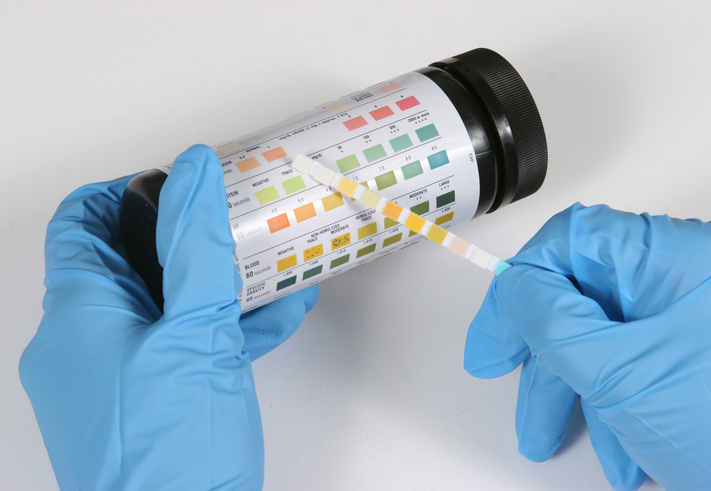
Urine dipstick test
A urine dipstick test tests the urine using a special strip of paper that is dipped into a sample of urine. The result is available almost immediately. It is sometimes called a rapid urine test. Urine contains waste chemicals from all of the millions of chemical reactions that go on in the body all the time. However, in some conditions, chemicals.

Patient information leaflet
Diabetic kidney disease
Diabetic kidney disease is a complication that occurs in some people with diabetes. What is diabetic kidney disease. Diabetic kidney disease (diabetic nephropathy) is a complication that occurs in some people with diabetes. Diabetic kidney disease is one of the causes of chronic kidney disease Chronic kidney disease , a long-term condition where.
Further reading and references
- phosphofurin acidic cluster sorting protein 1; MedlinePlus, National Library of Medicine.
- Schuurs-Hoeijmakers JH, Landsverk ML, Foulds N, Kukolich MK, Gavrilova RH, Greville-Heygate S, Hanson-Kahn A, Bernstein JA, Glass J, Chitayat D, Burrow TA, Husami A, Collins K, Wusik K, van der Aa N, Kooy F, Brown KT, Gadzicki D, Kini U, Alvarez S, Fernandez-Jaen A, McGehee F, Selby K, Tarailo-Graovac M, Van Allen M, van Karnebeek CD, Stavropoulos DJ, Marshall CR, Merico D, Gregor A, Zweier C, Hopkin RJ, Chu YW, Chung BH, de Vries BB, Devriendt K, Hurles ME, Brunner HG; DDD study. Clinical delineation of the PACS1-related syndrome--Report on 19 patients. Am J Med Genet A. 2016 Mar;170(3):670-5. doi: 10.1002/ajmg.a.37476. Epub 2016 Feb 3.
- Schuurs-Hoeijmakers JH, Oh EC, Vissers LE, Swinkels ME, Gilissen C, Willemsen MA, Holvoet M, Steehouwer M, Veltman JA, de Vries BB, van Bokhoven H, de Brouwer AP, Katsanis N, Devriendt K, Brunner HG. Recurrent de novo mutations in PACS1 cause defective cranial-neural-crest migration and define a recognizable intellectual-disability syndrome. Am J Hum Genet. 2012 Dec 7;91(6):1122-7. doi: 10.1016/j.ajhg.2012.10.013. Epub 2012 Nov 15.
- Stern D, Cho MT, Chikarmane R, Willaert R, Retterer K, Kendall F, Deardorff M, Hopkins S, Bedoukian E, Slavotinek A, Schrier Vergano S, Spangler B, McDonald M, McConkie-Rosell A, Burton BK, Kim KH, Oundjian N, Kronn D, Chandy N, Baskin B, Guillen Sacoto MJ, Wentzensen IM, McLaughlin HM, McKnight D, Chung WK. Association of the missense variant p.Arg203Trp in PACS1 as a cause of intellectual disability and seizures. Clin Genet. 2017 Aug;92(2):221-223. doi: 10.1111/cge.12956. Epub 2017 Jan 23.
- Taylor C, Lusk L, Martin C, Chung W. PACS1-Related Neurodevelopmental Disorder. 2020 Jul 16 [updated 2026 Aug 13]. In: Adam MP, Bick S, Mirzaa GM, Wallace SE, Amemiya A, editors. GeneReviews(R) [Internet]. Seattle (WA): University of Washington, Seattle; 1993-2026. Available from http://www.ncbi.nlm.nih.gov/books/NBK559434/
Share your thoughts or experiences with others in our patient communities.
Simple access to trusted treatments and health services online.
Common conditions
Get help with common conditions through the NHS, without a GP appointment.





Sign up to the Patient newsletter
Your weekly dose of clear, trustworthy health advice - written to help you feel informed, confident and in control.
By subscribing you accept our Privacy Policy. You can unsubscribe at any time. We never sell your data.