protein O-mannosyltransferase 1
Last updated 19 Apr 2023
Meets Patient’s editorial guidelines
- DownloadDownload
- Share
- Language
- Discussion
- Ask Patient
- Audio Version
- Add to preferred sources on Google
The POMT1 gene provides instructions for making one piece of the protein O-mannosyltransferase (POMT) enzyme complex. The other piece is produced from the POMT2 gene. This enzyme complex is present in many different tissues in the body but is particularly abundant in the muscles used for movement (skeletal muscles), fetal brain, and testes.
Video picks for GenesVideo library
Normal function
The POMT1 gene provides instructions for making one piece of the protein O-mannosyltransferase (POMT) enzyme complex. The other piece is produced from the POMT2 gene. This enzyme complex is present in many different tissues in the body but is particularly abundant in the muscles used for movement (skeletal muscles), fetal brain, and testes.
The POMT complex helps modify a protein called alpha (α)-dystroglycan. Specifically, this complex adds a sugar molecule called mannose to α-dystroglycan through a process called glycosylation. Glycosylation is critical for the normal function of α-dystroglycan.
The α-dystroglycan protein helps anchor the structural framework inside each cell (cytoskeleton) to the lattice of proteins and other molecules outside the cell (extracellular matrix). In skeletal muscles, glycosylated α-dystroglycan helps stabilize and protect muscle fibers. In the brain, it helps direct the movement (migration) of nerve cells (neurons) during early development.
Conditions referring to this gene or chromosome
Other names
dolichyl-phosphate-mannose--protein mannosyltransferase 1
dolichyl-phosphate-mannose-protein mannosyltransferase
LGMD2K
MDDGA1
MDDGB1
MDDGC1
POMT1_HUMAN
protein O-mannosyl-transferase 1
protein-O-mannosyltransferase 1
RT
Patient picks for Genes

Diet and nutrition
10 sources of plant-based protein for bone health
Plant-based diets are growing in popularity. People choose this way of eating for various reasons - to boost their health, help animals, and protect the environment. But switching to a plant-based diet may mean you're missing out on vital, bone-friendly nutrients. One of these is protein.
by Victoria Raw

Diet and nutrition
How a protein-packed breakfast can boost your health
When we think of breakfast, we often picture a bowl of cornflakes with milk. While it’s a classic morning staple, it might not be the most effective way to start your day, as it lacks protein. Adding more protein to your breakfast can boost your energy levels and help keep you feeling full for longer.
by Victoria Raw
Healthy living
Natural protein verses protein powder: which is better for strength training?
Consuming enough protein is essential for building strong muscles. Protein powder shakes are not a complete replacement for natural protein sources found in your food. However, you may consider supplementing your diet and strength-training regime with protein shakes. Before you decide if this is right for you, there are several benefits and considerations to take into account.
by Amberley Davis
Diet and nutrition
Plant-based proteins could help prevent high blood pressure
Eating a greater amount of minimally processed plant-based proteins - such as beans, nuts and lentils - may lower your chance of developing high blood pressure, according to new research.
by Laura Williamson
Healthy living
8 high-protein nuts to boost your strength
Packed with protein, delicious, easy to eat, and versatile - nuts are a great source of fuel for people building their fitness and strength. But not all nuts are created equal, which is why we count down the top eight nuts you should eat while strength training and serve these up with tasty recipe ideas.
by Lynn Stephen
Kidney and urinary tract
Proteinuria
Proteins are molecules that are found in almost every part of the body, including in the blood. The kidneys normally have a filter which stops protein from entering the urine, except in very tiny amounts; however, kidney problems can cause higher levels of protein to be found in the urine.
by Dr Doug McKechnie, MRCGP
Related patient information and medicines

Patient information leaflet
Liver function tests
The usual liver function tests typically include the following: Bilirubin. Albumin. Total protein. Transferases (AST or SGOT and ALT or SGPT). They are liver enzymes (protein... ALT stands for alanine transaminase and is also called SGPT (serum glutamic-pyruvic transaminase). AST stands for aspartate transaminase and is also called SGOT (serum.

Patient information leaflet
Telogen effluvium
Telogen effluvium (hair loss) is a condition where more than normal amounts of hair fall out. There is a general 'thinning' of the hair. Unlike some other hair and scalp conditions, it is temporary and the hair growth usually recovers. What is telogen effluvium. Telogen effluvium is rapid hair loss that is caused by stress or a change to your.
Patient information leaflet
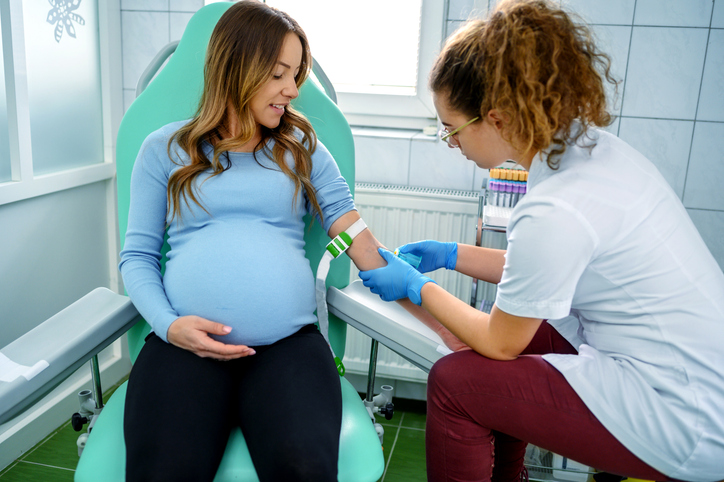
Pregnancy screening tests
What are pregnancy screening tests. A pregnancy screening test (also known as an antenatal check), aims to detect a disease or condition in the early stages before it causes significant problems, and where treatment can be offered. The potential benefits of any screening tests offered should outweigh any possible risks from the test. (They may be.

Patient information leaflet
Gastrointestinal malabsorption
Gastrointestinal malabsorption syndrome means a failure to fully absorb digested foods from the gut (bowel) into your body. There are many different causes. Prolonged intestinal malabsorption may cause problems because of a lack of carbohydrates, proteins, fats, minerals and vitamins that are essential to keep you healthy. The treatment will.

Patient information leaflet
Healthy eating
Healthy eating may help to prevent certain long-term (chronic) diseases such as heart disease, stroke and diabetes. It may also help to reduce your risk of developing some cancers and help you to maintain a healthy weight. You obtain this energy from nutrients in the food that you eat - mostly, carbohydrates, fats and proteins. Minerals and.
Patient information leaflet
Diet in chronic kidney disease
Chronic kidney disease (CKD) is a common long-term condition where the kidneys aren't working as well as they should be. There are some dietary choices that are recommended for people with early CKD. People with more advanced CKD may be advised to follow a special diet, usually with the support of a specialist dietician. It's important for.
Further reading and references
- protein O-mannosyltransferase 1; MedlinePlus, National Library of Medicine.
- Akasaka-Manya K, Manya H, Endo T. Mutations of the POMT1 gene found in patients with Walker-Warburg syndrome lead to a defect of protein O-mannosylation. Biochem Biophys Res Commun. 2004 Dec 3;325(1):75-9. doi: 10.1016/j.bbrc.2004.10.001.
- Akasaka-Manya K, Manya H, Nakajima A, Kawakita M, Endo T. Physical and functional association of human protein O-mannosyltransferases 1 and 2. J Biol Chem. 2006 Jul 14;281(28):19339-45. doi: 10.1074/jbc.M601091200. Epub 2006 May 12.
- Balci B, Uyanik G, Dincer P, Gross C, Willer T, Talim B, Haliloglu G, Kale G, Hehr U, Winkler J, Topaloglu H. An autosomal recessive limb girdle muscular dystrophy (LGMD2) with mild mental retardation is allelic to Walker-Warburg syndrome (WWS) caused by a mutation in the POMT1 gene. Neuromuscul Disord. 2005 Apr;15(4):271-5. doi: 10.1016/j.nmd.2005.01.013.
- Bello L, Melacini P, Pezzani R, D'Amico A, Piva L, Leonardi E, Torella A, Soraru G, Palmieri A, Smaniotto G, Gavassini BF, Vianello A, Nigro V, Bertini E, Angelini C, Tosatto SC, Pegoraro E. Cardiomyopathy in patients with POMT1-related congenital and limb-girdle muscular dystrophy. Eur J Hum Genet. 2012 Dec;20(12):1234-9. doi: 10.1038/ejhg.2012.71. Epub 2012 May 2.
- Kim DS, Hayashi YK, Matsumoto H, Ogawa M, Noguchi S, Murakami N, Sakuta R, Mochizuki M, Michele DE, Campbell KP, Nonaka I, Nishino I. POMT1 mutation results in defective glycosylation and loss of laminin-binding activity in alpha-DG. Neurology. 2004 Mar 23;62(6):1009-11. doi: 10.1212/01.wnl.0000115386.28769.65.
- Lommel M, Cirak S, Willer T, Hermann R, Uyanik G, van Bokhoven H, Korner C, Voit T, Baric I, Hehr U, Strahl S. Correlation of enzyme activity and clinical phenotype in POMT1-associated dystroglycanopathies. Neurology. 2010 Jan 12;74(2):157-64. doi: 10.1212/WNL.0b013e3181c919d6.
- Manya H, Chiba A, Yoshida A, Wang X, Chiba Y, Jigami Y, Margolis RU, Endo T. Demonstration of mammalian protein O-mannosyltransferase activity: coexpression of POMT1 and POMT2 required for enzymatic activity. Proc Natl Acad Sci U S A. 2004 Jan 13;101(2):500-5. doi: 10.1073/pnas.0307228101. Epub 2003 Dec 29.
Share your thoughts or experiences with others in our patient communities.
Simple access to trusted treatments and health services online.
Common conditions
Get help with common conditions through the NHS, without a GP appointment.





Sign up to the Patient newsletter
Your weekly dose of clear, trustworthy health advice - written to help you feel informed, confident and in control.
By subscribing you accept our Privacy Policy. You can unsubscribe at any time. We never sell your data.