RNA component of mitochondrial RNA processing endoribonuclease
Last updated 25 Apr 2023
Meets Patient’s editorial guidelines
- DownloadDownload
- Share
- Language
- Discussion
- Ask Patient
- Audio Version
- Add to preferred sources on Google
Unlike many genes, the RMRP gene does not contain instructions for making a protein. Instead, a molecule called a noncoding RNA, a chemical cousin of DNA, is produced from the RMRP gene. Several proteins attach (bind) to this RNA molecule, forming an enzyme called mitochondrial RNA-processing endoribonuclease, or RNase MRP.
Video picks for GenesVideo library
Normal function
Unlike many genes, the RMRP gene does not contain instructions for making a protein. Instead, a molecule called a noncoding RNA, a chemical cousin of DNA, is produced from the RMRP gene. Several proteins attach (bind) to this RNA molecule, forming an enzyme called mitochondrial RNA-processing endoribonuclease, or RNase MRP.
The RNase MRP enzyme is thought to be involved in several important processes in the cell. For example, it likely helps copy (replicate) the DNA found in the energy-producing centers of cells (mitochondria). The RNase MRP enzyme also processes ribosomal RNA, which is required for assembling protein building blocks (amino acids) into functioning proteins. In addition, this enzyme helps control the cell cycle, which is the cell's way of replicating itself in an organized, step-by-step fashion.
Conditions referring to this gene or chromosome
Other names
CHH
NME1
RMRPR
RRP2
Patient picks for Genes

Women's health
Endometrial hyperplasia
Endometrial hyperplasia is a thickening of the womb (uterus) lining. The womb lining is called the endometrium. Hyperplasia means over ("hyper" in Latin) growth ("plasia" in Latin).
by Dr Philippa Vincent, MRCGP

Senior health
What not to say to someone who is dying
If a friend or family member is given a terminal diagnosis, it's natural to want to support them. But many of us are scared of saying the wrong thing. We look at potential pitfalls.
by Gillian Harvey

Heart health and blood vessels
What happens to your blood pressure when you're not measuring it?
Think about the last time you had your blood pressure checked. Perhaps you were sitting in your GP's surgery, waiting for the cuff to inflate. Seconds later, two numbers appeared on the screen. Those numbers provide useful information about your blood pressure at that moment. But blood pressure changes throughout the day and night. Some people even have higher readings at the GP's surgery than at home - known as white coat hypertension - while others have normal readings in the surgery but higher blood pressure elsewhere (masked hypertension).
by Hilo
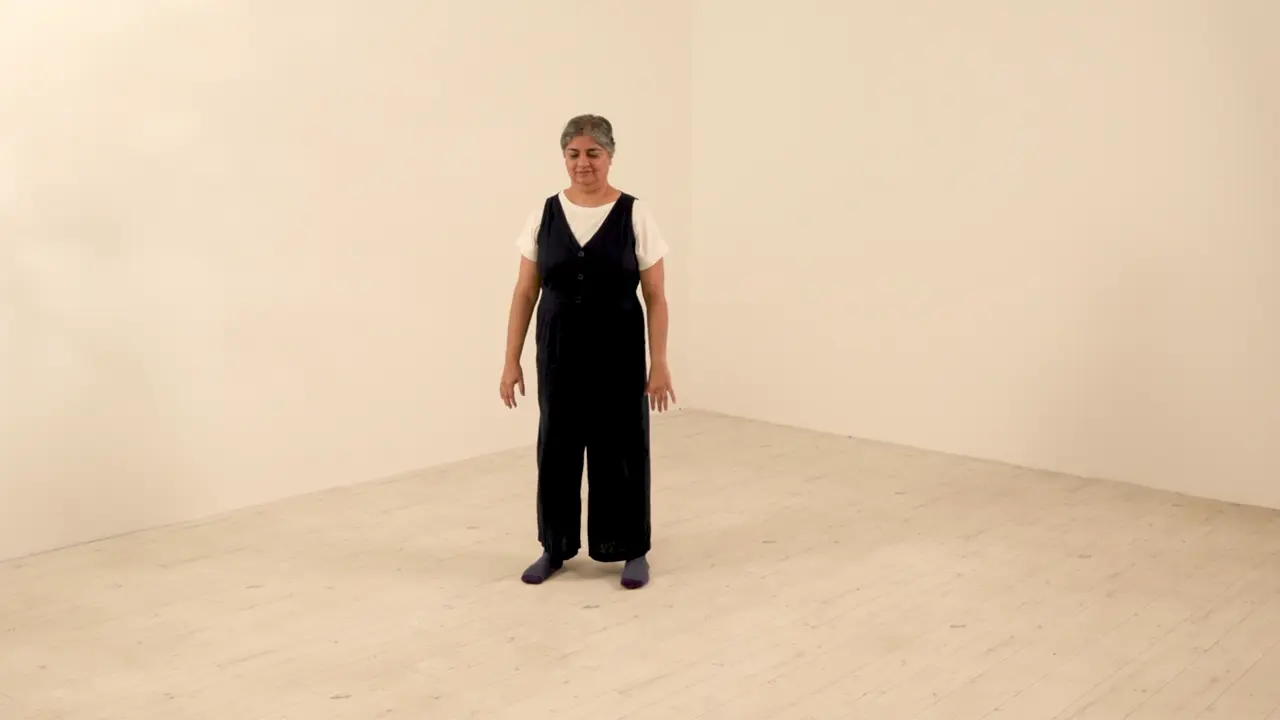
MSK
Looking at the Moon
Feet are wider than hip distance and toes are slightly pointed out. Both arms lift as you turn from the waist to lift your arms and look at the moon behind you; as you do so the back heel can lift. As you inhale, lower your arms and come back to centre. I like to imagine that I can carry the light of the moon across the still waters of a lake. This form with its deep back rotation is linked with the water element and its associated organ and meridian system of the kidneys.
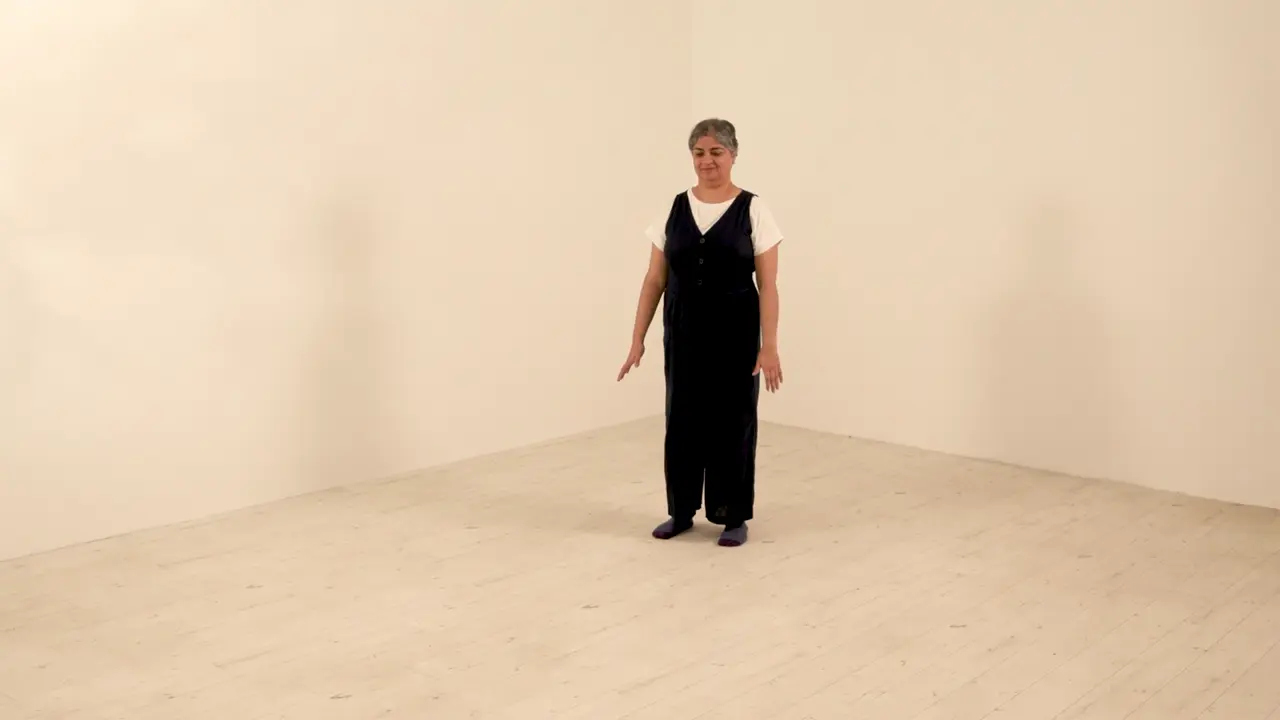
MSK
Two Hands Support the Heavens
Stand with your feet about hip-width apart and your knees soft. Let your arms rest by your sides. On an inhale, float both hands up the centre of the body until they reach collarbone height. Here, interlace your fingers, turn the palms outward, and extend the hands upward, lengthening through the sides of the body as though gently supporting the heavens. As you exhale, release the arms outward and down, softening the shoulders and letting the breath fall naturally. After a few rounds, you can add an optional lift of the heels as the hands extend upward, creating a sense of lightness and rising energy. This form is said to support the Triple Heater (San Jiao) — recognised as an organ system in Chinese medicine and thought to correspond to the body’s connective tissue networks, describing the body’s three energetic centres that help harmonise breathing, digestion, and overall vitality.

Bones, joints and muscles
Scoliosis and kyphosis
Scoliosis is a back condition that causes the (back) spine to curve to the side - either left or right. Most cases develop in children between the ages of 9 and 14 years during the growth spurt of puberty. Scoliosis is usually mild and needs no treatment. For more severe cases treatments include specific exercises, a back brace or occasionally surgery to straighten the spine. A very pronounced front-to-back curve is called a kyphosis, which does not usually need treatment.
by Dr Colin Tidy, MRCGP
Related patient information and medicines

Patient information leaflet
The immune system
This leaflet gives a brief overview of the immune system and how it works. A person with a weak immune system might have difficulty fighting off infections. In autoimmune diseases the body is unable to tell what is its own and what is foreign, so it attacks itself. Autoimmune diseases can attack any part of the body - eg, type 1 diabetes.

Patient information leaflet
Cyclical vomiting syndrome
Cyclical vomiting syndrome is a condition which occurs mainly in children but can also affect adults. It is more common in people who have migraines. Children have severe episodes of feeling sick (nausea) and being sick (vomiting), sometimes with other symptoms. In between these episodes the person is completely well. There are various treatments.

Patient information leaflet
Paget's disease of bone
Paget's disease of bone affects the structure of parts of one or more bones. In most cases it causes no symptoms and does not need treatment. Symptoms develop in some cases and pain in the affected part of bone is the most common symptom. Affected bones are weaker than normal and may become deformed and may break (fracture) more easily than.

Medicine leaflet
COVID-19 mRNA Vaccine
Drink plenty of fluids and rest if possible. About COVID-19 mRNA vaccine (Comirnaty®, Spikevax®) Type of medicine COVID-19 mRNA vaccine Used for Protection against infection caused by SARS-CoV-2 virus, original and Omicron variants Also called Comirnaty® 'Pfizer BioNTech' vaccine; 'Moderna' Spikevax® vaccine Available as Multi-dose injection vials.
Patient information leaflet
Endometrial hyperplasia
Endometrial hyperplasia is a thickening of the womb (uterus) lining. The womb lining is called the endometrium. Hyperplasia means over ("hyper. What is endometrial hyperplasia. Endometrial hyperplasia is a thickening of the endometrium which is the womb (uterus) lining. It can cause vaginal bleeding. In others, hormone treatment or an operation.

Patient information leaflet
Paleolithic diet (paleo diet)
Following a Paleolithic diet means eating unprocessed, fresh foods that reflect the diet of our hunter-gatherer ancestors from the Paleolithic era. It involves avoiding any foods that were not available to these 'cavemen' at that time, including processed foods, grains and dairy products. The staple foods of a Paleolithic diet include meat and.
Further reading and references
- RNA component of mitochondrial RNA processing endoribonuclease; MedlinePlus, National Library of Medicine.
- Hermanns P, Bertuch AA, Bertin TK, Dawson B, Schmitt ME, Shaw C, Zabel B, Lee B. Consequences of mutations in the non-coding RMRP RNA in cartilage-hair hypoplasia. Hum Mol Genet. 2005 Dec 1;14(23):3723-40. doi: 10.1093/hmg/ddi403. Epub 2005 Oct 27.
- Hermanns P, Tran A, Munivez E, Carter S, Zabel B, Lee B, Leroy JG. RMRP mutations in cartilage-hair hypoplasia. Am J Med Genet A. 2006 Oct 1;140(19):2121-30. doi: 10.1002/ajmg.a.31331.
- Hirose Y, Nakashima E, Ohashi H, Mochizuki H, Bando Y, Ogata T, Adachi M, Toba E, Nishimura G, Ikegawa S. Identification of novel RMRP mutations and specific founder haplotypes in Japanese patients with cartilage-hair hypoplasia. J Hum Genet. 2006;51(8):706-710. doi: 10.1007/s10038-006-0015-3. Epub 2006 Jul 11.
- Martin AN, Li Y. RNase MRP RNA and human genetic diseases. Cell Res. 2007 Mar;17(3):219-26. doi: 10.1038/sj.cr.7310120.
- Ridanpaa M, Sistonen P, Rockas S, Rimoin DL, Makitie O, Kaitila I. Worldwide mutation spectrum in cartilage-hair hypoplasia: ancient founder origin of the major70A-->G mutation of the untranslated RMRP. Eur J Hum Genet. 2002 Jul;10(7):439-47. doi: 10.1038/sj.ejhg.5200824.
- Ridanpaa M, van Eenennaam H, Pelin K, Chadwick R, Johnson C, Yuan B, vanVenrooij W, Pruijn G, Salmela R, Rockas S, Makitie O, Kaitila I, de la Chapelle A. Mutations in the RNA component of RNase MRP cause a pleiotropic human disease, cartilage-hair hypoplasia. Cell. 2001 Jan 26;104(2):195-203. doi: 10.1016/s0092-8674(01)00205-7.
- Thiel CT, Horn D, Zabel B, Ekici AB, Salinas K, Gebhart E, Ruschendorf F, Sticht H, Spranger J, Muller D, Zweier C, Schmitt ME, Reis A, Rauch A. Severely incapacitating mutations in patients with extreme short stature identify RNA-processing endoribonuclease RMRP as an essential cell growth regulator. Am J Hum Genet. 2005 Nov;77(5):795-806. doi: 10.1086/497708. Epub 2005 Sep 29.
- Thiel CT, Mortier G, Kaitila I, Reis A, Rauch A. Type and level of RMRP functional impairment predicts phenotype in the cartilage hair hypoplasia-anauxetic dysplasia spectrum. Am J Hum Genet. 2007 Sep;81(3):519-29. doi: 10.1086/521034. Epub 2007 Aug 6.
- Thiel CT, Rauch A. The molecular basis of the cartilage-hair hypoplasia-anauxetic dysplasia spectrum. Best Pract Res Clin Endocrinol Metab. 2011 Feb;25(1):131-42. doi: 10.1016/j.beem.2010.08.004.
Share your thoughts or experiences with others in our patient communities.
Simple access to trusted treatments and health services online.
Common conditions
Get help with common conditions through the NHS, without a GP appointment.





Sign up to the Patient newsletter
Your weekly dose of clear, trustworthy health advice - written to help you feel informed, confident and in control.
By subscribing you accept our Privacy Policy. You can unsubscribe at any time. We never sell your data.