ribosomal protein S24
Last updated 18 Aug 2020
Meets Patient’s editorial guidelines
- DownloadDownload
- Share
- Language
- Discussion
- Ask Patient
- Audio Version
- Add to preferred sources on Google
The RPS24 gene provides instructions for making one of approximately 80 different ribosomal proteins, which are components of cellular structures called ribosomes. Ribosomes process the cell's genetic instructions to create proteins.
Video picks for GenesVideo library
Normal function
The RPS24 gene provides instructions for making one of approximately 80 different ribosomal proteins, which are components of cellular structures called ribosomes. Ribosomes process the cell's genetic instructions to create proteins.
Each ribosome is made up of two parts (subunits) called the large and small subunits. The protein produced from the RPS24 gene is among those found in the small subunit.
The specific functions of the RPS24 protein and the other ribosomal proteins within these subunits are unclear. Some ribosomal proteins are involved in the assembly or stability of ribosomes. Others help carry out the ribosome's main function of building new proteins. Studies suggest that some ribosomal proteins may have other functions, such as participating in chemical signaling pathways within the cell, regulating cell division, and controlling the self-destruction of cells (apoptosis).
Conditions referring to this gene or chromosome
Other names
40S ribosomal protein S24
DBA3
eS24
RS24_HUMAN
S24
Patient picks for Genes

Kidney and urinary tract
Proteinuria
Proteins are molecules that are found in almost every part of the body, including in the blood. The kidneys normally have a filter which stops protein from entering the urine, except in very tiny amounts; however, kidney problems can cause higher levels of protein to be found in the urine.
by Dr Doug McKechnie, MRCGP

Diet and nutrition
10 sources of plant-based protein for bone health
Plant-based diets are growing in popularity. People choose this way of eating for various reasons - to boost their health, help animals, and protect the environment. But switching to a plant-based diet may mean you're missing out on vital, bone-friendly nutrients. One of these is protein.
by Victoria Raw

Diet and nutrition
How a protein-packed breakfast can boost your health
When we think of breakfast, we often picture a bowl of cornflakes with milk. While it’s a classic morning staple, it might not be the most effective way to start your day, as it lacks protein. Adding more protein to your breakfast can boost your energy levels and help keep you feeling full for longer.
by Victoria Raw
Healthy living
Natural protein verses protein powder: which is better for strength training?
Consuming enough protein is essential for building strong muscles. Protein powder shakes are not a complete replacement for natural protein sources found in your food. However, you may consider supplementing your diet and strength-training regime with protein shakes. Before you decide if this is right for you, there are several benefits and considerations to take into account.
by Amberley Davis

Diet and nutrition
Plant-based proteins could help prevent high blood pressure
Eating a greater amount of minimally processed plant-based proteins - such as beans, nuts and lentils - may lower your chance of developing high blood pressure, according to new research.
by Laura Williamson
Healthy living
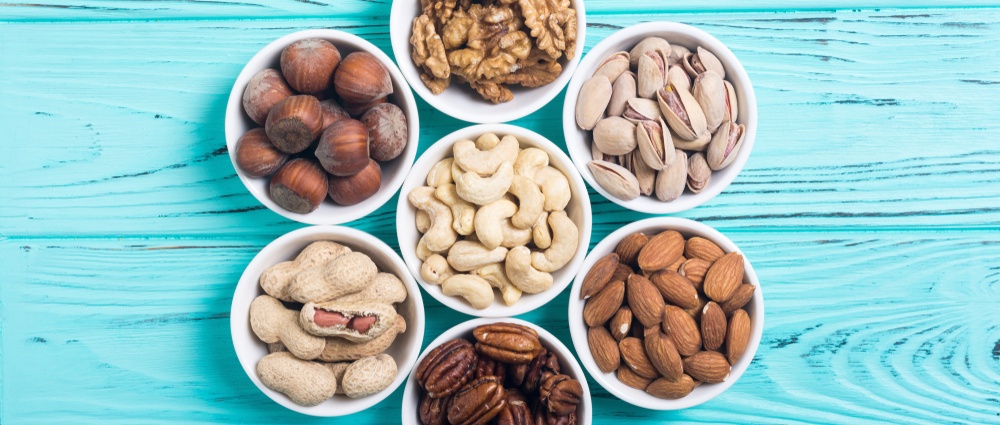
8 high-protein nuts to boost your strength
Packed with protein, delicious, easy to eat, and versatile - nuts are a great source of fuel for people building their fitness and strength. But not all nuts are created equal, which is why we count down the top eight nuts you should eat while strength training and serve these up with tasty recipe ideas.
by Lynn Stephen
Related patient information and medicines

Patient information leaflet
Recurrent miscarriage
What is the cause of. The simple answer is that quite often, nobody knows. In about half of cases, no cause is found after doing all the tests. In the other half, causes can be found and these include: Abnormalities of the pregnant woman's womb (uterus). For example, long-standing infection or inflammation of the womb (endometritis), scarring of.

Patient information leaflet
Premature labour
If labour is not confirmed or if you have a ... National Institute for Health and Care Excellence standard The National Institute for Health and Care Excellence (NICE) has published new 'quality standards' for doctors about the care they should offer to women who are in possible or premature labour, or who are at risk of going into premature.

Patient information leaflet
Lumbar puncture
A lumbar puncture is used to diagnose meningitis and some other brain and spinal cord disorders. Note : the information below is a general guide only. The arrangements, and the way tests are performed, may vary between different hospitals. Always follow the instructions given ... What is a lumbar puncture. A lumbar puncture (sometimes called a.

Patient information leaflet
Vaccines and egg allergies
Some types of vaccine are made using a process that involves chicken eggs or chicken embryos, and contain small amounts of egg protein. Egg allergy is one of the most common food allergies, especially in children. In the past, people with egg allergies have been told to avoid having any vaccines made with chicken eggs, due to concerns about.

Patient information leaflet
Neonatal jaundice
Neonatal jaundice is very common in the first two weeks of a baby's life. It is usually harmless but may be due to a serious cause which needs treatment in hospital. Neonatal jaundice is more likely to have a serious cause if it is seen in the first 24 hours of life or doesn't disappear by 2 weeks of age. All babies with jaundice should be seen by.

Patient information leaflet
Feeding your toddler
At this point you can still be a huge influence on your child's future eating habits. In a few years your child will decide entirely for themself what they eat, but they will have learned their early tastes with your help. Feeding your child from the age of 2 years is a natural progression from the 12- to 24-month stage. You should still be.
Further reading and references
- ribosomal protein S24; MedlinePlus, National Library of Medicine.
- Badhai J, Frojmark AS, J Davey E, Schuster J, Dahl N. Ribosomal protein S19 and S24 insufficiency cause distinct cell cycle defects in Diamond-Blackfan anemia. Biochim Biophys Acta. 2009 Oct;1792(10):1036-42. doi: 10.1016/j.bbadis.2009.08.002. Epub 2009 Aug 16.
- Ball S. Diamond Blackfan anemia. Hematology Am Soc Hematol Educ Program. 2011;2011:487-91. doi: 10.1182/asheducation-2011.1.487.
- Boultwood J, Pellagatti A, Wainscoat JS. Haploinsufficiency of ribosomal proteins and p53 activation in anemia: Diamond-Blackfan anemia and the 5q- syndrome. Adv Biol Regul. 2012 Jan;52(1):196-203. doi: 10.1016/j.advenzreg.2011.09.008. No abstract available.
- Choesmel V, Fribourg S, Aguissa-Toure AH, Pinaud N, Legrand P, Gazda HT, Gleizes PE. Mutation of ribosomal protein RPS24 in Diamond-Blackfan anemia results in a ribosome biogenesis disorder. Hum Mol Genet. 2008 May 1;17(9):1253-63. doi: 10.1093/hmg/ddn015. Epub 2008 Jan 29.
- Danilova N, Gazda HT. Ribosomopathies: how a common root can cause a tree of pathologies. Dis Model Mech. 2015 Sep;8(9):1013-26. doi: 10.1242/dmm.020529.
- Ellis SR. Nucleolar stress in Diamond Blackfan anemia pathophysiology. Biochim Biophys Acta. 2014 Jun;1842(6):765-8. doi: 10.1016/j.bbadis.2013.12.013. Epub 2014 Jan 8.
- Gazda HT, Grabowska A, Merida-Long LB, Latawiec E, Schneider HE, Lipton JM, Vlachos A, Atsidaftos E, Ball SE, Orfali KA, Niewiadomska E, Da Costa L, Tchernia G, Niemeyer C, Meerpohl JJ, Stahl J, Schratt G, Glader B, Backer K, Wong C, Nathan DG, Beggs AH, Sieff CA. Ribosomal protein S24 gene is mutated in Diamond-Blackfan anemia. Am J Hum Genet. 2006 Dec;79(6):1110-8. doi: 10.1086/510020. Epub 2006 Nov 2.
- Lipton JM, Ellis SR. Diamond-Blackfan anemia: diagnosis, treatment, and molecular pathogenesis. Hematol Oncol Clin North Am. 2009 Apr;23(2):261-82. doi: 10.1016/j.hoc.2009.01.004.
- Mills EW, Green R. Ribosomopathies: There's strength in numbers. Science. 2017 Nov 3;358(6363):eaan2755. doi: 10.1126/science.aan2755.
- Sieff C. DBA Syndrome. 2009 Jun 25 [updated 2025 Jul 31]. In: Adam MP, Bick S, Mirzaa GM, Wallace SE, Amemiya A, editors. GeneReviews(R) [Internet]. Seattle (WA): University of Washington, Seattle; 1993-2026. Available from http://www.ncbi.nlm.nih.gov/books/NBK7047/
- Vlachos A, Blanc L, Lipton JM. Diamond Blackfan anemia: a model for the translational approach to understanding human disease. Expert Rev Hematol. 2014 Jun;7(3):359-72. doi: 10.1586/17474086.2014.897923. Epub 2014 Mar 26.
Share your thoughts or experiences with others in our patient communities.
Simple access to trusted treatments and health services online.
Common conditions
Get help with common conditions through the NHS, without a GP appointment.





Sign up to the Patient newsletter
Your weekly dose of clear, trustworthy health advice - written to help you feel informed, confident and in control.
By subscribing you accept our Privacy Policy. You can unsubscribe at any time. We never sell your data.