ribosomal protein S6 kinase A3
Last updated 25 Apr 2023
Meets Patient’s editorial guidelines
- DownloadDownload
- Share
- Language
- Discussion
- Ask Patient
- Audio Version
- Add to preferred sources on Google
The RPS6KA3 gene provides instructions for making a protein that is part of a family called ribosomal S6 kinases (RSKs). These proteins help regulate the activity of certain genes and are involved in signaling within cells. RSK proteins are thought to play a role in several important cellular processes including cell growth and division (proliferation), cell specialization (differentiation), and the self-destruction of cells (apoptosis).
Video picks for GenesVideo library
Normal function
The RPS6KA3 gene provides instructions for making a protein that is part of a family called ribosomal S6 kinases (RSKs). These proteins help regulate the activity of certain genes and are involved in signaling within cells. RSK proteins are thought to play a role in several important cellular processes including cell growth and division (proliferation), cell specialization (differentiation), and the self-destruction of cells (apoptosis).
The protein made by the RPS6KA3 gene appears to play an important role in the brain. The protein is involved in cell signaling pathways that are required for learning, the formation of long-term memories, and the survival of nerve cells.
Conditions referring to this gene or chromosome
Other names
HU-2
HU-3
Insulin-stimulated protein kinase 1
ISPK-1
KS6A3_HUMAN
MAP kinase-activated protein kinase 1b
MAPKAPK1B
MRX19
p90(rsk)
ribosomal protein S6 kinase, 90kDa, polypeptide 3
Ribosomal S6 kinase 2
RSK-2
RSK2
Patient picks for Genes

Diet and nutrition
How a protein-packed breakfast can boost your health
When we think of breakfast, we often picture a bowl of cornflakes with milk. While it’s a classic morning staple, it might not be the most effective way to start your day, as it lacks protein. Adding more protein to your breakfast can boost your energy levels and help keep you feeling full for longer.
by Victoria Raw

Kidney and urinary tract
Proteinuria
Proteins are molecules that are found in almost every part of the body, including in the blood. The kidneys normally have a filter which stops protein from entering the urine, except in very tiny amounts; however, kidney problems can cause higher levels of protein to be found in the urine.
by Dr Doug McKechnie, MRCGP

Diet and nutrition
10 sources of plant-based protein for bone health
Plant-based diets are growing in popularity. People choose this way of eating for various reasons - to boost their health, help animals, and protect the environment. But switching to a plant-based diet may mean you're missing out on vital, bone-friendly nutrients. One of these is protein.
by Victoria Raw
Healthy living
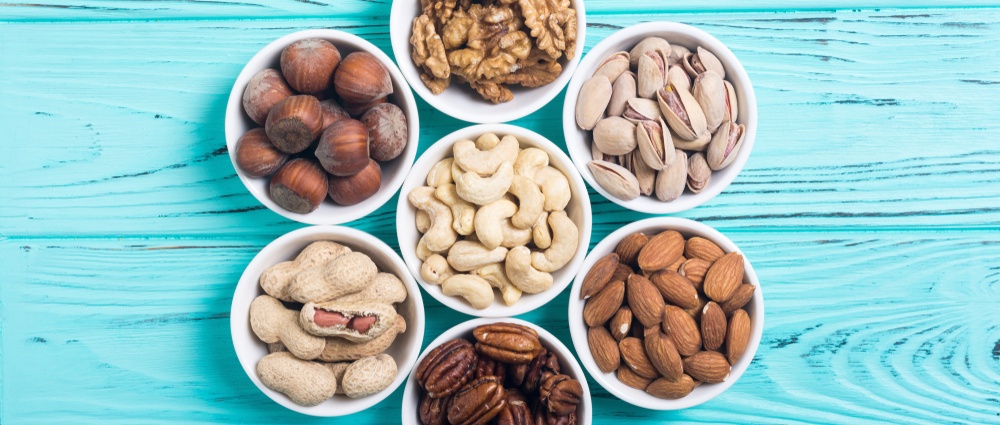
8 high-protein nuts to boost your strength
Packed with protein, delicious, easy to eat, and versatile - nuts are a great source of fuel for people building their fitness and strength. But not all nuts are created equal, which is why we count down the top eight nuts you should eat while strength training and serve these up with tasty recipe ideas.
by Lynn Stephen
Healthy living
Natural protein verses protein powder: which is better for strength training?
Consuming enough protein is essential for building strong muscles. Protein powder shakes are not a complete replacement for natural protein sources found in your food. However, you may consider supplementing your diet and strength-training regime with protein shakes. Before you decide if this is right for you, there are several benefits and considerations to take into account.
by Amberley Davis

Diet and nutrition
Plant-based proteins could help prevent high blood pressure
Eating a greater amount of minimally processed plant-based proteins - such as beans, nuts and lentils - may lower your chance of developing high blood pressure, according to new research.
by Laura Williamson
Related patient information and medicines

Patient information leaflet
Primary liver cancer
Primary liver cancer is uncommon in the UK but is common in other parts of the world. In the UK, most cases develop as a complication of scarring of the liver (cirrhosis). In general the outlook is poor. Chemotherapy Chemotherapy Chemothe... There are new medicines being developed for the treatment of liver cancer. For example, sorafenib is a type.

Patient information leaflet
Muscular dystrophy
If muscular dystrophy is suspected, tests can help to make an accurate diagnosis. Other people in the family can also be tested to see if they have a muscular dystrophy gene. Muscular dystrophy cannot be cured but there are various treatments which can help. What is muscular dystrophy. Muscular dystrophy (MD) is the name given to a group of.

Patient information leaflet
Mouth cancer
Diagnosing mouth cancer Your healthcare professional may suspect mouth cancer if you have a lesion in your mouth (such as a sore, an ulcer or a lump) which has not healed for 3 wee... Dr Krishna Vakharia , 16th October 2023 The National Institute for Health and Care Excellence (NICE) has recommended that a person should receive a diagnosis or.

Patient information leaflet
Glycogen storage disorders
Glycogen storage disorders are a group of inherited diseases. They result from a problem with one of the proteins (known as enzymes) involved in the conversion of glucose to glycogen, or the breakdown of glycogen back into glucose. They mostly tend to affect your liver and muscles. Newer treatment possibilities provide hope for an improved outlook.

Patient information leaflet
Liver function tests
Liver function tests are a set of blood tests commonly done to check on the health of your liver. Changes in liver function tests give a clue as to whether your liver is under strain, inflamed, infected or diseased, and how badly. The pattern of the liver function tests can give a clue to the cause and can allow early detection of unsuspected.

Patient information leaflet
Healthy eating
It may also help to reduce your risk of developing some cancers and help you to maintain a healthy weight. This leaflet explains the principles of a healthy diet. If you become sick, eating a healthy diet may help you to recover more quickly. Also, a main way of preventing obesity Obesity and weight loss and overweight is to eat a healthy diet. If.
Further reading and references
- ribosomal protein S6 kinase A3; MedlinePlus, National Library of Medicine.
- Delaunoy J, Abidi F, Zeniou M, Jacquot S, Merienne K, Pannetier S, Schmitt M, Schwartz C, Hanauer A. Mutations in the X-linked RSK2 gene (RPS6KA3) in patients with Coffin-Lowry syndrome. Hum Mutat. 2001 Feb;17(2):103-16. doi: 10.1002/1098-1004(200102)17:23.0.CO;2-N.
- Delaunoy JP, Dubos A, Marques Pereira P, Hanauer A. Identification of novel mutations in the RSK2 gene (RPS6KA3) in patients with Coffin-Lowry syndrome. Clin Genet. 2006 Aug;70(2):161-6. doi: 10.1111/j.1399-0004.2006.00660.x.
- Field M, Tarpey P, Boyle J, Edkins S, Goodship J, Luo Y, Moon J, Teague J, Stratton MR, Futreal PA, Wooster R, Raymond FL, Turner G. Mutations in the RSK2(RPS6KA3) gene cause Coffin-Lowry syndrome and nonsyndromic X-linked mental retardation. Clin Genet. 2006 Dec;70(6):509-15. doi: 10.1111/j.1399-0004.2006.00723.x.
- Guimiot F, Delezoide AL, Hanauer A, Simonneau M. Expression of the RSK2 gene during early human development. Gene Expr Patterns. 2004 Jan;4(1):111-4. doi: 10.1016/j.modgep.2003.06.001.
- Hanauer A, Young ID. Coffin-Lowry syndrome: clinical and molecular features. J Med Genet. 2002 Oct;39(10):705-13. doi: 10.1136/jmg.39.10.705.
- Raymond FL. X linked mental retardation: a clinical guide. J Med Genet. 2006 Mar;43(3):193-200. doi: 10.1136/jmg.2005.033043. Epub 2005 Aug 23.
- Zeniou M, Ding T, Trivier E, Hanauer A. Expression analysis of RSK gene family members: the RSK2 gene, mutated in Coffin-Lowry syndrome, is prominently expressed in brain structures essential for cognitive function and learning. Hum Mol Genet. 2002 Nov 1;11(23):2929-40. doi: 10.1093/hmg/11.23.2929.
- Zeniou M, Gattoni R, Hanauer A, Stevenin J. Delineation of the mechanisms of aberrant splicing caused by two unusual intronic mutations in the RSK2 gene involved in Coffin-Lowry syndrome. Nucleic Acids Res. 2004 Feb 18;32(3):1214-23. doi: 10.1093/nar/gkh272. Print 2004.
Share your thoughts or experiences with others in our patient communities.
Simple access to trusted treatments and health services online.
Common conditions
Get help with common conditions through the NHS, without a GP appointment.





Sign up to the Patient newsletter
Your weekly dose of clear, trustworthy health advice - written to help you feel informed, confident and in control.
By subscribing you accept our Privacy Policy. You can unsubscribe at any time. We never sell your data.