retinoschisin 1
Last updated 18 Aug 2020
Meets Patient’s editorial guidelines
- DownloadDownload
- Share
- Language
- Discussion
- Ask Patient
- Audio Version
- Add to preferred sources on Google
The RS1 gene provides instructions for making a protein called retinoschisin, which is found in the retina. The retina is a specialized light-sensitive tissue that lines the back of the eye. Retinoschisin attaches (binds) to the surface of specialized cells within the retina that detect light and colour (photoreceptor cells). The protein also binds to bipolar cells, which relay light signals from photoreceptor cells to other retinal cells. Studies suggest that retinoschisin plays a role in the development and maintenance of the retina and its specialized cells. Retinoschisin is likely involved in the organisation of cells in the retina by attaching cells together (cell adhesion).
Video picks for GenesVideo library
Normal function
The RS1 gene provides instructions for making a protein called retinoschisin, which is found in the retina. The retina is a specialized light-sensitive tissue that lines the back of the eye. Retinoschisin attaches (binds) to the surface of specialized cells within the retina that detect light and colour (photoreceptor cells). The protein also binds to bipolar cells, which relay light signals from photoreceptor cells to other retinal cells. Studies suggest that retinoschisin plays a role in the development and maintenance of the retina and its specialized cells. Retinoschisin is likely involved in the organisation of cells in the retina by attaching cells together (cell adhesion).
Conditions referring to this gene or chromosome
Other names
retinoschisin
retinoschisis (X-linked, juvenile) 1
RS
X-linked juvenile retinoschisis protein
XLRS1
XLRS1_HUMAN
Patient picks for Genes

Patient explainers
What is sciatica? | Patient Explainers
Often called sciatica, this occurs in less than 1 case in 20 of acute low back pain. Nerve root pain means that a nerve coming out from the spinal cord (the root of the nerve) is irritated or pressed on. (Many people call this a trapped nerve.) Find out more: [https://patient.info/health/back-and-spine-pain/lower-back-pain](https://patient.info/health/back-and-spine-pain/lower-back-pain) Follow Patient: Website: [https://patient.info/](https://patient.info/) Facebook: [https://www.facebook.com/patient](https://www.facebook.com/patient) Twitter: [https://twitter.com/patient](https://twitter.com/patient) Pinterest: [https://uk.pinterest.com/patient/](https://uk.pinterest.com/patient/) Instagram: [https://www.instagram.com/patient.info/](https://www.instagram.com/patient.info/)
by Dr Sarah Jarvis

STI
How do you get genital warts?
Dr Sarah Jarvis MBE The virus is passed on by sexual contact. You need close skin-to-skin contact to pass on the virus. This means that you do not necessarily need to have penetrative sex to pass on infection. Sharing sex toys may also pass on infection. Very rarely, anogenital warts may be passed on from hand warts. They may also rarely be passed on to a baby when a woman gives birth. [https://patient.info/health/sexually-transmitted-infections-leaflet/anogenital-warts#nav-1](https://patient.info/health/sexually-transmitted-infections-leaflet/anogenital-warts#nav-1)
by Dr Sarah Jarvis

The sex and relationships podcast
From Bliss to Blame I The Sex and Relationships Podcast I S2E5
Have you ever found yourself thinking, ‘What on earth was I doing? This person is all wrong for me’, when only a few months ago they seemed perfect? How did that feeling of bliss when you’re finishing each other’s sentences and laughing at the same jokes turn to irritation, resentment and blaming them for everything that’s wrong? Clare and Aileen help you understand the natural cycle from falling-in-love bliss to relationship blame, why it happens, and how to navigate your way through it. Dip into some of the things Clare and Aileen chat about in this episode: 03:51 What’s happening to our bodies during the bliss phase 10:54 Difference – the good, the bad and the ugly 17:35 The danger of confiding in people who agree with you 20:49 Tips for navigating through the bliss to blame phases 23:50 Esther Perel – many different marriages within the same marriage 26:08 Tips on better communication 28:03 Has this relationship come to the end of the road? 34:22 Tips on how to have honest conversations with partners and friends Want to know more? If you want to hear more about what to do when sexual attraction starts to fade in a relationship listen to Episode 7 “Lust or Bust” from Season 1: [https://www.youtube.com/watch?v=oczHRWuev30&list=PLx6Nf3acNljjvrnko9zfaOBzGCQxLrTic&index=7](https://www.youtube.com/watch?v=oczHRWuev30&list=PLx6Nf3acNljjvrnko9zfaOBzGCQxLrTic&index=7) Visit our website The Sex and Relationships Podcast for more information on the issues discussed in this episode: [https://thesexandrelationshipspodcast.com/](https://thesexandrelationshipspodcast.com/) You can also Ask Clare a question or suggest a topic for future episodes. Follow us on social media: Instagram: [https://www.instagram.com/s3x_and_relationships_podcast/profilecard/?igsh=MXIza3BxeWg3OTJxOA%3D%3D](https://www.instagram.com/s3x_and_relationships_podcast/profilecard/?igsh=MXIza3BxeWg3OTJxOA%3D%3D) Facebook: [https://www.facebook.com/people/The-Sex-and-Relationships-Podcast-With-Therapists-Clare-Janet/61558082319934/](https://www.facebook.com/people/The-Sex-and-Relationships-Podcast-With-Therapists-Clare-Janet/61558082319934/) About the Sex and Relationships Podcast This podcast is for anyone looking for information or help with their sex lives or relationships. In this season your hosts Clare Prendergast and Aileen Gonsalves deep dive into the world of relationships to give you insights, advice and top tips to help guide you through your relationships. Your hosts Clare Prendergast is a sex and relationships therapist and draws on her knowledge and years of experience in the therapy room to give you help and guidance. Aileen Gonsalves is fascinated in human behaviour and drawing on her many years in the theatre has developed the unique Gonsalves Method which helps people be more present and develop authentic connections with those around them.

Other diabetes
What does insulin do?
Dr Partha Kar In type 1 diabetes, the body stops making insulin and the blood sugar level goes very high. Some people who have type 2 diabetes may also need to have insulin injections to help control blood sugar levels. Insulin is usually injected under the skin between 2-4 times a day. For more information on insulin, go to [https://patient.info/health/type-1-diabetes/insulins](https://patient.info/health/type-1-diabetes/insulins)
by Dr Partha Kar, FRCP

Contraceptive implant
Can you get pregnant when you have the implant?
Dr Rosemary Leonard Only around 1 in 3,000 sexually active women using the implant will become pregnant each year, often because they were actually pregnant at the time of insertion. This is the lowest contraceptive failure rate of any method, including sterilisation (male or female). In fact in most studies of the implant, no women became pregnant at all. For more information on the contraceptive implant, go to [https://patient.info/health/long-acting-reversible-contraceptives-larc/contraceptive-implant](https://patient.info/health/long-acting-reversible-contraceptives-larc/contraceptive-implant)
by Dr Rosemary Leonard MBE, MRCGP
Asthma & COPD
How do I know if I have asthma?
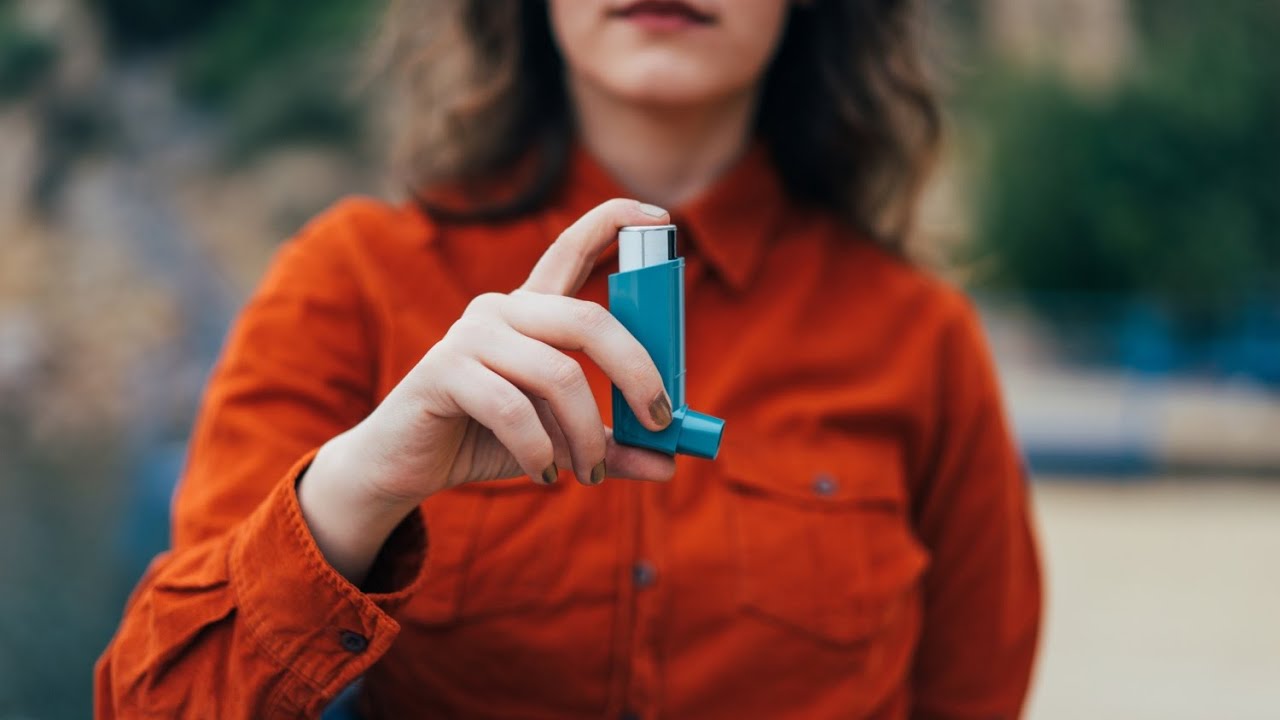
Dr Sarah Jarvis MBE The common symptoms are cough and wheeze. You may also become breathless and develop a feeling of chest tightness. Symptoms can range from mild to severe between different people and at different times in the same person. Each episode of symptoms may last just an hour or so, or persist for days or weeks unless treated. [https://patient.info/health/asthma-leaflet#nav-1](https://patient.info/health/asthma-leaflet#nav-1)
by Dr Sarah Jarvis
Related patient information and medicines

Patient information leaflet
Telogen effluvium
Telogen effluvium (hair loss) is a condition where more than normal amounts of hair fall out. Medications, including retinoids, beta-blockers Beta-blockers , calcium channel block... Many other medications have been linked to telogen effluvium, but some of the most common are beta-blockers; retinoids, including excess vitamin A (often used for.

Patient information leaflet
Driving and diabetes
Insulin, used for people with type 1 diabetes and some people with type 2, can cause your blood sugar to drop too low - so-called hypoglycaemia episodes, or hypos. Do I... Rules for everyone with diabetes Regardless of which treatment you use for your diabetes, you must inform the DVLA if: You need laser treatment for diabetic retinopathy to both.

Patient information leaflet
Type 1 diabetes
Type 1 diabetes is the type of diabetes that typically develops in children and in young adults. Eye problems Diabetic retinopathy which can affect vision. Checking for early signs of complications - for example: Eye checks: Guidance from the National Institute for Health and Care Excellence (NICE) recommends that if you are diagnosed with type 1.

Patient information leaflet
Diabetes
There are two main types of diabetes - type 1 diabetes and type 2 diabetes. Find out more here: [https://patient.info/health/diabetes-mellitus-leaflet](https://patient.info/health/diabetes-mellitus-leaflet) Diabetes mellitus (just called diabetes from now on) occurs when the level of sugar (glucose) in the blood is higher than normal. Increased.

Patient information leaflet
Type 2 diabetes treatment
As soon. If you are already taking metformin, your doctor should add in an SGLT-2 inhibitor. See the leaflet that comes in the medicine packet for full details of cautions and possible side-effects. GLP-1 (glucagon-like peptide-1) mimetics - exenatide, dulaglutide, liraglutide, lixisenatide and semaglutide Exenatide Exenatide for diabetes ,.

Patient information leaflet
Giant Cell Arteritis
Giant cell arteritis (temporal arteritis) causes No one really knows exactly what causes giant cell arteritis (temporal arteritis). We do know that there are genetic changes in some people which make them more likely to develop giant cell (temporal) arteritis. Who is likely to develop giant cell arteritis (temporal arteritis). Giant cell.
Further reading and references
- retinoschisin 1; MedlinePlus, National Library of Medicine.
- Kim DY, Mukai S. X-linked juvenile retinoschisis (XLRS): a review of genotype-phenotype relationships. Semin Ophthalmol. 2013 Sep-Nov;28(5-6):392-6. doi: 10.3109/08820538.2013.825299.
- Molday RS, Kellner U, Weber BH. X-linked juvenile retinoschisis: clinical diagnosis, genetic analysis, and molecular mechanisms. Prog Retin Eye Res. 2012 May;31(3):195-212. doi: 10.1016/j.preteyeres.2011.12.002. Epub 2012 Jan 3.
- Molday RS. Focus on molecules: retinoschisin (RS1). Exp Eye Res. 2007 Feb;84(2):227-8. doi: 10.1016/j.exer.2005.12.013. Epub 2006 Apr 4. No abstract available.
- Pimenides D, George ND, Yates JR, Bradshaw K, Roberts SA, Moore AT, Trump D. X-linked retinoschisis: clinical phenotype and RS1 genotype in 86 UK patients. J Med Genet. 2005 Jun;42(6):e35. doi: 10.1136/jmg.2004.029769.
- Wu WW, Wong JP, Kast J, Molday RS. RS1, a discoidin domain-containing retinal cell adhesion protein associated with X-linked retinoschisis, exists as a novel disulfide-linked octamer. J Biol Chem. 2005 Mar 18;280(11):10721-30. doi: 10.1074/jbc.M413117200. Epub 2005 Jan 11.
- Yi J, Li S, Jia X, Xiao X, Wang P, Guo X, Zhang Q. Novel RS1 mutations associated with X-linked juvenile retinoschisis. Int J Mol Med. 2012 Apr;29(4):644-8. doi: 10.3892/ijmm.2012.882. Epub 2012 Jan 10.
Share your thoughts or experiences with others in our patient communities.
Simple access to trusted treatments and health services online.
Common conditions
Get help with common conditions through the NHS, without a GP appointment.





Sign up to the Patient newsletter
Your weekly dose of clear, trustworthy health advice - written to help you feel informed, confident and in control.
By subscribing you accept our Privacy Policy. You can unsubscribe at any time. We never sell your data.