X-linked juvenile retinoschisis
Last updated 18 Aug 2020
Meets Patient’s editorial guidelines
- DownloadDownload
- Share
- Language
- Discussion
- Ask Patient
- Audio Version
- Add to preferred sources on Google
X-linked juvenile retinoschisis is a condition characterised by impaired vision that begins in childhood and occurs almost exclusively in males. This disorder affects the retina, which is a specialized light-sensitive tissue that lines the back of the eye. Damage to the retina impairs the sharpness of vision (visual acuity) in both eyes. Typically, X-linked juvenile retinoschisis affects cells in the central area of the retina called the macula. The macula is responsible for sharp central vision, which is needed for detailed tasks such as reading, driving, and recognizing faces. X-linked juvenile retinoschisis is one type of a broader disorder called macular degeneration, which disrupts the normal functioning of the macula. Occasionally, side (peripheral) vision is affected in people with X-linked juvenile retinoschisis.
Video picks for Genetic conditionsVideo library
Description
X-linked juvenile retinoschisis is a condition characterised by impaired vision that begins in childhood and occurs almost exclusively in males. This disorder affects the retina, which is a specialized light-sensitive tissue that lines the back of the eye. Damage to the retina impairs the sharpness of vision (visual acuity) in both eyes. Typically, X-linked juvenile retinoschisis affects cells in the central area of the retina called the macula. The macula is responsible for sharp central vision, which is needed for detailed tasks such as reading, driving, and recognizing faces. X-linked juvenile retinoschisis is one type of a broader disorder called macular degeneration, which disrupts the normal functioning of the macula. Occasionally, side (peripheral) vision is affected in people with X-linked juvenile retinoschisis.
X-linked juvenile retinoschisis is usually diagnosed when affected boys start school and poor vision and difficulty with reading become apparent. In more severe cases, eye squinting and involuntary movement of the eyes (nystagmus) begin in infancy. Other early features of X-linked juvenile retinoschisis include eyes that do not look in the same direction (strabismus) and farsightedness (hyperopia). Visual acuity often declines in childhood and adolescence but then stabilizes throughout adulthood until a significant decline in visual acuity typically occurs in a man's fifties or sixties. Sometimes, severe complications develop, such as separation of the retinal layers (retinal detachment) or leakage of blood vessels in the retina (vitreous hemorrhage). These eye abnormalities can further impair vision or cause blindness.
Inheritance patterns
The source lists the following possible inheritance patterns: X-linked recessive. More than one pattern can apply in different cases.
Related genes
Other names
Congenital X-linked retinoschisis
Degenerative retinoschisis
Juvenile retinoschisis
X-linked retinoschisis
XJR
Patient picks for Genetic conditions
Children's health
Juvenile idiopathic arthritis
Juvenile idiopathic arthritis is a condition in which persisting joint inflammation first occurs in children under the age of 16 years. Affected joints become painful and swollen, and can become damaged. Juvenile idiopathic arthritis cannot generally be cured but there are effective treatments. These help symptoms, prevent any long-standing joint problems, and can lead to remission.
by Dr Doug McKechnie, MRCGP

MSK
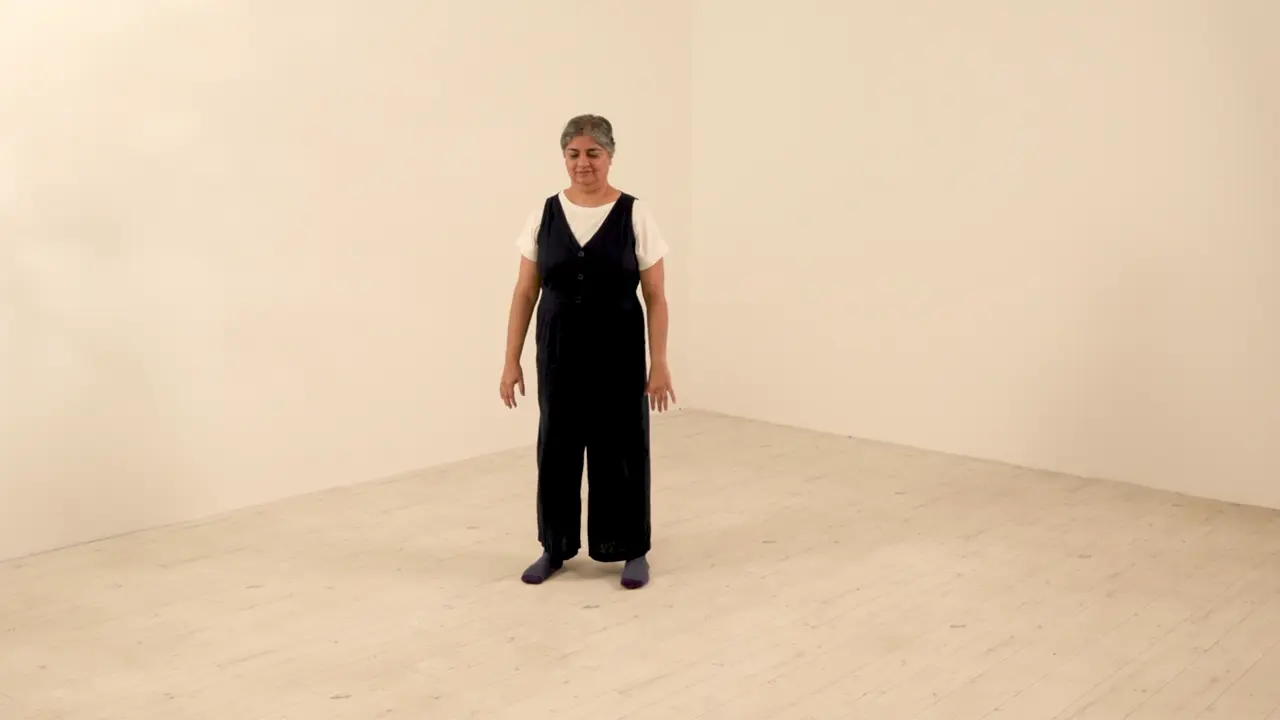
Rainbow Dance Seated
Sit comfortably toward the front of the chair with your feet flat on the floor, knees slightly apart and aligned with the hips. Keep the spine long and relaxed. Open your arms out to the sides, imagining you are holding a rainbow — each palm supporting one end of its arc. Gently shift your weight into one sit bone, and as you do, bend sideways toward the opposite side (so if you shift right, you lean left). Keep the movement soft and spacious, lifting through the ribs rather than collapsing. This gentle lateral stretch supports the Stomach meridian, traditionally linked with digestion and overall nourishment. The movement can also help release tension across the shoulders and encourage ease in the nervous system. Return to centre, switch sides, and continue flowing side to side, as though moving beneath a rainbow that arches and softens with each breath.
MSK
Looking at the Moon
Feet are wider than hip distance and toes are slightly pointed out. Both arms lift as you turn from the waist to lift your arms and look at the moon behind you; as you do so the back heel can lift. As you inhale, lower your arms and come back to centre. I like to imagine that I can carry the light of the moon across the still waters of a lake. This form with its deep back rotation is linked with the water element and its associated organ and meridian system of the kidneys.

Brain and nerves
Young-onset dementia is linked to health and lifestyle, as well as genetics
Many of us fear dementia, not to mention developing it while we're young, but little is known about whether we can prevent it. However, a breakthrough study has identified 15 significant factors linked to young-onset dementia, which develops before the age of 65. And many of these are influenced by your health and lifestyle choices. With around 370,000 people developing young-onset dementia each year worldwide, experts believe this research brings us closer to finding ways to prevent, identify, and treat this devastating disease.
by Amberley Davis

General health and lifestyle
Air pollution linked to mental health problems
New research shows that pollution could be linked to psychiatric disorders and poorer mental health.
by Milly Evans

Heart health and blood vessels
Microvascular angina
There is no agreed definition for CSX. The underlying cause may be sudden narrowing (spasm) of normal coronary arteries without any evidence of atheromatous fatty plaques.
by Dr Hayley Willacy, FRCGP
Related patient information and medicines

Patient information leaflet
Glycogen storage disorders
Glycogen storage disorders are a group of inherited diseases. They result from a problem with one of the proteins (known as enzymes) involved in the convers... X-linked inheritance pattern This occurs in some people with glycogen storage disorder type IX. X-linked inheritance pattern x-linked pattern of inheritance In this pattern of inheritance,.

Patient information leaflet
Joint pain
The different causes result in differing symptoms, treatments and outcomes. However, some require treatment for a long time and cause long-term joint problems as w... This leaflet summarises the most common causes of joint pain, and discusses when you should seek help if you have joint pain. Arthritis Joint pain may affect just one joint or it may.

Patient information leaflet
Simple, secure access to your NHS GP record
Patient.info has partnered with ORB Connect - a UK, clinician-led, secure platform - to help you see and download your NHS GP records clearly and in one place. Why we’ve partnered with ORB We’ve teamed up with ORB - a secure, clinician-led UK service - to make reading and downloading your GP records easier than ever. ...protectionThe NHS App is a.

Patient information leaflet
Duchenne muscular dystrophy
It usually affects only boys, although girls may carry the Duchenne gene. They are likely to need increasing help and treatments. Duchenne muscular dystrophy (DMD) is an inherited (genetic) condition which affects muscle strength and function. It causes progressive muscle weakness and is a serious condition which starts in early childhood. The.

Patient information leaflet
Huntington's disease
Huntington's disease is a genetically inherited condition that causes parts of the brain and nervous system to stop working properly over time. It is a slowly progressive condition that interferes with the movements of your body, thinking and judgement, and can lead to a change in your behaviour. The symptoms occur because of damage and death of.

Patient information leaflet
Haemophilia
Haemophilia is a rare bleeding disorder that affects your ability to make a clot. The blood contains substances called clotting factors that work with platelets to form a clot. When you injure yourself the clot stops you bleeding. Haemophilia is a condition where there is a deficiency of clotting factors, so people with this condition usually have.
Further reading and references
- X-linked juvenile retinoschisis; MedlinePlus, National Library of Medicine.
- Apushkin MA, Fishman GA, Rajagopalan AS. Fundus findings and longitudinal study of visual acuity loss in patients with X-linked retinoschisis. Retina. 2005 Jul-Aug;25(5):612-8. doi: 10.1097/00006982-200507000-00012.
- Kim DY, Mukai S. X-linked juvenile retinoschisis (XLRS): a review of genotype-phenotype relationships. Semin Ophthalmol. 2013 Sep-Nov;28(5-6):392-6. doi: 10.3109/08820538.2013.825299.
- Molday RS, Kellner U, Weber BH. X-linked juvenile retinoschisis: clinical diagnosis, genetic analysis, and molecular mechanisms. Prog Retin Eye Res. 2012 May;31(3):195-212. doi: 10.1016/j.preteyeres.2011.12.002. Epub 2012 Jan 3.
- Pimenides D, George ND, Yates JR, Bradshaw K, Roberts SA, Moore AT, Trump D. X-linked retinoschisis: clinical phenotype and RS1 genotype in 86 UK patients. J Med Genet. 2005 Jun;42(6):e35. doi: 10.1136/jmg.2004.029769.
- Prenner JL, Capone A Jr, Ciaccia S, Takada Y, Sieving PA, Trese MT. Congenital X-linked retinoschisis classification system. Retina. 2006 Sep;26(7 Suppl):S61-4. doi: 10.1097/01.iae.0000244290.09499.c1.
- Yi J, Li S, Jia X, Xiao X, Wang P, Guo X, Zhang Q. Novel RS1 mutations associated with X-linked juvenile retinoschisis. Int J Mol Med. 2012 Apr;29(4):644-8. doi: 10.3892/ijmm.2012.882. Epub 2012 Jan 10.
Share your thoughts or experiences with others in our patient communities.
Simple access to trusted treatments and health services online.
Common conditions
Get help with common conditions through the NHS, without a GP appointment.





Sign up to the Patient newsletter
Your weekly dose of clear, trustworthy health advice - written to help you feel informed, confident and in control.
By subscribing you accept our Privacy Policy. You can unsubscribe at any time. We never sell your data.