transcription factor 4
Last updated 2 May 2023
Meets Patient’s editorial guidelines
- DownloadDownload
- Share
- Language
- Discussion
- Ask Patient
- Audio Version
- Add to preferred sources on Google
The TCF4 gene provides instructions for making a protein that attaches (binds) to specific regions of DNA and helps control the activity of many other genes. On the basis of this action, the TCF4 protein is known as a transcription factor. The TCF4 protein is part of a group of proteins known as E-proteins. E-proteins each bind with another identical or similar protein and then bind to a specific sequence of DNA known as an E-box. E-proteins are involved in many aspects of development.
Video picks for GenesVideo library
Normal function
The TCF4 gene provides instructions for making a protein that attaches (binds) to specific regions of DNA and helps control the activity of many other genes. On the basis of this action, the TCF4 protein is known as a transcription factor. The TCF4 protein is part of a group of proteins known as E-proteins. E-proteins each bind with another identical or similar protein and then bind to a specific sequence of DNA known as an E-box. E-proteins are involved in many aspects of development.
The TCF4 protein is found in the brain, muscles, lungs, and heart. This protein also appears to be active (expressed) in various tissues before birth. The TCF4 protein plays a role in the maturation of cells to carry out specific functions (cell differentiation) and the self-destruction of cells (apoptosis).
Conditions referring to this gene or chromosome
Other names
bHLHb19
class B basic helix-loop-helix protein 19
E2-2
immunoglobulin transcription factor 2
ITF-2
ITF2
ITF2_HUMAN
SEF-2
SEF2
TCF-4
Patient picks for Genes

Heart health and blood vessels
Dilated cardiomyopathy causes: what are the risk factors?
Having dilated cardiomyopathy means that your heart muscle is weakened, which affects how your heart pumps blood around your body. There are a wide range of dilated cardiomyopathy causes, including genetics, other health conditions, alcohol consumption and a poor diet. While we can't control some of these risk factors, we can make positive lifestyle changes to reduce our risk of developing dilated cardiomyopathy.
by Amberley Davis

Cancer
Breast cancer facts and risk factors
Most cases of breast cancer occur by chance. However, breast cancer does occur more often than usual in some families because of their genetic makeup.
by Dr Colin Tidy, MRCGP

Treatment and medication
What factors are causing antimicrobial resistance?
Following a recent study by health economists at the University of Manchester and the University of Southern Denmark, the tremendous pressure GPs are currently working under has been linked to increasing broad-spectrum antibiotic prescribing in England. Because excess antibiotic prescribing has been closely linked to antibiotic resistance, there are concerns that these higher prescribing levels may be contributing to antimicrobial resistance.
by Emily Jane Bashforth

Preventative health
Seated Figure 4 Hamstring Stretch
The Seated Figure 4 Hamstring Stretch, is an effective and simple way to stretch your glutes, hips, hamstrings and lower back.

Type 1 diabetes
Is type 1 diabetes hereditary?
Dr Partha Kar Although type 1 diabetes is not an inherited disease, there is some genetic factor. A first-degree relative (sister, brother, son, daughter) of someone with type 1 diabetes has about a 1 in 16 chance of developing type 1 diabetes. For more information on type 1 diabetes, go to [https://patient.info/health/type-1-diabetes](https://patient.info/health/type-1-diabetes)
by Dr Partha Kar, FRCP

Other diabetes
What does insulin do?
Dr Partha Kar In type 1 diabetes, the body stops making insulin and the blood sugar level goes very high. Some people who have type 2 diabetes may also need to have insulin injections to help control blood sugar levels. Insulin is usually injected under the skin between 2-4 times a day. For more information on insulin, go to [https://patient.info/health/type-1-diabetes/insulins](https://patient.info/health/type-1-diabetes/insulins)
by Dr Partha Kar, FRCP
Related patient information and medicines

Patient information leaflet
Acute lymphoblastic leukaemia
Acute lymphoblastic leukaemia (ALL) is a condition where the bone marrow makes large numbers of abnormal immature lymphocytes. What is acute lymphoblastic leukaemia. Acute lymphoblastic leukaemia (ALL) is a ... In some cases, radiotherapy to the brain is also used. Stem cell transplantation (SCT) SCT - sometimes called bone marrow transplantation.
Patient information leaflet
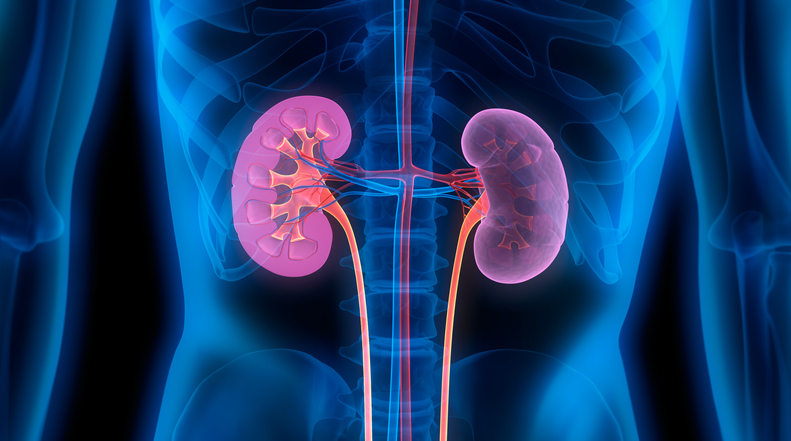
Chronic kidney disease
Guidance now suggests... However, dapagliflozin is not advised for people with stage 5 CKD (and only on the advice of a specialist in people with stage 4 CKD). Dr Krishna Vakharia , 29th January 2024 The National Institute for Health and Care Excellence (NICE) has now recommended empagliflozin as an option for treating CKD in adults. It can only.

Patient information leaflet
Haemophilia
Haemophilia is a rare bleeding disorder that affects your ability to make a clot. The blood contains substances called clotting factors that work with platelets to form a clot. When you injure yourself the clot stops you bleeding. Haemophilia is a condition where there is a deficiency of clotting factors, so people with this condition usually have.

Patient information leaflet
Blood clotting tests
Blood clotting tests are used to diagnose and assess bleeding problems and to monitor people who take warfarin or other anticoagulant medicines. You may be advised to have blood clotting tests: If you have a suspected bleeding disorder. These chemicals then react with other chemicals and proteins in th... There are 13 known clotting factors which.

Patient information leaflet
Type 2 diabetes treatment
DPP-4 (dipeptidyl peptidase-4) inhibitors - also known as incretin enhancers This group includes alogliptin Alogliptin tablets for diabetes , linagliptin Linagliptin tablets for diabetes , saxagliptin Saxagliptin for diabetes , sitagliptin Sitagliptin for diabetes and vildagliptin Vildagliptin for diabetes. Dipeptidyl peptidase 4 (DPP-4) is a.
Patient information leaflet
Intraventricular haemorrhage in babies
An intraventricular haemorrhage is a bleed in the brain. Premature babies are particularly at risk of this condition. What is an intraventricular haemorrhage. It is a type of stroke Stroke , and may be due to various causes including high blood pressure High blood pressure , a head injury, abnormally formed blood vessels, or brain tumours. This.
Further reading and references
- transcription factor 4; MedlinePlus, National Library of Medicine.
- Amiel J, Rio M, de Pontual L, Redon R, Malan V, Boddaert N, Plouin P, Carter NP, Lyonnet S, Munnich A, Colleaux L. Mutations in TCF4, encoding a class I basic helix-loop-helix transcription factor, are responsible for Pitt-Hopkins syndrome, a severe epileptic encephalopathy associated with autonomic dysfunction. Am J Hum Genet. 2007 May;80(5):988-93. doi: 10.1086/515582. Epub 2007 Mar 23.
- de Pontual L, Mathieu Y, Golzio C, Rio M, Malan V, Boddaert N, Soufflet C, Picard C, Durandy A, Dobbie A, Heron D, Isidor B, Motte J, Newburry-Ecob R, Pasquier L, Tardieu M, Viot G, Jaubert F, Munnich A, Colleaux L, Vekemans M, Etchevers H, Lyonnet S, Amiel J. Mutational, functional, and expression studies of the TCF4 gene in Pitt-Hopkins syndrome. Hum Mutat. 2009 Apr;30(4):669-76. doi: 10.1002/humu.20935.
- Takano K, Lyons M, Moyes C, Jones J, Schwartz CE. Two percent of patients suspected of having Angelman syndrome have TCF4 mutations. Clin Genet. 2010 Sep;78(3):282-8. doi: 10.1111/j.1399-0004.2010.01380.x. Epub 2010 Feb 10.
- Zweier C, Peippo MM, Hoyer J, Sousa S, Bottani A, Clayton-Smith J, Reardon W, Saraiva J, Cabral A, Gohring I, Devriendt K, de Ravel T, Bijlsma EK, Hennekam RC, Orrico A, Cohen M, Dreweke A, Reis A, Nurnberg P, Rauch A. Haploinsufficiency of TCF4 causes syndromal mental retardation with intermittent hyperventilation (Pitt-Hopkins syndrome). Am J Hum Genet. 2007 May;80(5):994-1001. doi: 10.1086/515583. Epub 2007 Mar 23.
Share your thoughts or experiences with others in our patient communities.
Simple access to trusted treatments and health services online.
Common conditions
Get help with common conditions through the NHS, without a GP appointment.





Sign up to the Patient newsletter
Your weekly dose of clear, trustworthy health advice - written to help you feel informed, confident and in control.
By subscribing you accept our Privacy Policy. You can unsubscribe at any time. We never sell your data.