vacuolar protein sorting 13 homolog B
Last updated 18 Aug 2020
Meets Patient’s editorial guidelines
- DownloadDownload
- Share
- Language
- Discussion
- Ask Patient
- Audio Version
- Add to preferred sources on Google
Researchers are still working to determine the exact role of the VPS13B gene (also called the COH1 gene) in the human body. Studies show that the protein produced from this gene is a part of the Golgi apparatus, which is a cell structure in which newly produced proteins are modified so they can carry out their functions. In particular, the VPS13B protein is involved in a modification called glycosylation, which is the attachment of sugar molecules to proteins. The VPS13B protein also appears to be involved in the sorting and transporting of proteins inside the cell.
Video picks for GenesVideo library
Normal function
Researchers are still working to determine the exact role of the VPS13B gene (also called the COH1 gene) in the human body. Studies show that the protein produced from this gene is a part of the Golgi apparatus, which is a cell structure in which newly produced proteins are modified so they can carry out their functions. In particular, the VPS13B protein is involved in a modification called glycosylation, which is the attachment of sugar molecules to proteins. The VPS13B protein also appears to be involved in the sorting and transporting of proteins inside the cell.
Studies suggest several functions for the VPS13B protein in the body. The protein appears to play an important role in the normal growth and development of nerve cells (neurons). It may also be involved in the growth and development of adipocytes, which are cells that store fats for energy, and may play a role in the storage and distribution of fats in the body.
Conditions referring to this gene or chromosome
Other names
CHS1
COH1
Cohen syndrome 1
DKFZp313I0811
KIAA0532
vacuolar protein sorting 13 homolog B (yeast)
vacuolar protein sorting 13B
VP13B_HUMAN
Patient picks for Genes

Infections
6-in-1 vaccine
The 6-in-1 vaccine is part of routine childhood immunisations and protects babies against six different serious illnesses. Three doses are given. Further boosters without all six components are given at other times later in childhood and in adult life. The 6-in-1 vaccine used to be given as the 3-in-1 vaccine DTaP along with the polio vaccine which was given by mouth, but has gradually been extended so that it now protects against even more diseases. It is given in one single injection into the thigh from one single syringe. This leaflet explains when this vaccine is given and why. It also explains which components of the 6-in-1 vaccine are given later in the UK immunisation schedule as the 4-in-1, 3-in-1 etc.
by Dr Philippa Vincent, MRCGP

Kidney and urinary tract
Proteinuria
Proteins are molecules that are found in almost every part of the body, including in the blood. The kidneys normally have a filter which stops protein from entering the urine, except in very tiny amounts; however, kidney problems can cause higher levels of protein to be found in the urine.
by Dr Doug McKechnie, MRCGP

Diet and nutrition
How a protein-packed breakfast can boost your health
When we think of breakfast, we often picture a bowl of cornflakes with milk. While it’s a classic morning staple, it might not be the most effective way to start your day, as it lacks protein. Adding more protein to your breakfast can boost your energy levels and help keep you feeling full for longer.
by Victoria Raw
Healthy living
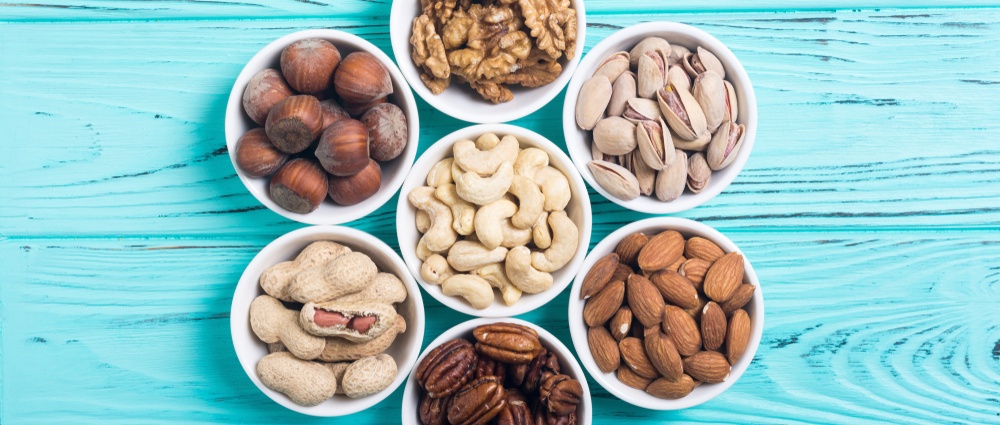
8 high-protein nuts to boost your strength
Packed with protein, delicious, easy to eat, and versatile - nuts are a great source of fuel for people building their fitness and strength. But not all nuts are created equal, which is why we count down the top eight nuts you should eat while strength training and serve these up with tasty recipe ideas.
by Lynn Stephen

Diet and nutrition
How much protein do you need to build muscle?
If you wish to build muscle, there is no escaping the importance of protein. Why do we need protein to build muscle, and how much protein intake do we need to maximise muscle gain?
by Amberley Davis
Healthy living
Natural protein verses protein powder: which is better for strength training?
Consuming enough protein is essential for building strong muscles. Protein powder shakes are not a complete replacement for natural protein sources found in your food. However, you may consider supplementing your diet and strength-training regime with protein shakes. Before you decide if this is right for you, there are several benefits and considerations to take into account.
by Amberley Davis
Related patient information and medicines

Patient information leaflet
Vaccines and egg allergies
Some types of vaccine are made using a process that involves chicken eggs or chicken embryos, and contain small amounts of egg protein. Egg allergy is one of the most common food allergies, especially in children. In the past, people with egg allergies have been told to avoid having any vaccines made with chicken eggs, due to concerns about.

Patient information leaflet
Rubella
However, if a pregnant woman has the rubella virus, it is likely to cause serious damage to the unborn child or cause a miscarriage. Rubella can lead to damage to the heart, brain, hearing and sight. The baby is likely to be born with a very serious condition called the congenital rubella syndrome. Since rubella immunisation was introduced in 1970.
Patient information leaflet
Immunisation
This leaflet provides information about the normal immunisation schedule for people in the UK. Normal immunisation schedule UK 2026 Immunisation Schedule This is the complete routine immunisation schedule and includes the childhood immunisation schedule, including the routine injections for babies, children aged 1 year, children in their.

Patient information leaflet
Liver function tests
The usual liver function tests typically include the following: Bilirubin. Albumin. Total protein. Transferases (AST or SGOT and ALT or SGPT). These would normally be done if an abnormality is found with the basic liver function tests described here, or if a specific problem is suspected. They might include: Virus tests - for example, for.
Patient information leaflet
6-in-1 vaccine
The 6-in-1 vaccine used to be given as the 3-in-1 vaccine DTaP along with the polio vaccine which was given by mouth, but has gradually been extended so that it now protects against even more diseases. It is given in one single injection into the thigh from one single syringe. This leaflet explains when this vaccine is given and why. It also.
Patient information leaflet
Tetanus and the tetanus vaccine
All children and adults should have the tetanus vaccine. See your practice nurse if you think that you are not fully immunised. What is tetanus. Tetanus is an infection caused by a germ (bacterium) called Clostridium tetani which can attack the muscles and nervous system. It is a serious infection which can even be fatal. Tetanus germs (bacteria).
Further reading and references
- vacuolar protein sorting 13 homolog B; MedlinePlus, National Library of Medicine.
- Duplomb L, Duvet S, Picot D, Jego G, El Chehadeh-Djebbar S, Marle N, Gigot N, Aral B, Carmignac V, Thevenon J, Lopez E, Riviere JB, Klein A, Philippe C, Droin N, Blair E, Girodon F, Donadieu J, Bellanne-Chantelot C, Delva L, Michalski JC, Solary E, Faivre L, Foulquier F, Thauvin-Robinet C. Cohen syndrome is associated with major glycosylation defects. Hum Mol Genet. 2014 May 1;23(9):2391-9. doi: 10.1093/hmg/ddt630. Epub 2013 Dec 13.
- Falk MJ, Feiler HS, Neilson DE, Maxwell K, Lee JV, Segall SK, Robin NH, Wilhelmsen KC, Traskelin AL, Kolehmainen J, Lehesjoki AE, Wiznitzer M, Warman ML. Cohen syndrome in the Ohio Amish. Am J Med Genet A. 2004 Jul 1;128A(1):23-8. doi: 10.1002/ajmg.a.30033.
- Kolehmainen J, Black GC, Saarinen A, Chandler K, Clayton-Smith J, Traskelin AL, Perveen R, Kivitie-Kallio S, Norio R, Warburg M, Fryns JP, de la Chapelle A, Lehesjoki AE. Cohen syndrome is caused by mutations in a novel gene, COH1, encoding a transmembrane protein with a presumed role in vesicle-mediated sorting and intracellular protein transport. Am J Hum Genet. 2003 Jun;72(6):1359-69. doi: 10.1086/375454. Epub 2003 May 2.
- Limoge F, Faivre L, Gautier T, Petit JM, Gautier E, Masson D, Jego G, El Chehadeh-Djebbar S, Marle N, Carmignac V, Deckert V, Brindisi MC, Edery P, Ghoumid J, Blair E, Lagrost L, Thauvin-Robinet C, Duplomb L. Insulin response dysregulation explains abnormal fat storage and increased risk of diabetes mellitus type 2 in Cohen Syndrome. Hum Mol Genet. 2015 Dec 1;24(23):6603-13. doi: 10.1093/hmg/ddv366. Epub 2015 Sep 10.
- Seifert W, Holder-Espinasse M, Spranger S, Hoeltzenbein M, Rossier E, Dollfus H, Lacombe D, Verloes A, Chrzanowska KH, Maegawa GH, Chitayat D, Kotzot D, Huhle D, Meinecke P, Albrecht B, Mathijssen I, Leheup B, Raile K, Hennies HC, Horn D. Mutational spectrum of COH1 and clinical heterogeneity in Cohen syndrome. J Med Genet. 2006 May;43(5):e22. doi: 10.1136/jmg.2005.039867.
- Seifert W, Kuhnisch J, Maritzen T, Horn D, Haucke V, Hennies HC. Cohen syndrome-associated protein, COH1, is a novel, giant Golgi matrix protein required for Golgi integrity. J Biol Chem. 2011 Oct 28;286(43):37665-75. doi: 10.1074/jbc.M111.267971. Epub 2011 Aug 24.
- Seifert W, Kuhnisch J, Maritzen T, Lommatzsch S, Hennies HC, Bachmann S, Horn D, Haucke V. Cohen syndrome-associated protein COH1 physically and functionally interacts with the small GTPase RAB6 at the Golgi complex and directs neurite outgrowth. J Biol Chem. 2015 Feb 6;290(6):3349-58. doi: 10.1074/jbc.M114.608174. Epub 2014 Dec 9.
- Wang H, Xin B, Wensel C, Traboulsi EI. Cohen Syndrome. 2006 Aug 29 [updated 2025 Dec 4]. In: Adam MP, Bick S, Mirzaa GM, Wallace SE, Amemiya A, editors. GeneReviews(R) [Internet]. Seattle (WA): University of Washington, Seattle; 1993-2026. Available from http://www.ncbi.nlm.nih.gov/books/NBK1482/
Share your thoughts or experiences with others in our patient communities.
Simple access to trusted treatments and health services online.
Common conditions
Get help with common conditions through the NHS, without a GP appointment.





Sign up to the Patient newsletter
Your weekly dose of clear, trustworthy health advice - written to help you feel informed, confident and in control.
By subscribing you accept our Privacy Policy. You can unsubscribe at any time. We never sell your data.