What is DNA?
Meets Patient’s editorial guidelines
- DownloadDownload
- Share
- Language
- Discussion
- Ask Patient
- Audio Version
- Add to preferred sources on Google
DNA, or deoxyribonucleic acid, is the hereditary material in humans and almost all other organisms. Nearly every cell in a person’s body has the same DNA. Most DNA is located in the cell nucleus (where it is called nuclear DNA), but a small amount of DNA can also be found in the mitochondria (where it is called mitochondrial DNA or mtDNA). Mitochondria are structures within cells that convert the energy from food into a form that cells can use.
Video picks for Understanding geneticsVideo library
Overview
DNA, or deoxyribonucleic acid, is the hereditary material in humans and almost all other organisms. Nearly every cell in a person’s body has the same DNA. Most DNA is located in the cell nucleus (where it is called nuclear DNA), but a small amount of DNA can also be found in the mitochondria (where it is called mitochondrial DNA or mtDNA). Mitochondria are structures within cells that convert the energy from food into a form that cells can use.
The information in DNA is stored as a code made up of four chemical bases: adenine (A), guanine (G), cytosine (C), and thymine (T). Human DNA consists of about 3 billion bases, and more than 99 percent of those bases are the same in all people. The order, or sequence, of these bases determines the information available for building and maintaining an organism, similar to the way in which letters of the alphabet appear in a certain order to form words and sentences.
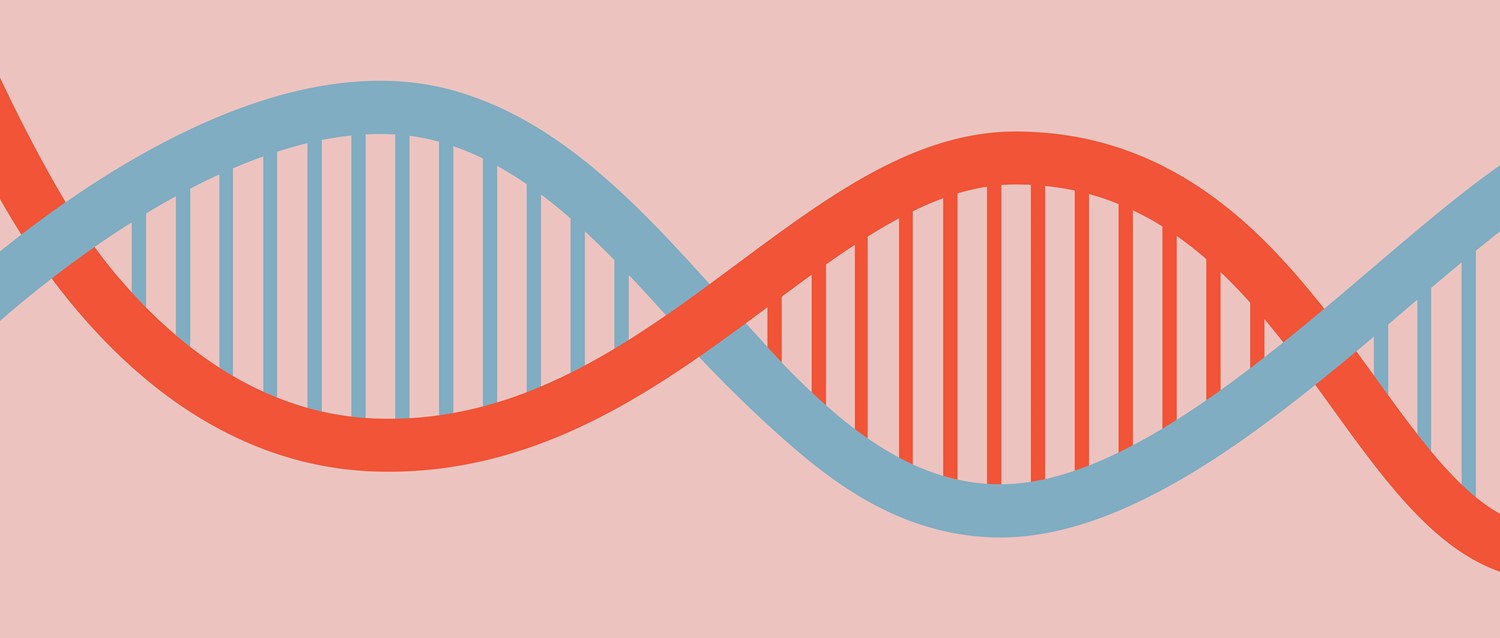
DNA bases pair up with each other, A with T and C with G, to form units called base pairs. Each base is also attached to a sugar molecule and a phosphate molecule. Together, a base, sugar, and phosphate are called a nucleotide. Nucleotides are arranged in two long strands that form a spiral called a double helix. The structure of the double helix is somewhat like a ladder, with the base pairs forming the ladder’s rungs and the sugar and phosphate molecules forming the vertical sidepieces of the ladder.
An important property of DNA is that it can replicate, or make copies of itself. Each strand of DNA in the double helix can serve as a pattern for duplicating the sequence of bases. This is critical when cells divide because each new cell needs to have an exact copy of the DNA present in the old cell.
Patient picks for Understanding genetics

Tests and investigations
Is DNA testing a good idea?
'DIY' genetic tests are heavily hyped these days - they claim to be able to predict your risk of dementia, cancer, heart disease and much more. But should you shell out your money for them? Absolutely not, according to most doctors. However, there are situations where DNA tests can save lives.
by Dr Sarah Jarvis
Children's health
What is a genetic disorder?
It's estimated that one in 25 children in the UK are affected by a genetic disorder - that's around 30,000 babies and children being newly diagnosed each year. Ahead of Jeans for Genes Day on Friday 21st September, an expert reveals seven things you probably didn't know about genetic conditions.
by Natalie Healey

Health research
What is a clinical trial?
We need clinical trials to understand how new treatments work on people. If successful, they may eventually be used in the real world by those who need them for a better quality of life. Find out all about how clinical trials work, along with personal insights from Alice - who has participated in around 50 trials over his life.
by Amberley Davis

Allergies, blood and immune system
What is gluten intolerance?
Gluten intolerance, also known as non-coeliac gluten sensitivity, is a food intolerance toward the protein gluten that can cause discomfort and pain after it's eaten. Not to be confused with coeliac disease - an autoimmune disease caused by gluten - the symptoms of gluten intolerance are short-lasting. By contrast, coeliac disease can have serious long-term consequences if left untreated. Both are managed through the adoption of a gluten-free diet.
by Amberley Davis
Allergies, blood and immune system
What is blood?
Blood is made up of liquid (plasma) and various different types of cells. An average-sized man has about 5-6 litres of blood in his body; a woman has slightly less. Blood has many different functions - detailed below.
by Dr Jacqueline Payne, FRCGP
Diet and nutrition
What is your gut microbiome?
Let’s talk about something small that has a big impact on your health - the gut microbiome. This hidden universe of microbes plays an important role in your wellbeing. How you treat these tiny residents can make a world of difference to how you feel.
by Victoria Raw
Related patient information and medicines

Patient information leaflet
Genetic testing
Genetic testing is a type of medical test that identifies changes in chromosomes, genes or proteins. Genetic tests examine a person's DNA in a variety of ways to assess a person's genetic health. They are all designed to identify a particular gene that may cause a genetic disorder. What are DNA, genes and chromosomes. Your body is... DNA in.

Patient information leaflet
Lupus
If your sympt... Most people with lupus have an antibody called antinuclear antibody (. (Antibodies are small proteins that are part of the immune system.). Another antibody called anti-double-stranded DNA (anti-dsDNA) is often present in people with lupus. Various other antibodies are also associated with lupus. However, these antibodies can also.

Patient information leaflet
Causes of cancer
Different parts of the body such as organs, bones, muscles, skin and blood are made up from different specialised cells. Most cells have a centre called a nucleus. The nucleus in each cell contains thousands of genes which are made up from a chemical called DNA. The genes are like codes which control the functions of the cell. For example,.

Patient information leaflet
Chorionic villus sampling
It is not a standard test done in pregnancy, but is usually offe... A note about DNA, genes and chromosomes In most cells of your body you have 46 chromosomes arranged in 23 pairs. 22 of the pairs are matching pairs. The 23rd pair is the sex chromosomes, which match exactly in women (who have two X chromosomes) but not in men (who have one X and.
Patient information leaflet
Muscular dystrophy
Muscular dystrophy is an inherited (genetic) disorder causing muscle weakness. There are different types of muscular dystrophy, which vary as to how severe they are, ranging from very mild to severe. The different types also vary a... What causes muscular dystrophy. The cause is an abnormal or 'faulty' gene. Genes are made from a biological.

Patient information leaflet
Amniocentesis
The most common reason for a pregnant woman to be offer... A note about DNA, genes and chromosomes In most cells of your body you have 46 chromosomes arranged in 23 pairs. 22 of the pairs are matching pairs. Chromosomes are made of DNA, which stands for 'deoxyribonucleic acid'. This is your genetic material. It is found in the nucleus of every.
Further reading and references
- What is DNA?; MedlinePlus, National Library of Medicine.
Share your thoughts or experiences with others in our patient communities.
Simple access to trusted treatments and health services online.
Common conditions
Get help with common conditions through the NHS, without a GP appointment.





Sign up to the Patient newsletter
Your weekly dose of clear, trustworthy health advice - written to help you feel informed, confident and in control.
By subscribing you accept our Privacy Policy. You can unsubscribe at any time. We never sell your data.