Is temperament determined by genetics?
Meets Patient’s editorial guidelines
- DownloadDownload
- Share
- Language
- Discussion
- Ask Patient
- Audio Version
- Add to preferred sources on Google
Temperament includes behavioural traits such as sociability (outgoing or shy), emotionality (easy-going or quick to react), activity level (high or low energy), attention level (focused or easily distracted), and persistence (determined or easily discouraged). These examples represent a spectrum of common characteristics, each of which may be advantageous in certain circumstances. Temperament remains fairly consistent, particularly throughout adulthood.
Video picks for Understanding geneticsVideo library
Overview
Temperament includes behavioural traits such as sociability (outgoing or shy), emotionality (easy-going or quick to react), activity level (high or low energy), attention level (focused or easily distracted), and persistence (determined or easily discouraged). These examples represent a spectrum of common characteristics, each of which may be advantageous in certain circumstances. Temperament remains fairly consistent, particularly throughout adulthood.
Similar temperaments within a family may be attributable to shared genetics and to the environment in which an individual is raised. Studies of identical twins (who share 100 percent of their DNA) and their non-twin siblings (who share about 50 percent of their DNA) show that genetics play a large role. Identical twins typically have very similar temperaments when compared with their other siblings. Even identical twins who were raised apart from one another in separate households share such traits.
Scientists estimate that 20 to 60 percent of temperament is determined by genetics. Temperament, however, does not have a clear pattern of inheritance and there are not specific genes that confer specific temperamental traits. Instead, many (perhaps thousands) of common gene variations (polymorphisms) combine to influence individual characteristics of temperament. Other DNA modifications that do not alter DNA sequences (epigenetic changes) also likely contribute to temperament.
Large studies have identified several genes that play a role in temperament. Many of these genes are involved in communication between cells in the brain. Certain gene variations may contribute to particular traits related to temperament. For example, variants in the DRD2 and DRD4 genes have been linked to a desire to seek out new experiences, and KATNAL2 gene variants are associated with self-discipline and carefulness. Variants affecting the PCDH15 and WSCD2 genes are associated with sociability, while some MAOA gene variants may be linked to introversion, particularly in certain environments. Variants in several genes, such as SLC6A4, AGBL2, BAIAP2, CELF4, L3MBTL2, LINGO2, XKR6, ZC3H7B, OLFM4, MEF2C, and TMEM161B contribute to anxiousness or depression.
Environmental factors also play a role in temperament by influencing gene activity. In children raised in an adverse environment (such as one of child abuse and violence), genes that increase the risk of impulsive temperamental characteristics may be turned on (activated). However, a child who grows up in a positive environment (for example a safe and loving home) may have a calmer temperament, in part because a different set of genes is activated
Patient picks for Understanding genetics

Brain and nerves
Young-onset dementia is linked to health and lifestyle, as well as genetics
Many of us fear dementia, not to mention developing it while we're young, but little is known about whether we can prevent it. However, a breakthrough study has identified 15 significant factors linked to young-onset dementia, which develops before the age of 65. And many of these are influenced by your health and lifestyle choices. With around 370,000 people developing young-onset dementia each year worldwide, experts believe this research brings us closer to finding ways to prevent, identify, and treat this devastating disease.
by Amberley Davis
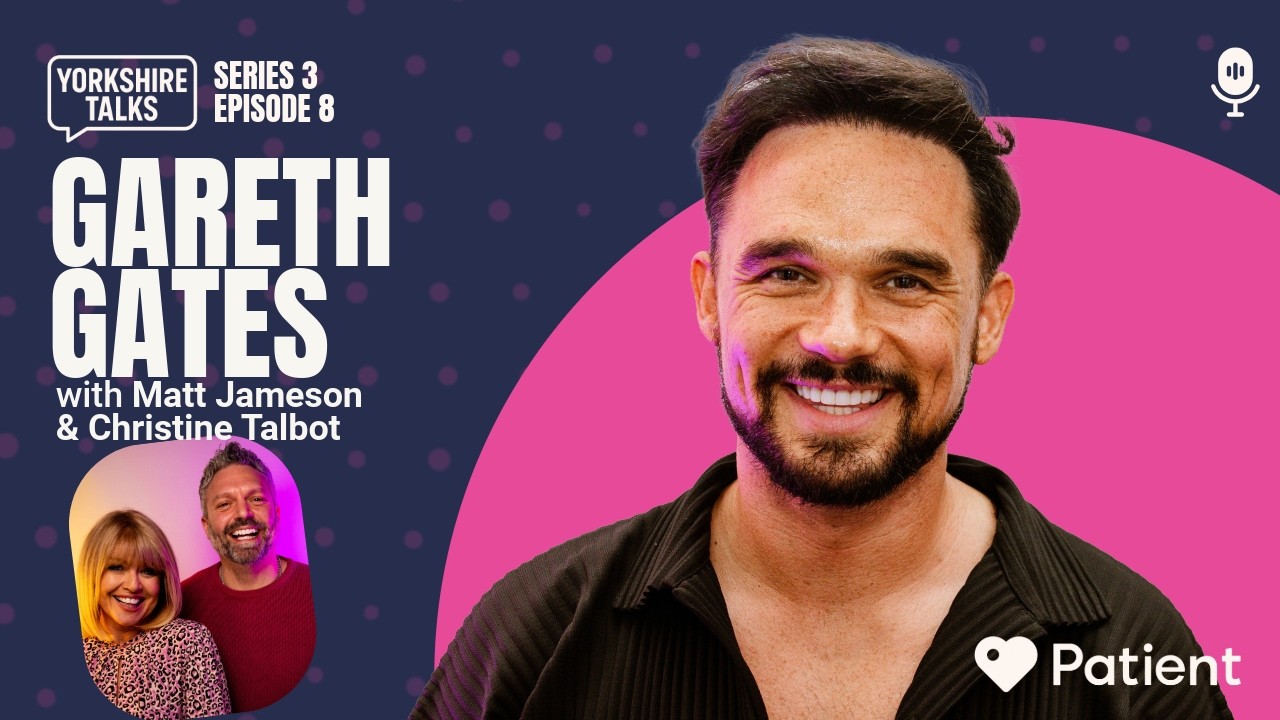
Yorkshire talks series 3
Gareth Gates: "I believed I was defective — my stammer was my superpower" | Yorkshire Talks
In our final episode of Series Three, our Yorkshire Talks guest is former Pop Idol star, producer and performer Gareth Gates. Bradford lad Gareth was first interviewed by Christine for a YTV talent show for young people nearly 30 years ago — so this episode was a bit of a reunion. Now all grown up, Gareth joins Matt and Christine to talk openly and honestly about his journey: from being bullied at school and living with a debilitating stammer, to reaching the final of the very first Pop Idol and having his whole life changed overnight. Gareth explains how taking part in the McGuire Programme has helped him manage his stammer, and how his experiences have shaped the work he does today. He also chats about his role in Boyband in the Buff, currently touring, his journey into becoming a music producer and entrepreneur, and his exciting new project — Speechless, a musical about stammering, due to hit the stage next year. Now a dad himself, with a daughter the same age he was when he first found fame, Gareth reflects on the last few decades with warmth, honesty and plenty of Yorkshire humour. 🎙️ It's a fascinating, funny and incredibly inspiring conversation — one you won't want to miss. If you enjoy the episode, don't forget to LIKE, SUBSCRIBE and leave us a comment. Follow Gareth: 📸 Instagram: @gareth_gates See Gareth on tour: 🎭 Boyband in the Buff is currently on tour. Find tour dates here: [paste official tour dates link] See Gareth in Beauty and the Beast: ✨ Gareth stars as the Beast in Beauty and the Beast at the Britannia Pier, Great Yarmouth, 8–31 December: britannia-pier.co.uk Follow the hosts: Matt Jameson: @matt_d_jameson Christine Talbot: @christineetalbot Yorkshire Talks is presented by Christine Talbot and Matt Jameson, and produced by Simon Fogal at Chapter 81 Studios in Leeds. Proudly sponsored by Patient.info.

Podcasts
Making work work
Work can take up so much of our waking hours but how often do we look at our relationship with work. Are you a workaholic or just going through the motions? Does it inspire or drain you? What about the people we work with: colleagues, managers and those unrequited crushes or unwanted attentions? When it comes to work, things can get complicated. Clare and Aileen delve into the tangled world of work to help you think about your relationship with work and give tips on how to navigate those complex relationships in the workplace.
by Thomas Andrew Porteus, MBCS
Podcasts
Green eyes
Have you ever had that knot in your stomach when your partner is spending a lot of time with someone else, or that emotional reaction when a colleague gets promoted over you? Then it’s likely you’ve experienced this week’s topic: jealousy. In this episode, Clare and Aileen discuss what jealousy is, where it comes from and tips on what you can do about it. They will give you a set of tools to help you work with your jealous emotions in a better way when you feel them welling up inside you.
by Thomas Andrew Porteus, MBCS

Diet and nutrition
What is the carnivore diet and is it healthy?
The carnivore diet is one of the fastest-growing dietary trends on social media. Far from your average high-protein low-carb diet, on the carnivore diet you eat meat, and meat alone. If this sounds questionable for your health and contrary to mainstream nutritional advice, that's because it is.
by Victoria Raw

Yorkshire talks series 3
Matthew Haywood: BBC Survivor Winner on Strategy & Men's Mental Health | Yorkshire Talks
This week on Yorkshire Talks, Christine and Matt are joined by Matthew Haywood, winner of the BBC's Survivor. At just 21 years old, Matthew travelled halfway around the world, lived on a remote beach, battled the elements, built crucial alliances and outplayed every other contestant to become the sole survivor — walking away with the £100,000 prize. In this episode, we talk about: • What it was really like competing on Survivor. • The strategy behind winning without creating unnecessary drama. • Life after the show, and building a successful outdoor adventure platform on social media. • Why he's passionate about supporting young men's mental health. • The lessons resilience, teamwork and adversity have taught him. • His love of football and family, and his lovely bond with his late gran — watch out for his emotional special item at the end. Whether you're a fan of Survivor, love stories of resilience and adventure, or are interested in honest conversations about mental health, this is an episode you won't want to miss. Watch now — and don't forget to LIKE, SUBSCRIBE and share if you enjoy the conversation. Follow: Matthew Haywood on TikTok: @matthewhaywoodx Matthew Haywood on Instagram: @matthewhaywoodx Matt Jameson: @matt_d_jameson Christine Talbot: @christineetalbot Yorkshire Talks is proudly sponsored by Patient.info and produced by @chapter_81 #YorkshireTalks #MatthewHaywood #BBCSurvivor #Survivor #MensMentalHealth #Resilience #Adventure #InspirationalStories #Podcast
Related patient information and medicines

Patient information leaflet
Genetic testing
Genetic testing is a type of medical test that identifies changes in chromosomes, genes or proteins. Genetic tests examine a person's DNA in a variety of ways to assess a person's genetic health. They are all designed to identify a particular gene that may cause a genetic disorder. We all have 46 chromosomes in our cells. Genes are short sections.

Patient information leaflet
ADHD in adults
Attention deficit hyperactivity disorder (ADHD) causes problems with concentrating (inattention), and being too active and having difficulty staying focused (hyperactivity). ADHD is the extreme of behavioural traits that are common. Genetics play an important role in whether someone has ADHD. Therefore ADHD can occur in different ways: Common.

Patient information leaflet
Cri du chat syndrome
Cri du chat syndrome is a chromosome problem caused by a missing piece of chromosome 5. The syndrome is called cri du chat (French for cry of the cat) because affected babies often have a high-pitched cry. Understanding chromosomes and cell division Chromosomes are found in the centre (nucleus) of a cell. They carry genetic information in the form.

Patient information leaflet
Selective mutism
Causes of... It was once believed that selective mutism was the result of childhood abuse, trauma, or upheaval. However, research now suggests that selective mutism is related to extreme social anxiety and that genetic factors probably play a role. Selective mutism may be more likely if the parents have social anxiety. Other potential causes.

Patient information leaflet
Klinefelter's syndrome
Klinefelter's syndrome is a genetic condition that only affects males. Affected males have an extra X chromosome. It is sometimes just called XXY. A physique which is less muscular ... That is they will not be able to father a baby without medical help. ServiceUpsellPlaceholder Causes of Klinefelter's syndrome KS is a genetic condition but it is.
Patient information leaflet
Avoidant personality disorder
Avoidant personality disorder al... Causes of avoidant personality disorder The exact cause of avoidant personality disorder isn’t known. However, it’s believed that both genetics and environment play a role. Shyness, often normal in young children, lasts into adolescents and adulthood in those with avoidant personality disorder. Those with.
Further reading and references
- Is temperament determined by genetics?; MedlinePlus, National Library of Medicine.
- Power RA, Pluess M. Heritability estimates of the big five personality traits based on common genetic variants. Translational Psychiatry (2015) 5, e604; doi:10.1038/tp.2015.96; published online 14 July 2015. PubMed: 26171985 PubMed Central: PMC5068715
- Zwir I, Arnedo J, Del-Val C, Pulkki-Råback L, Konte B, Yang SS, Romero-Zaliz R, Hintsanen M, Cloninger KM, Garcia D, Svrakic DM, Rozsa S, Martinez M, Lyytikäinen LP, Giegling I, Kähönen M, Hernandez-Cuervo H, Seppälä I, Raitoharju E, de Erausquin GA, Raitakari O, Rujescu D, Postolache TT, Sung J, Keltikangas-Järvinen L, Lehtimäki T, Cloninger CR. Uncovering the complex genetics of human temperament. Mol Psychiatry. 2020 Oct;25(10):2275-2294. doi: 10.1038/s41380-018-0264-5. Epub 2018 Oct 2. PMID: 30279457. Free full-text available from PubMed Central: PMC7515831.
Share your thoughts or experiences with others in our patient communities.
Simple access to trusted treatments and health services online.
Common conditions
Get help with common conditions through the NHS, without a GP appointment.





Sign up to the Patient newsletter
Your weekly dose of clear, trustworthy health advice - written to help you feel informed, confident and in control.
By subscribing you accept our Privacy Policy. You can unsubscribe at any time. We never sell your data.