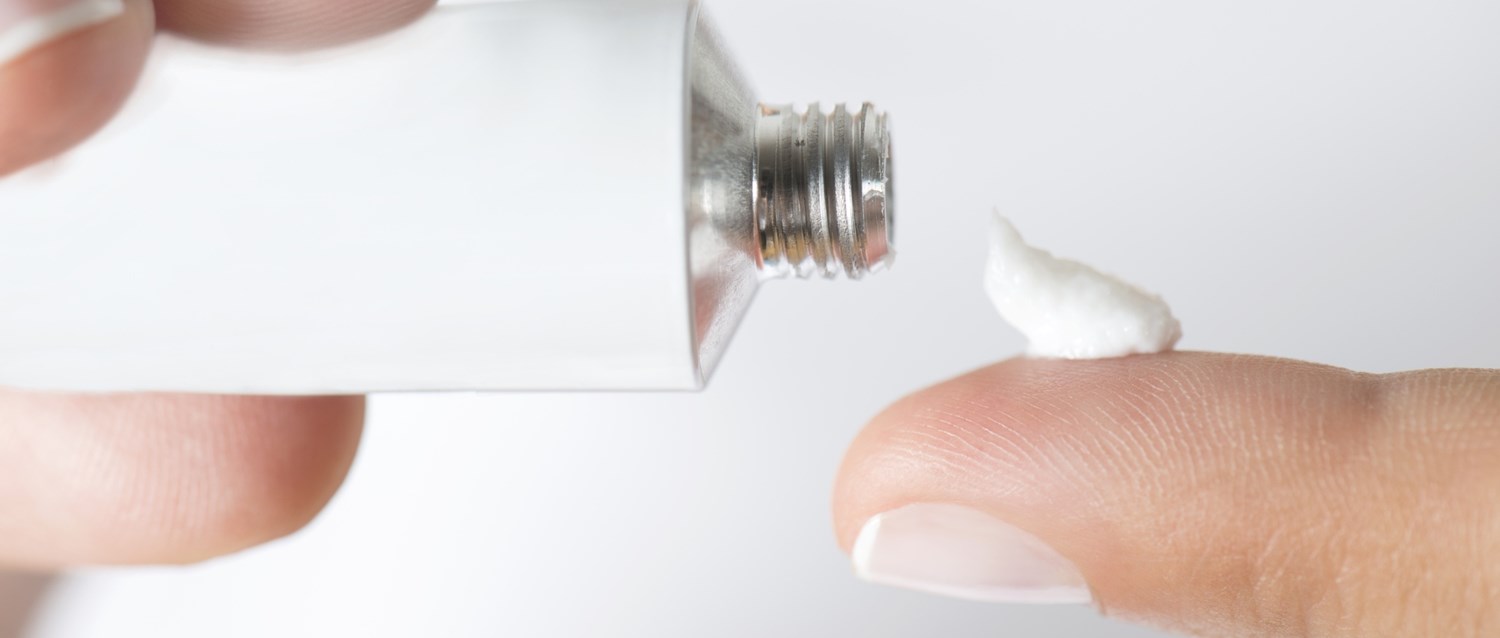
How to use eye ointment
Peer reviewed by Prof Cathy Jackson, MRCGPAuthored by Dr Mary Harding, MRCGPOriginally published 11 Oct 2017
Meets Patient’s editorial guidelines
- DownloadDownload
- Share
- Language
- Discussion
- Ask Patient
- Audio Version
- Add to preferred sources on Google
This leaflet gives general advice on how to use most eye ointments. However, you may be given specific instructions which may vary from the advice below. Ask your pharmacist if you have any queries.
Video picks for Eye health Video library
Using an eye ointment
Wash your hands well before you use the eye ointment.
Sit or stand in front of a mirror.
Remove the cap from the tube.
Tilt your head back a little and pull the lower lid of your eye out to form a pocket.
Hold the tube upside down near to your eye.
Apply enough pressure to the tube to release a thin line of ointment along the inside of the lower eyelid. Try not to touch your eye as you do this.
Close your eye for a moment or two and then blink a few times to spread the ointment around the inside of your eye.
Your vision may become a little blurred after you use an eye ointment. If you blink several times after you apply your eye ointment your vision should clear. Try not to rub your eyes.
Repeat the process in your other eye if both eyes are affected.
When you have finished, remember to replace the cap on the tube in order to prevent the ointment from becoming contaminated. Try not to touch the top of the tube.
Some points about eye ointments
Eye ointments are free from germs (sterile) before the bottle top is opened. Once it is opened:
Keep the tube closed in a cool, dark place (unless otherwise advised).
Do not let the top of the tube touch your eye, fingers, or any other surface. This is to keep it free from germs such as bacteria.
Do not let anyone else use your eye ointment and do not use anyone else's eye ointment yourself.
Throw out the tube (and get a new one if required) after the recommended time. This is often four weeks after first opening the tube. Never keep opened tubes to use later. There is a risk that the ointment may become infected if it is kept and used for longer than advised. You may wish to write the date that you opened the tube on the label so you will know when it is time to throw it out.
Some eye ointments sting or irritate for a short while. Rarely, some people are allergic to some eye ointments. Tell your doctor if eye symptoms become worse after using an eye ointment.
Do not wear contact lenses whilst using eye ointments unless otherwise advised. (Some drugs and preservatives in eye ointments can accumulate in soft contact lenses and may cause harm.)
Keep eye ointments out of children's reach.
Giving eye ointment to children
This will depend on the age and co-operation of the child but can be a challenge. Depending on their age, you can:
Sit the child with their head tilted back.
Lay them flat on their back.
Ask another adult to hold them securely.
Wrap a baby or young child in a blanket to keep their arms and legs still.
Then apply the ointment in the same way as above, taking care not to let the tube contact your child's eyelashes, eyes or skin.
Using other eye ointments or drops
If you need to use two eye ointments, you should apply one of the eye ointments as per the instructions above; then, wait about half an hour before you apply the second eye ointment. This is in order to allow enough time for the first eye ointment to be absorbed.
If you have been prescribed an eye drop as well as an eye ointment you should normally apply the eye drop first. Wait five minutes and then apply your eye ointment. See also separate leaflet called How to Use Eye Drops.
For more detailed information see the leaflet that came with your medicine.
Patient picks for Eye health

Signs and symptoms
Dry eyes
Dry eyes can affect anyone. They are usually nothing to worry about and can often be treated at home. Artificial tears, gels, and soothing ointments usually ease symptoms.
by Dr Colin Tidy, MRCGP

Eye health
Eye infection (herpes simplex)
A herpes simplex eye infection, or eye herpes, is a viral infection caused by the herpes simplex virus (HSV). It can damage the eye and affect vision, so see a doctor if your eye becomes red, sore, or painful, especially after having a cold sore.
by Dr Hayley Willacy, FRCGP

Eye health
Halloween and Bonfire Night - how to protect your eyes this spooky season
With Halloween and Bonfire Night falling so close together, they can feel like one big celebration, ushering in autumn's darker, spookier nights. From dressing up in frightening costumes to gazing at dazzling firework displays, there’s plenty of fun to be had. But while we’re all for getting into the spirit of the season, it’s important to stay safe, too. An ophthalmologist shares his advice on protecting your eyes, so you can enjoy the festivities without putting your vision at risk.
by Victoria Raw
Eye health
Amblyopia (lazy eye)
Amblyopia (often called a lazy eye) means that vision in one eye does not develop fully during early childhood. Amblyopia is usually a correctable problem if it is treated early. Late treatment can mean that the sight problem remains permanent. A squint (strabismus) is one of the most common causes of amblyopia. Treatment of amblyopia involves making the lazy eye work harder to see. This is usually done by blocking the vision in the good eye with a patch or by making the eyesight in the good eye blurry by using atropine eye drops.
by Dr Philippa Vincent, MRCGP

Eye health
Top 10 tips for dry eye relief
Dry eyes happen for various reasons. While not usually serious, they can be uncomfortable. Fortunately, there are several things you can do to treat dry eyes and find relief from symptoms.
by Victoria Raw
Eye health
How to look after your eyes while working from home
Eye strain has become increasingly common following advances in technology. 95% of households now own at least one mobile phone - yet just a generation (25 years) ago, more than 5 in 6 households didn't have a single mobile between them. As for computers, household ownership has increased from 27% in 1995 to almost 90% today. We're spending more time staring at screens, possibly more than ever now that many employees are working from home. However, it's important we don't let our eyes suffer as a result.
by Emily Jane Bashforth
About the authorView full bio
Authored by

Dr Mary Harding, MRCGP
General Practitioner, Medical Author
BA, MA, MB, BChir, MRCGP, DFFP
Dr Mary Harding qualified from Cambridge University medical school in 1989.
About the reviewerView full bio

Prof Cathy Jackson, MRCGP
Medical Author
BSc (Hons) Physiology, MB, ChB, MRCGP, MD
Professor Cathy Jackson graduated from Manchester Medical School having gained a first-class honours degree in physiology along the way.
Article history
Article also available in English, German, Spanish, French, Italian, Portuguese, Hindi, Hebrew, Arabic, and Swedish.
11 Oct 2017 | Originally published
Authored by:
Dr Mary Harding, MRCGPPeer reviewed by
Prof Cathy Jackson, MRCGP
Share your thoughts or experiences with others in our patient communities.
Sign up to the Patient newsletter
Your weekly dose of clear, trustworthy health advice - written to help you feel informed, confident and in control.
By subscribing you accept our Privacy Policy. You can unsubscribe at any time. We never sell your data.