What causes our skin to break out in hives?
Peer reviewed by Dr Sarah JarvisAuthored by Sarah GrahamOriginally published 5 Apr 2019
Meets Patient’s editorial guidelines
- DownloadDownload
- Share
- Language
- Discussion
- Ask Patient
- Audio Version
- Add to preferred sources on Google
Hives - also known as urticaria - is a relatively common itchy rash that causes red or white bumps on the skin. According to the British Association of Dermatologists (BAD), it affects around one in five people at some point in their lives, and in around half of cases the trigger is unknown. But, if you're breaking out in hives, here's what could be behind those itchy bumps.
Explore tablets for allergy symptoms
Get expert healthcare advice from the comfort of home. Complete a quick online consultation, available 24/7, with your request reviewed by a UK-registered clinician. Next day delivery available on eligible treatments.

Video picks for Skin rashesVideo library
"Hives is caused by the release of histamine from skin cells called mast cells," explains Dr Justine Kluk of the British Association of Dermatologists.
These chemicals cause fluid to leak from tiny blood vessels just under the surface of your skin, and it's this fluid that forms those bumpy weals on the skin. Meanwhile, histamine chemicals also cause your blood vessels to widen, or dilate, which makes those red or white bumps flare up.
"It typically causes itchy pink or white raised areas of skin, which can look like nettle rash. These areas, known as weals, can appear anywhere on the body and may move from one site on the skin to another over a 24-hour period," Kluk says.
So what triggers the release of histamines? Known triggers include physical stimuli, coming into contact with an allergen, skin contact with certain substances, and viral infections like a cold or flu. However, Kluk explains: "In people with the most common type of hives - spontaneous hives - a trigger is not normally identified."
Physical triggers
Possible physical triggers include heat, cold, sweat, physical pressure, or tight clothes, as well as specific foods and alcohol. Food allergies, reactions to bites or stings, and allergies to certain medications can also all act as triggers for hives, while some people develop the rash after coming into direct skin contact with certain cosmetics, perfumes, plants, latex, or chemicals.
If you're suffering from hives, Kluk also recommends avoiding the medicines codeine, aspirin, ibuprofen and naproxen, which, she says "can increase the release of histamine from mast cells, thus acting as a driver for the hives".
Stress has also been shown to lower the threshold for many skin conditions to flare up, although Kluk says she wouldn't expect it to be the only reason for hives appearing.
Chronic hives
In chronic cases, where the rash is persistent, Kluk says: "You may have an underlying medical condition that is driving the process, and this would typically be investigated through blood testing."
This type of urticaria, she adds, may also be triggered by factors in the blood, such as antibodies which work against the mast cells.
"If this is suspected, a dermatologist or allergist will include this in their panel of blood tests."
Chronic hives is uncommon, however, and is defined as hives lasting for more than six weeks. Acute (short-lived) hives develops suddenly and typically only lasts 24-48 hours. In some cases, the rash may only last a few hours, but any episode of hives lasting less than six weeks is considered 'acute', even if you suffer from recurring flare-ups.
Treating hives
When it comes to tackling hives, Kluk says: "Treatments can be used to suppress the symptoms, rather than curing the condition. The most common treatment is antihistamine tablets, which block the effect of histamine and reduce the itch and rash."
If you experience recurring hives regularly, she explains, your doctor will likely recommend that you take an antihistamine daily to keep the symptoms at bay.
"Other treatment options for hives may include oral steroids," Kluk adds. "And, in people with severe chronic spontaneous hives, a new biological treatment injection called omalizumab has been made available in specialist clinics."
Avoiding triggers
If you know what tends to trigger your hives, the best course of action is obviously to steer clear as much as possible. However, as Kluk points out: "Triggers vary between patients, so there are no set rules for how to avoid triggering hives."
Keeping a symptom diary or going for an allergy test can be useful for working out if there's a specific trigger - for example, if you're more likely to develop hives after eating a certain food or coming into contact with a particular substance. You can then try avoiding or cutting these out to see if it helps stave off the rash.
Patient picks for Skin rashes
Skin, nail and hair health
Hives
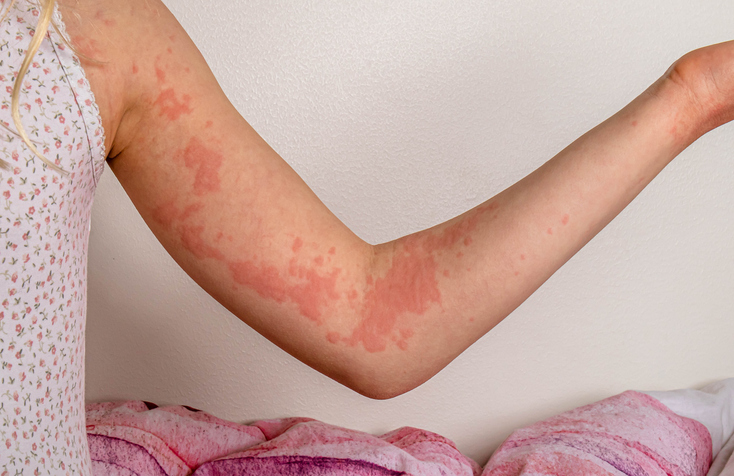
Hives (also called urticaria) are itchy red or white bumps on the skin that look like a nettle rash. Hives are common and are often caused by an allergic reaction, stress, infections, or certain medications. Most hives get better on their own within a few days. This leaflet discusses the causes, types, and treatment for hives.
by Dr Philippa Vincent, MRCGP
Skin, nail and hair health
Dry skin in winter: what cold weather can do to your skin
Cold weather can be tough on our skin, and dry skin in winter can cause or inflame a number of skin conditions. Lesser known effects of winter weather include allergic reactions and the spread of infections that also trigger skin problems.
by Amberley Davis

Skin, nail and hair health
What are the common causes of summer rashes?
Higher temperatures or sun exposure can sometimes be bad news for skin, resulting in summer rashes. Skin rashes can be more common in hot or humid conditions - particularly heat rash - so if you or your child have a new rash at this time of year there could be a number of different causes.
by Lawrence Higgins

Infections
Viral skin infections
Viral skin infections are a wide group of conditions. They can be a reaction to a virus inside your body, or they can be an actual infection of your skin. They range from the entirely harmless, to the quite serious (but not usually life-threatening). Some are contagious; others you can touch without catching.
by Dr Toni Hazell, FRCGP

Infections
Yeast infection
A yeast infection is usually not serious and is usually easily treated with an antifungal cream.
by Dr Hayley Willacy, FRCGP

Hormones
The 'second puberty': why you might be breaking out in your thirties
If you’re in your late thirties, you may have noticed a sudden outbreak of spots - something that feels a lot like acne, even though you thought you’d left your teenage skin behind. Some people even call it a ‘second puberty’. But according to dermatologist Dr Shamsa Kanwal, it’s actually a hormonal shift that changes how your skin behaves as you approach midlife.
by Victoria Raw
About the authorView full bio
Authored by

Sarah Graham
Freelance health journalist
MA, Newspaper, Journalism
Sarah Graham is an award-winning freelance health journalist, and founder of the feminist women's health blog Hysterical Women.
About the reviewerView full bio

Dr Sarah Jarvis
Clinical Consultant
MA (Cantab), BM, BCh (Oxon), DRCOG, FRCGP, MBE
After training in medicine at Cambridge and Oxford, Dr Sarah Jarvis MBE became a GP.
Article history
Article also available in English, German, Spanish, French, Italian, Portuguese, Hindi, Hebrew, Arabic, and Swedish.
5 Apr 2019 | Originally published
Authored by:
Sarah GrahamPeer reviewed by
Dr Sarah Jarvis
Share your thoughts or experiences with others in our patient communities.
Sign up to the Patient newsletter
Your weekly dose of clear, trustworthy health advice - written to help you feel informed, confident and in control.
By subscribing you accept our Privacy Policy. You can unsubscribe at any time. We never sell your data.