Chromosome 13
Last updated 9 Sept 2021
Meets Patient’s editorial guidelines
- DownloadDownload
- Share
- Language
- Discussion
- Ask Patient
- Audio Version
- Add to preferred sources on Google
Humans normally have 46 chromosomes in each cell, divided into 23 pairs. Two copies of chromosome 13, one copy inherited from each parent, form one of the pairs. Chromosome 13 is made up of about 115 million DNA building blocks (base pairs) and represents between 3.5 and 4 percent of the total DNA in cells.
Video picks for Chromosomes and mitochondrial DNAVideo library
Description
Humans normally have 46 chromosomes in each cell, divided into 23 pairs. Two copies of chromosome 13, one copy inherited from each parent, form one of the pairs. Chromosome 13 is made up of about 115 million DNA building blocks (base pairs) and represents between 3.5 and 4 percent of the total DNA in cells.
Identifying genes on each chromosome is an active area of genetic research. Because researchers use different approaches to predict the number of genes on each chromosome, the estimated number of genes varies. Chromosome 13 likely contains 300 to 400 genes that provide instructions for making proteins. These proteins perform a variety of different roles in the body.
Conditions referring to this gene or chromosome
Patient picks for Chromosomes and mitochondrial DNA
Medicine
Pneumococcal vaccine for babies and children
Pneumococcal vaccine is offered as part of the UK childhood immunisation schedule. It helps to protect against infections such as pneumonia and meningitis. The vaccine will be injected into your child's leg or upper arm. The most common side-effects are tenderness at the site of the injection, a raised temperature (mild fever) and lack of appetite. These should soon pass.
by Michael Stewart, MRPharmS
Medicine
Pneumococcal vaccines for adults and children
Pneumococcal vaccines help to protect against infections such as pneumonia and meningitis. The vaccine will be injected into a muscle or under the surface of your skin. The most common side-effects are tenderness at the site of the injection, a raised temperature (mild fever), feeling tired, and head/muscle aches. These should soon pass.
by Michael Stewart, MRPharmS
The sex and relationships podcast
The Arousal Paradox I The Sex and Relationships Podcast I S1E2
When Porn or Hollywood are your sex educators, it can get confusing when things don’t work that way for us! Why is it that the things that are supposed to turn us on, sometimes turn us off? How come our desires can vary or be so different from our partner’s? Dip into some of things Clare and Janet chat about in this episode: 05:12 Where are you on the arousal scale? 09:02 Why does one person have more desire for sex than another? Do you understand how your sexual arousal system works? 13:14 How biological difficulties can affect sexual desire. 17:10 The impact of stress and obesity on attraction and desire. 18:22 What are the things that turn you on and what turns you off? Emily Nagoski: Come As You Are 24:51 The way you feel about your body affects your arousal. Want to know more? Visit our website The Sex and Relationships Podcast for more information on the issues discussed in this episode: [https://thesexandrelationshipspodcast.com/](https://thesexandrelationshipspodcast.com/) You can also Ask Clare a question or suggest a topic for future episodes. Follow us on social media: Instagram: [https://www.instagram.com/s3x_and_relationships_podcast/profilecard/?igsh=MXIza3BxeWg3OTJxOA%3D%3D](https://www.instagram.com/s3x_and_relationships_podcast/profilecard/?igsh=MXIza3BxeWg3OTJxOA%3D%3D) Facebook: [https://www.facebook.com/people/The-Sex-and-Relationships-Podcast-With-Therapists-Clare-Janet/61558082319934/](https://www.facebook.com/people/The-Sex-and-Relationships-Podcast-With-Therapists-Clare-Janet/61558082319934/) About The Sex and Relationships Podcast: This podcast is for anyone looking for information or help with their sex lives or relationships. Your hosts Clare Prendergast and Janet Eccles are sex and relationship therapists. In each episode they chat about common problems they see in the therapy room and draw on their years of experience to give you some insights, advice and top tips to help guide you through your relationships and sex lives.

The sexual health series
Gonorrhoea - Symptoms, testing and treatment
Gonorrhoea is an infection affecting mainly the genital areas. It can also affect the throat and eyes. Very occasionally the infection can spread to other parts of the body. In this video, you'll find out more about gonorrhoea, including the symptoms, how it gets tested, treatments and if it can cause any complications. *Design and video production by Cáit Hanstock, Georgia Townsend, and the team at Wowvi.* Visit our website to find out more: [https://patient.info/sexual-health/sexually-transmitted-infections-leaflet/gonorrhoea](https://patient.info/sexual-health/sexually-transmitted-infections-leaflet/gonorrhoea) #gonorrhea #sexualhealtheducation 00:00 - 00:29 - Introduction to Dr Krishna and the sexual health series 00:36 - 00:47 - What is gonorrhoea? 00:49 - 01:11 - What are the symptoms of gonorrhoea? 01:13 - 01:33 - How can gonorrhoea be treated? 01:34 - 02:17 - How do you get tested for gonorrhoea? 02:18 - 03:10 - What complications are there for gonorrhoea?
by Dr Krishna Vakharia, MRCGP

The sex and relationships podcast
Victims and Villains I The Sex and Relationships Podcast I S1E6
Clare and Janet explore the relationship issues that lead to arguments and how to do conflict better. Dip into some of things Clare and Janet chat about in this episode: 00:43 Shouting, crying, slamming doors, walking away, silence - common reactions to arguments but what’s really going on in conflict? What are you really fighting for? 13:30 So what to do about conflict in relationships? How to understand conflict through Karpman's Drama Triangle 23:24 Why having some ‘me’ time is really important for improving relationships. 26:56 Janet’s 10 minute exercise to help you manage relationship issues and arguments better. 34:45 Clare and Janet’s top tips Want to know more? If you want to hear more about why it’s so important for your relationships to have ‘me’ time listen to episode 9 Me-topia: [https://www.youtube.com/watch?v=_OeNvaVV6Hg](https://www.youtube.com/watch?v=_OeNvaVV6Hg) Visit our website The Sex and Relationships Podcast for more information on the issues discussed in this episode: [https://thesexandrelationshipspodcast.com/](https://thesexandrelationshipspodcast.com/) You can also Ask Clare a question or suggest a topic for future episodes. Follow us on social media: Instagram: [https://www.instagram.com/s3x_and_relationships_podcast/profilecard/?igsh=MXIza3BxeWg3OTJxOA%3D%3D](https://www.instagram.com/s3x_and_relationships_podcast/profilecard/?igsh=MXIza3BxeWg3OTJxOA%3D%3D) Facebook: [https://www.facebook.com/people/The-Sex-and-Relationships-Podcast-With-Therapists-Clare-Janet/61558082319934/](https://www.facebook.com/people/The-Sex-and-Relationships-Podcast-With-Therapists-Clare-Janet/61558082319934/) About The Sex and Relationships Podcast: This podcast is for anyone looking for information or help with their sex lives or relationships. Your hosts Clare Prendergast and Janet Eccles are sex and relationship therapists. In each episode they chat about common problems they see in the therapy room and draw on their years of experience to give you some insights, advice and top tips to help guide you through your relationships and sex lives.

Miscarriage
What is a miscarriage?
Dr Lesley Regan The most common cause of bleeding after the time of the missed period is miscarriage. Miscarriage is the loss of a pregnancy at any time up to the 24th week. A loss after this time is called a stillbirth. At least 8 miscarriages out of 10 actually occur before 13 weeks of pregnancy. These are called early miscarriages. A late miscarriage is one that happens from 13 weeks to 24 weeks of pregnancy.
by Prof Lesley Regan, FRCOG
Related patient information and medicines

Patient information leaflet
Retinoblastoma
Retinoblastoma is an uncommon cancer of the eye which occurs in children under the age of 5. This leaflet describes retinoblastoma. Retinoblastoma is a genetic disease. Genetic diseases are disorders of the 46 chromosomes which contain the coding (DNA) that our body needs in order to build and grow its cells. Retinoblastoma is caused by.

Patient information leaflet
Wilson's disease
Wilson's disease is a genetic disorder in which copper builds up in the body, mainly in the liver and brain. Without any treatment, the build-up of copper can cause serious symptoms. Treatment is with medication to remov... Hence, Wilson's disease is sometimes also called hepatolenticular degeneration. What causes Wilson's disease. In Wilson's.
Patient information leaflet
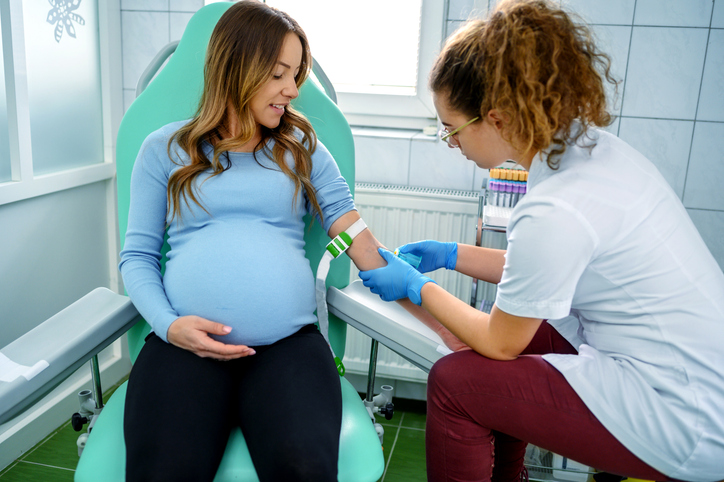
Pregnancy screening tests
Down's syndrome Down's syndrome Down's syndrome is a genetic chromosomal problem that some people are born with. A person with Down's syndrom... Someone with Down's syndrome has an extra copy of chromosome number 21 in the cells of their body. Edwards' and Patau's syndrome Babies with Edwards' syndrome and Patau's syndrome have an extra copy of.

Patient information leaflet
Down's syndrome screening
There are two different types of tests that can be done to look for Down's syndrome during pregnancy - a screening test and a diagnostic test. What is Down's syndrome. Down's syndrome is a genetic chromosome problem that some people are born with. This gives a more accurate ... You can choose to have NIPT for Down's syndrome alone; just for.

Patient information leaflet
Acute lymphoblastic leukaemia
Acute lymphoblastic leukaemia (ALL) is a condition where the bone marrow makes large numbers of abnormal immature lymphocytes. ... are done on abnormal cells obtained from the bone marrow sample or bloodThe chromosomes within the cells are checked for certain changes. (These changes in chromosomes only occur in the leukaemia cells, not the normal.
Patient information leaflet
Molar pregnancy
Dr Sarah Jarvis MBE A hydatidiform mole is a growing mass of tissue inside your womb (uterus) that will not develop into a baby. How does conception work. Chromosomes are found in the centre (the nucleus) of the cells in your body. They carry genetic information in the form of genes. Most of the cells in your body contain 46 sets of chromosomes.
Further reading and references
- Chromosome 13; MedlinePlus, National Library of Medicine.
- Baud O, Cormier-Daire V, Lyonnet S, Desjardins L, Turleau C, Doz F. Dysmorphic phenotype and neurological impairment in 22 retinoblastoma patients with constitutional cytogenetic 13q deletion. Clin Genet. 1999 Jun;55(6):478-82. doi: 10.1034/j.1399-0004.1999.550614.x.
- de Pontual L, Yao E, Callier P, Faivre L, Drouin V, Cariou S, Van Haeringen A, Genevieve D, Goldenberg A, Oufadem M, Manouvrier S, Munnich A, Vidigal JA, Vekemans M, Lyonnet S, Henrion-Caude A, Ventura A, Amiel J. Germline deletion of the miR-17 approximately 92 cluster causes skeletal and growth defects in humans. Nat Genet. 2011 Sep 4;43(10):1026-30. doi: 10.1038/ng.915.
- Dunham A, Matthews LH, Burton J, Ashurst JL, Howe KL, Ashcroft KJ, Beare DM, Burford DC, Hunt SE, Griffiths-Jones S, Jones MC, Keenan SJ, Oliver K, Scott CE, Ainscough R, Almeida JP, Ambrose KD, Andrews DT, Ashwell RI, Babbage AK, Bagguley CL, Bailey J, Bannerjee R, Barlow KF, Bates K, Beasley H, Bird CP, Bray-Allen S, Brown AJ, Brown JY, Burrill W, Carder C, Carter NP, Chapman JC, Clamp ME, Clark SY, Clarke G, Clee CM, Clegg SC, Cobley V, Collins JE, Corby N, Coville GJ, Deloukas P, Dhami P, Dunham I, Dunn M, Earthrowl ME, Ellington AG, Faulkner L, Frankish AG, Frankland J, French L, Garner P, Garnett J, Gilbert JG, Gilson CJ, Ghori J, Grafham DV, Gribble SM, Griffiths C, Hall RE, Hammond S, Harley JL, Hart EA, Heath PD, Howden PJ, Huckle EJ, Hunt PJ, Hunt AR, Johnson C, Johnson D, Kay M, Kimberley AM, King A, Laird GK, Langford CJ, Lawlor S, Leongamornlert DA, Lloyd DM, Lloyd C, Loveland JE, Lovell J, Martin S, Mashreghi-Mohammadi M, McLaren SJ, McMurray A, Milne S, Moore MJ, Nickerson T, Palmer SA, Pearce AV, Peck AI, Pelan S, Phillimore B, Porter KM, Rice CM, Searle S, Sehra HK, Shownkeen R, Skuce CD, Smith M, Steward CA, Sycamore N, Tester J, Thomas DW, Tracey A, Tromans A, Tubby B, Wall M, Wallis JM, West AP, Whitehead SL, Willey DL, Wilming L, Wray PW, Wright MW, Young L, Coulson A, Durbin R, Hubbard T, Sulston JE, Beck S, Bentley DR, Rogers J, Ross MT. The DNA sequence and analysis of human chromosome 13. Nature. 2004 Apr 1;428(6982):522-8. doi: 10.1038/nature02379.
- Ensembl Human Map View: Chromosome 13
- Gilbert F. Chromosome 13. Genet Test. 2000;4(1):85-94. doi: 10.1089/109065700316543. No abstract available.
- Hall HE, Chan ER, Collins A, Judis L, Shirley S, Surti U, Hoffner L, Cockwell AE, Jacobs PA, Hassold TJ. The origin of trisomy 13. Am J Med Genet A. 2007 Oct 1;143A(19):2242-8. doi: 10.1002/ajmg.a.31913.
- Hemmat M, Rumple MJ, Mahon LW, Strom CM, Anguiano A, Talai M, Nguyen B, Boyar FZ. Short stature, digit anomalies and dysmorphic facial features are associated with the duplication of miR-17 ~ 92 cluster. Mol Cytogenet. 2014 Apr 16;7:27. doi: 10.1186/1755-8166-7-27. eCollection 2014.
- Jackson CC, Medeiros LJ, Miranda RN. 8p11 myeloproliferative syndrome: a review. Hum Pathol. 2010 Apr;41(4):461-76. doi: 10.1016/j.humpath.2009.11.003.
- Kannu P, Campos-Xavier AB, Hull D, Martinet D, Ballhausen D, Bonafe L. Post-axial polydactyly type A2, overgrowth and autistic traits associated with a chromosome 13q31.3 microduplication encompassing miR-17-92 and GPC5. Eur J Med Genet. 2013 Aug;56(8):452-7. doi: 10.1016/j.ejmg.2013.06.001. Epub 2013 Jun 20.
- Kivela T, Tuppurainen K, Riikonen P, Vapalahti M. Retinoblastoma associated with chromosomal 13q14 deletion mosaicism. Ophthalmology. 2003 Oct;110(10):1983-8. doi: 10.1016/S0161-6420(03)00484-6.
- UCSC Genome Browser: Statistics
- Xiao S, Nalabolu SR, Aster JC, Ma J, Abruzzo L, Jaffe ES, Stone R, Weissman SM, Hudson TJ, Fletcher JA. FGFR1 is fused with a novel zinc-finger gene, ZNF198, in the t(8;13) leukaemia/lymphoma syndrome. Nat Genet. 1998 Jan;18(1):84-7. doi: 10.1038/ng0198-84.
Share your thoughts or experiences with others in our patient communities.
Simple access to trusted treatments and health services online.
Common conditions
Get help with common conditions through the NHS, without a GP appointment.





Sign up to the Patient newsletter
Your weekly dose of clear, trustworthy health advice - written to help you feel informed, confident and in control.
By subscribing you accept our Privacy Policy. You can unsubscribe at any time. We never sell your data.