ADCY5-related dyskinesia
Last updated 18 Aug 2023
Meets Patient’s editorial guidelines
- DownloadDownload
- Share
- Language
- Discussion
- Ask Patient
- Audio Version
- Add to preferred sources on Google
ADCY5-related dyskinesia is a movement disorder; the term "dyskinesia" refers to abnormal involuntary movements. The abnormal movements that occur in ADCY5-related dyskinesia typically appear as sudden (paroxysmal) jerks, twitches, tremors, muscle tensing (dystonia), or writhing (choreiform) movements, and can affect the limbs, neck, and face.
Video picks for Genetic conditionsVideo library
Description
ADCY5-related dyskinesia is a movement disorder; the term "dyskinesia" refers to abnormal involuntary movements. The abnormal movements that occur in ADCY5-related dyskinesia typically appear as sudden (paroxysmal) jerks, twitches, tremors, muscle tensing (dystonia), or writhing (choreiform) movements, and can affect the limbs, neck, and face.
The abnormal movements associated with ADCY5-related dyskinesia usually begin between infancy and late adolescence. They can occur continually during waking hours, and frequently also disturb sleep. The involuntary movements often occur when changing position, such as from sitting to standing, or when deliberately making other movements.
Severely affected infants may experience weak muscle tone (hypotonia) and delay in development of motor skills such as crawling and walking; later, these individuals may have difficulties with activities of daily living and may eventually require a wheelchair. In more mildly affected individuals, the condition has little impact on walking and other motor skills, although the abnormal movements can lead to clumsiness or difficulty with social acceptance in school or other situations.
In some people with ADCY5-related dyskinesia, the disorder is generally stable throughout their lifetime. In others, it slowly gets worse (progresses) in both frequency and severity before stabilizing or even improving in middle age. Anxiety, fatigue, and other stress can temporarily increase the severity of the signs and symptoms of ADCY5-related dyskinesia, while some affected individuals may experience remission periods of days or weeks without abnormal movements. Life expectancy is not usually affected by ADCY5-related dyskinesia, and most people with this condition have normal intelligence.
Inheritance patterns
The source lists the following possible inheritance patterns: Autosomal dominant. More than one pattern can apply in different cases.
Related genes
Other names
Familial dyskinesia with facial myokymia
FDFM
Patient picks for Genetic conditions

Chest and lungs
SARS and MERS virus
Severe acute respiratory syndrome (SARS) and Middle East respiratory syndrome (MERS) are viral infections. Both infections can cause very serious illnesses that particularly affect the lungs. SARS caused many infections, especially in Asia, in 2002-2004 but was not heard of for some time. A SARS-CoV-2 (COVID-19) outbreak emerged in Wuhan, China in December 2019. This spread rapidly and was declared a global pandemic in 2020. MERS was first recognised in the Middle East in 2012. Most of the initial infections were in the Middle East. However, by February 2018, the World Health Organization (WHO) had reported cases in many other countries.
by Dr Hayley Willacy, FRCGP

Travel and vaccinations
Dengue
Dengue (which used to be called dengue fever) is a viral illness which is very common in the tropics and subtropics. It is usually a flu-like illness lasting under a week but it can sometimes be very serious, even fatal.
by Dr Philippa Vincent, MRCGP

Travel and vaccinations
Jet lag
Jet lag occurs after travelling rapidly across several time zones, because the body's internal clock has not adjusted to the required sleep-wake cycle in the new time zone. Jet lag causes physical and psychological symptoms, the severity of which increases with the number of time zones crossed and direction of travel. Eastward travel, when hours are 'gained' is associated with worse jet lag than westward travel, when hours are 'lost.'
by Dr Hayley Willacy, FRCGP
Travel and vaccinations
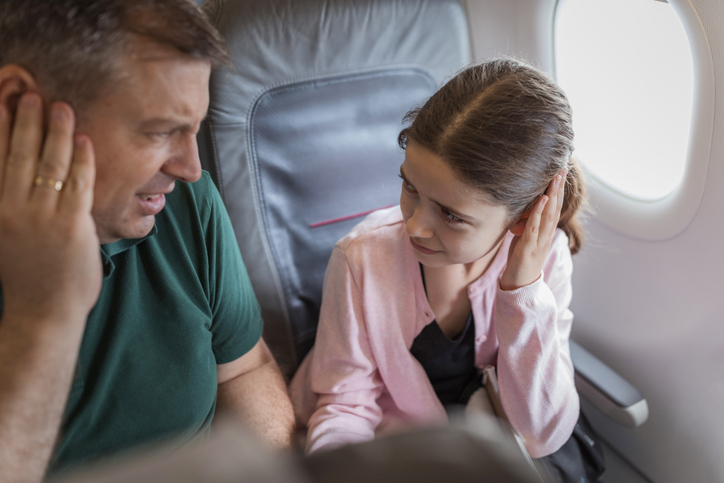
Ears and flying
Aeroplane ear, or the feeling of blocked or painful ears while flying, is caused by pressure changes. Usually your ears will settle soon after landing. Occasionally pain or a feeling of blockage drags on; if it does, see your doctor.
by Dr Doug McKechnie, MRCGP

Travel and vaccinations
Ebola
Ebola is a viral infection, which mainly occurs in West and Equatorial Africa. There is as yet no vaccine or cure for Ebola, and about 4 out of 10 of those infected die of the disease. The risk of becoming infected with Ebola in the UK is very small. Ebola is spread by close contact with an infected person. People with Ebola become infectious when they have symptoms.
by Dr Mary Elisabeth Lowth, FRCGP

Travel and vaccinations
Schistosomiasis
Schistosomiasis is a tropical disease caused by an infection with parasitic worms. In the past it was more commonly known as Bilharzia. Many people do not develop symptoms of acute schistosomiasis, or their symptoms may be mild and go unrecognised. Diagnosis is usually made by testing the urine or poo (faeces) or through a blood test. Treatment is with a medicine called praziquantel. Many people recover completely following treatment.
by Dr Surangi Mendis, MRCGP
Related patient information and medicines

Patient information leaflet
Antipsychotic medicines
Movement disorders develop in some cases. These include: Parkinsonism - this can cause symptoms similar to those that occur in people with Parkinson's disease Parkinson's disease - for example, tremor and muscle stiffness. Tardive dyskinesia (TD) - this is a movement disorder that can occur in some people who have taken antipsychotics for several.

Patient information leaflet
Blepharospasm
Tardive dyskinesia (see below). Tourette's syndrom... Deep brain stimulation Deep brain stimulation has been used (very rarely) for blepharospasm which is a part of Meige syndrome. Is tardive dyskinesia related to blepharospasm. Tardive dyskinesia is a movement disorder that results from taking certain medication, particularly a class of medicines.

Patient information leaflet
Parkinson's disease
The main symptoms of Parkinson's disease are usually stiffness, shaking (tremor), and slowness of movement. Parkinson's disease is a progressive neurological degeneration of certain cells (called dopaminergic cells) within a specific part of the brain (substantia nigra). Three common PD symptoms that gradually develop are: Slowness of movement.

Patient information leaflet
Selective mutism
Selective mutism involves being unable to speak or communicate in specific social situations, such as at school, work, or in the community.

Patient information leaflet
Can I take Lansoprazole and Quetiapine together?
Taking lansoprazole and quetiapine together may increase the risk of a rare but serious heart rhythm problem. It can also potentially change how much quetiapine is absorbed into your body. Why this happens Lansoprazole Lansoprazole to reduce stomach acid reduces stomach acid, which can change how quetiapine Quetiapine dissolves and is absorbed. By.

Patient information leaflet
Can I take Atorvastatin and Maitake together?
Taking maitake mushrooms alongside atorvastatin may increase the risk of muscle-related side effects or liver irritation. It may also cause your blood sugar or cholesterol levels to drop lower than expected. Speak to your doctor before taking atorvastatin Atorvastatin tablets and maitake together as combining them may increase the risk of.
Further reading and references
- ADCY5-related dyskinesia; MedlinePlus, National Library of Medicine.
- Carapito R, Paul N, Untrau M, Le Gentil M, Ott L, Alsaleh G, Jochem P, Radosavljevic M, Le Caignec C, David A, Damier P, Isidor B, Bahram S. A de novo ADCY5 mutation causes early-onset autosomal dominant chorea and dystonia. Mov Disord. 2015 Mar;30(3):423-7. doi: 10.1002/mds.26115. Epub 2014 Dec 27.
- Chen DH, Meneret A, Friedman JR, Korvatska O, Gad A, Bonkowski ES, Stessman HA, Doummar D, Mignot C, Anheim M, Bernes S, Davis MY, Damon-Perriere N, Degos B, Grabli D, Gras D, Hisama FM, Mackenzie KM, Swanson PD, Tranchant C, Vidailhet M, Winesett S, Trouillard O, Amendola LM, Dorschner MO, Weiss M, Eichler EE, Torkamani A, Roze E, Bird TD, Raskind WH. ADCY5-related dyskinesia: Broader spectrum and genotype-phenotype correlations. Neurology. 2015 Dec 8;85(23):2026-35. doi: 10.1212/WNL.0000000000002058. Epub 2015 Nov 4.
- Chen YZ, Friedman JR, Chen DH, Chan GC, Bloss CS, Hisama FM, Topol SE, Carson AR, Pham PH, Bonkowski ES, Scott ER, Lee JK, Zhang G, Oliveira G, Xu J, Scott-Van Zeeland AA, Chen Q, Levy S, Topol EJ, Storm D, Swanson PD, Bird TD, Schork NJ, Raskind WH, Torkamani A. Gain-of-function ADCY5 mutations in familial dyskinesia with facial myokymia. Ann Neurol. 2014 Apr;75(4):542-9. doi: 10.1002/ana.24119. Epub 2014 Mar 13.
- Chen YZ, Matsushita MM, Robertson P, Rieder M, Girirajan S, Antonacci F, Lipe H, Eichler EE, Nickerson DA, Bird TD, Raskind WH. Autosomal dominant familial dyskinesia and facial myokymia: single exome sequencing identifies a mutation in adenylyl cyclase 5. Arch Neurol. 2012 May;69(5):630-5. doi: 10.1001/archneurol.2012.54.
- Mencacci NE, Erro R, Wiethoff S, Hersheson J, Ryten M, Balint B, Ganos C, Stamelou M, Quinn N, Houlden H, Wood NW, Bhatia KP. ADCY5 mutations are another cause of benign hereditary chorea. Neurology. 2015 Jul 7;85(1):80-8. doi: 10.1212/WNL.0000000000001720. Epub 2015 Jun 17.
- Raskind WH, Matsushita M, Peter B, Biberston J, Wolff J, Lipe H, Burbank R, Bird TD. Familial dyskinesia and facial myokymia (FDFM): Follow-up of a large family and linkage to chromosome 3p21-3q21. Am J Med Genet B Neuropsychiatr Genet. 2009 Jun 5;150B(4):570-4. doi: 10.1002/ajmg.b.30879.
Share your thoughts or experiences with others in our patient communities.
Simple access to trusted treatments and health services online.
Common conditions
Get help with common conditions through the NHS, without a GP appointment.





Sign up to the Patient newsletter
Your weekly dose of clear, trustworthy health advice - written to help you feel informed, confident and in control.
By subscribing you accept our Privacy Policy. You can unsubscribe at any time. We never sell your data.