Amyotrophic lateral sclerosis
Last updated 18 Aug 2023
Meets Patient’s editorial guidelines
- DownloadDownload
- Share
- Language
- Discussion
- Ask Patient
- Audio Version
- Add to preferred sources on Google
Amyotrophic lateral sclerosis (ALS) is a progressive disease that affects motor neurons, which are specialized nerve cells that control muscle movement. These nerve cells are found in the spinal cord and the brain. In ALS, motor neurons die (atrophy) over time, leading to muscle weakness, a loss of muscle mass, and an inability to control movement.
Video picks for Genetic conditionsVideo library
Description
Amyotrophic lateral sclerosis (ALS) is a progressive disease that affects motor neurons, which are specialized nerve cells that control muscle movement. These nerve cells are found in the spinal cord and the brain. In ALS, motor neurons die (atrophy) over time, leading to muscle weakness, a loss of muscle mass, and an inability to control movement.
There are many different types of ALS; these types are distinguished by their signs and symptoms and their genetic cause or lack of clear genetic association. Most people with ALS have a form of the condition that is described as sporadic, which means it occurs in people with no apparent history of the disorder in their family. People with sporadic ALS usually first develop features of the condition in their late fifties or early sixties. A small proportion of people with ALS, estimated at 5 to 10 percent, have a family history of ALS or a related condition called frontotemporal dementia (FTD), which is a progressive brain disorder that affects personality, behaviour, and language. The signs and symptoms of familial ALS typically first appear in one's late forties or early fifties. Rarely, people with familial ALS develop symptoms in childhood or their teenage years. These individuals have a rare form of the disorder known as juvenile ALS.
The first signs and symptoms of ALS may be so subtle that they are overlooked. The earliest symptoms include muscle twitching, cramping, stiffness, or weakness. Affected individuals may develop slurred speech (dysarthria) and, later, difficulty chewing or swallowing (dysphagia). Many people with ALS experience malnutrition because of reduced food intake due to dysphagia and an increase in their body's energy demands (metabolism) due to prolonged illness. Muscles become weaker as the disease progresses, and arms and legs begin to look thinner as muscle tissue atrophies. Individuals with ALS eventually lose muscle strength and the ability to walk. Affected individuals eventually become wheelchair-dependent and increasingly require help with personal care and other activities of daily living. Over time, muscle weakness causes affected individuals to lose the use of their hands and arms. Breathing becomes difficult because the muscles of the respiratory system weaken. Most people with ALS die from respiratory failure within 2 to 10 years after the signs and symptoms of ALS first appear; however, disease progression varies widely among affected individuals.
Approximately 20 percent of individuals with ALS also develop FTD. Changes in personality and behaviour may make it difficult for affected individuals to interact with others in a socially appropriate manner. Communication skills worsen as the disease progresses. It is unclear how the development of ALS and FTD are related. Individuals who develop both conditions are diagnosed as having ALS-FTD.
A rare form of ALS that often runs in families is known as ALS-parkinsonism-dementia complex (ALS-PDC). This disorder is characterised by the signs and symptoms of ALS, in addition to a pattern of movement abnormalities known as parkinsonism, and a progressive loss of intellectual function (dementia). Signs of parkinsonism include unusually slow movements (bradykinesia), stiffness, and tremors. Affected members of the same family can have different combinations of signs and symptoms.
Inheritance patterns
The source lists the following possible inheritance patterns: X-linked dominant; Not inherited; Autosomal dominant; Autosomal recessive. More than one pattern can apply in different cases.
Related genes
Other names
ALS
Amyotrophic lateral sclerosis with dementia
Charcot disease
Dementia with amyotrophic lateral sclerosis
Lou Gehrig disease
Motor neuron disease, amyotrophic lateral sclerosis
Patient picks for Genetic conditions
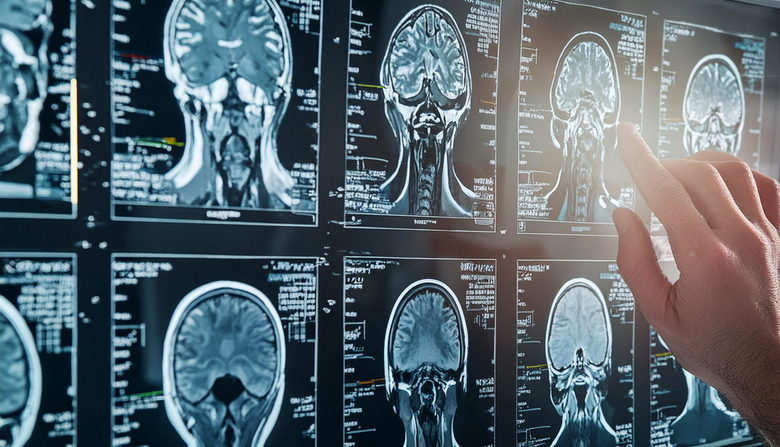
Brain and nerves
Multiple sclerosis
Multiple sclerosis is a disorder of the brain and spinal cord. It can cause various symptoms. In most cases, episodes of symptoms come and go for several years. In time, some symptoms can become permanent and can cause disability. Although there is no cure for multiple sclerosis, various medicines and therapies may reduce the number of flare-ups and can help to ease symptoms and disability.
by Dr Hayley Willacy, FRCGP
Allergies, blood and immune system
Systemic sclerosis
Systemic sclerosis is a type of scleroderma, which means hard skin. If you have scleroderma, you have areas of hardening of the skin. In systemic sclerosis, you can also get hardening of some of your internal organs. This stops them working normally. There are many possible symptoms and problems that may develop with systemic sclerosis because the extent of the disease can vary greatly from person to person. People with systemic sclerosis should have regular monitoring of blood pressure, blood and urine tests, and lung function, and should report any unexplained symptoms promptly to a doctor. Systemic sclerosis cannot be cured but there are various treatments which can help. Newer treatments have improved the outlook for this condition.
by Dr Colin Tidy, MRCGP

Preventative health
Rainbow Dance Seated
Sit comfortably toward the front of the chair with your feet flat on the floor, knees slightly apart and aligned with the hips. Keep the spine long and relaxed. Open your arms out to the sides, imagining you are holding a rainbow — each palm supporting one end of its arc. Gently shift your weight into one sit bone, and as you do, bend sideways toward the opposite side (so if you shift right, you lean left). Keep the movement soft and spacious, lifting through the ribs rather than collapsing. This gentle lateral stretch supports the Stomach meridian, traditionally linked with digestion and overall nourishment. The movement can also help release tension across the shoulders and encourage ease in the nervous system. Return to centre, switch sides, and continue flowing side to side, as though moving beneath a rainbow that arches and softens with each breath.

Lower body strength & conditioning exercises
Lateral Action Scissor Tap No Impact
The Lateral Action Scissor Tap No impact is a low-impact exercise focusing on lateral movement, involving scissor-like motions and tapping actions without creating an impact on your joints. This enhances lateral agility, improves lower body coordination, and engages muscles in the legs, including the quadriceps, hamstrings, glutes, and calves.

Lower body strength & conditioning exercises
Lateral Action Scissor Jump
Enhance your leg strength and agility with Lateral Action Scissor Jumps. In this exercise, you'll perform lateral jumps with scissor-like leg movements, engaging your Lower Body and promoting coordination. With this dynamic exercise, you will improve leg power and agility.
COVID-19
COVID-19: When should you do a lateral flow test and when should you do a PCR?
With the Omicron variant spreading rapidly, there is a high demand for both lateral flow and PCR tests to detect COVID-19. Double-vaccinated people in England are now being asked to take a lateral flow test daily for one week if they come into contact with someone with COVID-19, rather than self-isolate. But when else should you do a lateral flow test and when should you do a PCR?
by Lydia Smith
Related patient information and medicines
Patient information leaflet
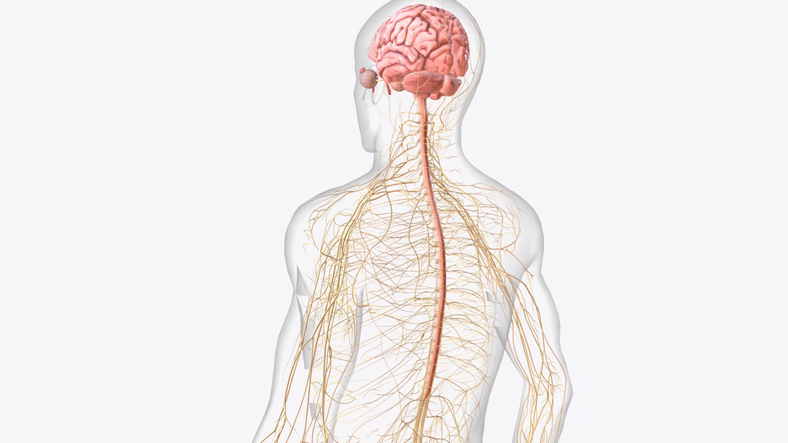
Motor neurone disease
Motor neurone disease (MND) is a neurological condition causes a progressive weakness and wasting of many of the muscles in the body. This leaflet is mainly about amyotrophic lateral sclerosis (ALS), which is the most common type of motor neurone disease. Types of motor neurone disease The main types of MND are: Amyotrophic lateral sclerosis (ALS).

Patient information leaflet
Immunisation for flu
Chronic kidney disease Chronic kidney disease. Chronic liver diseases. Neurological problems, including strokes Stroke , multiple sclerosis Multiple sclerosis , cerebral palsy, and severe learning disabilities, including Down's syndrome Down's syndrome. Diabetes Diabetes and adrenal insufficiency (for example, Addison's disease Addison's disease.
Patient information leaflet
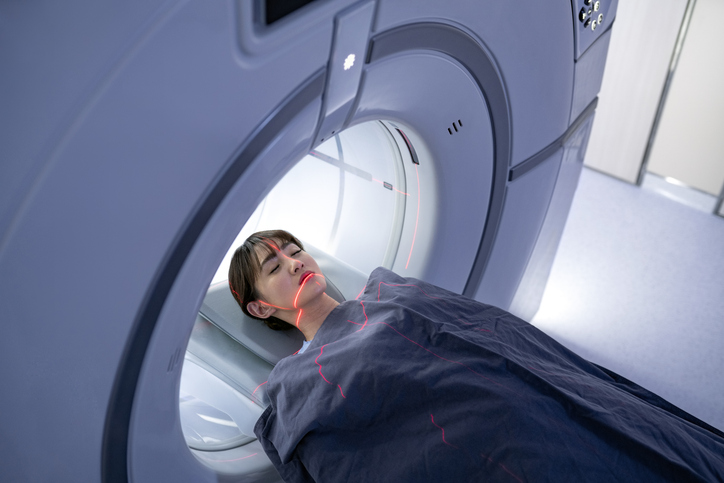
MRI scan
An MRI scan is a safe and painless test that can provide detailed pictures of organs and other structures inside your body. Note : the information below is a general guide only. Brain MRI is the first-choice investigation for brain tumours B... There is clear contrast between grey and white matter parts of the brain and this makes MRI the best.
Patient information leaflet
Functional neurological disorder
The term functional neurological disorder encompasses a wide range of symptoms that are often very debilitating. The difficulty is many of these symptoms are present in other neurological conditions like Parkinson's disease Parkinson's disease , multiple sclerosis Multiple sclerosis and epilepsy Epilepsy. What is known for certain is that the.

Patient information leaflet
COVID-19
Conditions causing weakened immune systems. Medical treatments causing weakened immune systems (like steroid medicines Oral steroids , antibody treatments, or chemotherapy Chemotherapy ). Rare conditions affecting the brain and nerves, like multiple sclerosis Multiple sclerosis , motor neurone disease Motor neurone disease , Huntington's disease.

Patient information leaflet
Joint pain
The list separates conditions usually affecting one joint from conditions affecting more. Connective tissue diseases For example, conditions such as systemic lupus erythematosus and scleroderma: connective tissue diseases affect tissues throughout the body, including tendons, ligaments, skin, eyes, cartilage, bone and bloo... See the separate.
Further reading and references
- Amyotrophic lateral sclerosis; MedlinePlus, National Library of Medicine.
- Andersen PM, Al-Chalabi A. Clinical genetics of amyotrophic lateral sclerosis: what do we really know? Nat Rev Neurol. 2011 Oct 11;7(11):603-15. doi: 10.1038/nrneurol.2011.150.
- Andersen PM. Amyotrophic lateral sclerosis associated with mutations in the CuZn superoxide dismutase gene. Curr Neurol Neurosci Rep. 2006 Jan;6(1):37-46. doi: 10.1007/s11910-996-0008-9.
- Chio A, Borghero G, Restagno G, Mora G, Drepper C, Traynor BJ, Sendtner M, Brunetti M, Ossola I, Calvo A, Pugliatti M, Sotgiu MA, Murru MR, Marrosu MG, Marrosu F, Marinou K, Mandrioli J, Sola P, Caponnetto C, Mancardi G, Mandich P, La Bella V, Spataro R, Conte A, Monsurro MR, Tedeschi G, Pisano F, Bartolomei I, Salvi F, Lauria Pinter G, Simone I, Logroscino G, Gambardella A, Quattrone A, Lunetta C, Volanti P, Zollino M, Penco S, Battistini S; ITALSGEN consortium; Renton AE, Majounie E, Abramzon Y, Conforti FL, Giannini F, Corbo M, Sabatelli M. Clinical characteristics of patients with familial amyotrophic lateral sclerosis carrying the pathogenic GGGGCC hexanucleotide repeat expansion of C9ORF72. Brain. 2012 Mar;135(Pt 3):784-93. doi: 10.1093/brain/awr366.
- Farg MA, Sundaramoorthy V, Sultana JM, Yang S, Atkinson RA, Levina V, Halloran MA, Gleeson PA, Blair IP, Soo KY, King AE, Atkin JD. C9ORF72, implicated in amytrophic lateral sclerosis and frontotemporal dementia, regulates endosomal trafficking. Hum Mol Genet. 2014 Jul 1;23(13):3579-95. doi: 10.1093/hmg/ddu068. Epub 2014 Feb 18.
- Fecto F, Siddique T. Making connections: pathology and genetics link amyotrophic lateral sclerosis with frontotemporal lobe dementia. J Mol Neurosci. 2011 Nov;45(3):663-75. doi: 10.1007/s12031-011-9637-9. Epub 2011 Sep 7.
- Ferraiuolo L, Kirby J, Grierson AJ, Sendtner M, Shaw PJ. Molecular pathways of motor neuron injury in amyotrophic lateral sclerosis. Nat Rev Neurol. 2011 Nov;7(11):616-30. doi: 10.1038/nrneurol.2011.152.
- Kiernan MC, Vucic S, Cheah BC, Turner MR, Eisen A, Hardiman O, Burrell JR, Zoing MC. Amyotrophic lateral sclerosis. Lancet. 2011 Mar 12;377(9769):942-55. doi: 10.1016/S0140-6736(10)61156-7. Epub 2011 Feb 4.
- Lattante S, Ciura S, Rouleau GA, Kabashi E. Defining the genetic connection linking amyotrophic lateral sclerosis (ALS) with frontotemporal dementia (FTD). Trends Genet. 2015 May;31(5):263-73. doi: 10.1016/j.tig.2015.03.005. Epub 2015 Apr 10.
- Ling SC, Polymenidou M, Cleveland DW. Converging mechanisms in ALS and FTD: disrupted RNA and protein homeostasis. Neuron. 2013 Aug 7;79(3):416-38. doi: 10.1016/j.neuron.2013.07.033.
- Marangi G, Traynor BJ. Genetic causes of amyotrophic lateral sclerosis: new genetic analysis methodologies entailing new opportunities and challenges. Brain Res. 2015 May 14;1607:75-93. doi: 10.1016/j.brainres.2014.10.009. Epub 2014 Oct 12.
- McGeer PL, Steele JC. The ALS/PDC syndrome of Guam: potential biomarkers for an enigmatic disorder. Prog Neurobiol. 2011 Dec;95(4):663-9. doi: 10.1016/j.pneurobio.2011.04.001. Epub 2011 Apr 20.
- National Institute of Neurological Disorders and Stroke
- Paganoni S, Macklin EA, Lee A, Murphy A, Chang J, Zipf A, Cudkowicz M, Atassi N. Diagnostic timelines and delays in diagnosing amyotrophic lateral sclerosis (ALS). Amyotroph Lateral Scler Frontotemporal Degener. 2014 Sep;15(5-6):453-6. doi: 10.3109/21678421.2014.903974. Epub 2014 Jul 1.
- Renton AE, Chio A, Traynor BJ. State of play in amyotrophic lateral sclerosis genetics. Nat Neurosci. 2014 Jan;17(1):17-23. doi: 10.1038/nn.3584. Epub 2013 Dec 26.
- Siddique N, Siddique T. Amyotrophic Lateral Sclerosis Overview. 2001 Mar 23 [updated 2023 Sep 28]. In: Adam MP, Bick S, Mirzaa GM, Wallace SE, Amemiya A, editors. GeneReviews(R) [Internet]. Seattle (WA): University of Washington, Seattle; 1993-2026. Available from http://www.ncbi.nlm.nih.gov/books/NBK1450/
- Vance C, Rogelj B, Hortobagyi T, De Vos KJ, Nishimura AL, Sreedharan J, Hu X, Smith B, Ruddy D, Wright P, Ganesalingam J, Williams KL, Tripathi V, Al-Saraj S, Al-Chalabi A, Leigh PN, Blair IP, Nicholson G, de Belleroche J, Gallo JM, Miller CC, Shaw CE. Mutations in FUS, an RNA processing protein, cause familial amyotrophic lateral sclerosis type 6. Science. 2009 Feb 27;323(5918):1208-1211. doi: 10.1126/science.1165942.
Share your thoughts or experiences with others in our patient communities.
Simple access to trusted treatments and health services online.
Common conditions
Get help with common conditions through the NHS, without a GP appointment.





Sign up to the Patient newsletter
Your weekly dose of clear, trustworthy health advice - written to help you feel informed, confident and in control.
By subscribing you accept our Privacy Policy. You can unsubscribe at any time. We never sell your data.