Chronic granulomatous disease
Last updated 18 Aug 2020
Meets Patient’s editorial guidelines
- DownloadDownload
- Share
- Language
- Discussion
- Audio Version
- Add to preferred sources on Google
Chronic granulomatous disease is a disorder that causes the immune system to malfunction, resulting in a form of immunodeficiency. Immunodeficiencies are conditions in which the immune system is not able to protect the body from foreign invaders such as bacteria and fungi. Individuals with chronic granulomatous disease may have recurrent bacterial and fungal infections. People with this condition may also have areas of inflammation (granulomas) in various tissues that can result in damage to those tissues. The features of chronic granulomatous disease usually first appear in childhood, although some individuals do not show symptoms until later in life.
Description
Chronic granulomatous disease is a disorder that causes the immune system to malfunction, resulting in a form of immunodeficiency. Immunodeficiencies are conditions in which the immune system is not able to protect the body from foreign invaders such as bacteria and fungi. Individuals with chronic granulomatous disease may have recurrent bacterial and fungal infections. People with this condition may also have areas of inflammation (granulomas) in various tissues that can result in damage to those tissues. The features of chronic granulomatous disease usually first appear in childhood, although some individuals do not show symptoms until later in life.
People with chronic granulomatous disease typically have at least one serious bacterial or fungal infection every 3 to 4 years. The lungs are the most frequent area of infection; pneumonia is a common feature of this condition. Individuals with chronic granulomatous disease may develop a type of fungal pneumonia, called mulch pneumonitis, which causes fever and shortness of breath after exposure to decaying organic materials such as mulch, hay, or dead leaves. Exposure to these organic materials and the numerous fungi involved in their decomposition causes people with chronic granulomatous disease to develop fungal infections in their lungs. Other common areas of infection in people with chronic granulomatous disease include the skin, liver, and lymph nodes.
Inflammation can occur in many different areas of the body in people with chronic granulomatous disease. Most commonly, granulomas occur in the gastrointestinal tract and the genitourinary tract. In many cases the intestinal wall is inflamed, causing a form of inflammatory bowel disease that varies in severity but can lead to stomach pain, diarrhea, bloody stool, nausea, and vomiting. Other common areas of inflammation in people with chronic granulomatous disease include the stomach, colon, and rectum, as well as the mouth, throat, and skin. Additionally, granulomas within the gastrointestinal tract can lead to tissue breakdown and pus production (abscesses). Inflammation in the stomach can prevent food from passing through to the intestines (gastric outlet obstruction), leading to an inability to digest food. These digestive problems cause vomiting after eating and weight loss. In the genitourinary tract, inflammation can occur in the kidneys and bladder. Inflammation of the lymph nodes (lymphadenitis) and bone marrow (osteomyelitis), which both produce immune cells, can lead to further impairment of the immune system.
Rarely, people with chronic granulomatous disease develop autoimmune disorders, which occur when the immune system malfunctions and attacks the body's own tissues and organs.
Repeated episodes of infection and inflammation reduce the life expectancy of individuals with chronic granulomatous disease; however, with treatment, most affected individuals live into mid- to late adulthood.
Inheritance patterns
The source lists the following possible inheritance patterns: Autosomal recessive; X-linked recessive. More than one pattern can apply in different cases.
Related genes
Other names
Autosomal recessive chronic granulomatous disease
CGD
Granulomatous disease, chronic
X-linked chronic granulomatous disease
Related patient information and medicines

Patient information leaflet
Chronic sinusitis
Chronic sinusitis is inflammation of the sinuses that lasts a long time, usually defined as 12 weeks or more. Examples include: Cystic fibrosis , a genetic condition which causes thick mucus that is difficult to clear from the lungs, sinuses, and elsewhere. Granulomatosis with polyangiitis , a rare condition causing inflammation of blood vessels..

Patient information leaflet
Chronic myeloid leukaemia
Chronic myeloid leukaemia (CML) is sometimes called chronic myelogenous leukaemia, chronic granulocytic leukaemia, or chronic myelocytic leukaemia. What is chronic myeloid leukaemia. Chronic myeloid leukaemia (CML) is sometimes called chronic myelogenous leukaemia, chronic granulocytic leukaemia, or chronic myelocytic leukaemia. CML develops due.

Patient information leaflet
Cat scratch disease
Cat scratch disease is a bacterial infection caused by cat scratches or bites. It causes swollen lymph nodes and other symptoms such as a fever. It usually goes away without treatment, but antibiotics are often used to help clea... What is cat scratch disease. Cat scratch disease is an infection caused by a bacterium called Bartonella henselae..
Patient information leaflet
Chronic kidney disease
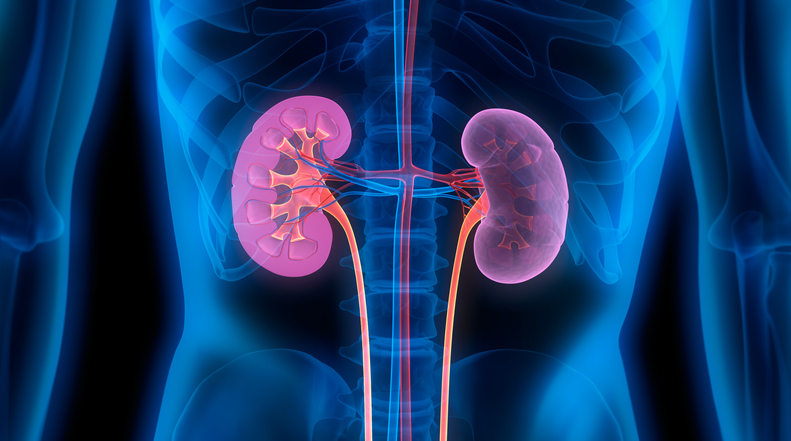
Chronic kidney disease means that the kidneys are not working as well as would be expected. Various conditions can cause chronic kidney disease. Severity can vary but most cases are mild or moderate, occur in older people and do not cause symptoms. Chronic kidney disease tends to become worse gradually over months or years. What is chronic kidney.

Patient information leaflet
Behçet's disease
Behçet's disease (also known as Behçet's syndrome) is a rare condition which causes frequent ulcers in your mouth and genital area and can affect different parts of your body. It most commonly affects your eyes and skin. It is more common in people from Mediterranean countries and also those from the Middle East and Eastern Asia. Various.

Patient information leaflet
IgA nephropathy
IgA nephropathy is a condition in which a protein causes damage to the kidneys. The protein is called immunoglobulin A or IgA. Nephropathy means an illness that damages the kidney. The main job of the kidneys is to clear waste materials from the body and maintain a normal balance of fluids and chemicals in the body. The kidneys also have other.
Further reading and references
- Chronic granulomatous disease; MedlinePlus, National Library of Medicine.
- Ben-Ari J, Wolach O, Gavrieli R, Wolach B. Infections associated with chronic granulomatous disease: linking genetics to phenotypic expression. Expert Rev Anti Infect Ther. 2012 Aug;10(8):881-94. doi: 10.1586/eri.12.77.
- Holland SM. Chronic granulomatous disease. Clin Rev Allergy Immunol. 2010 Feb;38(1):3-10. doi: 10.1007/s12016-009-8136-z.
- Kannengiesser C, Gerard B, El Benna J, Henri D, Kroviarski Y, Chollet-Martin S, Gougerot-Pocidalo MA, Elbim C, Grandchamp B. Molecular epidemiology of chronic granulomatous disease in a series of 80 kindreds: identification of 31 novel mutations. Hum Mutat. 2008 Sep;29(9):E132-49. doi: 10.1002/humu.20820.
- Martire B, Rondelli R, Soresina A, Pignata C, Broccoletti T, Finocchi A, Rossi P, Gattorno M, Rabusin M, Azzari C, Dellepiane RM, Pietrogrande MC, Trizzino A, Di Bartolomeo P, Martino S, Carpino L, Cossu F, Locatelli F, Maccario R, Pierani P, Putti MC, Stabile A, Notarangelo LD, Ugazio AG, Plebani A, De Mattia D; IPINET. Clinical features, long-term follow-up and outcome of a large cohort of patients with Chronic Granulomatous Disease: an Italian multicenter study. Clin Immunol. 2008 Feb;126(2):155-64. doi: 10.1016/j.clim.2007.09.008. Epub 2007 Nov 26.
- Matute JD, Arias AA, Wright NA, Wrobel I, Waterhouse CC, Li XJ, Marchal CC, Stull ND, Lewis DB, Steele M, Kellner JD, Yu W, Meroueh SO, Nauseef WM, Dinauer MC. A new genetic subgroup of chronic granulomatous disease with autosomal recessive mutations in p40 phox and selective defects in neutrophil NADPH oxidase activity. Blood. 2009 Oct 8;114(15):3309-15. doi: 10.1182/blood-2009-07-231498. Epub 2009 Aug 19.
- Rieber N, Hector A, Kuijpers T, Roos D, Hartl D. Current concepts of hyperinflammation in chronic granulomatous disease. Clin Dev Immunol. 2012;2012:252460. doi: 10.1155/2012/252460. Epub 2011 Jul 25.
- Roos D, de Boer M. Molecular diagnosis of chronic granulomatous disease. Clin Exp Immunol. 2014 Feb;175(2):139-49. doi: 10.1111/cei.12202.
- Rosenzweig SD. Inflammatory manifestations in chronic granulomatous disease (CGD). J Clin Immunol. 2008 May;28 Suppl 1:S67-72. doi: 10.1007/s10875-007-9160-5. Epub 2008 Jan 12.
Join the conversation
Share your thoughts or experiences with others in our patient communities.

Ask, share, connect.
Browse discussions, ask questions, and share experiences across hundreds of health topics.
Sign up to the Patient newsletter
Your weekly dose of clear, trustworthy health advice - written to help you feel informed, confident and in control.
By subscribing you accept our Privacy Policy. You can unsubscribe at any time. We never sell your data.