Core binding factor acute myeloid leukemia
Last updated 8 Sept 2020
Meets Patient’s editorial guidelines
- DownloadDownload
- Share
- Language
- Discussion
- Ask Patient
- Audio Version
- Add to preferred sources on Google
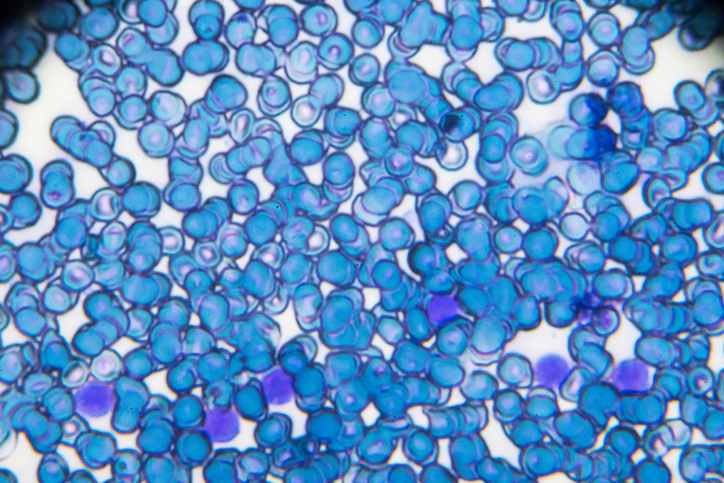
Core binding factor acute myeloid leukemia (CBF-AML) is one form of a cancer of the blood-forming tissue (bone marrow) called acute myeloid leukemia. In normal bone marrow, early blood cells called hematopoietic stem cells develop into several types of blood cells: white blood cells (leukocytes) that protect the body from infection, red blood cells (erythrocytes) that carry oxygen, and platelets (thrombocytes) that are involved in blood clotting. In acute myeloid leukemia, the bone marrow makes large numbers of abnormal, immature white blood cells called myeloid blasts. Instead of developing into normal white blood cells, the myeloid blasts develop into cancerous leukemia cells. The large number of abnormal cells in the bone marrow interferes with the production of functional white blood cells, red blood cells, and platelets.
Video picks for Genetic conditionsVideo library
Description
Core binding factor acute myeloid leukemia (CBF-AML) is one form of a cancer of the blood-forming tissue (bone marrow) called acute myeloid leukemia. In normal bone marrow, early blood cells called hematopoietic stem cells develop into several types of blood cells: white blood cells (leukocytes) that protect the body from infection, red blood cells (erythrocytes) that carry oxygen, and platelets (thrombocytes) that are involved in blood clotting. In acute myeloid leukemia, the bone marrow makes large numbers of abnormal, immature white blood cells called myeloid blasts. Instead of developing into normal white blood cells, the myeloid blasts develop into cancerous leukemia cells. The large number of abnormal cells in the bone marrow interferes with the production of functional white blood cells, red blood cells, and platelets.
People with CBF-AML have a shortage of all types of mature blood cells: a shortage of white blood cells (leukopenia) leads to increased susceptibility to infections, a low number of red blood cells (anaemia) causes fatigue and weakness, and a reduction in the amount of platelets (thrombocytopenia) can result in easy bruising and abnormal bleeding. Other symptoms of CBF-AML may include fever and weight loss.
While acute myeloid leukemia is generally a disease of older adults, CBF-AML often begins in young adulthood and can occur in childhood. Compared to other forms of acute myeloid leukemia, CBF-AML has a relatively good prognosis: about 90 percent of individuals with CBF-AML recover from their disease following treatment, compared with 25 to 40 percent of those with other forms of acute myeloid leukemia. However, the disease recurs in approximately half of them after successful treatment of the initial occurrence.
Inheritance patterns
The source lists the following possible inheritance patterns: Not inherited. More than one pattern can apply in different cases.
Related genes
Other names
CBF acute myeloid leukemia
CBF-AML
Core-binding factor AML
Patient picks for Genetic conditions

Cancer
Acute myeloid leukaemia
Acute myeloid leukaemia is where the bone marrow makes large numbers of abnormal immature white blood cells which are derived from a myeloid stem cell.
by Dr Laurence Knott

Cancer
Chronic myeloid leukaemia
Chronic myeloid leukaemia (CML) is sometimes called chronic myelogenous leukaemia, chronic granulocytic leukaemia, or chronic myelocytic leukaemia.
by Dr Laurence Knott

Cancer
Acute lymphoblastic leukaemia
Acute lymphoblastic leukaemia (ALL) is a condition where the bone marrow makes large numbers of abnormal immature lymphocytes.
by Dr Laurence Knott

Heart health and blood vessels
Dilated cardiomyopathy causes: what are the risk factors?
Having dilated cardiomyopathy means that your heart muscle is weakened, which affects how your heart pumps blood around your body. There are a wide range of dilated cardiomyopathy causes, including genetics, other health conditions, alcohol consumption and a poor diet. While we can't control some of these risk factors, we can make positive lifestyle changes to reduce our risk of developing dilated cardiomyopathy.
by Amberley Davis

MSK
Core Activation Walk
The Core Activation Walk is a gentle, mindful movement that strengthens core engagement and postural awareness. Walk at a steady pace or step in place while consciously activating and gently tightening your core muscles. Stand tall and draw your belly button slightly toward your spine without holding your breath. Maintain steady, natural breathing, focusing on expanding your ribcage as you inhale. This exercise improves core stability, posture, and body awareness.

MSK
Side Step With Crossover Reach
The Side Step with Crossover Reach is a coordination and mobility exercise that targets the legs, shoulders, and core while improving flexibility and balance. Step your right foot out to the side and tap your toe lightly on the floor as you reach your right arm across your body to the left. Return to the center, then repeat on the opposite side, moving in a smooth and controlled rhythm. This exercise enhances coordination, balance, and functional mobility through cross-body movement.
Related patient information and medicines
Patient information leaflet
Acute myeloid leukaemia
Acute myeloid leukaemia is where the bone marrow makes large numbers of abnormal immature white blood cells which are derived from a myeloid stem cell. What is acute myeloid leukaemia. Acute myeloid leukaemia (AML) is a condition where the bone marrow makes large numbers of abnormal immature white blood cells which are derived from a myeloid stem.
Patient information leaflet
Leukaemia
Leukaemia is a cancer of blood-forming cells. There are different types of leukaemia. If you develop leukaemia it is important to know... The main types of leukaemia Acute lymphoblastic leukaemia (ALL). Chronic lymphocytic leukaemia (CLL). Acute myeloid leukaemia (AML). Chronic myeloid leukaemia (CML). There are various 'subtypes' of each of.

Patient information leaflet
Childhood leukaemias
Leukaemia is a cancer of the cells which develop into blood cells. There are different types of leukaemia. Most children with leukaemia will have acute lymphoblastic leukaemia. Some will have acute myeloid leukaemia. The outlook (prognosis) for children with leukaem... This leaflet gives a general overview of childhood leukaemias. Acute myeloid.

Patient information leaflet
The immune system
This leaflet gives a brief overview of the immune system and how it works. A person with a weak immune system might have difficulty fighting off infections. Some disorders of the immune system include: HIV and AIDS HIV and AIDs - when your immune system is weakened. Lymphoma Non-Hodgkin's lymphoma , myeloma Myeloma and leukaemia Leukaemia -.
Patient information leaflet
Chronic myeloid leukaemia
Chronic myeloid leukaemia (CML) is sometimes called chronic myelogenous leukaemia, chronic granulocytic leukaemia, or chronic myelocytic leukaemia. What is chronic myeloid leukaemia. Large numbers of these cells are made in the bone marrow and spill into the bloodstream. (In contrast, in acute myeloid leukaemia (AML) Leukaemia the abnormal cells.

Patient information leaflet
Children's cancers
There are many different types of chil... The following list includes the most common types of childhood cancer: Leukaemia Leukaemia is a cancer of the bone marrow and blood. It is the most common type of childhood cancer. There are two main types of childhood leukaemia - acute lymphoblastic leukaemia and acute myeloid leukaemia. Chronic myeloid.
Further reading and references
- Core binding factor acute myeloid leukemia; MedlinePlus, National Library of Medicine.
- Goyama S, Mulloy JC. Molecular pathogenesis of core binding factor leukemia: current knowledge and future prospects. Int J Hematol. 2011 Aug;94(2):126-133. doi: 10.1007/s12185-011-0858-z. Epub 2011 May 3.
- Kuykendall A, Duployez N, Boissel N, Lancet JE, Welch JS. Acute Myeloid Leukemia: The Good, the Bad, and the Ugly. Am Soc Clin Oncol Educ Book. 2018 May 23;38:555-573. doi: 10.1200/EDBK_199519.
- Lam K, Zhang DE. RUNX1 and RUNX1-ETO: roles in hematopoiesis and leukemogenesis. Front Biosci (Landmark Ed). 2012 Jan 1;17(3):1120-39. doi: 10.2741/3977.
- Marcucci G, Haferlach T, Dohner H. Molecular genetics of adult acute myeloid leukemia: prognostic and therapeutic implications. J Clin Oncol. 2011 Feb 10;29(5):475-86. doi: 10.1200/JCO.2010.30.2554. Epub 2011 Jan 10.
- Paschka P, Dohner K. Core-binding factor acute myeloid leukemia: can we improve on HiDAC consolidation? Hematology Am Soc Hematol Educ Program. 2013;2013:209-19. doi: 10.1182/asheducation-2013.1.209.
- Sangle NA, Perkins SL. Core-binding factor acute myeloid leukemia. Arch Pathol Lab Med. 2011 Nov;135(11):1504-9. doi: 10.5858/arpa.2010-0482-RS.
- Welch JS, Ley TJ, Link DC, Miller CA, Larson DE, Koboldt DC, Wartman LD, Lamprecht TL, Liu F, Xia J, Kandoth C, Fulton RS, McLellan MD, Dooling DJ, Wallis JW, Chen K, Harris CC, Schmidt HK, Kalicki-Veizer JM, Lu C, Zhang Q, Lin L, O'Laughlin MD, McMichael JF, Delehaunty KD, Fulton LA, Magrini VJ, McGrath SD, Demeter RT, Vickery TL, Hundal J, Cook LL, Swift GW, Reed JP, Alldredge PA, Wylie TN, Walker JR, Watson MA, Heath SE, Shannon WD, Varghese N, Nagarajan R, Payton JE, Baty JD, Kulkarni S, Klco JM, Tomasson MH, Westervelt P, Walter MJ, Graubert TA, DiPersio JF, Ding L, Mardis ER, Wilson RK. The origin and evolution of mutations in acute myeloid leukemia. Cell. 2012 Jul 20;150(2):264-78. doi: 10.1016/j.cell.2012.06.023.
Share your thoughts or experiences with others in our patient communities.
Simple access to trusted treatments and health services online.
Common conditions
Get help with common conditions through the NHS, without a GP appointment.





Sign up to the Patient newsletter
Your weekly dose of clear, trustworthy health advice - written to help you feel informed, confident and in control.
By subscribing you accept our Privacy Policy. You can unsubscribe at any time. We never sell your data.