Horizontal gaze palsy with progressive scoliosis
Last updated 7 Apr 2025
Meets Patient’s editorial guidelines
- DownloadDownload
- Share
- Language
- Discussion
- Ask Patient
- Audio Version
- Add to preferred sources on Google
Horizontal gaze palsy with progressive scoliosis (HGPPS) is a disorder that affects the eyes and the spine. Individuals with this condition are unable to move their eyes side-to-side (horizontally) from birth, although the problem may not be diagnosed until later in infancy. As a result, affected individuals must track moving objects by turning their head instead of moving their eyes. Up-and-down (vertical) eye movements are typically normal.
Video picks for Genetic conditionsVideo library
Description
Horizontal gaze palsy with progressive scoliosis (HGPPS) is a disorder that affects the eyes and the spine. Individuals with this condition are unable to move their eyes side-to-side (horizontally) from birth, although the problem may not be diagnosed until later in infancy. As a result, affected individuals must track moving objects by turning their head instead of moving their eyes. Up-and-down (vertical) eye movements are typically normal.
In people with HGPPS, an abnormal side-to-side curvature of the spine (scoliosis) develops between infancy and childhood. It tends to be moderate to severe and worsens over time. The abnormal spine position can be painful and can interfere with movement. In severe cases, it may impede breathing. It may require external support, such as bracing, and is often treated with surgery early in life.
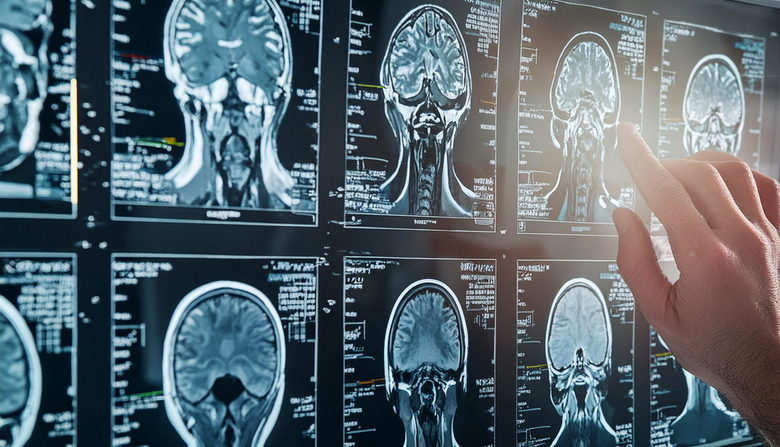
People with HGPPS have structural abnormalities along the midline of the brain that can only be seen with medical imaging. This imaging shows distinctive malformations that include underdevelopment of brain structures called the pons and cerebellar peduncles and a notch or cleft in the midline of the brain. While most people with HGPPS have a normal intellect, mild intellectual disabilities can occur.
Inheritance patterns
The source lists the following possible inheritance patterns: Autosomal recessive. More than one pattern can apply in different cases.
Related genes
Other names
Familial horizontal gaze palsy with progressive scoliosis
Familial infantile scoliosis associated with bilateral paralysis of conjugate gaze
HGPPS
Progressive external ophthalmoplegia and scoliosis
Patient picks for Genetic conditions

General health and lifestyle
Book a Pharmacy First online consultation
NHS Pharmacy First is a new scheme from the Government and NHS in England. It allows patients to get treatment, including prescription medications where necessary, for common conditions without t... Through NHS Pharmacy First, My Local Surgery offers fast, free private online consultations with an NHS pharmacist for quick diagnosis and.
by Thomas Andrew Porteus, MBCS

Bones, joints and muscles
Scoliosis and kyphosis
Scoliosis is a back condition that causes the (back) spine to curve to the side - either left or right. Most cases develop in children between the ages of 9 and 14 years during the growth spurt of puberty. Scoliosis is usually mild and needs no treatment. For more severe cases treatments include specific exercises, a back brace or occasionally surgery to straighten the spine. A very pronounced front-to-back curve is called a kyphosis, which does not usually need treatment.
by Dr Colin Tidy, MRCGP

Brain and nerves
Cerebral palsy
Cerebral palsy is a problem with muscle function. It is caused by brain injury or abnormal development of the brain that occurs while a child's brain is still developing. This may be before the baby is born, during the birth or soon after birth.
by Dr Hayley Willacy, FRCGP

Brain and nerves
What you need to know about Bell's palsy
Bell's palsy affects as many as 24,800 people a year in the UK, but facial paralysis is still seen as a cosmetic issue - meaning knowledge of the condition, research funding and support for sufferers is scarce. We talk to Charles Nduka, founder of the charity Facial Palsy UK.
by Julian Turner

Brain and nerves
Bell's palsy
Bell's palsy is a weakness (paralysis) that causes nerve damage; it affects the nerve fibres that control the muscles of the face. It is due to a problem with the facial nerve. It develops suddenly, usually on one side of the face. The cause is not clear but most cases are probably due to a viral infection. Most people make a full recovery within 2-3 months. A course of steroid tablets started within 72 hours of it starting improves the chance of full recovery even further. You should protect your eye if you cannot close your eyelids fully.
by Dr Toni Hazell, FRCGP
Preventative health
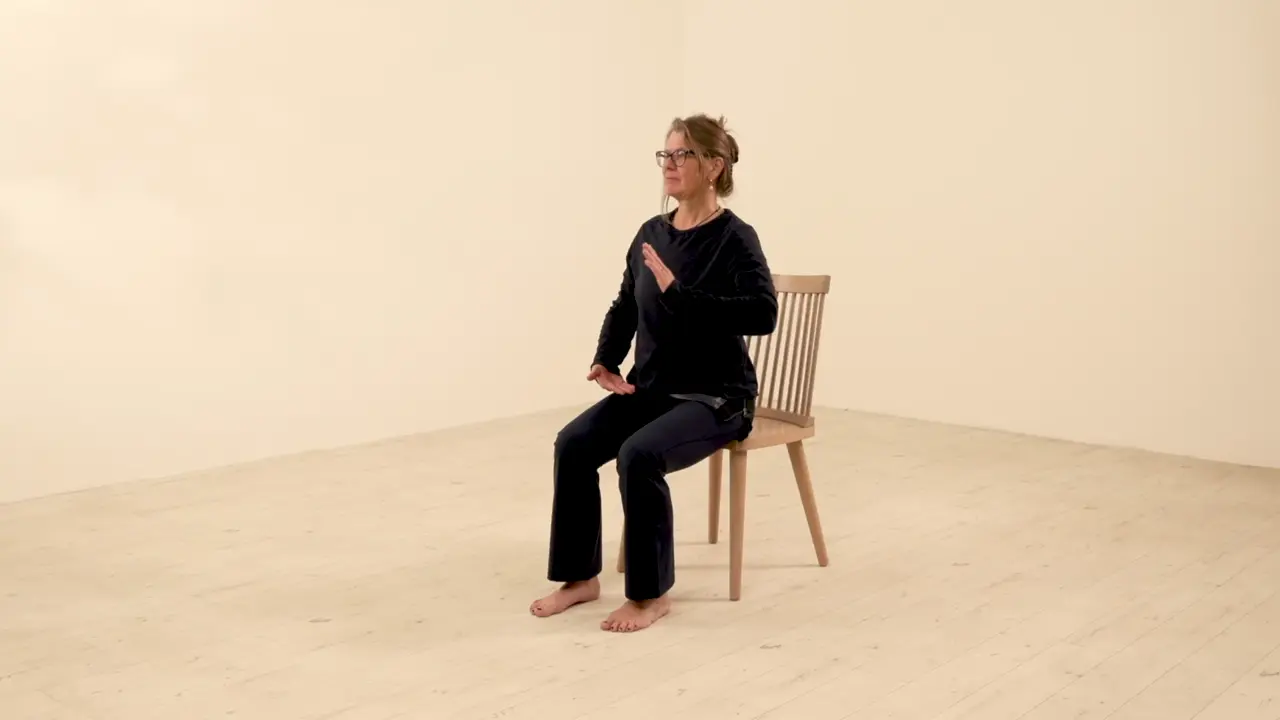
Spinal Twist and Back Glance
Spinal Twist and Back Glance combines a gentle torso rotation with a backward gaze to release tension in the spine and shoulders. It enhances mobility, balance, and postural awareness.
Related patient information and medicines

Patient information leaflet
Immunisation for flu
Chronic kidney disease Chronic kidney disease. Chronic liver diseases. Neurological problems, including strokes Stroke , multiple sclerosis Multiple sclerosis , cerebral palsy, and severe learning disabilities, including Down's syndrome Down's syndrome. Diabetes Diabetes and adrenal insufficiency (for example, Addison's disease Addison's disease.

Patient information leaflet
Spina bifida
In such cases, no treatment is needed. In other cases, there may be some symptoms, such as bladder and bowel problems, or an abnormal curve of the spine (scoliosis) Scoliosis and kyphosis. Spina bifida cystica Spina bifida cystica occurs when the lining (membranes) of the spinal cord and sometimes the spinal cord push out through the defect in the.

Patient information leaflet
COVID-19
COVID-19 is an infectious disease caused by a virus that was first identified in December 2019 in Wuhan, China. This leaflet deals with the symptoms, causes and treatment of COVID-19. Medical treatments causing weakened immune systems (like steroid med... Rare conditions affecting the brain and nerves, like multiple sclerosis Multiple sclerosis ,.
Patient information leaflet
Scoliosis and kyphosis
Scoliosis is a back condition that causes the (back) spine to curve to the side - either left or right. Most cases develop in children between the ages of 9 and 14 years during the growth spurt of puberty. Scoliosis is usually mild and needs no treatment. For more severe cases treatments include specific exercises, a back brace or occasionally.

Patient information leaflet
Duchenne muscular dystrophy
Duchenne muscular dystrophy is a condition which causes progressive muscle weakness. It starts in childhood and may be noticed when a child has difficulty standing up, climbing or running. It usually affects only boys, although girls may... They are likely to need increasing help and treatments. Duchenne muscular dystrophy (DMD) is an inherited.
Patient information leaflet
Multiple sclerosis
Multiple sclerosis is a disorder of the brain and spinal cord. Although there is no cure for multiple sclerosis, various medicines and therapies may reduce the number of flare-ups and can help to ease symptoms and disability. What is multiple sclerosis. Multiple sclerosis (MS) is a disease where patches of inflammation occur in parts of your brain.
Further reading and references
- Horizontal gaze palsy with progressive scoliosis; MedlinePlus, National Library of Medicine.
- Abu-Amero KK, al Dhalaan H, al Zayed Z, Hellani A, Bosley TM. Five new consanguineous families with horizontal gaze palsy and progressive scoliosis and novel ROBO3 mutations. J Neurol Sci. 2009 Jan 15;276(1-2):22-6. doi: 10.1016/j.jns.2008.08.026. Epub 2008 Oct 1.
- Bosley TM, Salih MA, Jen JC, Lin DD, Oystreck D, Abu-Amero KK, MacDonald DB, al Zayed Z, al Dhalaan H, Kansu T, Stigsby B, Baloh RW. Neurologic features of horizontal gaze palsy and progressive scoliosis with mutations in ROBO3. Neurology. 2005 Apr 12;64(7):1196-203. doi: 10.1212/01.WNL.0000156349.01765.2B.
- Chan WM, Traboulsi EI, Arthur B, Friedman N, Andrews C, Engle EC. Horizontal gaze palsy with progressive scoliosis can result from compound heterozygous mutations in ROBO3. J Med Genet. 2006 Mar;43(3):e11. doi: 10.1136/jmg.2005.035436.
- Engle EC. Oculomotility disorders arising from disruptions in brainstem motor neuron development. Arch Neurol. 2007 May;64(5):633-7. doi: 10.1001/archneur.64.5.633.
- Gunbey C, Cavdarli B, Gocmen R, Yazici M, Temucin CM, Ozdemir O, Cirak S, Haliloglu G. Horizontal gaze palsy with progressive scoliosis: Further expanding the ROBO3 spectrum. Ann Clin Transl Neurol. 2024 Aug;11(8):2088-2099. doi: 10.1002/acn3.52129. Epub 2024 Jun 21.
- Jen J, Coulin CJ, Bosley TM, Salih MA, Sabatti C, Nelson SF, Baloh RW. Familial horizontal gaze palsy with progressive scoliosis maps to chromosome 11q23-25. Neurology. 2002 Aug 13;59(3):432-5. doi: 10.1212/wnl.59.3.432.
- Jen JC, Chan WM, Bosley TM, Wan J, Carr JR, Rub U, Shattuck D, Salamon G, Kudo LC, Ou J, Lin DD, Salih MA, Kansu T, Al Dhalaan H, Al Zayed Z, MacDonald DB, Stigsby B, Plaitakis A, Dretakis EK, Gottlob I, Pieh C, Traboulsi EI, Wang Q, Wang L, Andrews C, Yamada K, Demer JL, Karim S, Alger JR, Geschwind DH, Deller T, Sicotte NL, Nelson SF, Baloh RW, Engle EC. Mutations in a human ROBO gene disrupt hindbrain axon pathway crossing and morphogenesis. Science. 2004 Jun 4;304(5676):1509-13. doi: 10.1126/science.1096437. Epub 2004 Apr 22.
- Jen JC. Effects of failure of development of crossing brainstem pathways on ocular motor control. Prog Brain Res. 2008;171:137-41. doi: 10.1016/S0079-6123(08)00618-3.
- Pinero-Pinto E, Perez-Cabezas V, Tous-Rivera C, Sanchez-Gonzalez JM, Ruiz-Molinero C, Jimenez-Rejano JJ, Benitez-Lugo ML, Sanchez-Gonzalez MC. Mutation in ROBO3 Gene in Patients with Horizontal Gaze Palsy with Progressive Scoliosis Syndrome: A Systematic Review. Int J Environ Res Public Health. 2020 Jun 22;17(12):4467. doi: 10.3390/ijerph17124467.
- Sicotte NL, Salamon G, Shattuck DW, Hageman N, Rub U, Salamon N, Drain AE, Demer JL, Engle EC, Alger JR, Baloh RW, Deller T, Jen JC. Diffusion tensor MRI shows abnormal brainstem crossing fibers associated with ROBO3 mutations. Neurology. 2006 Aug 8;67(3):519-21. doi: 10.1212/01.wnl.0000227960.38262.0c.
- Zhang Z, Zhang Z, Shu L, Meng Y, Ma J, Gao R, Zhou X. A Genetic Variant of the ROBO3 Gene is Associated With Adolescent Idiopathic Scoliosis in the Chinese Population. Spine (Phila Pa 1976). 2023 Jan 15;48(2):E20-E24. doi: 10.1097/BRS.0000000000004484. Epub 2022 Sep 20.
Share your thoughts or experiences with others in our patient communities.
Simple access to trusted treatments and health services online.
Common conditions
Get help with common conditions through the NHS, without a GP appointment.





Sign up to the Patient newsletter
Your weekly dose of clear, trustworthy health advice - written to help you feel informed, confident and in control.
By subscribing you accept our Privacy Policy. You can unsubscribe at any time. We never sell your data.