Juvenile myoclonic epilepsy
Last updated 28 Apr 2023
Meets Patient’s editorial guidelines
- DownloadDownload
- Share
- Language
- Discussion
- Audio Version
- Add to preferred sources on Google
Juvenile myoclonic epilepsy is a condition characterised by recurrent seizures (epilepsy). This condition begins in childhood or adolescence, usually between ages 12 and 18, and lasts into adulthood. The most common type of seizure in people with this condition is myoclonic seizures, which cause rapid, uncontrolled muscle jerks. People with this condition may also have generalized tonic-clonic seizures (also known as grand mal seizures), which cause muscle rigidity, convulsions, and loss of consciousness. Sometimes, affected individuals have absence seizures, which cause loss of consciousness for a short period that appears as a staring spell. Typically, people with juvenile myoclonic epilepsy develop the characteristic myoclonic seizures in adolescence, then develop generalized tonic-clonic seizures a few years later. Although seizures can happen at any time, they occur most commonly in the morning, shortly after awakening. Seizures can be triggered by a lack of sleep, extreme tiredness, stress, or alcohol consumption.
Description
Juvenile myoclonic epilepsy is a condition characterised by recurrent seizures (epilepsy). This condition begins in childhood or adolescence, usually between ages 12 and 18, and lasts into adulthood. The most common type of seizure in people with this condition is myoclonic seizures, which cause rapid, uncontrolled muscle jerks. People with this condition may also have generalized tonic-clonic seizures (also known as grand mal seizures), which cause muscle rigidity, convulsions, and loss of consciousness. Sometimes, affected individuals have absence seizures, which cause loss of consciousness for a short period that appears as a staring spell. Typically, people with juvenile myoclonic epilepsy develop the characteristic myoclonic seizures in adolescence, then develop generalized tonic-clonic seizures a few years later. Although seizures can happen at any time, they occur most commonly in the morning, shortly after awakening. Seizures can be triggered by a lack of sleep, extreme tiredness, stress, or alcohol consumption.
Inheritance patterns
The source lists the following possible inheritance patterns: Autosomal recessive; Autosomal dominant. More than one pattern can apply in different cases.
Related genes
Other names
Adolescent myoclonic epilepsy
Janz syndrome
Petit mal, impulsive
Related patient information and medicines
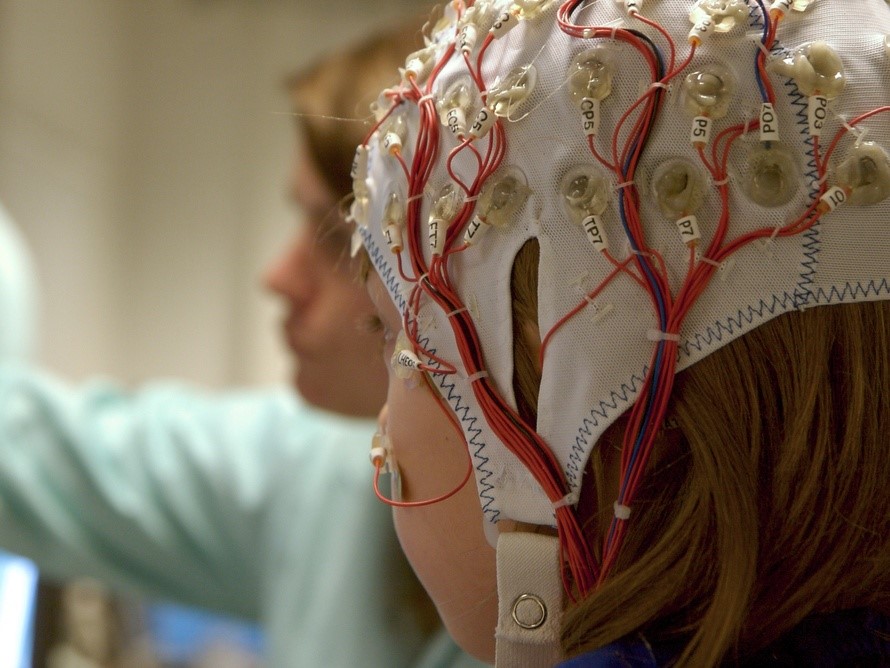
Patient information leaflet
Types of seizures
Typically, a seizure lasts from a few seconds to a few minutes. Seizures that last longer than 5 minutes, or that repeatedly happen w... Even though there is no shaking, absence seizures are also 'generalised onset' seizures, because they start in both sides of the brain at the same time. They are more common in children than in adults. Myoclonic.

Patient information leaflet
Temporal lobe lesions
Temporal lobe epilepsy Seizures which begin in the temporal lobe can cause a wide variety of symptoms. These symptoms may include... The seizure may also cause nice sensations and be enjoyable. Temporal lobe epilepsy can be treated with medicines that are used for epilepsy, but treatment will also depend on any underlying temporal lobe lesion. See.

Patient information leaflet
Fetal anticonvulsant syndrome
Fetal anticonvulsant syndrome (FACS) - also known as fetal valproate syndrome and fetal hydantoin syndrome - is a group of malformations that can affect some babies if they are exposed to certain medicines known as antiepileptic drugs (AEDs) while in the womb. Most women with epilepsy will have a healthy child. Women with epilepsy who are pregnant.

Patient information leaflet
Cannabis-based medicinal products
Since a change in the law in 2018, some cannabis-based medicines have been available on prescription in the UK. However, there is only evidence of benefit for treating a small number of conditions. Children and adults with rare, severe forms of epilepsy. Severe treatment-resistant epilepsy Epidyolex® is a highly purified liquid containing.

Patient information leaflet
Epilepsy
About 1 in 30 people in the UK develop epilepsy at some stage in their lives. However, epilepsy can begin at any age. What is epilepsy. Epilepsy is a long-lasting brain condition that causes people to have repeated seizures. It can cause different symptoms, from someone becoming unconscious and shaking, to someone behaving unusually for a short.
Patient information leaflet
Absence seizures
Absence seizures usually occur only in children and young people. Most people with this type of epilepsy grow out of it by the time they are adults. This leaflet discusses only the type of epilepsy with typical absence seizures. There are other types of 'atypical' absence seizures not dealt with in this leaflet. What is an absence seizure. Absence.
Further reading and references
- Juvenile myoclonic epilepsy; MedlinePlus, National Library of Medicine.
- Cossette P, Liu L, Brisebois K, Dong H, Lortie A, Vanasse M, Saint-Hilaire JM, Carmant L, Verner A, Lu WY, Wang YT, Rouleau GA. Mutation of GABRA1 in an autosomal dominant form of juvenile myoclonic epilepsy. Nat Genet. 2002 Jun;31(2):184-9. doi: 10.1038/ng885. Epub 2002 May 6.
- Ding L, Feng HJ, Macdonald RL, Botzolakis EJ, Hu N, Gallagher MJ. GABA(A) receptor alpha1 subunit mutation A322D associated with autosomal dominant juvenile myoclonic epilepsy reduces the expression and alters the composition of wild type GABA(A) receptors. J Biol Chem. 2010 Aug 20;285(34):26390-405. doi: 10.1074/jbc.M110.142299. Epub 2010 Jun 15.
- Gallagher MJ, Ding L, Maheshwari A, Macdonald RL. The GABAA receptor alpha1 subunit epilepsy mutation A322D inhibits transmembrane helix formation and causes proteasomal degradation. Proc Natl Acad Sci U S A. 2007 Aug 7;104(32):12999-3004. doi: 10.1073/pnas.0700163104. Epub 2007 Aug 1.
- Krampfl K, Maljevic S, Cossette P, Ziegler E, Rouleau GA, Lerche H, Bufler J. Molecular analysis of the A322D mutation in the GABA receptor alpha-subunit causing juvenile myoclonic epilepsy. Eur J Neurosci. 2005 Jul;22(1):10-20. doi: 10.1111/j.1460-9568.2005.04168.x.
- Suzuki T, Delgado-Escueta AV, Aguan K, Alonso ME, Shi J, Hara Y, Nishida M, Numata T, Medina MT, Takeuchi T, Morita R, Bai D, Ganesh S, Sugimoto Y, Inazawa J, Bailey JN, Ochoa A, Jara-Prado A, Rasmussen A, Ramos-Peek J, Cordova S, Rubio-Donnadieu F, Inoue Y, Osawa M, Kaneko S, Oguni H, Mori Y, Yamakawa K. Mutations in EFHC1 cause juvenile myoclonic epilepsy. Nat Genet. 2004 Aug;36(8):842-9. doi: 10.1038/ng1393. Epub 2004 Jul 18.
Join the conversation
Share your thoughts or experiences with others in our patient communities.

Ask, share, connect.
Browse discussions, ask questions, and share experiences across hundreds of health topics.
Sign up to the Patient newsletter
Your weekly dose of clear, trustworthy health advice - written to help you feel informed, confident and in control.
By subscribing you accept our Privacy Policy. You can unsubscribe at any time. We never sell your data.