Leber congenital amaurosis
Last updated 6 Oct 2022
Meets Patient’s editorial guidelines
- DownloadDownload
- Share
- Language
- Discussion
- Ask Patient
- Audio Version
- Add to preferred sources on Google
Leber congenital amaurosis, also known as LCA, is an eye disorder that is present from birth (congenital). This condition primarily affects the retina, which is the specialized tissue at the back of the eye that detects light and colour. People with this disorder typically have severe visual impairment beginning at birth or shortly afterward. The visual impairment tends to be severe and may worsen over time.
Video picks for Genetic conditionsVideo library
Description
Leber congenital amaurosis, also known as LCA, is an eye disorder that is present from birth (congenital). This condition primarily affects the retina, which is the specialized tissue at the back of the eye that detects light and colour. People with this disorder typically have severe visual impairment beginning at birth or shortly afterward. The visual impairment tends to be severe and may worsen over time.
Leber congenital amaurosis is also associated with other vision problems, including an increased sensitivity to light (photophobia), involuntary movements of the eyes (nystagmus), and extreme farsightedness (hyperopia). The pupils, which usually expand and contract in response to the amount of light entering the eye, do not react normally to light. Instead, they expand and contract more slowly than normal, or they may not respond to light at all.
A specific behaviour called Franceschetti's oculo-digital sign is characteristic of Leber congenital amaurosis. This sign consists of affected individuals poking, pressing, and rubbing their eyes with a knuckle or finger. Poking their eyes often results in the sensation of flashes of light called phosphenes. Researchers suspect that this behaviour may contribute to deep-set eyes in affected children.
In very rare cases, delayed development and intellectual disability have been reported in people with the features of Leber congenital amaurosis. Because of the visual loss, affected children may become isolated. Providing children with opportunities to play, hear, touch, understand and other early educational interventions may prevent developmental delays in children with Leber congenital amaurosis.
At least 20 genetic types of Leber congenital amaurosis have been described. The types are distinguished by their genetic cause, patterns of vision loss, and related eye abnormalities.
Inheritance patterns
The source lists the following possible inheritance patterns: Autosomal dominant; Autosomal recessive. More than one pattern can apply in different cases.
Related genes
Other names
Amaurosis, Leber congenital
Congenital amaurosis of retinal origin
Congenital retinal blindness
CRB
Dysgenesis neuroepithelialis retinae
Hereditary epithelial dysplasia of retina
Hereditary retinal aplasia
Heredoretinopathia congenitalis
LCA
Leber abiotrophy
Leber congenital tapetoretinal degeneration
Leber's amaurosis
Patient picks for Genetic conditions
Hormones
Congenital adrenal hyperplasia
Congenital adrenal hyperplasia is an inherited (genetic) condition causing swelling of the adrenal glands. The condition is associated with a decrease in the blood level of a hormone called cortisol and an increase in the level of male sex hormones (androgens) in both sexes. Some people get a mild condition that produces no symptoms. Others (mainly baby boys) develop a severe form that can be life-threatening. Medical treatment to correct hormone levels is available. Surgery to improve the appearance of unusual genitalia (in girls) is sometimes considered.
by Dr Rosalyn Adleman, MRCGP

Children's health
Club foot
Club foot (also called talipes equinovarus is a deformity of the foot and ankle that a baby can be born with. It is not clear exactly what causes club foot. In most cases, it is diagnosed by the typical appearance of a baby's foot after they are born. The Ponseti method is a widely used treatment for club foot. This treatment gives good results for most children. If it doesn't work, surgery can help.
by Dr Doug McKechnie, MRCGP

Children's health
Congenital heart disease
Congenital heart disease is a condition where an abnormality (defect) develops in the heart before birth. There are a number of types of congenital heart defect. Some are mild and cause few problems; others are life-threatening for the baby.
by Dr Mary Harding, MRCGP
Children's health
Congenital pulmonary airway malformation
Congenital pulmonary airway malformation (CPAM) is a rare abnormality of lung development. It is found either in unborn babies or in young babies. The name has recently changed from congenital cystic adenomatoid malformation (CCAM). It is increasingly detected by the routine ultrasound scan during pregnancy. Congenital means present from birth. Pulmonary means related to the lungs. The severity of the abnormality is very variable. Some lesions can shrink or even disappear without treatment. Some lesions cause the baby to have breathing problems very soon after birth. Some lesions cause severe problems for the baby and may have a poor outcome.
by Dr Hayley Willacy, FRCGP
Related patient information and medicines

Patient information leaflet
Porphyria
. Porphyrias can be: Acute porphyrias Symptoms of acute porphyria can vary. The most commo... Erythropoietic protoporphyria. Congenital erythropoietic porphyria (also known as Günther's disease). Mixed porphyrias This type of porphyria can lead to symptoms of both acute porphyria and cutaneous porphyria. The body then uses some of the excess.
Patient information leaflet
Retinal artery occlusion
Retinal artery occlusion occurs when the retinal artery or one of its branches becomes blocked. This cuts off the blood and nutrient supply to the nerve layer of the retina, leading to permanent damage. These include infection on the heart valves (endocarditis) Infective endocard... Around 1 in 10 patients have previously experienced a warning.
Patient information leaflet
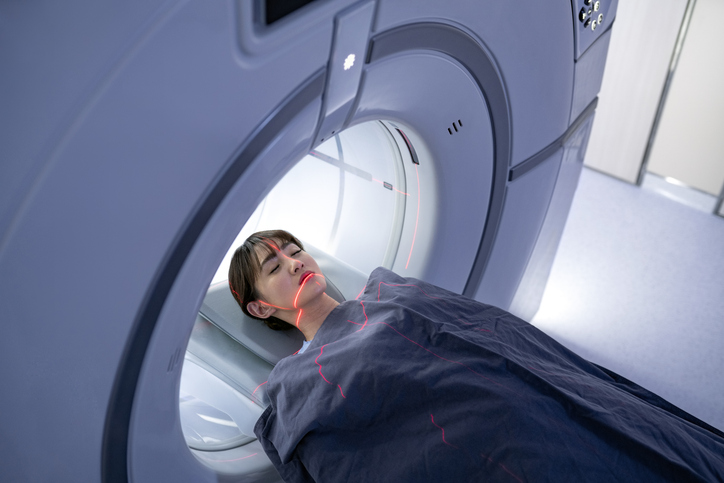
MRI scan
An MRI scan is a safe and painless test that can provide detailed pictures of organs and other structures inside your body. Note : the information below is a general guide only. The arrangements (and the way tests are performed) may vary between different hospitals. Always follow the instructions given by your doctor or local hospital. These are.

Patient information leaflet
Oral steroids
Steroid medicines (sometimes referred to as corticosteroids) are man-made (synthetic) versions of steroid hormones produced by the body. There are several different forms of steroid m... Oral steroids are also used to treat the effects of some cancers or to treat conditions in which a person is not making enough of their own natural steroids (for.

Patient information leaflet
Immunisation for flu
Some people can become seriously ill with flu, needing hospital treatment, and it can be life-threatening. Certain groups of people, such as older adults and young children, are at higher risk from flu infection. Getting the flu vaccine reduces the risk of catching flu, and also reduces the chances of becoming seriously unwell with flu. Exactly.

Patient information leaflet
Down's syndrome
A bigger than normal space between the first and second toe (the 'sandal gap'). Muscles. Muscles that lack tone and can be quite floppy (this is often most noticeable in babies). Low weight. Babies may have a low birth weight. Problems with physical and mental development Learning difficulties. Everyone with Down's syndrome will have some degree.
Further reading and references
- Leber congenital amaurosis; MedlinePlus, National Library of Medicine.
- Balbirsingh V, Daich Varela M, Michaelides M. Clinical Characteristics of Patients With Less Common Causes of Leber Congenital Amaurosis/Early-Onset Severe Retinal Dystrophy. Am J Ophthalmol. 2025 Aug;276:297-306. doi: 10.1016/j.ajo.2025.04.019. Epub 2025 Apr 26.
- den Hollander AI, Roepman R, Koenekoop RK, Cremers FP. Leber congenital amaurosis: genes, proteins and disease mechanisms. Prog Retin Eye Res. 2008 Jul;27(4):391-419. doi: 10.1016/j.preteyeres.2008.05.003. Epub 2008 Jun 1.
- Georgiou M, Robson AG, Fujinami K, de Guimaraes TAC, Fujinami-Yokokawa Y, Daich Varela M, Pontikos N, Kalitzeos A, Mahroo OA, Webster AR, Michaelides M. Phenotyping and genotyping inherited retinal diseases: Molecular genetics, clinical and imaging features, and therapeutics of macular dystrophies, cone and cone-rod dystrophies, rod-cone dystrophies, Leber congenital amaurosis, and cone dysfunction syndromes. Prog Retin Eye Res. 2024 May;100:101244. doi: 10.1016/j.preteyeres.2024.101244. Epub 2024 Jan 24.
- Hanein S, Perrault I, Gerber S, Tanguy G, Barbet F, Ducroq D, Calvas P, Dollfus H, Hamel C, Lopponen T, Munier F, Santos L, Shalev S, Zafeiriou D, Dufier JL, Munnich A, Rozet JM, Kaplan J. Leber congenital amaurosis: comprehensive survey of the genetic heterogeneity, refinement of the clinical definition, and genotype-phenotype correlations as a strategy for molecular diagnosis. Hum Mutat. 2004 Apr;23(4):306-17. doi: 10.1002/humu.20010.
- Huang CH, Yang CM, Yang CH, Hou YC, Chen TC. Leber's Congenital Amaurosis: Current Concepts of Genotype-Phenotype Correlations. Genes (Basel). 2021 Aug 19;12(8):1261. doi: 10.3390/genes12081261.
- Koenekoop RK, Cremers FP, den Hollander AI. Leber congenital amaurosis: ciliary proteins on the move. Ophthalmic Genet. 2007 Sep;28(3):111-2. doi: 10.1080/13816810701537457. No abstract available.
- Koenekoop RK. An overview of Leber congenital amaurosis: a model to understand human retinal development. Surv Ophthalmol. 2004 Jul-Aug;49(4):379-98. doi: 10.1016/j.survophthal.2004.04.003.
- Kumaran N, Moore AT, Weleber RG, Michaelides M. Leber congenital amaurosis/early-onset severe retinal dystrophy: clinical features, molecular genetics and therapeutic interventions. Br J Ophthalmol. 2017 Sep;101(9):1147-1154. doi: 10.1136/bjophthalmol-2016-309975. Epub 2017 Jul 8.
- Kumaran N, Pennesi ME, Yang P, Trzupek KM, Michaelides M. Nonsyndromic Leber Congenital Amaurosis / Early-Onset Severe Retinal Dystrophy Overview. 2018 Oct 4 [updated 2025 Dec 4]. In: Adam MP, Bick S, Mirzaa GM, Wallace SE, Amemiya A, editors. GeneReviews(R) [Internet]. Seattle (WA): University of Washington, Seattle; 1993-2026. Available from http://www.ncbi.nlm.nih.gov/books/NBK531510/
- Leroy BP, Birch DG, Duncan JL, Lam BL, Koenekoop RK, Porto FBO, Russell SR, Girach A. LEBER CONGENITAL AMAUROSIS DUE TO CEP290 MUTATIONS-SEVERE VISION IMPAIRMENT WITH A HIGH UNMET MEDICAL NEED: A Review. Retina. 2021 May 1;41(5):898-907. doi: 10.1097/IAE.0000000000003133.
- Maguire AM, Simonelli F, Pierce EA, Pugh EN Jr, Mingozzi F, Bennicelli J, Banfi S, Marshall KA, Testa F, Surace EM, Rossi S, Lyubarsky A, Arruda VR, Konkle B, Stone E, Sun J, Jacobs J, Dell'Osso L, Hertle R, Ma JX, Redmond TM, Zhu X, Hauck B, Zelenaia O, Shindler KS, Maguire MG, Wright JF, Volpe NJ, McDonnell JW, Auricchio A, High KA, Bennett J. Safety and efficacy of gene transfer for Leber's congenital amaurosis. N Engl J Med. 2008 May 22;358(21):2240-8. doi: 10.1056/NEJMoa0802315. Epub 2008 Apr 27.
- Napier MP, Selvan K, Hayeems RZ, Shuman C, Chitayat D, Sutherland JE, Day MA, Heon E. Gene therapy: perspectives from young adults with Leber's congenital amaurosis. Eye (Lond). 2022 Nov;36(11):2088-2093. doi: 10.1038/s41433-021-01763-z. Epub 2021 Sep 16.
- Tsang SH, Sharma T. Leber Congenital Amaurosis. Adv Exp Med Biol. 2025;1467:143-149. doi: 10.1007/978-3-031-72230-1_26.
Share your thoughts or experiences with others in our patient communities.
Simple access to trusted treatments and health services online.
Common conditions
Get help with common conditions through the NHS, without a GP appointment.





Sign up to the Patient newsletter
Your weekly dose of clear, trustworthy health advice - written to help you feel informed, confident and in control.
By subscribing you accept our Privacy Policy. You can unsubscribe at any time. We never sell your data.