Legg-Calvé-Perthes disease
Last updated 18 Aug 2020
Meets Patient’s editorial guidelines
- DownloadDownload
- Share
- Language
- Discussion
- Ask Patient
- Audio Version
- Add to preferred sources on Google
Legg-Calvé-Perthes disease is a bone disorder that affects the hips. Usually, only one hip is involved, but in about 10 percent of cases, both hips are affected. Legg-Calvé-Perthes disease begins in childhood, typically between ages 4 and 8, and affects boys more frequently than girls.
Video picks for Genetic conditionsVideo library
Description
Legg-Calvé-Perthes disease is a bone disorder that affects the hips. Usually, only one hip is involved, but in about 10 percent of cases, both hips are affected. Legg-Calvé-Perthes disease begins in childhood, typically between ages 4 and 8, and affects boys more frequently than girls.
In this condition, the upper end of the thigh bone, known as the femoral head, breaks down. As a result, the femoral head is no longer round and does not move easily in the hip socket, which leads to hip pain, limping, and restricted leg movement. The bone eventually begins to heal itself through a normal process called bone remodeling, by which old bone is removed and new bone is created to replace it. This cycle of breakdown and healing can recur multiple times. Affected individuals are often shorter than their peers due to the bone abnormalities. Many people with Legg-Calvé-Perthes disease go on to develop a painful joint disorder called osteoarthritis in the hips at an early age.
Inheritance patterns
The source lists the following possible inheritance patterns: Autosomal dominant. More than one pattern can apply in different cases.
Related genes
Other names
Calve-Perthes disease
Coxa plana
LCPD
Perthes disease
Patient picks for Genetic conditions
Children's health
Perthes' disease
Perthes' disease is a condition where the top of the thigh bone in the hip joint (the femoral head) loses its blood supply and so the bone is damaged. The bone gradually heals and reforms but Perthes' disease may cause hip problems later in life.
by Dr Doug McKechnie, MRCGP
Heart health and blood vessels
Peripheral arterial disease
Peripheral arterial disease, also called peripheral vascular disease, is a narrowing of the blood vessels (arteries). In addition to also being known as peripheral vascular disease (PVD), it is also sometimes called 'hardening' of the arteries of the legs.
by Dr Hayley Willacy, FRCGP
Heart health and blood vessels
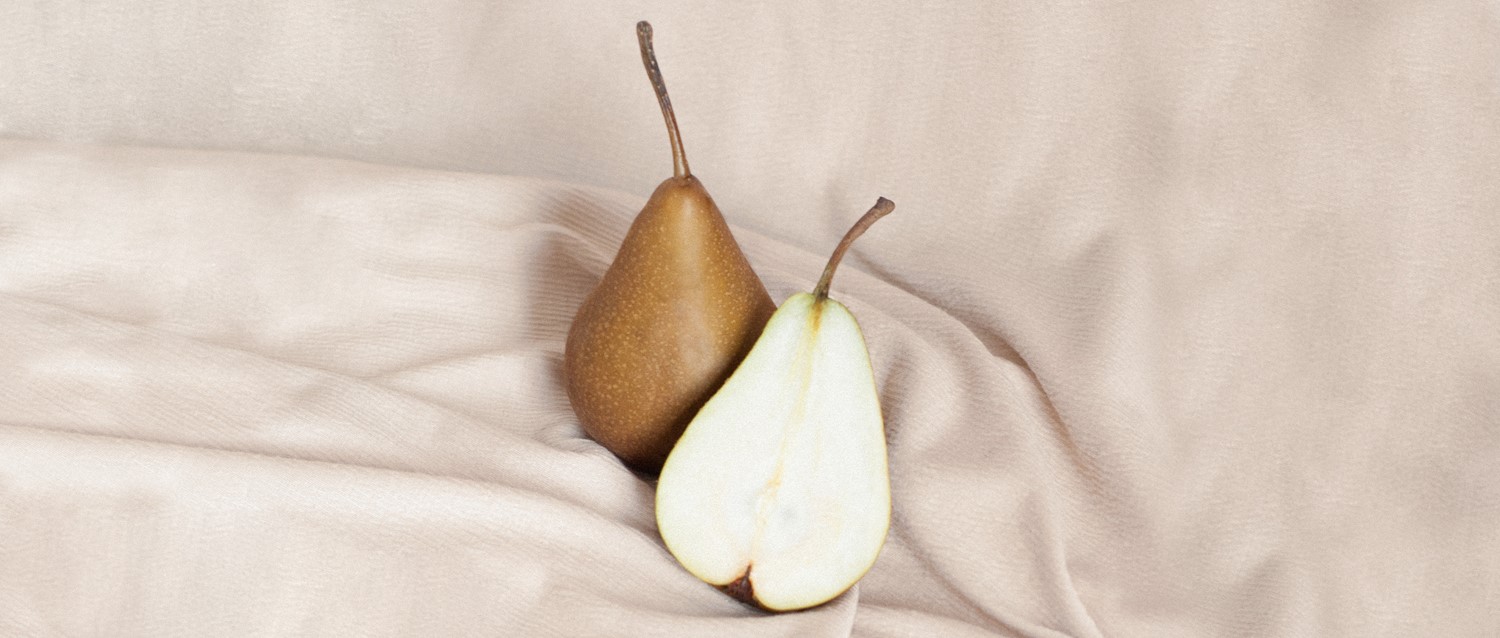
Being 'pear-shaped' may lower risk of heart disease in women
A new study of postmenopausal women has shown that women who are 'apple-shaped' rather than 'pear-shaped' are at greater risk of heart and blood vessel problems.
by Milly Evans

Skin, nail and hair health
Bowen's disease
Bowen's disease is a very early form of skin cancer. It causes one or more small patches of scaly red skin. It occurs when skin cancer cells grow in the outer layer of the skin, but don't spread any deeper into the skin, or elsewhere in the body. Because these cancer cells stay in the outer layer of the skin, they don't cause serious problems in themselves. However, over time, there is a chance that these cells can develop into a different type of skin cancer, which can cause problems. So, Bowen's disease is generally treated to stop this happening. Close follow-up is needed after treatment to check for any return (recurrence) of Bowen's disease.
by Dr Doug McKechnie, MRCGP

Heart health and blood vessels
Buerger's disease
Buerger's disease causes inflammation of blood vessels in the legs and arms, particularly in the hands and feet. It leads to narrowing and blockage of the blood vessels so that blood flow to the hands and feet is reduced. This causes pain and other symptoms. It may eventually lead to damage and death of the tissues in the hands and/or feet. The exact cause is not known. It mainly affects smokers but occasionally occurs in non-smokers. The single most important thing that you can do if you are diagnosed with Buerger's disease is to stop smoking. This can help to stop the disease from becoming worse and reduces your chance of needing surgical removal (amputation) of a finger, a toe, or worse.
by Dr Laurence Knott
Foot care
Sever's disease
Sever's disease (sometimes called calcaneal apophysitis) causes pain in the heel. It is more common in children who are regularly involved in high impact sport activities such as running and jumping. It can usually be treated with rest, wearing supportive footwear for sports, and shoe inserts to support the heel. It is a harmless condition and usually gets better within a few weeks or a few months.
by Dr Hayley Willacy, FRCGP
Related patient information and medicines
Patient information leaflet
Perthes' disease
Perthes' disease is a condition where the top of the thigh bone in the hip joint (the femoral head) loses its blood supply and so the bone is damaged. What is Perthes' disease. Perthes' disease, also known as Legg-Calvé-Perthes disease, is a rare childhood hip disorder that affects the blood supply to the femoral head. It mainly affects young.
Patient information leaflet
Peripheral arterial disease
Peripheral arterial disease, also called peripheral vascular disease, is a narrowing of the blood vessels (arteries). In addition to also being known as peripheral vascular disease (PVD), it is also sometimes called 'hardening' of the arteries of the legs. What is peripheral arterial disease. Peripheral arterial disease (PAD) is narrowing of one.

Patient information leaflet
Asbestos-related diseases
People exposed to asbestos can develop diseases in later life. These most commonly affect the lungs but can also affect the lining of the tummy (abdomen). Some conditions - for example, mesothelioma or lung cancer - are more serious than others. This leaflet gives a brief overview of the diseases that are related to having an exposure to asbestos.
Patient information leaflet
Bowen's disease
Bowen's disease is a very early form of skin cancer. It occurs when skin cancer cells grow in the outer layer of the skin, but don't spread any deeper into the skin, or elsewhere in the body. Because these cancer cells stay in the outer layer of the skin, they don't cause serious problems in themselves. However, over time, there is a chance that.
Patient information leaflet
Paget's disease of bone
Paget's disease of bone affects the structure of parts of one or more bones. In most cases it causes no symptoms and does not need treatment. Affected bones are weaker than normal and may become deformed and may break (fracture) more easily than normal. There is a slow but constant turn... What is Paget's disease of bone. Paget's disease of bone.
Patient information leaflet
Inflammatory bowel disease
Inflammatory Bowel Disease (IBD) is a term used to describe people who either have either of the two main types of IBD (Crohn's disease and ulcerative colitis). Both these conditions can cause inflammation of the colon and rectum (large bowel or large intestine) with similar symptoms, such as bloody diarrhoea, tummy (abdominal) pain, weight loss.
Further reading and references
- Legg-Calvé-Perthes disease; MedlinePlus, National Library of Medicine.
- Chaudhry S, Phillips D, Feldman D. Legg-Calve-Perthes disease: an overview with recent literature. Bull Hosp Jt Dis (2013). 2014;72(1):18-27.
- Gregersen PA, Savarirayan R. Type II Collagen Disorders Overview. 2019 Apr 25 [updated 2024 Oct 24]. In: Adam MP, Bick S, Mirzaa GM, Wallace SE, Amemiya A, editors. GeneReviews(R) [Internet]. Seattle (WA): University of Washington, Seattle; 1993-2026. Available from http://www.ncbi.nlm.nih.gov/books/NBK540447/
- Kannu P, Irving M, Aftimos S, Savarirayan R. Two novel COL2A1 mutations associated with a Legg-Calve-Perthes disease-like presentation. Clin Orthop Relat Res. 2011 Jun;469(6):1785-90. doi: 10.1007/s11999-011-1850-x. Epub 2011 Mar 26.
- Kenet G, Ezra E, Wientroub S, Steinberg DM, Rosenberg N, Waldman D, Hayek S. Perthes' disease and the search for genetic associations: collagen mutations, Gaucher's disease and thrombophilia. J Bone Joint Surg Br. 2008 Nov;90(11):1507-11. doi: 10.1302/0301-620X.90B11.20318.
- Lindblad M, Bladh M, Bjornsson-Hallgren H, Sydsjo G, Johansson T. No correlation to collagen synthesis disorders in patients with Perthes' disease: a nationwide Swedish register study of 3488 patients. BMC Musculoskelet Disord. 2024 Jan 9;25(1):42. doi: 10.1186/s12891-023-07161-8.
- Miyamoto Y, Matsuda T, Kitoh H, Haga N, Ohashi H, Nishimura G, Ikegawa S. A recurrent mutation in type II collagen gene causes Legg-Calve-Perthes disease in a Japanese family. Hum Genet. 2007 Jun;121(5):625-9. doi: 10.1007/s00439-007-0354-y. Epub 2007 Mar 30.
- Mortier GR, Cohn DH, Cormier-Daire V, Hall C, Krakow D, Mundlos S, Nishimura G, Robertson S, Sangiorgi L, Savarirayan R, Sillence D, Superti-Furga A, Unger S, Warman ML. Nosology and classification of genetic skeletal disorders: 2019 revision. Am J Med Genet A. 2019 Dec;179(12):2393-2419. doi: 10.1002/ajmg.a.61366. Epub 2019 Oct 21.
- Park KW, Rejuso CA, Cho WT, Song HR. Timing of premature physeal closure in Legg-Calve-Perthes Disease. Int Orthop. 2014 Oct;38(10):2137-42. doi: 10.1007/s00264-014-2394-y. Epub 2014 Jun 12.
- Pavone V, Chisari E, Vescio A, Lizzio C, Sessa G, Testa G. Aetiology of Legg-Calve-Perthes disease: A systematic review. World J Orthop. 2019 Mar 18;10(3):145-165. doi: 10.5312/wjo.v10.i3.145. eCollection 2019 Mar 18.
- Rodriguez-Olivas AO, Hernandez-Zamora E, Reyes-Maldonado E. Legg-Calve-Perthes disease overview. Orphanet J Rare Dis. 2022 Mar 15;17(1):125. doi: 10.1186/s13023-022-02275-z.
- Sabry AO, Li D. Legg-Calve-Perthes Disease. 2026 Mar 25. In: StatPearls [Internet]. Treasure Island (FL): StatPearls Publishing; 2026 Jan-. Available from http://www.ncbi.nlm.nih.gov/books/NBK513230/
- Su P, Li R, Liu S, Zhou Y, Wang X, Patil N, Mow CS, Mason JC, Huang D, Wang Y. Age at onset-dependent presentations of premature hip osteoarthritis, avascular necrosis of the femoral head, or Legg-Calve-Perthes disease in a single family, consequent upon a p.Gly1170Ser mutation of COL2A1. Arthritis Rheum. 2008 Jun;58(6):1701-6. doi: 10.1002/art.23491.
- Unger S, Ferreira CR, Mortier GR, Ali H, Bertola DR, Calder A, Cohn DH, Cormier-Daire V, Girisha KM, Hall C, Krakow D, Makitie O, Mundlos S, Nishimura G, Robertson SP, Savarirayan R, Sillence D, Simon M, Sutton VR, Warman ML, Superti-Furga A. Nosology of genetic skeletal disorders: 2023 revision. Am J Med Genet A. 2023 May;191(5):1164-1209. doi: 10.1002/ajmg.a.63132. Epub 2023 Feb 13.
Share your thoughts or experiences with others in our patient communities.
Simple access to trusted treatments and health services online.
Common conditions
Get help with common conditions through the NHS, without a GP appointment.





Sign up to the Patient newsletter
Your weekly dose of clear, trustworthy health advice - written to help you feel informed, confident and in control.
By subscribing you accept our Privacy Policy. You can unsubscribe at any time. We never sell your data.