Palmoplantar keratoderma with deafness
Last updated 18 Aug 2020
Meets Patient’s editorial guidelines
- DownloadDownload
- Share
- Language
- Discussion
- Ask Patient
- Audio Version
- Add to preferred sources on Google
Palmoplantar keratoderma with deafness is a disorder characterised by skin abnormalities and hearing loss. Affected individuals develop unusually thick skin on the palms of the hands and soles of the feet (palmoplantar keratoderma) beginning in childhood. Hearing loss ranges from mild to profound. It begins in early childhood and gets worse over time. Affected individuals have particular trouble hearing high-pitched sounds.
Video picks for Genetic conditionsVideo library
Description
Palmoplantar keratoderma with deafness is a disorder characterised by skin abnormalities and hearing loss. Affected individuals develop unusually thick skin on the palms of the hands and soles of the feet (palmoplantar keratoderma) beginning in childhood. Hearing loss ranges from mild to profound. It begins in early childhood and gets worse over time. Affected individuals have particular trouble hearing high-pitched sounds.
The signs and symptoms of this disorder may vary even within the same family, with some individuals developing only skin abnormalities and others developing only hearing loss.
Inheritance patterns
The source lists the following possible inheritance patterns: mitochondrial; Autosomal dominant. More than one pattern can apply in different cases.
Related genes
Other names
Palmoplantar hyperkeratosis-deafness syndrome
Palmoplantar hyperkeratosis-hearing loss syndrome
Palmoplantar keratoderma-deafness syndrome
Palmoplantar keratoderma-hearing loss syndrome
PPK with deafness
PPK-deafness syndrome
Patient picks for Genetic conditions

General health and lifestyle
Book a Pharmacy First online consultation
NHS Pharmacy First is a new scheme from the Government and NHS in England. It allows patients to get treatment, including prescription medications where necessary, for common conditions without t... Through NHS Pharmacy First, My Local Surgery offers fast, free private online consultations with an NHS pharmacist for quick diagnosis and.
by Thomas Andrew Porteus, MBCS

Diabetes
Dealing with hyperglycaemia
This leaflet is created from first aid advice provided by St John Ambulance, the nation's leading first aid charity. This advice is no substitute for first aid training - find a training course near you.
by St John Ambulance
Preventative health
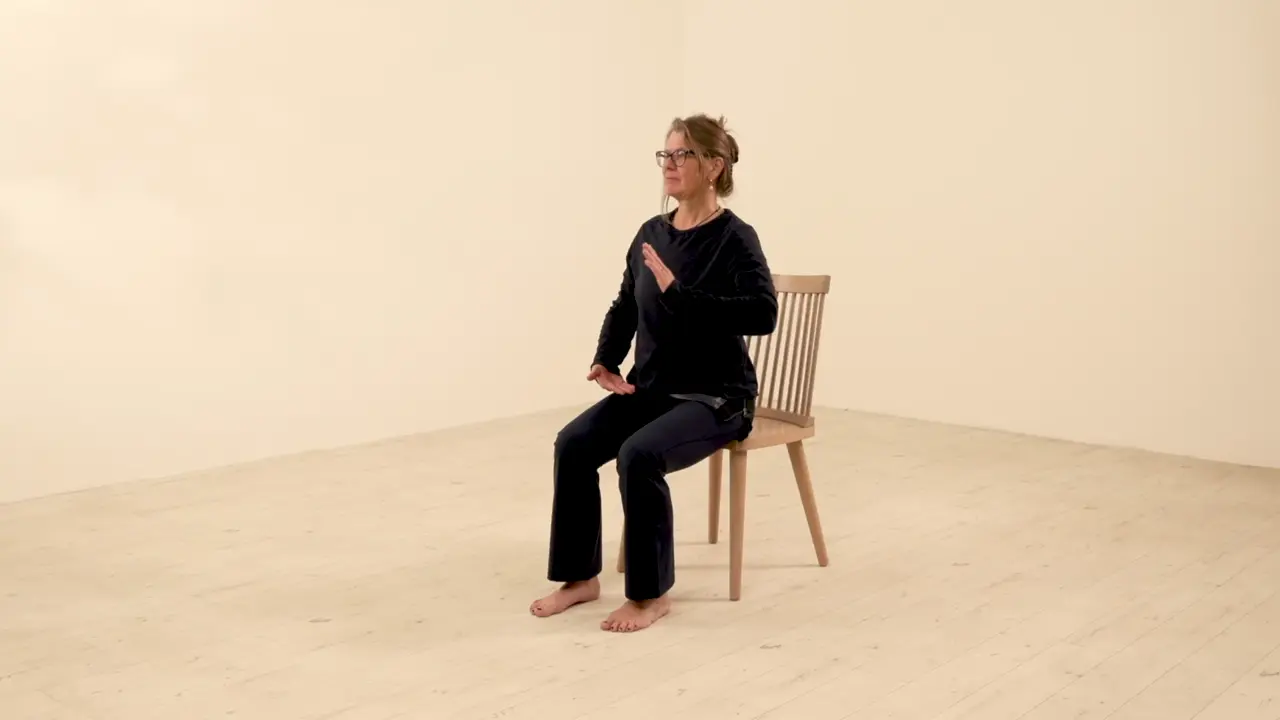
Spinal Twist and Back Glance
Spinal Twist and Back Glance combines a gentle torso rotation with a backward gaze to release tension in the spine and shoulders. It enhances mobility, balance, and postural awareness.
Preventative health
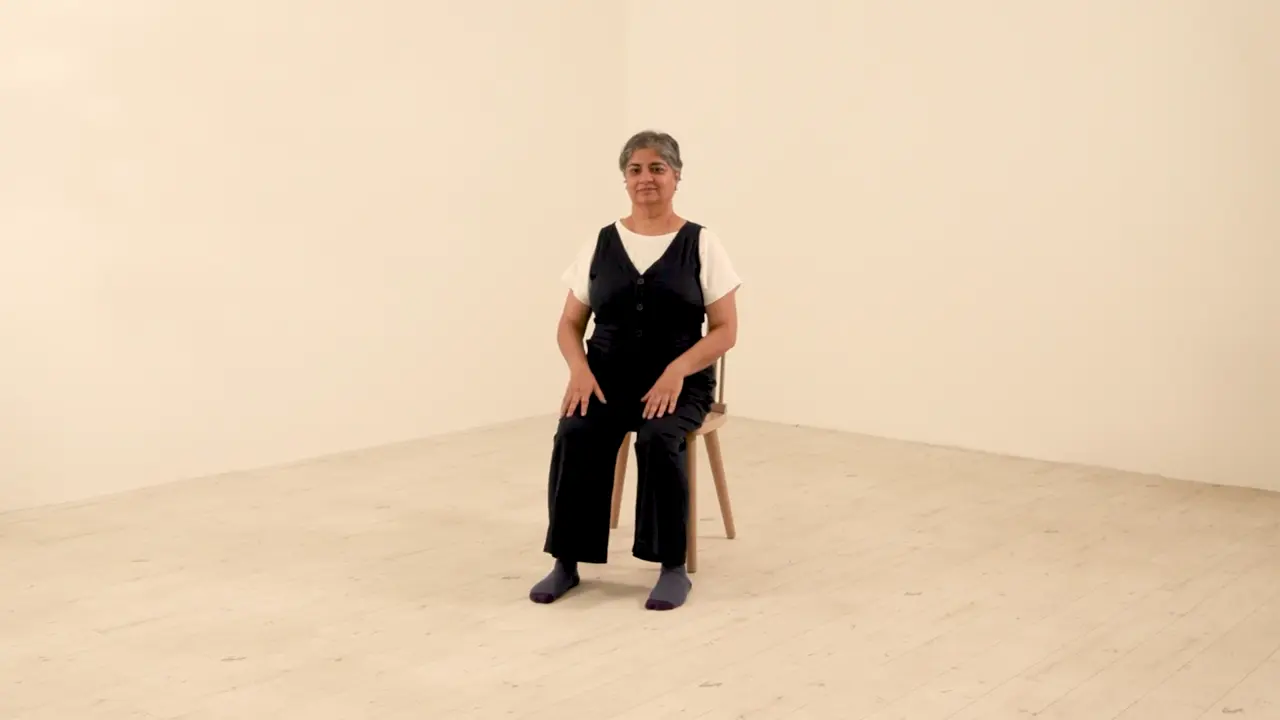
Rainbow Dance Seated
Sit comfortably toward the front of the chair with your feet flat on the floor, knees slightly apart and aligned with the hips. Keep the spine long and relaxed. Open your arms out to the sides, imagining you are holding a rainbow — each palm supporting one end of its arc. Gently shift your weight into one sit bone, and as you do, bend sideways toward the opposite side (so if you shift right, you lean left). Keep the movement soft and spacious, lifting through the ribs rather than collapsing. This gentle lateral stretch supports the Stomach meridian, traditionally linked with digestion and overall nourishment. The movement can also help release tension across the shoulders and encourage ease in the nervous system. Return to centre, switch sides, and continue flowing side to side, as though moving beneath a rainbow that arches and softens with each breath.
Condition & symptom support
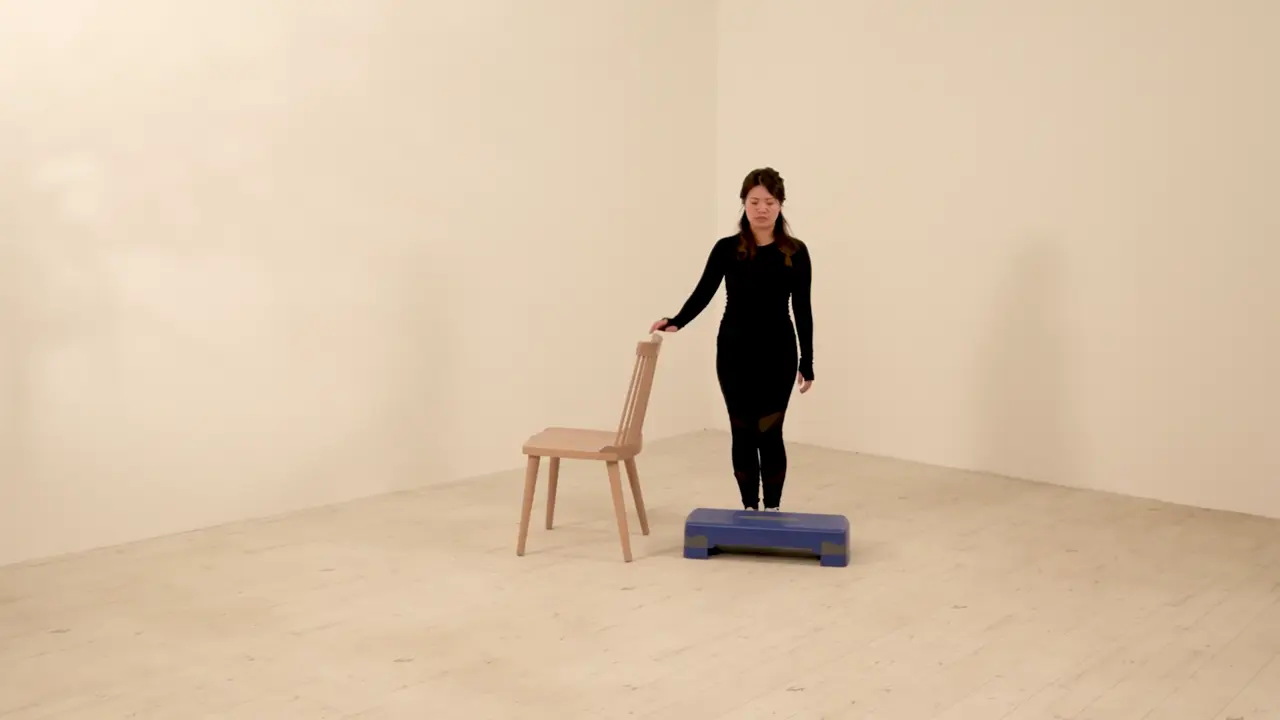
Supported Standing Step Ups Slow
The Supported Standing Step Up Slow is a lower-body strength and balance exercise that targets the legs and glutes. Stand in front of a low step or platform and hold a support for balance. Step up slowly with one foot, then bring the other to meet it before stepping down. Repeat with control. This exercise enhances strength, coordination, and stability.
Condition & symptom support
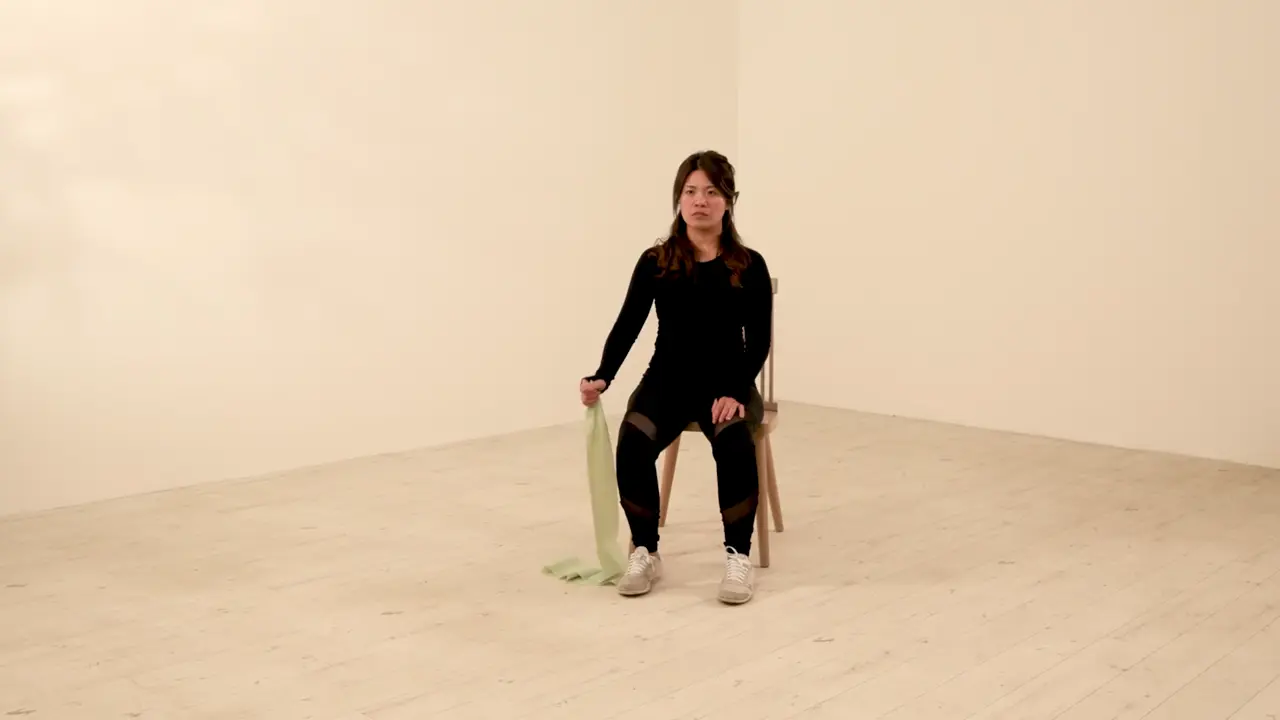
Seated Single Arm Banded Overhead Press
The Seated Single Arm Banded Overhead Press is a unilateral strength exercise that targets the shoulders and arms. Sit tall with one end of the resistance band under your foot and hold the other end in one hand at shoulder height. Press the band overhead until your arm is straight, then lower with control. This exercise builds shoulder stability and balanced strength.
Related patient information and medicines

Patient information leaflet
Reactive arthritis
Reactive arthritis is a type of arthritis in which you develop inflammation in joints after you have had an infection in some other part of the body. For example, after a bad bout of diarrhoea you might develop a sore knee a couple of weeks later. Symptoms com... It is more serious than conjunctivitis. A scaly skin rash on the hands and feet.

Patient information leaflet
Somatisation and functional disorders
Sometimes there are no obvious reasons for the changes in the way our brain ... This may be more common in situations where someone has very severe pain but where there is no underlying physical cause for that pain. Functional neurological disorder Previously known as conversion disorder, functional neurological disorder (or FND) is a condition.

Patient information leaflet
Trigeminal neuralgia
Also, there is a hi... Stereotactic radiosurgery for trigeminal neuralgia This form of surgery is sometimes known as 'gamma knife' surgery (see above). The National Institute for Health and Care Excellence (NICE) has now reviewed all the studies done on people with trigeminal neuralgia having this treatment. They have concluded that the treatment.

Patient information leaflet
Cholesteatoma
Skin cells, including those that line the ear canal, normally multiply regularly to replace those that have died. If the dead cells become trapped and form a collection, this build-up of dead skin cells over time can form a cholesteatoma. A cholesteatoma is not a type of cancer, but it is still important because, if untreated, it can lead to.

Patient information leaflet
Syphilis
Syphilis is an infectious disease caused by a germ (bacterium) called Treponema pallidum. Dr Rosemary Leonard Syphilis is an infectious disease caused by a germ (bacterium) called Treponema pallidum. The number of cases are, however, rising. In the UK, the rates of infection are highest amongst men who have sex with men..

Patient information leaflet
Dealing with eye injuries
This leaflet is created from first aid advice provided by St John Ambulance, the nation's leading first aid charity. This advice is no substitute for first aid training - find a training course near you. ... When should I worry about eye pain. Dr Sarah Jarvis MBE For more information on the eyes, go to.
Further reading and references
- Palmoplantar keratoderma with deafness; MedlinePlus, National Library of Medicine.
- Birkenhager R, Lublinghoff N, Prera E, Schild C, Aschendorff A, Arndt S. Autosomal dominant prelingual hearing loss with palmoplantar keratoderma syndrome: Variability in clinical expression from mutations of R75W and R75Q in the GJB2 gene. Am J Med Genet A. 2010 Jul;152A(7):1798-802. doi: 10.1002/ajmg.a.33464.
- Caria H, Matos T, Oliveira-Soares R, Santos AR, Galhardo I, Soares-Almeida L, Dias O, Andrea M, Correia C, Fialho G. A7445G mtDNA mutation present in a Portuguese family exhibiting hereditary deafness and palmoplantar keratoderma. J Eur Acad Dermatol Venereol. 2005 Jul;19(4):455-8. doi: 10.1111/j.1468-3083.2005.01087.x.
- de Zwart-Storm EA, Hamm H, Stoevesandt J, Steijlen PM, Martin PE, van Geel M, van Steensel MA. A novel missense mutation in GJB2 disturbs gap junction protein transport and causes focal palmoplantar keratoderma with deafness. J Med Genet. 2008 Mar;45(3):161-6. doi: 10.1136/jmg.2007.052332. Epub 2007 Nov 9.
- de Zwart-Storm EA, van Geel M, van Neer PA, Steijlen PM, Martin PE, van Steensel MA. A novel missense mutation in the second extracellular domain of GJB2, p.Ser183Phe, causes a syndrome of focal palmoplantar keratoderma with deafness. Am J Pathol. 2008 Oct;173(4):1113-9. doi: 10.2353/ajpath.2008.080049. Epub 2008 Sep 11.
- Feldmann D, Denoyelle F, Blons H, Lyonnet S, Loundon N, Rouillon I, Hadj-Rabia S, Petit C, Couderc R, Garabedian EN, Marlin S. The GJB2 mutation R75Q can cause nonsyndromic hearing loss DFNA3 or hereditary palmoplantar keratoderma with deafness. Am J Med Genet A. 2005 Aug 30;137(2):225-7. doi: 10.1002/ajmg.a.30765. No abstract available.
- Iossa S, Chinetti V, Auletta G, Laria C, De Luca M, Rienzo M, Giannini P, Delfino M, Ciccodicola A, Marciano E, Franze A. New evidence for the correlation of the p.G130V mutation in the GJB2 gene and syndromic hearing loss with palmoplantar keratoderma. Am J Med Genet A. 2009 Feb 15;149A(4):685-8. doi: 10.1002/ajmg.a.32462.
- Lee JR, White TW. Connexin-26 mutations in deafness and skin disease. Expert Rev Mol Med. 2009 Nov 19;11:e35. doi: 10.1017/S1462399409001276.
- Lee JY, In SI, Kim HJ, Jeong SY, Choung YH, Kim YC. Hereditary palmoplantar keratoderma and deafness resulting from genetic mutation of Connexin 26. J Korean Med Sci. 2010 Oct;25(10):1539-42. doi: 10.3346/jkms.2010.25.10.1539. Epub 2010 Sep 17.
- Maasz A, Komlosi K, Hadzsiev K, Szabo Z, Willems PJ, Gerlinger I, Kosztolanyi G, Mehes K, Melegh B. Phenotypic variants of the deafness-associated mitochondrial DNA A7445G mutation. Curr Med Chem. 2008;15(13):1257-62. doi: 10.2174/092986708784534910.
- Xu J, Nicholson BJ. The role of connexins in ear and skin physiology - functional insights from disease-associated mutations. Biochim Biophys Acta. 2013 Jan;1828(1):167-78. doi: 10.1016/j.bbamem.2012.06.024. Epub 2012 Jul 13.
- Yuan Y, Huang D, Yu F, Zhu X, Kang D, Yuan H, Han D, Dai P. A de novo GJB2 (connexin 26) mutation, R75W, in a Chinese pedigree with hearing loss and palmoplantar keratoderma. Am J Med Genet A. 2009 Feb 15;149A(4):689-92. doi: 10.1002/ajmg.a.32461. No abstract available.
Share your thoughts or experiences with others in our patient communities.
Simple access to trusted treatments and health services online.
Common conditions
Get help with common conditions through the NHS, without a GP appointment.





Sign up to the Patient newsletter
Your weekly dose of clear, trustworthy health advice - written to help you feel informed, confident and in control.
By subscribing you accept our Privacy Policy. You can unsubscribe at any time. We never sell your data.