Pantothenate kinase-associated neurodegeneration
Last updated 21 Aug 2023
Meets Patient’s editorial guidelines
- DownloadDownload
- Share
- Language
- Discussion
- Ask Patient
- Audio Version
- Add to preferred sources on Google
Pantothenate kinase-associated neurodegeneration (formerly called Hallervorden-Spatz syndrome) is a disorder of the nervous system. This condition is characterised by progressive difficulty with movement, typically beginning in childhood. Movement abnormalities include involuntary muscle spasms, rigidity, and trouble with walking that worsens over time. Many people with this condition also develop problems with speech (dysarthria), and some develop vision loss. Additionally, affected individuals may experience a loss of intellectual function (dementia) and psychiatric symptoms such as behavioural problems, personality changes, and depression.
Video picks for Genetic conditionsVideo library
Description
Pantothenate kinase-associated neurodegeneration (formerly called Hallervorden-Spatz syndrome) is a disorder of the nervous system. This condition is characterised by progressive difficulty with movement, typically beginning in childhood. Movement abnormalities include involuntary muscle spasms, rigidity, and trouble with walking that worsens over time. Many people with this condition also develop problems with speech (dysarthria), and some develop vision loss. Additionally, affected individuals may experience a loss of intellectual function (dementia) and psychiatric symptoms such as behavioural problems, personality changes, and depression.
Pantothenate kinase-associated neurodegeneration is characterised by an abnormal buildup of iron in certain areas of the brain. A particular change called the eye-of-the-tiger sign, which indicates an accumulation of iron, is typically seen on magnetic resonance imaging (MRI) scans of the brain in people with this disorder.
Researchers have described classic and atypical forms of pantothenate kinase-associated neurodegeneration. The classic form usually appears in early childhood, causing severe problems with movement that worsen rapidly. Features of the atypical form appear later in childhood or adolescence and progress more slowly. Signs and symptoms vary, but the atypical form is more likely than the classic form to involve speech defects and psychiatric problems.
A condition called HARP (hypoprebetalipoproteinemia, acanthocytosis, retinitis pigmentosa, and pallidal degeneration) syndrome, which was historically described as a separate syndrome, is now considered part of pantothenate kinase-associated neurodegeneration.
Inheritance patterns
The source lists the following possible inheritance patterns: Autosomal recessive. More than one pattern can apply in different cases.
Related genes
Other names
NBIA1
Neurodegeneration with brain iron accumulation type 1
PKAN
Patient picks for Genetic conditions

Travel and vaccinations
What side effects are associated with the yellow fever vaccine?
Yellow fever is endemic to many countries in Latin America and Africa and can often be fatal. Vaccination is currently the best protection against this deadly disease - but what are the risks?
by Léa Surugue
Preventative health
Looking at the Moon
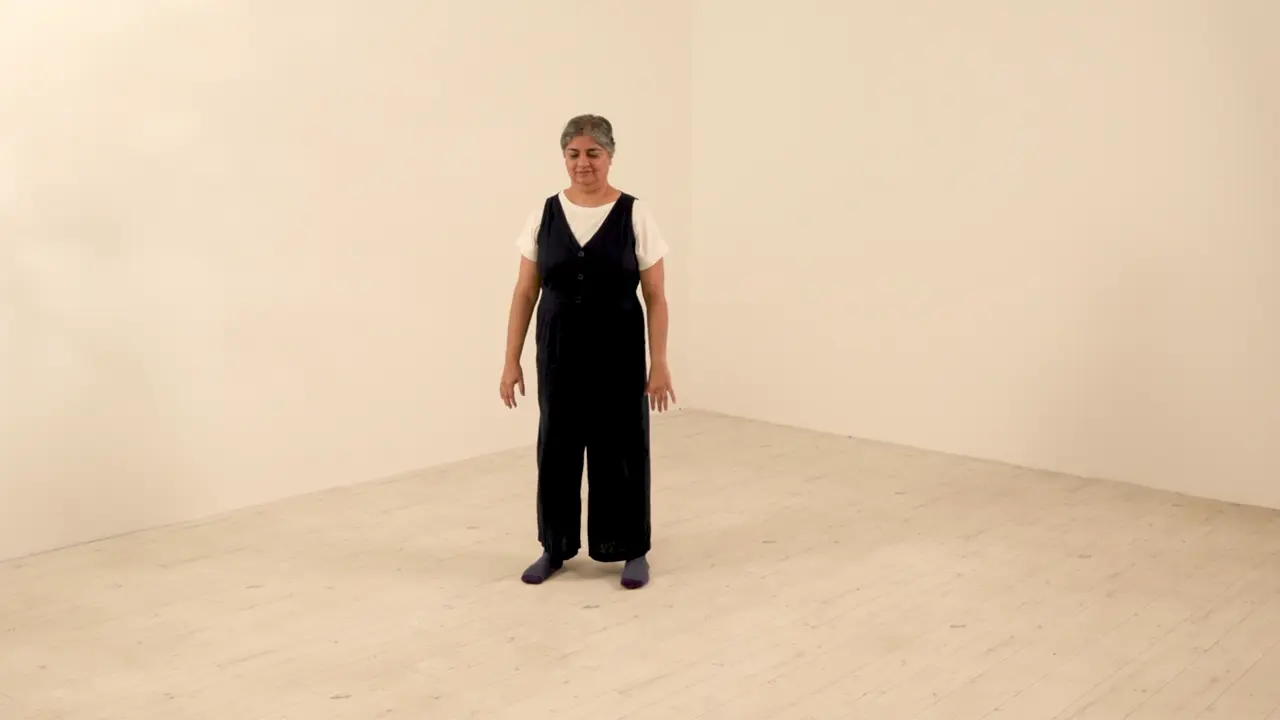
Feet are wider than hip distance and toes are slightly pointed out. Both arms lift as you turn from the waist to lift your arms and look at the moon behind you; as you do so the back heel can lift. As you inhale, lower your arms and come back to centre. I like to imagine that I can carry the light of the moon across the still waters of a lake. This form with its deep back rotation is linked with the water element and its associated organ and meridian system of the kidneys.

Preventative health
Looking at the Moon Seated
Sit toward the front of the chair with your feet flat on the floor, slightly wider than hip-distance apart, and toes pointing comfortably forward. Keep the spine long and knees soft. Lift both arms and, turning gently from the waist, move the arms as if reaching to look at the moon behind you. As you turn, you can subtly lift the heels or simply imagine the rising motion. Inhale as you lower the arms and return to centre, maintaining length through the spine. Imagine carrying the light of the moon across the still waters of a lake. This gentle twisting movement, with its deep rotation, is associated with the Water element and the Kidneys, supporting circulation, grounding, and a sense of calm and reflection.

Rashes
What could this rash be? (Adults)
Dr Sarah Jarvis MBE Some rashes (especially dark red or purple rashes that don't fade with pressure) may need urgent medical treatment as they can be associated with meningitis and blood infection (septicaemia). For more information, go to [https://patient.info/health/skin-rashes](https://patient.info/health/skin-rashes)
by Dr Sarah Jarvis

Meningitis Q&A
Is meningitis life threatening?
Dr Sarah Jarvis On average there are around 3,200 cases of bacterial meningitis a year; after babies, 16-25 year olds are the age group most affected. Experts are currently worried about an increase in cases associated with a particularly aggressive MenW strain, called ST-11 - in 2009/10 there were only 22 cases in England, but this went up to 210 cases in 2015/16. Scarily, one in seven teenagers infected with MenW don't survive. [https://patient.info/health/meningitis-leaflet/features/do-you-need-the-meningitis-jab](https://patient.info/health/meningitis-leaflet/features/do-you-need-the-meningitis-jab)
by Dr Sarah Jarvis

Children's health
More evidence that social media is associated with teenage depression
Researchers have found a link between social media usage and teenage depression.
by Ashwin Bhandari
Related patient information and medicines

Patient information leaflet
Glycogen storage disorders
Glycogen storage disorders are a group of inherited diseases. They result from a problem with one of the proteins (known as enzymes) involved in the conversion of glucose to glycogen, or the breakdown of glycogen back into glucose. They mostly tend to affect your liver and muscles. Most are diagnosed in childhood. Symptoms include weakness,.

Patient information leaflet
BRCA genes
There are a few known gene changes (mutations) that can increase the risk of certain cancers, and tests available for some of them, including BRCA1 and BRCA2 gene mutations. The BRCA1 and BRCA2 genes normally protect against certain cancers, particularly breast cancer and ovarian cancer. If there is a mutation in one of these genes then this may.

Patient information leaflet
Restricted growth
Dwarfism is a medical or genetic condition which causes people to have restricted growth so that they are shorter than average. Specifically, people with dwarfism grow no higher than 4 ft 10 ins (147 cm). It can be due to literally hundreds of different causes, so the term actually includes many different medical conditions. The cause and type of.
Patient information leaflet
Diogenes syndrome
Diogenes syndrome is uncommon but can be easily missed, especially in an elderly person living on their own. People with Diogenes syndrome often cause problems for neighbours because of hoarding and neglect, and so aren't always treated with comp... Diogenes syndrome, also known as senile squalor syndrome or hoarding disorder, is a disorder with.
Patient information leaflet
Primary liver cancer
In primary liver cancer the cancer starts in the liver. In secondary liver cancer, the cancer spreads from another part of the body to the liver. Primary liver cancer is uncommon in the UK but is common in other parts of the world. In the UK, most cases develop as a complication of scarring of the liver (cirrhosis). In general the outlook is poor..

Patient information leaflet
Duchenne muscular dystrophy
The DMD gene is located on a chromosome called the X chromosome. Boys have one X chromosome and one Y chromosome; girls have two X chromosomes. DMD is inherited in a pattern called 'X-linked inheritance'. The DMD gene is 'carried' by women but does not usually cause problems in girls or women (with rare exceptions, below). This is because of there.
Further reading and references
- Pantothenate kinase-associated neurodegeneration; MedlinePlus, National Library of Medicine.
- Gregory A, Hayflick SJ. Neurodegeneration with brain iron accumulation. Folia Neuropathol. 2005;43(4):286-96.
- Gregory A, Hayflick SJ. Pantothenate Kinase-Associated Neurodegeneration. 2002 Aug 13 [updated 2017 Aug 3]. In: Adam MP, Bick S, Mirzaa GM, Wallace SE, Amemiya A, editors. GeneReviews(R) [Internet]. Seattle (WA): University of Washington, Seattle; 1993-2026. Available from http://www.ncbi.nlm.nih.gov/books/NBK1490/
- Hartig MB, Hortnagel K, Garavaglia B, Zorzi G, Kmiec T, Klopstock T, Rostasy K, Svetel M, Kostic VS, Schuelke M, Botz E, Weindl A, Novakovic I, Nardocci N, Prokisch H, Meitinger T. Genotypic and phenotypic spectrum of PANK2 mutations in patients with neurodegeneration with brain iron accumulation. Ann Neurol. 2006 Feb;59(2):248-56. doi: 10.1002/ana.20771.
- Hayflick SJ, Westaway SK, Levinson B, Zhou B, Johnson MA, Ching KH, Gitschier J. Genetic, clinical, and radiographic delineation of Hallervorden-Spatz syndrome. N Engl J Med. 2003 Jan 2;348(1):33-40. doi: 10.1056/NEJMoa020817.
- Hayflick SJ. Pantothenate kinase-associated neurodegeneration (formerly Hallervorden-Spatz syndrome). J Neurol Sci. 2003 Mar 15;207(1-2):106-7. doi: 10.1016/s0022-510x(02)00433-1. No abstract available.
- Hayflick SJ. Unraveling the Hallervorden-Spatz syndrome: pantothenate kinase-associated neurodegeneration is the name. Curr Opin Pediatr. 2003 Dec;15(6):572-7. doi: 10.1097/00008480-200312000-00005.
- Houlden H, Lincoln S, Farrer M, Cleland PG, Hardy J, Orrell RW. Compound heterozygous PANK2 mutations confirm HARP and Hallervorden-Spatz syndromes are allelic. Neurology. 2003 Nov 25;61(10):1423-6. doi: 10.1212/01.wnl.0000094120.09977.92.
- Pellecchia MT, Valente EM, Cif L, Salvi S, Albanese A, Scarano V, Bonuccelli U, Bentivoglio AR, D'Amico A, Marelli C, Di Giorgio A, Coubes P, Barone P, Dallapiccola B. The diverse phenotype and genotype of pantothenate kinase-associated neurodegeneration. Neurology. 2005 May 24;64(10):1810-2. doi: 10.1212/01.WNL.0000161843.52641.EC.
- Shevell M. Hallervorden and history. N Engl J Med. 2003 Jan 2;348(1):3-4. doi: 10.1056/NEJMp020158. No abstract available.
- Zhou B, Westaway SK, Levinson B, Johnson MA, Gitschier J, Hayflick SJ. A novel pantothenate kinase gene (PANK2) is defective in Hallervorden-Spatz syndrome. Nat Genet. 2001 Aug;28(4):345-9. doi: 10.1038/ng572.
Share your thoughts or experiences with others in our patient communities.
Simple access to trusted treatments and health services online.
Common conditions
Get help with common conditions through the NHS, without a GP appointment.





Sign up to the Patient newsletter
Your weekly dose of clear, trustworthy health advice - written to help you feel informed, confident and in control.
By subscribing you accept our Privacy Policy. You can unsubscribe at any time. We never sell your data.