PURA syndrome
Last updated 2 Oct 2024
Meets Patient’s editorial guidelines
- DownloadDownload
- Share
- Language
- Discussion
- Ask Patient
- Audio Version
- Add to preferred sources on Google
PURA syndrome is a condition characterised by intellectual disability and delayed development of speech and motor skills, such as walking. Expressive language skills (vocabulary and the production of speech) are generally more severely affected than receptive language skills (the ability to understand speech), and most affected individuals are unable to speak. People with PURA syndrome may learn to walk later than their peers; many are never able to walk. In infancy, affected infants have very weak muscle tone (hypotonia) and feeding difficulties. Problems with swallowing (dysphagia) can last throughout life. In addition, affected infants can be excessively sleepy (hypersomnolent), have a low body temperature (hypothermia), and have short pauses in breathing (apnea) or episodes of abnormally slow breathing (hypoventilation). These breathing problems usually go away after age 1.
Video picks for Genetic conditionsVideo library
Description
PURA syndrome is a condition characterised by intellectual disability and delayed development of speech and motor skills, such as walking. Expressive language skills (vocabulary and the production of speech) are generally more severely affected than receptive language skills (the ability to understand speech), and most affected individuals are unable to speak. People with PURA syndrome may learn to walk later than their peers; many are never able to walk. In infancy, affected infants have very weak muscle tone (hypotonia) and feeding difficulties. Problems with swallowing (dysphagia) can last throughout life. In addition, affected infants can be excessively sleepy (hypersomnolent), have a low body temperature (hypothermia), and have short pauses in breathing (apnea) or episodes of abnormally slow breathing (hypoventilation). These breathing problems usually go away after age 1.
Recurrent seizures (epilepsy) are also common in PURA syndrome. Seizures usually begin before age 5 with uncontrolled muscle jerks (myoclonus). Other types of seizures can develop, such as generalized tonic-clonic seizures, which involve loss of consciousness, muscle rigidity, and convulsions. In people with PURA syndrome, seizures are often difficult to control.
Other features in people with PURA syndrome can include abnormalities of the heart, eyes, urogenital tract, gastrointestinal tract, and skeleton. Some affected individuals have symptoms of a hormonal problem, such as early sexual development (precocious puberty) or low levels of vitamin D (which is a hormone).
Inheritance patterns
The source lists the following possible inheritance patterns: Autosomal dominant. More than one pattern can apply in different cases.
Related genes
Other names
PURA-related neurodevelopmental disorder
PURA-related severe neonatal hypotonia-seizures-encephalopathy syndrome
Patient picks for Genetic conditions
Chest and lungs
Precordial catch syndrome
Although precordial catch syndrome is a harmless cause of chest pain, there are many other causes of chest pain, some of which are serious and need urgent medical attention.
by Dr Colin Tidy, MRCGP
Sexual health
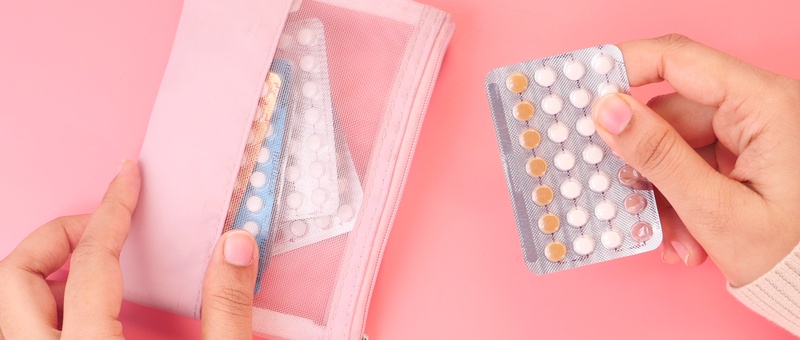
What is post-birth control syndrome?
After stopping birth control, you may notice physical or emotional changes in your body. While not officially recognised as a medical condition, these symptoms are often referred to as post-birth control syndrome (PBCS).
by Victoria Raw

Heart health and blood vessels
Osler-Weber-Rendu syndrome
Osler-Weber-Rendu syndrome is a disorder of the blood vessels that can cause excessive bleeding. Osler-Weber-Rendu syndrome is also called hereditary haemorrhagic telangiectasia. The abnormal blood vessels can cause bleeding both into the skin and inside your body.
by Dr Colin Tidy, MRCGP

Brain and nerves
Cervical rib
About 1 in 100 people are born with an extra rib called a cervical rib. About 1 in 10 people who have a cervical rib develop thoracic outlet syndrome. This happens if the cervical rib squashes the nerves and blood vessels going into the arm. Treatment can include painkillers, physiotherapy and sometimes surgery to relieve the compression caused by, for example, a cervical rib.
by Dr Doug McKechnie, MRCGP

Kidney and urinary tract
Nephrotic syndrome
Nephrotic syndrome is a condition where the 'filters' in the kidney become 'leaky' and large amounts of protein leak from the blood into the urine. The main symptom is fluid retention (oedema) which is mainly due to the low protein level in the blood. Various diseases can cause nephrotic syndrome, some more serious than others. Treatment and outcome (prognosis) vary, depending on the cause. The most common cause in children, minimal change disease, usually responds very well to treatment.
by Dr Surangi Mendis, MRCGP

Healthy living
Sleep apnoea
If you have sleep apnoea (also known as obstructive sleep apnoea syndrome), you have many periods when your breathing stops for 10 seconds or more when you sleep. You wake up briefly after each episode of stopped breathing to start breathing again. You do not usually remember the times you briefly wake up but you have a disturbed night's sleep. As a result, you feel sleepy during the day. A typical person with this condition is overweight, male and middle-aged, and snores loudly. However, it can affect anyone. Sleep apnoea treatment usually works well.
by Dr Colin Tidy, MRCGP
Related patient information and medicines

Patient information leaflet
Precordial catch syndrome
Although precordial catch syndrome is a harmless cause of chest pain, there are many other causes of chest pain, some of which are serious and need urgent medical attention. What is precordial catch syndrome. Precordial catch syndrome (PCS) is condition which causes a sharp stabbing pain in the chest. These typically get worse with brea....

Patient information leaflet
Pre-eclampsia
This means that should look out for any of the symptoms above after you give birth and report them to your doctor or midwife. This is called post natal pre-eclampsia. HELLP syndrome HELLP syndrome is a complication which occurs in women who have severe pre-eclampsia or eclampsia. It commonly occurs between 27 and 37 weeks of pregnancy but can.
Patient information leaflet
Slapped cheek syndrome
Slapped cheek syndrome is normally a mild, short illness. However, the rash may appear to be quite dramatic. However, it can cause harm to an unborn baby so women who are pregnant a... What is slapped cheek syndrome. Slapped cheek syndrome, sometimes called fifth disease or erythema infectiosum, is an infection caused by the parvovirus B19 virus..
Patient information leaflet
Fetal alcohol syndrome
FAS is a pattern of disabilities that can develop in a baby as it grows in the womb (uterus) because the mother drank alcohol whilst pregnant and the baby is therefore exposed to alcohol before birth. Fetal alcohol syndrome (FAS) is part of a group of conditions called fetal alcohol spectrum disorders (FASDs). It is acknowledged that there are.

Patient information leaflet
Refeeding syndrome
Refeeding syndrome was first described in Far East prisoners after the second world war when they developed heart failure after starting to eat again after a prolonged period of starvation. Refeeding syndrome is a dangerous and life threatening shift of fluids and body salts (electrolytes) that can occur when malnourished patients receive.

Patient information leaflet
Polycystic ovary syndrome
Polycystic ovary syndrome (PCOS) is a metabolic condition that affects how the ovaries work. It can cause symptoms such as weight gain, excess hair growth, period problems, and can impact fertility. Key points Polycystic Ovary Syndrome (PCOS) has been officially renamed to Polyendocrine Metabolic Ovarian Syndrome (PMOS). The new name, which is the.
Further reading and references
- PURA syndrome; MedlinePlus, National Library of Medicine.
- Hunt D, Leventer RJ, Simons C, Taft R, Swoboda KJ, Gawne-Cain M; DDD study; Magee AC, Turnpenny PD, Baralle D. Whole exome sequencing in family trios reveals de novo mutations in PURA as a cause of severe neurodevelopmental delay and learning disability. J Med Genet. 2014 Dec;51(12):806-13. doi: 10.1136/jmedgenet-2014-102798. Epub 2014 Oct 23.
- Lalani SR, Zhang J, Schaaf CP, Brown CW, Magoulas P, Tsai AC, El-Gharbawy A, Wierenga KJ, Bartholomew D, Fong CT, Barbaro-Dieber T, Kukolich MK, Burrage LC, Austin E, Keller K, Pastore M, Fernandez F, Lotze T, Wilfong A, Purcarin G, Zhu W, Craigen WJ, McGuire M, Jain M, Cooney E, Azamian M, Bainbridge MN, Muzny DM, Boerwinkle E, Person RE, Niu Z, Eng CM, Lupski JR, Gibbs RA, Beaudet AL, Yang Y, Wang MC, Xia F. Mutations in PURA cause profound neonatal hypotonia, seizures, and encephalopathy in 5q31.3 microdeletion syndrome. Am J Hum Genet. 2014 Nov 6;95(5):579-83. doi: 10.1016/j.ajhg.2014.09.014. Epub 2014 Oct 16.
- Reijnders MRF, Janowski R, Alvi M, Self JE, van Essen TJ, Vreeburg M, Rouhl RPW, Stevens SJC, Stegmann APA, Schieving J, Pfundt R, van Dijk K, Smeets E, Stumpel CTRM, Bok LA, Cobben JM, Engelen M, Mansour S, Whiteford M, Chandler KE, Douzgou S, Cooper NS, Tan EC, Foo R, Lai AHM, Rankin J, Green A, Lonnqvist T, Isohanni P, Williams S, Ruhoy I, Carvalho KS, Dowling JJ, Lev DL, Sterbova K, Lassuthova P, Neupauerova J, Waugh JL, Keros S, Clayton-Smith J, Smithson SF, Brunner HG, van Hoeckel C, Anderson M, Clowes VE, Siu VM, Ddd Study T, Selber P, Leventer RJ, Nellaker C, Niessing D, Hunt D, Baralle D. PURA syndrome: clinical delineation and genotype-phenotype study in 32 individuals with review of published literature. J Med Genet. 2018 Feb;55(2):104-113. doi: 10.1136/jmedgenet-2017-104946. Epub 2017 Nov 2.
- Reijnders MRF, Leventer RJ, Lee BH, Baralle D, Selber P, Paciorkowski AR, St John M, Morgan AT, Anderson M, Hildebrand MS, Sanchez LD, Hunt D. PURA-Related Neurodevelopmental Disorders. 2017 Apr 27 [updated 2026 Mar 25]. In: Adam MP, Bick S, Mirzaa GM, Wallace SE, Amemiya A, editors. GeneReviews(R) [Internet]. Seattle (WA): University of Washington, Seattle; 1993-2026. Available from http://www.ncbi.nlm.nih.gov/books/NBK426063/
- Tanaka AJ, Bai R, Cho MT, Anyane-Yeboa K, Ahimaz P, Wilson AL, Kendall F, Hay B, Moss T, Nardini M, Bauer M, Retterer K, Juusola J, Chung WK. De novo mutations in PURA are associated with hypotonia and developmental delay. Cold Spring Harb Mol Case Stud. 2015 Oct;1(1):a000356. doi: 10.1101/mcs.a000356.
- White MK, Johnson EM, Khalili K. Multiple roles for Puralpha in cellular and viral regulation. Cell Cycle. 2009 Feb 1;8(3):1-7. doi: 10.4161/cc.8.3.7585. Epub 2009 Feb 10.
Share your thoughts or experiences with others in our patient communities.
Simple access to trusted treatments and health services online.
Common conditions
Get help with common conditions through the NHS, without a GP appointment.





Sign up to the Patient newsletter
Your weekly dose of clear, trustworthy health advice - written to help you feel informed, confident and in control.
By subscribing you accept our Privacy Policy. You can unsubscribe at any time. We never sell your data.