TK2-related mitochondrial DNA depletion syndrome, myopathic form
Last updated 18 Aug 2020
Meets Patient’s editorial guidelines
- DownloadDownload
- Share
- Language
- Discussion
- Ask Patient
- Audio Version
- Add to preferred sources on Google
TK2-related mitochondrial DNA depletion syndrome, myopathic form (TK2-MDS) is an inherited condition that causes progressive muscle weakness (myopathy).
Video picks for Genetic conditionsVideo library
Description
TK2-related mitochondrial DNA depletion syndrome, myopathic form (TK2-MDS) is an inherited condition that causes progressive muscle weakness (myopathy).
The signs and symptoms of TK2-MDS typically begin in early childhood. Development is usually normal early in life, but as muscle weakness progresses, people with TK2-MDS lose motor skills such as standing, walking, eating, and talking. Some affected individuals have increasing weakness in the muscles that control eye movement, leading to droopy eyelids (progressive external ophthalmoplegia).
Most often in TK2-MDS, the muscles are the only affected tissues; however, the liver may be enlarged (hepatomegaly), seizures can occur, and hearing loss caused by nerve damage in the inner ear (sensorineural hearing loss) may be present. Intelligence is usually not affected.
As the disorder worsens, the muscles that control breathing become weakened and affected individuals frequently have to rely on mechanical ventilation. Respiratory failure is the most common cause of death in people with TK2-MDS, often occurring in childhood. Rarely, the disorder progresses slowly and affected individuals survive into adolescence or adulthood.
Inheritance patterns
The source lists the following possible inheritance patterns: Autosomal recessive. More than one pattern can apply in different cases.
Related genes
Other names
Mitochondrial DNA depletion syndrome 2 (myopathic type)
MTDPS2
TK2-related mitochondrial DNA depletion myopathy
Patient picks for Genetic conditions

General health and lifestyle
Ideas, Concerns and Expectations - a guide to filling in your GP’s online form
Booking a GP appointment has changed. Instead of waiting on the phone line at 8am, many people now complete an online consultation form through their practice website. At first glance, it may feel like another bureaucratic hurdle. But in fact, these forms are designed to help you, and your GP team, get to the heart of your problem more quickly. The way you fill them in makes a real difference. When you provide clear, thoughtful information, it not only helps the practice decide whether something is urgent, but also ensures you are directed to the right person in the wider primary care team. That might be your GP - but it could just as easily be a nurse, a pharmacist, a physiotherapist, or another professional who can meet your needs sooner. One of the simplest tools to guide you is known as Ideas, Concerns and Expectations, or ICE.
by Thomas Andrew Porteus, MBCS

Tests and investigations
Is DNA testing a good idea?
'DIY' genetic tests are heavily hyped these days - they claim to be able to predict your risk of dementia, cancer, heart disease and much more. But should you shell out your money for them? Absolutely not, according to most doctors. However, there are situations where DNA tests can save lives.
by Dr Sarah Jarvis
Brain and nerves
Cervical rib
About 1 in 100 people are born with an extra rib called a cervical rib. About 1 in 10 people who have a cervical rib develop thoracic outlet syndrome. This happens if the cervical rib squashes the nerves and blood vessels going into the arm. Treatment can include painkillers, physiotherapy and sometimes surgery to relieve the compression caused by, for example, a cervical rib.
by Dr Doug McKechnie, MRCGP

Travel and vaccinations
Jet lag
Jet lag occurs after travelling rapidly across several time zones, because the body's internal clock has not adjusted to the required sleep-wake cycle in the new time zone. Jet lag causes physical and psychological symptoms, the severity of which increases with the number of time zones crossed and direction of travel. Eastward travel, when hours are 'gained' is associated with worse jet lag than westward travel, when hours are 'lost.'
by Dr Hayley Willacy, FRCGP
Preventative health
Harmonising the Qi
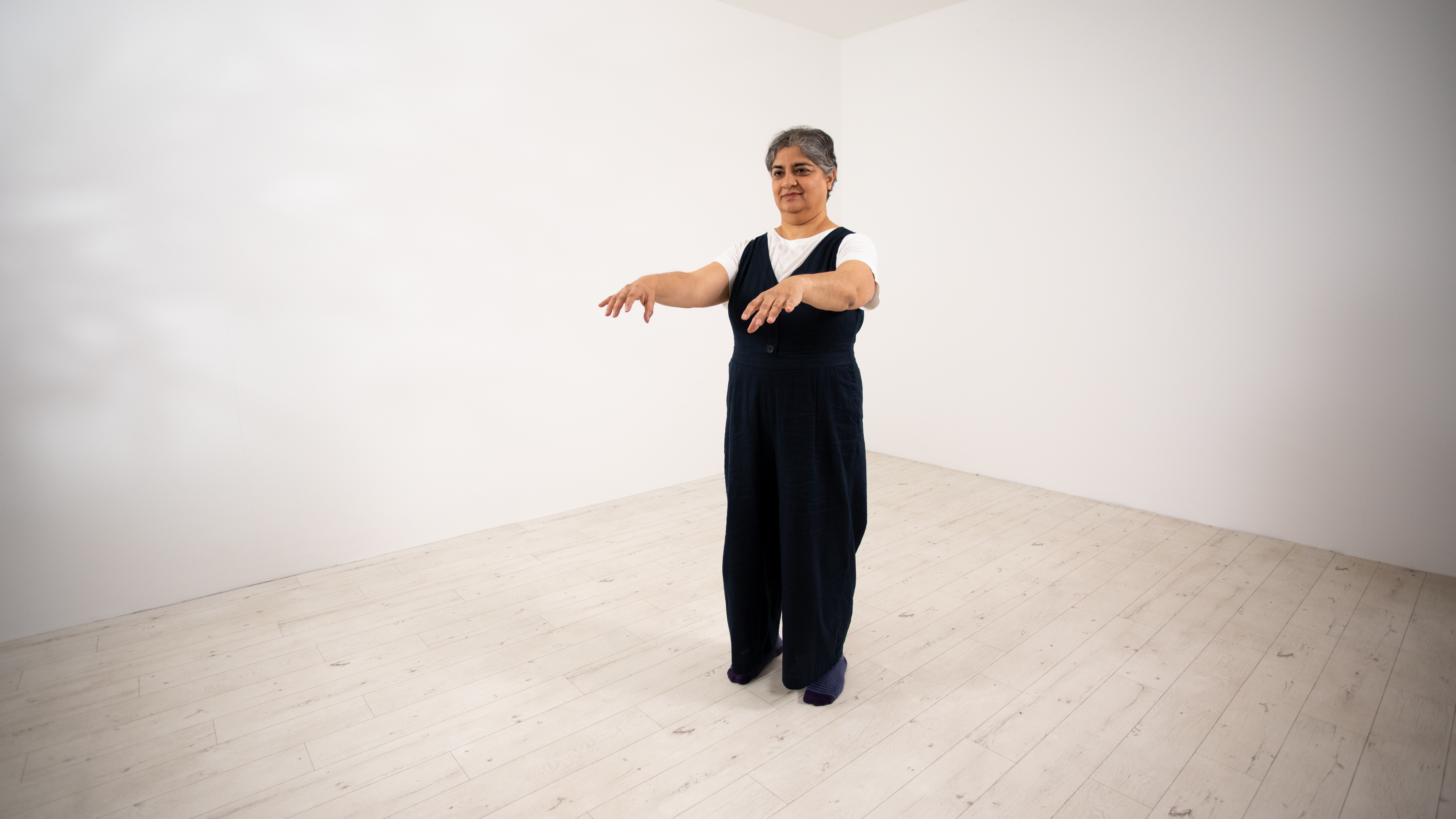
In pulsing or harmonising the Qi, the arms float in front of the chest as the knee bends and the hips draw back on an inhale. Then as you breahe out, the crown of the head lifts, the arms drop and the knees move towards straight. This form helps support the liver meridian and can help release feelings of frustration.
Travel and vaccinations
Roundworms
Roundworms (also called nematodes) are worms with a long round body. They vary in length from several millimetres to up to two metres. Roundworms are common in warm tropical countries and most infections seen in the UK will have been acquired abroad. Children are more often affected than adults. Treatment is usually very effective but wiping out (eradication of) roundworm infections has proved to be very difficult.
by Dr Toni Hazell, FRCGP
Related patient information and medicines

Patient information leaflet
Ehlers-Danlos syndrome
The Ehlers-Danlos syndromes (EDS) are a group of conditions that affect the stretchiness and strength of supporting tissues in the body, including skin, joints, blood vessels and internal organs. What are the Ehlers-Danlos syndromes. The Ehlers Danlos syndromes (EDS) are a group of conditions which are usually (although not always) inherited from.
Patient information leaflet
Refeeding syndrome
Refeeding syndrome was first described in Far East prisoners after the second world war when they developed heart failure after starting to eat again after a prolonged period of starvation. What is refeeding syndrome. Refeeding syndrome is a dangerous and life threatening shift of fluids and body salts (electrolytes) that can occur when.
Patient information leaflet
Cyclical vomiting syndrome
Cyclical vomiting syndrome is a condition which occurs mainly in children but can also affect adults. It is more common in people who have migraines. Children have severe episodes of feeling sick (nausea) and being sick (vomiting), sometimes with other symptoms. In between these episodes the person is completely well. There are various treatments.

Patient information leaflet
Sjögren's syndrome
Sjögren's syndrome is an autoimmune disease that causes the glands that produce tears and saliva to stop working. Key points Sjögren’s syndrome is an autoimmune condition where the immune system attacks glands that produce moisture, mainly the tear and salivary glands. Common symptoms include dry eyes, dry mouth, and sometimes dryness in other.
Patient information leaflet
Nephrotic syndrome
Nephrotic syndrome is a condition where the 'filters' in the kidney become 'leaky' and large amounts of protein leak from the blood into the urine. The main symptom is fluid retention (oedema) which is mainly due to the low protein level in the blood. Various diseases can cause nephrotic syndrome, some more serious than others. Treatment and.
Patient information leaflet
Cri du chat syndrome
Cri du chat syndrome is a chromosome problem caused by a missing piece of chromosome 5. The syndrome is called cri du chat (French for cry of the cat) because affected babies often have a high-pitched cry. Not all babies with the missing piece of chromosome 5 will develop cri du chat syndrome. Cri du chat syndrome may cause a variety of.
Further reading and references
- TK2-related mitochondrial DNA depletion syndrome, myopathic form; MedlinePlus, National Library of Medicine.
- Behin A, Jardel C, Claeys KG, Fagart J, Louha M, Romero NB, Laforet P, Eymard B, Lombes A. Adult cases of mitochondrial DNA depletion due to TK2 defect: an expanding spectrum. Neurology. 2012 Feb 28;78(9):644-8. doi: 10.1212/WNL.0b013e318248df2b. Epub 2012 Feb 15.
- Blakely E, He L, Gardner JL, Hudson G, Walter J, Hughes I, Turnbull DM, Taylor RW. Novel mutations in the TK2 gene associated with fatal mitochondrial DNA depletion myopathy. Neuromuscul Disord. 2008 Jul;18(7):557-60. doi: 10.1016/j.nmd.2008.04.014. Epub 2008 May 27.
- Gotz A, Isohanni P, Pihko H, Paetau A, Herva R, Saarenpaa-Heikkila O, Valanne L, Marjavaara S, Suomalainen A. Thymidine kinase 2 defects can cause multi-tissue mtDNA depletion syndrome. Brain. 2008 Nov;131(Pt 11):2841-50. doi: 10.1093/brain/awn236. Epub 2008 Sep 26.
- Lesko N, Naess K, Wibom R, Solaroli N, Nennesmo I, von Dobeln U, Karlsson A, Larsson NG. Two novel mutations in thymidine kinase-2 cause early onset fatal encephalomyopathy and severe mtDNA depletion. Neuromuscul Disord. 2010 Mar;20(3):198-203. doi: 10.1016/j.nmd.2009.11.013. Epub 2010 Jan 18.
- Marti R, Nascimento A, Colomer J, Lara MC, Lopez-Gallardo E, Ruiz-Pesini E, Montoya J, Andreu AL, Briones P, Pineda M. Hearing loss in a patient with the myopathic form of mitochondrial DNA depletion syndrome and a novel mutation in the TK2 gene. Pediatr Res. 2010 Aug;68(2):151-4. doi: 10.1203/PDR.0b013e3181e33bbe.
- Oskoui M, Davidzon G, Pascual J, Erazo R, Gurgel-Giannetti J, Krishna S, Bonilla E, De Vivo DC, Shanske S, DiMauro S. Clinical spectrum of mitochondrial DNA depletion due to mutations in the thymidine kinase 2 gene. Arch Neurol. 2006 Aug;63(8):1122-6. doi: 10.1001/archneur.63.8.1122.
- Paradas C, Gutierrez Rios P, Rivas E, Carbonell P, Hirano M, DiMauro S. TK2 mutation presenting as indolent myopathy. Neurology. 2013 Jan 29;80(5):504-6. doi: 10.1212/WNL.0b013e31827f0ff7. Epub 2013 Jan 9.
Share your thoughts or experiences with others in our patient communities.
Simple access to trusted treatments and health services online.
Common conditions
Get help with common conditions through the NHS, without a GP appointment.





Sign up to the Patient newsletter
Your weekly dose of clear, trustworthy health advice - written to help you feel informed, confident and in control.
By subscribing you accept our Privacy Policy. You can unsubscribe at any time. We never sell your data.