Treacher Collins syndrome
Last updated 18 Aug 2023
Meets Patient’s editorial guidelines
- DownloadDownload
- Share
- Language
- Discussion
- Ask Patient
- Audio Version
- Add to preferred sources on Google
Treacher Collins syndrome is a condition that affects the development of bones and other tissues of the face. The signs and symptoms of this disorder vary greatly, ranging from almost unnoticeable to severe. Most affected individuals have underdeveloped facial bones, particularly the cheek bones, and a very small jaw and chin (micrognathia). Some people with this condition are also born with an opening in the roof of the mouth called a cleft palate. In severe cases, underdevelopment of the facial bones may restrict an affected infant's airway, causing potentially life-threatening respiratory problems.
Video picks for Genetic conditionsVideo library
Description
Treacher Collins syndrome is a condition that affects the development of bones and other tissues of the face. The signs and symptoms of this disorder vary greatly, ranging from almost unnoticeable to severe. Most affected individuals have underdeveloped facial bones, particularly the cheek bones, and a very small jaw and chin (micrognathia). Some people with this condition are also born with an opening in the roof of the mouth called a cleft palate. In severe cases, underdevelopment of the facial bones may restrict an affected infant's airway, causing potentially life-threatening respiratory problems.
People with Treacher Collins syndrome often have eyes that slant downward, sparse eyelashes, and a notch in the lower eyelids called an eyelid coloboma. Some affected individuals have additional eye abnormalities that can lead to vision loss. This condition is also characterised by absent, small, or unusually formed ears. Hearing loss occurs in about half of all affected individuals; hearing loss is caused by defects of the three small bones in the middle ear, which transmit sound, or by underdevelopment of the ear canal. People with Treacher Collins syndrome usually have normal intelligence.
Inheritance patterns
The source lists the following possible inheritance patterns: Autosomal dominant. More than one pattern can apply in different cases.
Related genes
Other names
Franceschetti-Zwahlen-Klein syndrome
Mandibulofacial dysostosis (MFD1)
Treacher Collins-Franceschetti syndrome
Zygoauromandibular dysplasia
Patient picks for Genetic conditions

Heart health and blood vessels
Microvascular angina
There is no agreed definition for CSX. The underlying cause may be sudden narrowing (spasm) of normal coronary arteries without any evidence of atheromatous fatty plaques.
by Dr Hayley Willacy, FRCGP

Brain and nerves
Cervical rib
About 1 in 100 people are born with an extra rib called a cervical rib. About 1 in 10 people who have a cervical rib develop thoracic outlet syndrome. This happens if the cervical rib squashes the nerves and blood vessels going into the arm. Treatment can include painkillers, physiotherapy and sometimes surgery to relieve the compression caused by, for example, a cervical rib.
by Dr Doug McKechnie, MRCGP

Bones, joints and muscles
Hypermobility spectrum disorders
Hypermobility spectrum disorders include all people with what used to be called joint hypermobility syndrome, and before that benign joint hypermobility syndrome. Anyone who has symptoms as a result of having hypermobile joints, but who does not have all the features of Ehlers-Danlos syndrome, has a hypermobility spectrum disorder. These problems mainly affect children and young adolescents with extra-flexible (hypermobile) joints who develop pain on exercise, which persists when they rest. These conditions can have a major impact on school and sporting life. Whilst they do not usually cause long-term harm, they can be associated with injuries and can sometimes persist into adulthood. Treatment is aimed at increasing muscle strength and joint resilience without causing injury.
by Dr Colin Tidy, MRCGP

Children's health
Cot death
The cause of cot death is not known. However, you can reduce the risk of cot death by the measures detailed below. The most important are to lay your baby on his or her back to sleep (not on their front or side) and to create a smoke-free zone for your baby.
by Dr Toni Hazell, FRCGP

Healthy living
Sleep apnoea
If you have sleep apnoea (also known as obstructive sleep apnoea syndrome), you have many periods when your breathing stops for 10 seconds or more when you sleep. You wake up briefly after each episode of stopped breathing to start breathing again. You do not usually remember the times you briefly wake up but you have a disturbed night's sleep. As a result, you feel sleepy during the day. A typical person with this condition is overweight, male and middle-aged, and snores loudly. However, it can affect anyone. Sleep apnoea treatment usually works well.
by Dr Colin Tidy, MRCGP

Children's health
Cri du chat syndrome
Cri du chat syndrome is a chromosome problem caused by a missing piece of chromosome 5. The syndrome is called cri du chat (French for cry of the cat) because affected babies often have a high-pitched cry. Not all babies with the missing piece of chromosome 5 will develop cri du chat syndrome. Cri du chat syndrome may cause a variety of abnormalities, especially affecting the head and face. Other features may include learning difficulties and slow growth and development. There is no specific treatment. However, physiotherapy, speech and language therapy, and surgical treatment for some abnormal features may be needed. Many affected children will survive well into adulthood. However, those babies severely affected may die within the first year of life.
by Dr Hayley Willacy, FRCGP
Related patient information and medicines
Patient information leaflet
Hearing loss
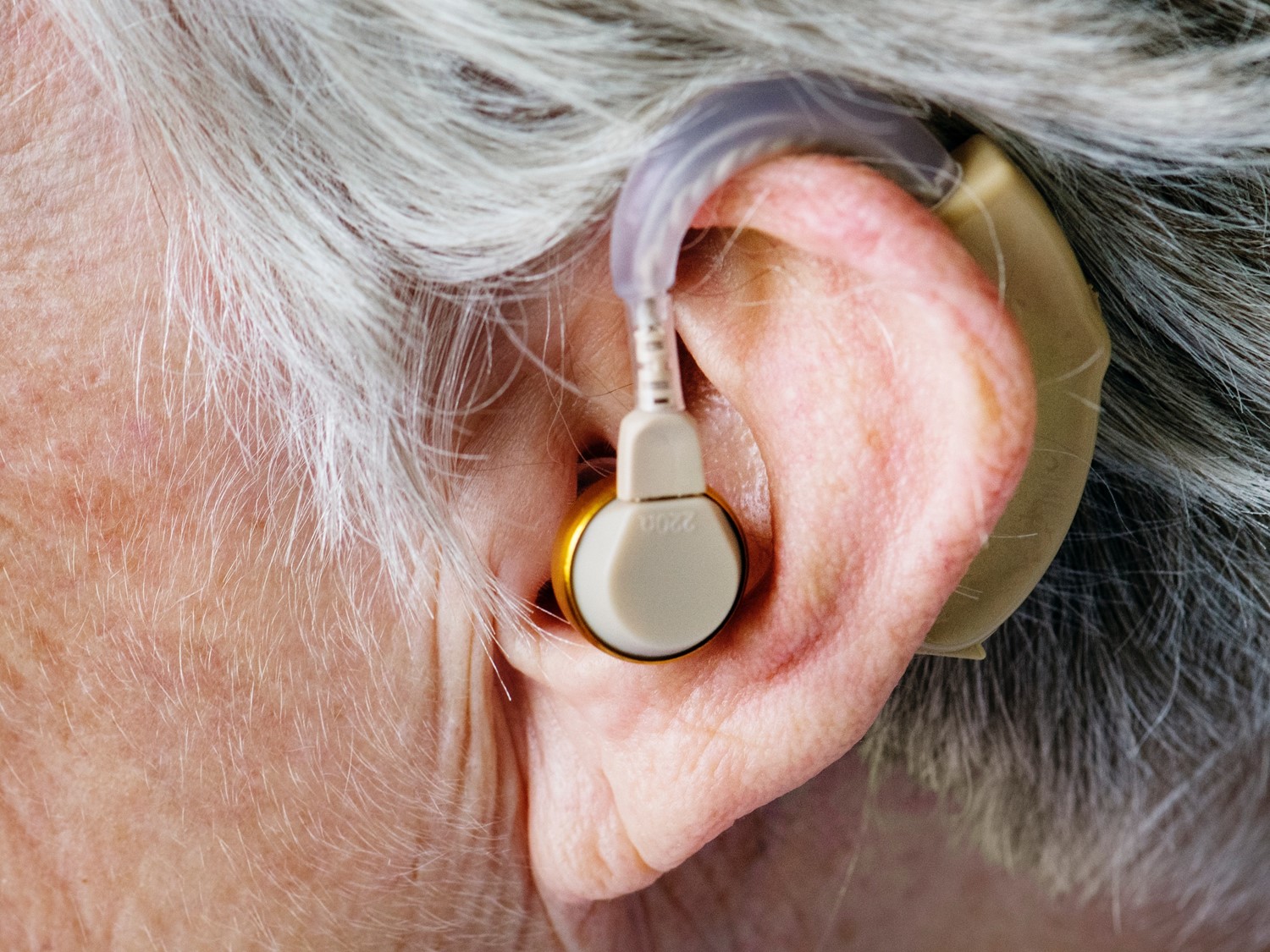
In this article we talk about the different causes of hearing loss, their different characteristics and what you can do about them. There are many inherited (genetic) syndromes which may cause hearing loss. These include Down's syndrome Down's syndrome , Treacher Collins' syndrome and Waardenburg's syndrome. They may have their effects through the.
Patient information leaflet
Precordial catch syndrome
Although precordial catch syndrome is a harmless cause of chest pain, there are many other causes of chest pain, some of which are serious and need urgent medical attention. What is precordial catch syndrome. Precordial catch syndrome (PCS) is condition which causes a sharp stabbing pain in the chest. These typically get worse with breathing in,.
Patient information leaflet
Microvascular angina
There is no agreed definition for CSX. The underlying cause may be sudden narrowing (spasm) of normal coronary arteries without any evidence of atheromatous fatty plaques. What is cardiac syndrome X. Cardiac syndrome X (CSX) is thought to be a type of angina Angina. In CSX chest pain is felt when the heart works harder but the heart arteries.
Patient information leaflet
Cervical rib
About 1 in 100 people are born with an extra rib called a cervical rib. About 1 in 10 people who have a cervical rib develop thoracic outlet syndrome. This happens if the cervical rib squashes the nerves and blood vessels going into the arm. Treatment can include painkillers, physiotherapy and sometimes surgery to relieve the compression caused.
Patient information leaflet
Hypermobility spectrum disorders
Hypermobility spectrum disorders include all people with what used to be called joint hypermobility syndrome, and before that benign joint hypermobility syndrome. Hypermobility spectrum disorders (HSDs) are a group of conditions that involve joint hypermobility (increased range of motion in the joints, sometimes referred to as "loose joints") and.

Patient information leaflet
Charles Bonnet syndrome
Charles Bonnet syndrome is a common condition experienced by people who are losing, or have lost, their sight. It involves seeing things which are not really there (having visual hallucinations). The hallucinations are most marked in low light or when relaxing and are often complicated scenes involving faces, children and wild animals. People.
Further reading and references
- Treacher Collins syndrome; MedlinePlus, National Library of Medicine.
- Barbosa M, Jabs EW, Huston S. Treacher Collins Syndrome. 2004 Jul 20 [updated 2024 Jun 20]. In: Adam MP, Bick S, Mirzaa GM, Wallace SE, Amemiya A, editors. GeneReviews(R) [Internet]. Seattle (WA): University of Washington, Seattle; 1993-2026. Available from http://www.ncbi.nlm.nih.gov/books/NBK1532/
- Dauwerse JG, Dixon J, Seland S, Ruivenkamp CA, van Haeringen A, Hoefsloot LH, Peters DJ, Boers AC, Daumer-Haas C, Maiwald R, Zweier C, Kerr B, Cobo AM, Toral JF, Hoogeboom AJ, Lohmann DR, Hehr U, Dixon MJ, Breuning MH, Wieczorek D. Mutations in genes encoding subunits of RNA polymerases I and III cause Treacher Collins syndrome. Nat Genet. 2011 Jan;43(1):20-2. doi: 10.1038/ng.724. Epub 2010 Dec 5.
- Dixon J, Jones NC, Sandell LL, Jayasinghe SM, Crane J, Rey JP, Dixon MJ, Trainor PA. Tcof1/Treacle is required for neural crest cell formation and proliferation deficiencies that cause craniofacial abnormalities. Proc Natl Acad Sci U S A. 2006 Sep 5;103(36):13403-8. doi: 10.1073/pnas.0603730103. Epub 2006 Aug 28.
- Marszalek B, Wojcicki P, Kobus K, Trzeciak WH. Clinical features, treatment and genetic background of Treacher Collins syndrome. J Appl Genet. 2002;43(2):223-33.
- Posnick JC, Ruiz RL. Treacher Collins syndrome: current evaluation, treatment, and future directions. Cleft Palate Craniofac J. 2000 Sep;37(5):434. doi: 10.1597/1545-1569(2000)0372.0.CO;2.
- Sakai D, Trainor PA. Treacher Collins syndrome: unmasking the role of Tcof1/treacle. Int J Biochem Cell Biol. 2009 Jun;41(6):1229-32. doi: 10.1016/j.biocel.2008.10.026. Epub 2008 Nov 5.
- Teber OA, Gillessen-Kaesbach G, Fischer S, Bohringer S, Albrecht B, Albert A, Arslan-Kirchner M, Haan E, Hagedorn-Greiwe M, Hammans C, Henn W, Hinkel GK, Konig R, Kunstmann E, Kunze J, Neumann LM, Prott EC, Rauch A, Rott HD, Seidel H, Spranger S, Sprengel M, Zoll B, Lohmann DR, Wieczorek D. Genotyping in 46 patients with tentative diagnosis of Treacher Collins syndrome revealed unexpected phenotypic variation. Eur J Hum Genet. 2004 Nov;12(11):879-90. doi: 10.1038/sj.ejhg.5201260.
- Trainor PA, Dixon J, Dixon MJ. Treacher Collins syndrome: etiology, pathogenesis and prevention. Eur J Hum Genet. 2009 Mar;17(3):275-83. doi: 10.1038/ejhg.2008.221. Epub 2008 Dec 24.
Share your thoughts or experiences with others in our patient communities.
Simple access to trusted treatments and health services online.
Common conditions
Get help with common conditions through the NHS, without a GP appointment.





Sign up to the Patient newsletter
Your weekly dose of clear, trustworthy health advice - written to help you feel informed, confident and in control.
By subscribing you accept our Privacy Policy. You can unsubscribe at any time. We never sell your data.