RNA polymerase I and III subunit D
Last updated 19 Apr 2023
Meets Patient’s editorial guidelines
- DownloadDownload
- Share
- Language
- Discussion
- Ask Patient
- Audio Version
- Add to preferred sources on Google
The POLR1D gene provides instructions for making one part (subunit) of two related enzymes called RNA polymerase I and RNA polymerase III. These enzymes are involved in the production (synthesis) of ribonucleic acid (RNA), a chemical cousin of DNA. Both enzymes help synthesize a form of RNA known as ribosomal RNA (rRNA). RNA polymerase III also plays a role in the synthesis of several other forms of RNA, including transfer RNA (tRNA). Ribosomal RNA and transfer RNA assemble protein building blocks (amino acids) into functioning proteins, which is essential for the normal functioning and survival of cells.
Video picks for GenesVideo library
Normal function
The POLR1D gene provides instructions for making one part (subunit) of two related enzymes called RNA polymerase I and RNA polymerase III. These enzymes are involved in the production (synthesis) of ribonucleic acid (RNA), a chemical cousin of DNA. Both enzymes help synthesize a form of RNA known as ribosomal RNA (rRNA). RNA polymerase III also plays a role in the synthesis of several other forms of RNA, including transfer RNA (tRNA). Ribosomal RNA and transfer RNA assemble protein building blocks (amino acids) into functioning proteins, which is essential for the normal functioning and survival of cells.
Based on its involvement in Treacher Collins syndrome, the POLR1D gene appears to play a critical role in the early development of structures that become bones and other tissues of the face.
Conditions referring to this gene or chromosome
Other names
AC19
DNA-directed RNA polymerase I subunit D
DNA-directed RNA polymerases I and III subunit RPAC2
FLJ20616
MGC9850
polymerase (RNA) I polypeptide D
polymerase (RNA) I polypeptide D, 16kDa
polymerase (RNA) I subunit D
RNA polymerase I subunit D
RNA polymerases I and III subunit AC2
RPA16
RPA9
RPAC2
RPAC2_HUMAN
RPC16
RPO1-3
Patient picks for Genes

Treatment and medication
Check your medicines for interactions
Use this medicine and drug interaction checker to see whether your medicines, supplements, vitamins, foods, or certain health conditions may interact with each other. It can help you understand potential risks, avoid unwanted side effects, and decide when it’s important to speak to a pharmacist, GP, or other healthcare professional. The tool is suitable for checking both prescription and over-the-counter medicines, as well as common supplements and herbal remedies. Open in a new window

Infections
6-in-1 vaccine
The 6-in-1 vaccine is part of routine childhood immunisations and protects babies against six different serious illnesses. Three doses are given. Further boosters without all six components are given at other times later in childhood and in adult life. The 6-in-1 vaccine used to be given as the 3-in-1 vaccine DTaP along with the polio vaccine which was given by mouth, but has gradually been extended so that it now protects against even more diseases. It is given in one single injection into the thigh from one single syringe. This leaflet explains when this vaccine is given and why. It also explains which components of the 6-in-1 vaccine are given later in the UK immunisation schedule as the 4-in-1, 3-in-1 etc.
by Dr Philippa Vincent, MRCGP

Pregnancy
Multiple pregnancy
In a multiple pregnancy, there is more than one baby growing in the womb (uterus) at the same time. Being pregnant with twins is the most common example. Both mother and babies need extra monitoring during pregnancy as the risks are higher than in a singleton pregnancy.
by Dr Toni Hazell, FRCGP
Nutrition and diet
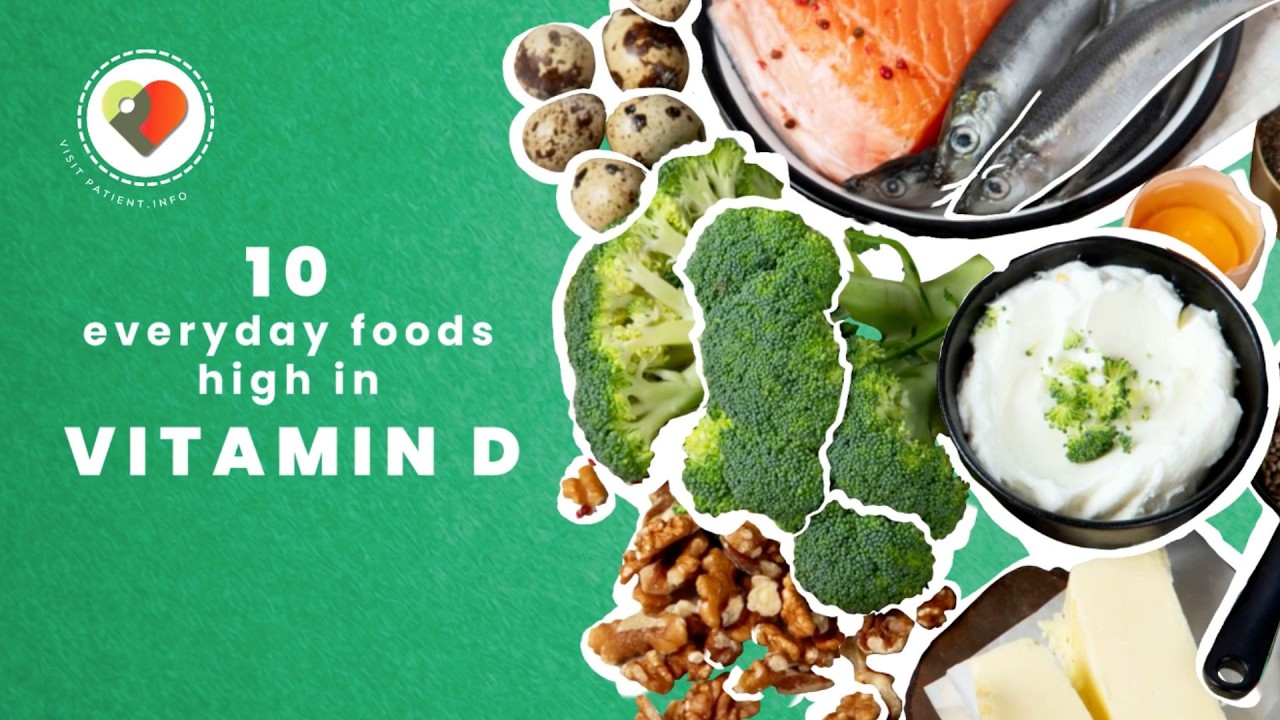
10 everyday foods high in vitamin D
Sunlight is our main source of vitamin D, but during the darker months, we may not get enough. That’s why a daily vitamin D supplement is recommended in winter, alongside vitamin D-rich foods to boost your intake: [https://patient.info/features/diet-and-nutrition/foods-high-in-vitamin-d](https://patient.info/features/diet-and-nutrition/foods-high-in-vitamin-d) *Visuals: Ben Hudson* *Audio: Victoria Raw* #VitaminD #WinterWellness #NutritionTips #HealthyEating #ImmuneHealth #NutritionEducation #Wellbeing #PatientInfo

Tests and investigations
CT scan
Note: the information below is a general guide only. The arrangements, and the way tests are performed, may vary between different hospitals. Always follow the instructions given by your doctor or local hospital.
by Dr Rachel Hudson, MRCGP

Bones, joints and muscles
Axial spondyloarthritis
Axial spondyloarthritis (also known as axSpA or axial SpA) is a painful, chronic arthritis that mainly affects the joints of the spine, and also the joints connecting each side of the base of the spine with the pelvis (sacroiliac joints). It can also affect other joints in the body, as well as tendons and ligaments. It is divided into: 1) Ankylosing spondylitis. 2) Non radiographic axial spondyloarthritis.
by Dr Philippa Vincent, MRCGP
Related patient information and medicines
Patient information leaflet
Antibody and antigen tests
False positive antigen tests (where the test is positive but the person doesn't actually have the infection) are unusual - false negative tests are more common, particularly if the swab-taking technique was not very good. Some tests can be done at home, for example a lateral flow test for COVID-19, whereas others need to be sent off to a lab, such.
Patient information leaflet
Check your medicines for interactions
Use this medicine and drug interaction checker to see whether your medicines, supplements, vitamins, foods, or certain health conditions may interact with each other. It can help you understand potential risks, avoid unwanted side effects, and decide when it’s important to speak to a pharmacist, GP, or other healthcare professional. The tool is.

Patient information leaflet
Vaccines and egg allergies
Newer techniques have been developed to make inactivated flu vaccines; these include: Cell-based vaccines, where mammal cells are infected with flu virus, which multiplies insi... Recombinant vaccines, where DNA from the flu virus is inserted into cells in a lab, causing them to produce a set of proteins from the virus which can then be collected.
Patient information leaflet
6-in-1 vaccine
The 6-in-1 vaccine is part of routine childhood immunisations and protects babies against six different serious illnesses. Three doses are given. Further boosters without all six components are given at other times later in childhood and in adult life. The 6-in-1 vaccine used to be given as the 3-in-1 vaccine DTaP along with the polio vaccine.
Patient information leaflet
Multiple pregnancy
Screening for Down’s syndrome, Edwards’ syndrome and Patau’s syndrome: NIPT; NHSE Oct 2023 NHSE Screening for Down’s syndrome, Edwards’ syndrome and Patau’s syndrome: NIPT The specialist team in multiple pregnancy You will usually be in the hands of a team of specialists, made up of the ultrasonographer, your midwife and a doctor who specialises.

Patient information leaflet
Neck lumps and bumps
Neck lumps and bumps are common and they have many possible causes. Key points Neck lumps have many causes including swollen lymph nodes or salivary glands, cysts or abscesses, and tumours. Most lumps are nothing to worry about and are often linked to infections such as colds, tonsillitis, or dental issues. See a doctor if a neck lump is hard,.
Further reading and references
- RNA polymerase I and III subunit D; MedlinePlus, National Library of Medicine.
- Barbosa M, Jabs EW, Huston S. Treacher Collins Syndrome. 2004 Jul 20 [updated 2024 Jun 20]. In: Adam MP, Bick S, Mirzaa GM, Wallace SE, Amemiya A, editors. GeneReviews(R) [Internet]. Seattle (WA): University of Washington, Seattle; 1993-2026. Available from http://www.ncbi.nlm.nih.gov/books/NBK1532/
- Dauwerse JG, Dixon J, Seland S, Ruivenkamp CA, van Haeringen A, Hoefsloot LH, Peters DJ, Boers AC, Daumer-Haas C, Maiwald R, Zweier C, Kerr B, Cobo AM, Toral JF, Hoogeboom AJ, Lohmann DR, Hehr U, Dixon MJ, Breuning MH, Wieczorek D. Mutations in genes encoding subunits of RNA polymerases I and III cause Treacher Collins syndrome. Nat Genet. 2011 Jan;43(1):20-2. doi: 10.1038/ng.724. Epub 2010 Dec 5.
- Fisher E. Exploring the genetic origins of Treacher Collins syndrome. Clin Genet. 2011 Apr;79(4):330-2. doi: 10.1111/j.1399-0004.2011.01632.x. Epub 2011 Feb 7. No abstract available.
- Yao Y, Yamamoto K, Nishi Y, Nogi Y, Muramatsu M. Mouse RNA polymerase I 16-kDa subunit able to associate with 40-kDa subunit is a homolog of yeast AC19 subunit of RNA polymerases I and III. J Biol Chem. 1996 Dec 20;271(51):32881-5. doi: 10.1074/jbc.271.51.32881.
Share your thoughts or experiences with others in our patient communities.
Simple access to trusted treatments and health services online.
Common conditions
Get help with common conditions through the NHS, without a GP appointment.





Sign up to the Patient newsletter
Your weekly dose of clear, trustworthy health advice - written to help you feel informed, confident and in control.
By subscribing you accept our Privacy Policy. You can unsubscribe at any time. We never sell your data.