X-linked infantile spinal muscular atrophy
Last updated 18 Aug 2020
Meets Patient’s editorial guidelines
- DownloadDownload
- Share
- Language
- Discussion
- Ask Patient
- Audio Version
- Add to preferred sources on Google
X-linked infantile spinal muscular atrophy is a condition that affects only boys and is characterised by severe muscle weakness and absent reflexes (areflexia). Affected children often have multiple joint deformities (contractures) from birth that cause joint stiffness (arthrogryposis) and impair movement. In severe cases, affected infants are born with broken bones. The muscle weakness worsens over time; affected children reach some early motor developmental milestones, such as sitting unassisted, but these skills are often lost (developmental regression).
Video picks for Genetic conditionsVideo library
Description
X-linked infantile spinal muscular atrophy is a condition that affects only boys and is characterised by severe muscle weakness and absent reflexes (areflexia). Affected children often have multiple joint deformities (contractures) from birth that cause joint stiffness (arthrogryposis) and impair movement. In severe cases, affected infants are born with broken bones. The muscle weakness worsens over time; affected children reach some early motor developmental milestones, such as sitting unassisted, but these skills are often lost (developmental regression).
Additional features of X-linked infantile spinal muscular atrophy include an unusually small chin (micrognathia), abnormal curvature of the spine (scoliosis or kyphosis), and undescended testes (cryptorchidism).
Weakness of the chest muscles used for breathing often leads to life-threatening breathing problems. Children with X-linked infantile spinal muscular atrophy usually do not survive past early childhood due to respiratory failure, although, in rare cases, affected individuals can survive into adolescence.
Inheritance patterns
The source lists the following possible inheritance patterns: X-linked recessive. More than one pattern can apply in different cases.
Related genes
Other names
AMCX1
Arthrogryposis multiplex congenita, distal, X-linked
Arthrogryposis, X-lined, type I
Distal X-linked AMC
Infantile X-linked SMA
SMAX2
Spinal muscular atrophy, infantile X-linked
Spinal muscular atrophy, X-linked 2
Spinal muscular atrophy, X-linked lethal infantile
X-linked arthrogryposis multiplex congenita
X-linked arthrogryposis type I
X-linked lethal infantile SMA
XL-SMA
XLSMA
Patient picks for Genetic conditions

Children's health
Duchenne muscular dystrophy
Duchenne muscular dystrophy is a condition which causes progressive muscle weakness. It starts in childhood and may be noticed when a child has difficulty standing up, climbing or running. It is a genetic condition and can be inherited. It usually affects only boys, although girls may carry the Duchenne gene. Boys with Duchenne muscular dystrophy should have regular reviews and physiotherapy from childhood. They are likely to need increasing help and treatments.
by Dr Philippa Vincent, MRCGP

Bones, joints and muscles
Muscular dystrophy
Muscular dystrophy is an inherited (genetic) disorder causing muscle weakness. There are different types of muscular dystrophy, which vary as to how severe they are, ranging from very mild to severe. The different types also vary as to what age they begin. If muscular dystrophy is suspected, tests can help to make an accurate diagnosis. Other people in the family can also be tested to see if they have a muscular dystrophy gene. Muscular dystrophy cannot be cured but there are various treatments which can help.
by Dr Doug McKechnie, MRCGP

Bones, joints and muscles
Spinal disc problems
Spinal discs are also called intervertebral discs. There is a spinal disc between each bone (vertebra) in your spine. This keeps the vertebrae separated and acts as a shock absorber. As we get older the spinal discs gradually become damaged and this can cause problems such as back pain. Other problems affecting the spinal discs include a slipped disc or, much more rarely, infection (discitis).
by Dr Hayley Willacy, FRCGP

Tests and investigations
Lumbar puncture
A lumbar puncture is used to diagnose meningitis and some other brain and spinal cord disorders.
by Dr Toni Hazell, FRCGP
Bones, joints and muscles
Spinal stenosis
Spinal stenosis is a term used to describe a narrowing of your spinal canal. The narrowing may not cause any symptoms. However, the narrowing may progress to cause squeezing (compression) of your spinal nerves or compression of your spine. Spinal stenosis causes back pain and leg pain. Most often it occurs when you walk. Weakness of the legs may make you feel unsteady. This may affect both legs or just one leg. Spinal stenosis affecting the cervical spine in your neck may also cause pain and weakness in the shoulders and arms. Spinal stenosis can often be treated by simple measures such as medicines for pain relief, keeping as active as you can and losing weight if you are overweight. Sometimes steroid injections or surgery are suggested if simple measures are not successful.
by Dr Rosalyn Adleman, MRCGP
Preventative health
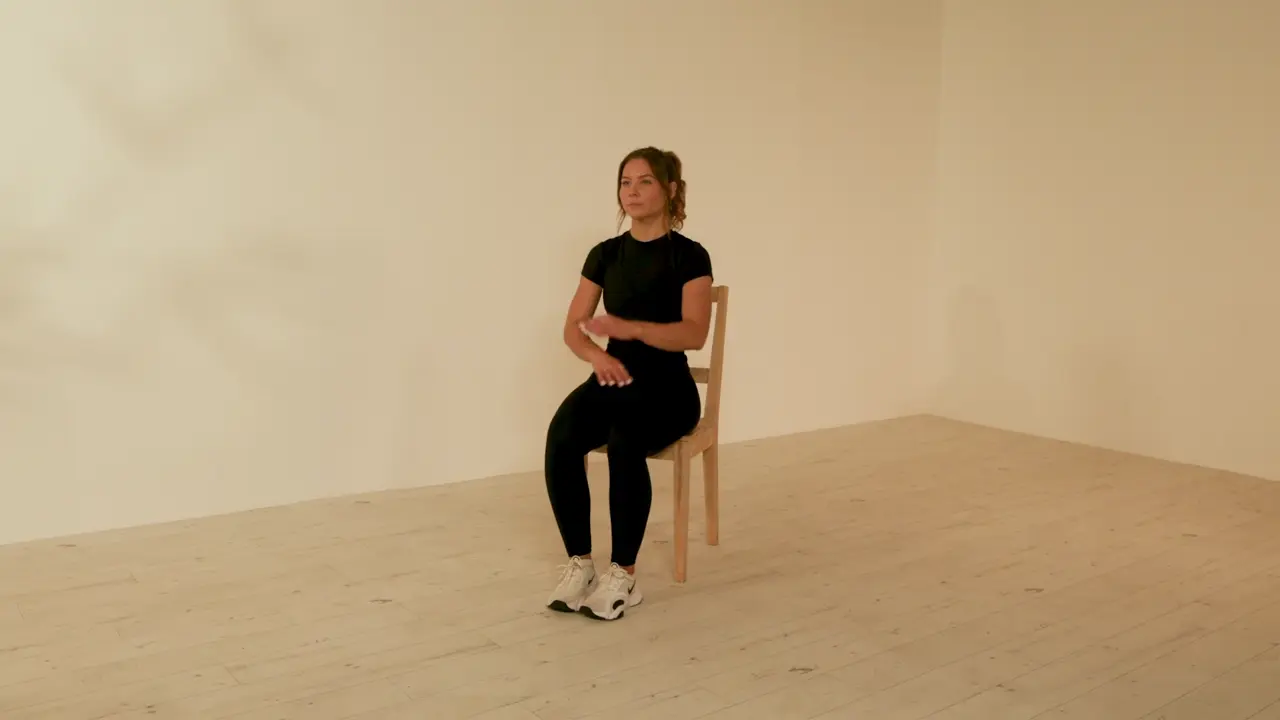
Seated Torso Rotation
This seated torso rotation exercise focuses on the core muscles. It helps to strengthens the obliques and improves spinal mobility and rotational flexibility.
Related patient information and medicines
Patient information leaflet
Duchenne muscular dystrophy
Duchenne muscular dystrophy is a condition which causes progressive muscle weakness. Duchenne muscular dystrophy (DMD) is an inherited (genetic) condition which affects muscle strength and function. For a woman who carries the DMD gene, there is a 1 in 2 chance that her sons will have DMD, and a 1 in 2 chanc... X-linked inheritance pattern.

Patient information leaflet
Glycogen storage disorders
Glycogen storage disorders are a group of inherited diseases. If both parents are carriers of the faulty gene, the chance of each one of their children bein... X-linked inheritance pattern This occurs in some people with glycogen storage disorder type IX. X-linked inheritance pattern x-linked pattern of inheritance In this pattern of inheritance,.

Patient information leaflet
Planning to become pregnant
The aim is to plan ahead to reduce the risk of any harm to the baby and to reduce the risk of pregnancy complications. Women on regular medication, or who have a long-term medical condition, may need to see... There is a summary checklist at the end of the leaflet. Women on medication for high blood pressure (hypertension) Medicine for high blood.

Patient information leaflet
Baby-led weaning
Babies who can coordinate eyes, hands and mouth in order to look at food, pick it up and put it in their mouths are more likely to be ready for weaning. Read our feature on Spinal Muscular Atrophy Spinal muscular atrophy to see the muscular milestones your baby should go through. A baby who is ready to eat may lose the reflex that makes them push.

Patient information leaflet
Scoliosis and kyphosis
Scoliosis is a back condition that causes the (back) spine to curve to the side - either left or right. Most cases develop in children between the ages of 9 and 14 years during the growth spurt of puberty. Scoliosis is usually mild and needs no treatment. For more severe cases treatments include specific exercises, a back brace or occasionally.

Patient information leaflet
Muscle weakness
Muscle weakness is a common complaint but the word weakness can mean different things to different people - including tiredness, reduced power and failure to work at all. It is also seen in a condition called muscular dystrophy Muscular dystrophy (discussed further below). ...Tumours in the brain can also lead to muscle weaknessSpine-related.
Further reading and references
- X-linked infantile spinal muscular atrophy; MedlinePlus, National Library of Medicine.
- Balak CD, Hunter JM, Ahearn ME, Wiley D, D'urso G, Baumbach-Reardon L. Functional characterizations of rare UBA1 variants in X-linked Spinal Muscular Atrophy. F1000Res. 2017 Sep 4;6:1636. doi: 10.12688/f1000research.11878.1. eCollection 2017.
- Dlamini N, Josifova DJ, Paine SM, Wraige E, Pitt M, Murphy AJ, King A, Buk S, Smith F, Abbs S, Sewry C, Jacques TS, Jungbluth H. Clinical and neuropathological features of X-linked spinal muscular atrophy (SMAX2) associated with a novel mutation in the UBA1 gene. Neuromuscul Disord. 2013 May;23(5):391-8. doi: 10.1016/j.nmd.2013.02.001. Epub 2013 Mar 18.
- Jedrzejowska M, Jakubowska-Pietkiewicz E, Kostera-Pruszczyk A. X-linked spinal muscular atrophy (SMAX2) caused by de novo c.1731C>T substitution in the UBA1 gene. Neuromuscul Disord. 2015 Aug;25(8):661-6. doi: 10.1016/j.nmd.2015.05.001. Epub 2015 May 8.
- Ramser J, Ahearn ME, Lenski C, Yariz KO, Hellebrand H, von Rhein M, Clark RD, Schmutzler RK, Lichtner P, Hoffman EP, Meindl A, Baumbach-Reardon L. Rare missense and synonymous variants in UBE1 are associated with X-linked infantile spinal muscular atrophy. Am J Hum Genet. 2008 Jan;82(1):188-93. doi: 10.1016/j.ajhg.2007.09.009.
Share your thoughts or experiences with others in our patient communities.
Simple access to trusted treatments and health services online.
Common conditions
Get help with common conditions through the NHS, without a GP appointment.





Sign up to the Patient newsletter
Your weekly dose of clear, trustworthy health advice - written to help you feel informed, confident and in control.
By subscribing you accept our Privacy Policy. You can unsubscribe at any time. We never sell your data.