ATP binding cassette subfamily G member 2 (JR blood group)
Last updated 1 May 2024
Meets Patient’s editorial guidelines
- DownloadDownload
- Share
- Language
- Discussion
- Ask Patient
- Audio Version
- Add to preferred sources on Google
The ABCG2 gene belongs to a group of genes called the ATP-binding cassette family; genes in this family provide instructions for making proteins that transport molecules across cell membranes. In the intestines, the ABCG2 protein helps release (secrete) a substance called urate into the urine. Urate is a byproduct of certain normal biochemical reactions in the body. In the bloodstream it acts as an antioxidant, protecting cells from the damaging effects of unstable molecules called free radicals. Urate levels are regulated by the kidneys and, to a lesser extent, by the intestines.
Video picks for GenesVideo library
Normal function
The ABCG2 gene belongs to a group of genes called the ATP-binding cassette family; genes in this family provide instructions for making proteins that transport molecules across cell membranes. In the intestines, the ABCG2 protein helps release (secrete) a substance called urate into the urine. Urate is a byproduct of certain normal biochemical reactions in the body. In the bloodstream it acts as an antioxidant, protecting cells from the damaging effects of unstable molecules called free radicals. Urate levels are regulated by the kidneys and, to a lesser extent, by the intestines.
The ABCG2 protein also transports certain drugs out of cells. For example, this protein clears some chemotherapy drugs from organs and tissues. Transport of these drugs allows them to have their intended effects and be eliminated from the body.
Conditions referring to this gene or chromosome
Other names
ABC15
ABCP
ATP-binding cassette transporter G2
ATP-binding cassette, sub-family G (WHITE), member 2 (Junior blood group)
BCRP
BCRP1
BMDP
breast cancer resistance protein
CD338
CDw338
EST157481
mitoxantrone resistance-associated protein
MRX
multi drug resistance efflux transport ATP-binding cassette sub-family G (WHITE) member 2
MXR
MXR-1
MXR1
placenta specific MDR protein
placenta-specific ATP-binding cassette transporter
UAQTL1
Patient picks for Genes

Tests and investigations
Blood tests
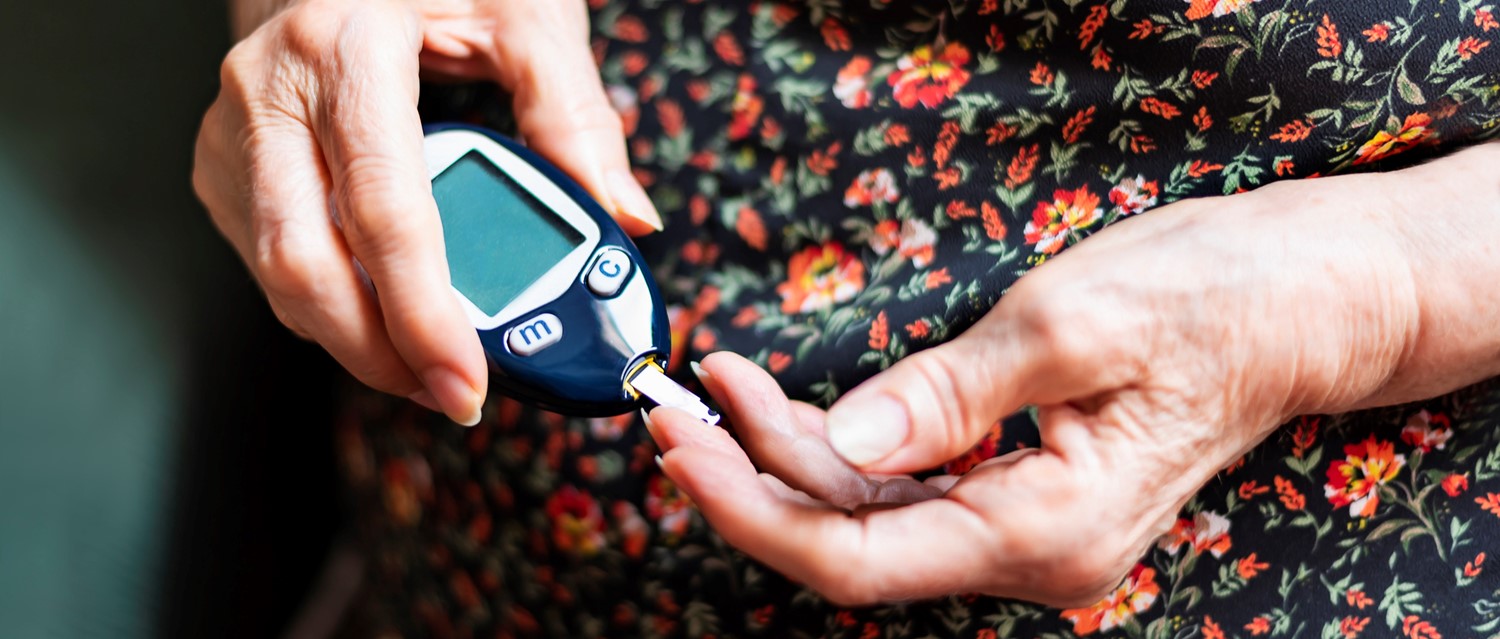
The main reasons to know your blood group are if you need to have a blood transfusion or if you are pregnant. You cannot request a blood test just to know your blood group on the NHS.
by Dr Hayley Willacy, FRCGP
Tests and investigations
Blood groups and types
ABO and rhesus are both types of antigens found on the surface of red blood cells. There are lots of other types but these are the most important.
by Dr Rosalyn Adleman, MRCGP
Allergies, blood and immune system
What is blood?
Blood is made up of liquid (plasma) and various different types of cells. An average-sized man has about 5-6 litres of blood in his body; a woman has slightly less. Blood has many different functions - detailed below.
by Dr Jacqueline Payne, FRCGP

Tests and investigations
Blood clotting tests
Blood clotting tests are used to diagnose and assess bleeding problems and to monitor people who take warfarin or other anticoagulant medicines.
by Dr Hayley Willacy, FRCGP

Allergies, blood and immune system
What to expect when you give blood
A new year is seen as a fresh start, and for many it's a time to resolve to give something up or start something new. For me, 2018 was the year I was going to start giving blood.
by Kerry Taylor-Smith

Tests and investigations
How to prepare for a blood test
A blood test is one of the most common medical tests and is a good way to get a picture of your overall health, which helps medical professionals assess health and disease. Most people will likely need a blood test at some point in their lives so it's important to know how to prepare.
by Lynn Stephen
Related patient information and medicines
Patient information leaflet
Blood tests
The main reasons to know your blood group are if you need to have a blood transfusion or if you are pregnant. You cannot request a blood test just to know your blood group on the NHS. What is blood made up of. Blood cells These can be seen under a microscope and make up about 40% of the blood's volume. Blood cells are made in the bone marrow by.
Patient information leaflet
Blood groups and types
ABO and rhesus are both types of antigens found on the surface of red blood cells. There are lots of other types but these are the most important. The main reasons to know your blood group are if you need to have a blood transfusion or if you are pregnant. What is a blood group. Red blood cells (erythrocytes) have certain proteins on their.
Patient information leaflet
Blood clotting tests
Blood clotting tests are used to diagnose and assess bleeding problems and to monitor people who take warfarin or other anticoagulant medicines. You may be advised to have blood clotting tests: If you have a suspected bleeding disorder. For example, if you bleed a lot after cuts, or if you bruise easily. If you have certain liver diseases that can.

Patient information leaflet
Haemochromatosis
Haemochromatosis is an inherited (genetic) disorder which causes the body to absorb too much iron from the diet. This excess iron causes damage to organs in which it builds up. What is haemochromatosis. Dr Sarah Jarvis MBE, GP and Clinical Director of Patient.info Haemochromatosis is an inherited (genetic) disorder causing the body to absorb too.
Patient information leaflet
Routine kidney function blood test
There are various different ways of measuring how well the kidneys are working. The most common way is by measuring a substance called creatinine with a blood test, and calculating something called the estimated glomerular filtration rate (eGFR). Usually, other substances such as urea and salts in the blood (potassium and sodium) are measured as.
Patient information leaflet
Myelofibrosis
Myelofibrosis is a condition affecting the bone marrow and its blood cell production. What is myelofibrosis. Myelofibrosis belongs to a group of diseases called myeloproliferative disorders. Myelofibrosis is a serious bone marrow disorder that disrupts your body's normal production of blood cells. This leads to reduced levels of: Red blood cells.
Further reading and references
- ATP binding cassette subfamily G member 2 (JR blood group); MedlinePlus, National Library of Medicine.
- Kottgen A, Albrecht E, Teumer A, Vitart V, Krumsiek J, Hundertmark C, Pistis G, Ruggiero D, O'Seaghdha CM, Haller T, Yang Q, Tanaka T, Johnson AD, Kutalik Z, Smith AV, Shi J, Struchalin M, Middelberg RP, Brown MJ, Gaffo AL, Pirastu N, Li G, Hayward C, Zemunik T, Huffman J, Yengo L, Zhao JH, Demirkan A, Feitosa MF, Liu X, Malerba G, Lopez LM, van der Harst P, Li X, Kleber ME, Hicks AA, Nolte IM, Johansson A, Murgia F, Wild SH, Bakker SJ, Peden JF, Dehghan A, Steri M, Tenesa A, Lagou V, Salo P, Mangino M, Rose LM, Lehtimaki T, Woodward OM, Okada Y, Tin A, Muller C, Oldmeadow C, Putku M, Czamara D, Kraft P, Frogheri L, Thun GA, Grotevendt A, Gislason GK, Harris TB, Launer LJ, McArdle P, Shuldiner AR, Boerwinkle E, Coresh J, Schmidt H, Schallert M, Martin NG, Montgomery GW, Kubo M, Nakamura Y, Tanaka T, Munroe PB, Samani NJ, Jacobs DR Jr, Liu K, D'Adamo P, Ulivi S, Rotter JI, Psaty BM, Vollenweider P, Waeber G, Campbell S, Devuyst O, Navarro P, Kolcic I, Hastie N, Balkau B, Froguel P, Esko T, Salumets A, Khaw KT, Langenberg C, Wareham NJ, Isaacs A, Kraja A, Zhang Q, Wild PS, Scott RJ, Holliday EG, Org E, Viigimaa M, Bandinelli S, Metter JE, Lupo A, Trabetti E, Sorice R, Doring A, Lattka E, Strauch K, Theis F, Waldenberger M, Wichmann HE, Davies G, Gow AJ, Bruinenberg M; LifeLines Cohort Study; Stolk RP, Kooner JS, Zhang W, Winkelmann BR, Boehm BO, Lucae S, Penninx BW, Smit JH, Curhan G, Mudgal P, Plenge RM, Portas L, Persico I, Kirin M, Wilson JF, Mateo Leach I, van Gilst WH, Goel A, Ongen H, Hofman A, Rivadeneira F, Uitterlinden AG, Imboden M, von Eckardstein A, Cucca F, Nagaraja R, Piras MG, Nauck M, Schurmann C, Budde K, Ernst F, Farrington SM, Theodoratou E, Prokopenko I, Stumvoll M, Jula A, Perola M, Salomaa V, Shin SY, Spector TD, Sala C, Ridker PM, Kahonen M, Viikari J, Hengstenberg C, Nelson CP; CARDIoGRAM Consortium; DIAGRAM Consortium; ICBP Consortium; MAGIC Consortium; Meschia JF, Nalls MA, Sharma P, Singleton AB, Kamatani N, Zeller T, Burnier M, Attia J, Laan M, Klopp N, Hillege HL, Kloiber S, Choi H, Pirastu M, Tore S, Probst-Hensch NM, Volzke H, Gudnason V, Parsa A, Schmidt R, Whitfield JB, Fornage M, Gasparini P, Siscovick DS, Polasek O, Campbell H, Rudan I, Bouatia-Naji N, Metspalu A, Loos RJ, van Duijn CM, Borecki IB, Ferrucci L, Gambaro G, Deary IJ, Wolffenbuttel BH, Chambers JC, Marz W, Pramstaller PP, Snieder H, Gyllensten U, Wright AF, Navis G, Watkins H, Witteman JC, Sanna S, Schipf S, Dunlop MG, Tonjes A, Ripatti S, Soranzo N, Toniolo D, Chasman DI, Raitakari O, Kao WH, Ciullo M, Fox CS, Caulfield M, Bochud M, Gieger C. Genome-wide association analyses identify 18 new loci associated with serum urate concentrations. Nat Genet. 2013 Feb;45(2):145-54. doi: 10.1038/ng.2500. Epub 2012 Dec 23.
- Matsuo H, Takada T, Ichida K, Nakamura T, Nakayama A, Takada Y, Okada C, Sakurai Y, Hosoya T, Kanai Y, Suzuki H, Shinomiya N. Identification of ABCG2 dysfunction as a major factor contributing to gout. Nucleosides Nucleotides Nucleic Acids. 2011 Dec;30(12):1098-104. doi: 10.1080/15257770.2011.627902.
- Matsuo H, Takada T, Nakayama A, Shimizu T, Sakiyama M, Shimizu S, Chiba T, Nakashima H, Nakamura T, Takada Y, Sakurai Y, Hosoya T, Shinomiya N, Ichida K. ABCG2 dysfunction increases the risk of renal overload hyperuricemia. Nucleosides Nucleotides Nucleic Acids. 2014;33(4-6):266-74. doi: 10.1080/15257770.2013.866679.
- Merriman T. Genomic Influences on Hyperuricemia and Gout. Rheum Dis Clin North Am. 2017 Aug;43(3):389-399. doi: 10.1016/j.rdc.2017.04.004.
Share your thoughts or experiences with others in our patient communities.
Simple access to trusted treatments and health services online.
Common conditions
Get help with common conditions through the NHS, without a GP appointment.





Sign up to the Patient newsletter
Your weekly dose of clear, trustworthy health advice - written to help you feel informed, confident and in control.
By subscribing you accept our Privacy Policy. You can unsubscribe at any time. We never sell your data.