calcium voltage-gated channel subunit alpha1 C
Last updated 13 Mar 2023
Meets Patient’s editorial guidelines
- DownloadDownload
- Share
- Language
- Discussion
- Ask Patient
- Audio Version
- Add to preferred sources on Google
The CACNA1C gene provides instructions for making one of several calcium channels. Calcium channels, which transport positively charged calcium atoms (calcium ions) into cells, play a key role in a cell's ability to generate electrical signals. Calcium ions are important for many cellular functions, including regulating the electrical activity of cells, cell-to-cell communication, the tensing of muscle fibers (muscle contraction), and the regulation of certain genes, particularly those involved in the development of the brain and bones before birth.
Video picks for GenesVideo library
Normal function
The CACNA1C gene provides instructions for making one of several calcium channels. Calcium channels, which transport positively charged calcium atoms (calcium ions) into cells, play a key role in a cell's ability to generate electrical signals. Calcium ions are important for many cellular functions, including regulating the electrical activity of cells, cell-to-cell communication, the tensing of muscle fibers (muscle contraction), and the regulation of certain genes, particularly those involved in the development of the brain and bones before birth.
The calcium channel produced from the CACNA1C gene is known as CaV1.2. These channels are found in many types of cells, although they appear to be particularly important for the function of heart cells (cardiomyocytes) and nerve cells (neurons) in the brain. In the heart, CaV1.2 channels open and close at specific times to control the flow of calcium ions into cardiomyocytes at each heartbeat. How long the channels are open and closed is regulated to maintain normal heart function. In the brain, CaV1.2 channels are thought to be involved in memory, the fear response, and the rapid transmission of nerve signals; however, the role of these channels in the brain and other tissues is not completely understood.
Researchers have discovered that many different versions (isoforms) of the CaV1.2 channel can be produced from the CACNA1C gene by a mechanism called alternative splicing. This mechanism produces different versions of the channel by cutting and rearranging the genetic instructions in different ways. Some versions of the CaV1.2 channel are more common than others in certain parts of the body. For example, in the heart and brain, about 80 percent of CaV1.2 channels are made with a particular segment known as exon 8. The other 20 percent of CaV1.2 channels contain a slightly different version of this segment, known as exon 8A. This difference becomes important when researchers are studying the effects of CACNA1C mutations in various tissues.
Conditions referring to this gene or chromosome
Other names
CAC1C_HUMAN
CACH2
CACN2
CACNL1A1
calcium channel, cardic dihydropyridine-sensitive, alpha-1 subunit
calcium channel, L type, alpha 1 polypeptide, isoform 1, cardic muscle
calcium channel, voltage-dependent, L type, alpha 1C subunit
CaV1.2
CCHL1A1
DHPR, alpha-1 subunit
MGC120730
voltage-dependent L-type calcium channel alpha 1C subunit
voltage-gated calcium channel alpha subunit Cav1.2
Patient picks for Genes
Treatment and medication
Calcium channel blockers
Calcium channel blockers (sometimes called calcium antagonists) are a group of medicines that affect the way calcium passes into certain muscle cells. They are commonly prescribed to manage high blood pressure, angina, Raynaud's phenomenon and some abnormal heart rhythms (arrhythmias). They are also used to try to stop premature labour in pregnancy. A calcium-channel blocker can be used alone. However, one is often combined with another medicine to treat high blood pressure or angina, when one medicine alone has not worked so well.
by Dr Toni Hazell, FRCGP
Drug interactions checker
Can I take Levothyroxine and Calcium together?
Taking calcium at the same time as levothyroxine can stop your thyroid medication from working properly. This can lead to symptoms of an underactive thyroid, such as feeling very tired, feeling cold, or gaining weight.
Drug interactions checker
Can I take Calcium and Doxycycline together?
Taking calcium at the same time as doxycycline can stop the antibiotic from working properly. The calcium attaches to the medicine in your stomach, which prevents your body from absorbing it into your bloodstream. This means the infection you are treating might not clear up as it should.
Mental health
Mind and body control - how to channel your ‘internal telekinesis’
The dark nights have arrived, and right on cue, Mike Flanagan has turned his attention to one of Stephen King’s most iconic tales of teenage torment and supernatural terror... Carrie. The story of a schoolgirl with telekinetic powers - the fictional ability to move objects using the mind alone - has gripped our morbid imaginations for decades. Little wonder, then, that this horror classic is getting a new lease of life in a television adaptation. But while we ourselves may not be able to bend spoons or move furniture, we do possess our own real-world form of ‘internal-telekinesis’. Through mental focus and controlled breathing, we can influence our heart rate and help calm an overworked nervous system.
by Hannah Boynton-Forshaw
Drug interactions checker
Can I take Calcium and Esomeprazole together?
Taking esomeprazole for a long time may reduce how much calcium your body absorbs from your diet or from certain supplements. This can lead to weaker bones and an increased risk of fractures, particularly in the hip, wrist, or spine, if used at high doses for over a year.
Drug interactions checker
Can I take Calcium and Ezetimibe together?
There is no known interaction between calcium supplements and ezetimibe. Taking these two together is generally considered safe and should not affect how well your cholesterol medication works.
Related patient information and medicines
Patient information leaflet
Heart valve disease
A heart valve that is diseased or damaged can affect the flow of blood through the heart. There are two main types of heart val... If rheumatic fever is the cause then symptoms often start between the ages of 20 and 50 years, about 10-20 years after having had an episode of rheumatic fever as a child. Other causes of heart valve disease Other.

Patient information leaflet
Anal fissure
ServiceUpsellPlaceholder How common are anal fissures. Anal fissures are common and probably ... Other medicines Some studies have shown that other medicines may also help relax the anal sphincter muscle and increase the blood supply to the area, to encourage the anal fissure to heal. For example, medicines called calcium-channel blockers Calcium.
Patient information leaflet
Swollen legs
This type may be called 'dependent oedema' by a healthcare professional. For most people, this oedema affects their legs and tends to improve overnight after you have had your legs up... Conditions causing low protein levels include malnutrition, nephrotic syndrome, liver failure, Liver failure and a gut condition called protein-losing.
Patient information leaflet
Raynaud's phenomenon
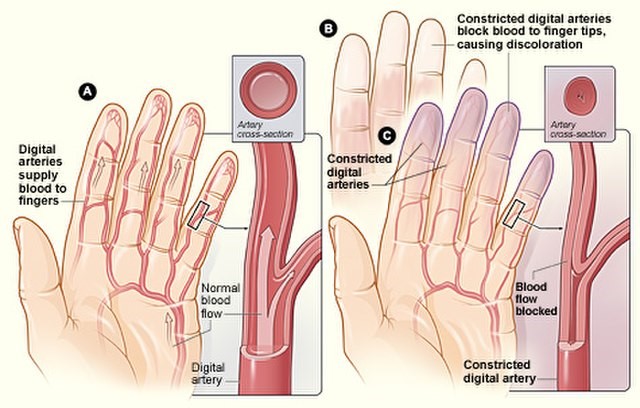
If you have severe symptoms, or symptoms that are easily triggered then portable heat packs and batter... The charity Scleroderma & Raynaud's UK has a list of suppliers - see below for their details. Your pharmacist or local medical supplier may also be able to advise. Other treatments are needed only in some cases. Medication A calcium-channel.

Patient information leaflet
Angina
Angina is a pain that comes from the heart. It is usually caused by narrowing of the heart's ... Other treatments that may be advised Other medicines to prevent angina pains A beta-blocker may be sufficient to prevent angina pains but other medicines are available if required. They fall into three main groups: Calcium-channel blockers Calcium.
Patient information leaflet
Can I take Levothyroxine and Felodipine together?
Taking levothy... If your thyroid levels are not well-controlled, it can change how your body processes the blood pressure medication. Why this happens Levothyroxine is a thyroid hormone, and felodipine is a calcium channel blocker used for high blood pressure. Thyroid hormones affect your metabolism. If you are hyperthyroid (too much hormone) or.
Further reading and references
- calcium voltage-gated channel subunit alpha1 C; MedlinePlus, National Library of Medicine.
- Bozarth X, Dines JN, Cong Q, Mirzaa GM, Foss K, Lawrence Merritt J 2nd, Thies J, Mefford HC, Novotny E. Expanding clinical phenotype in CACNA1C related disorders: From neonatal onset severe epileptic encephalopathy to late-onset epilepsy. Am J Med Genet A. 2018 Dec;176(12):2733-2739. doi: 10.1002/ajmg.a.40657. Epub 2018 Dec 4.
- Fukuyama M, Wang Q, Kato K, Ohno S, Ding WG, Toyoda F, Itoh H, Kimura H, Makiyama T, Ito M, Matsuura H, Horie M. Long QT syndrome type 8: novel CACNA1C mutations causing QT prolongation and variant phenotypes. Europace. 2014 Dec;16(12):1828-37. doi: 10.1093/europace/euu063. Epub 2014 Apr 12.
- Gardner RJM, Crozier IG, Binfield AL, Love DR, Lehnert K, Gibson K, Lintott CJ, Snell RG, Jacobsen JC, Jones PP, Waddell-Smith KE, Kennedy MA, Skinner JR. Penetrance and expressivity of the R858H CACNA1C variant in a five-generation pedigree segregating an arrhythmogenic channelopathy. Mol Genet Genomic Med. 2019 Jan;7(1):e00476. doi: 10.1002/mgg3.476. Epub 2018 Oct 21.
- Liao P, Yong TF, Liang MC, Yue DT, Soong TW. Splicing for alternative structures of Cav1.2 Ca2+ channels in cardiac and smooth muscles. Cardiovasc Res. 2005 Nov 1;68(2):197-203. doi: 10.1016/j.cardiores.2005.06.024. Epub 2005 Jul 27.
- Napolitano C, Antzelevitch C. Phenotypical manifestations of mutations in the genes encoding subunits of the cardiac voltage-dependent L-type calcium channel. Circ Res. 2011 Mar 4;108(5):607-18. doi: 10.1161/CIRCRESAHA.110.224279.
- Napolitano C, Priori SG. CACNA1C-Related Disorders. 2006 Feb 15 [updated 2025 Sep 18]. In: Adam MP, Bick S, Mirzaa GM, Wallace SE, Amemiya A, editors. GeneReviews(R) [Internet]. Seattle (WA): University of Washington, Seattle; 1993-2026. Available from http://www.ncbi.nlm.nih.gov/books/NBK1403/
- Paar V, Jirak P, Larbig R, Zagidullin NS, Brandt MC, Lichtenauer M, Hoppe UC, Motloch LJ. Pathophysiology of Calcium Mediated Ventricular Arrhythmias and Novel Therapeutic Options with Focus on Gene Therapy. Int J Mol Sci. 2019 Oct 24;20(21):5304. doi: 10.3390/ijms20215304.
- Rodan LH, Spillmann RC, Kurata HT, Lamothe SM, Maghera J, Jamra RA, Alkelai A, Antonarakis SE, Atallah I, Bar-Yosef O, Bilan F, Bjorgo K, Blanc X, Van Bogaert P, Bolkier Y, Burrage LC, Christ BU, Granadillo JL, Dickson P, Donald KA, Dubourg C, Eliyahu A, Emrick L, Engleman K, Gonfiantini MV, Good JM, Kalser J, Kloeckner C, Lachmeijer G, Macchiaiolo M, Nicita F, Odent S, O'Heir E, Ortiz-Gonzalez X, Pacio-Miguez M, Palomares-Bralo M, Pena L, Platzer K, Quinodoz M, Ranza E, Rosenfeld JA, Roulet-Perez E, Santani A, Santos-Simarro F, Pode-Shakked B, Skraban C, Slaugh R, Superti-Furga A, Thiffault I, van Jaabrsveld RH, Vincent M, Wang HG, Zacher P; Undiagnosed Diseases Network; Rush E, Pitt GS, Au PYB, Shashi V. Phenotypic expansion of CACNA1C-associated disorders to include isolated neurological manifestations. Genet Med. 2021 Oct;23(10):1922-1932. doi: 10.1038/s41436-021-01232-8. Epub 2021 Jun 23.
- Splawski I, Timothy KW, Decher N, Kumar P, Sachse FB, Beggs AH, Sanguinetti MC, Keating MT. Severe arrhythmia disorder caused by cardiac L-type calcium channel mutations. Proc Natl Acad Sci U S A. 2005 Jun 7;102(23):8089-96; discussion 8086-8. doi: 10.1073/pnas.0502506102. Epub 2005 Apr 29.
- Splawski I, Timothy KW, Sharpe LM, Decher N, Kumar P, Bloise R, Napolitano C, Schwartz PJ, Joseph RM, Condouris K, Tager-Flusberg H, Priori SG, Sanguinetti MC, Keating MT. Ca(V)1.2 calcium channel dysfunction causes a multisystem disorder including arrhythmia and autism. Cell. 2004 Oct 1;119(1):19-31. doi: 10.1016/j.cell.2004.09.011.
- Wemhoner K, Friedrich C, Stallmeyer B, Coffey AJ, Grace A, Zumhagen S, Seebohm G, Ortiz-Bonnin B, Rinne S, Sachse FB, Schulze-Bahr E, Decher N. Gain-of-function mutations in the calcium channel CACNA1C (Cav1.2) cause non-syndromic long-QT but not Timothy syndrome. J Mol Cell Cardiol. 2015 Mar;80:186-95. doi: 10.1016/j.yjmcc.2015.01.002. Epub 2015 Jan 26.
- Yamakage M, Namiki A. Calcium channels--basic aspects of their structure, function and gene encoding; anesthetic action on the channels--a review. Can J Anaesth. 2002 Feb;49(2):151-64. doi: 10.1007/BF03020488.
Share your thoughts or experiences with others in our patient communities.
Simple access to trusted treatments and health services online.
Common conditions
Get help with common conditions through the NHS, without a GP appointment.





Sign up to the Patient newsletter
Your weekly dose of clear, trustworthy health advice - written to help you feel informed, confident and in control.
By subscribing you accept our Privacy Policy. You can unsubscribe at any time. We never sell your data.