cyclic nucleotide gated channel subunit alpha 3
Last updated 14 Aug 2025
Meets Patient’s editorial guidelines
- DownloadDownload
- Share
- Language
- Discussion
- Ask Patient
- Audio Version
- Add to preferred sources on Google
The CNGA3 gene provides instructions for making one part (the alpha subunit) of the cyclic nucleotide-gated (CNG) channel. These channels are found exclusively in light-sensing (photoreceptor) cells called cones, which are located in a specialized tissue at the back of the eye (retina). Cones provide colour vision and vision in bright light (daytime vision). Other photoreceptor cells, called rods, provide vision in low light (night vision).
Video picks for GenesVideo library
Normal function
The CNGA3 gene provides instructions for making one part (the alpha subunit) of the cyclic nucleotide-gated (CNG) channel. These channels are found exclusively in light-sensing (photoreceptor) cells called cones, which are located in a specialized tissue at the back of the eye (retina). Cones provide colour vision and vision in bright light (daytime vision). Other photoreceptor cells, called rods, provide vision in low light (night vision).
CNG channels are openings in the cell membrane that transport positively charged atoms (ions) into cells. The CNG channels in cones remain open in low light, allowing ions to flow in. When light enters the eye, these channels close, stopping the flow of ions. This change in ion transport alters the cone's electrical charge, which ultimately generates a signal. This signal is sent to the brain, where it combines with other visual information and is interpreted as vision. The process of translating light into an electrical signal is called phototransduction.
Conditions referring to this gene or chromosome
Other names
ACHM2
cyclic nucleotide-gated channel, alpha-3
Patient picks for Genes
Mental health
Mind and body control - how to channel your ‘internal telekinesis’
The dark nights have arrived, and right on cue, Mike Flanagan has turned his attention to one of Stephen King’s most iconic tales of teenage torment and supernatural terror... Carrie. The story of a schoolgirl with telekinetic powers - the fictional ability to move objects using the mind alone - has gripped our morbid imaginations for decades. Little wonder, then, that this horror classic is getting a new lease of life in a television adaptation. But while we ourselves may not be able to bend spoons or move furniture, we do possess our own real-world form of ‘internal-telekinesis’. Through mental focus and controlled breathing, we can influence our heart rate and help calm an overworked nervous system.
by Hannah Boynton-Forshaw

Children's health
Alpha-1 antitrypsin deficiency
Alpha-1 antitrypsin deficiency is an inherited genetic condition. A genetic condition is one that can be passed on from parents through genes. In alpha-1 antitrypsin deficiency the result of a genetic abnormality leads to lung and, in some people, liver damage. Lung symptoms are the most common and include shortness of breath, cough and wheezing. Symptoms can worsen over time. At present, there is no cure for alpha-1 antitrypsin deficiency. Treatment aims at slowing down the progression of the disease.
by Dr Philippa Vincent, MRCGP
Digestive health
Cyclical vomiting syndrome
Cyclical vomiting syndrome is a condition which occurs mainly in children but can also affect adults. It is more common in people who have migraines. Children have severe episodes of feeling sick (nausea) and being sick (vomiting), sometimes with other symptoms. In between these episodes the person is completely well. There are various treatments available to reduce the frequency of these episodes and also to improve the symptoms when they occur.
by Dr Philippa Vincent, MRCGP
Treatment and medication
Alpha-blockers
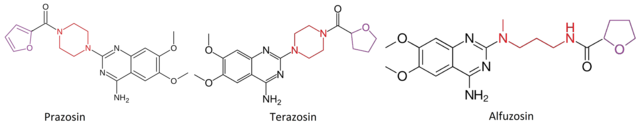
Alpha-blockers are medicines that are mainly used to treat high blood pressure (hypertension) and problems with passing urine in men who have enlargement of the prostate gland. Prostate gland enlargement is also called benign prostatic hyperplasia (BPH).
by Dr Doug McKechnie, MRCGP
Medicine
Phenoxybenzamine - an alpha-blocker
Adults will normally start with one capsule a day. This dose may then be increased over the next few days. It is common to feel dizzy or light-headed initially. This should soon settle. You may be given other medicines to take alongside phenoxybenzamine.
by Michael Stewart, MRPharmS

Treatment and medication
Calcium channel blockers
Calcium channel blockers (sometimes called calcium antagonists) are a group of medicines that affect the way calcium passes into certain muscle cells. They are commonly prescribed to manage high blood pressure, angina, Raynaud's phenomenon and some abnormal heart rhythms (arrhythmias). They are also used to try to stop premature labour in pregnancy. A calcium-channel blocker can be used alone. However, one is often combined with another medicine to treat high blood pressure or angina, when one medicine alone has not worked so well.
by Dr Toni Hazell, FRCGP
Related patient information and medicines

Patient information leaflet
Thalassaemia
Thalassaemia is an inherited condition affecting the blood. For the more severe forms of thalassaemia, modern treatment gives a good outlook, but lifelong monitoring and treatment are needed. Thalassaemia is an inherited (genetic) condition affecting the blood. The cause is an inherited (genetic) change, involving the genes which tell the body how.
Patient information leaflet
Ankylosing spondylitis
Ankylosing spondylitis is a chronic inflammatory arthritis. What is ankylosing spondylitis. Ankylosing spondylitis (AS) is a persistent (chronic) inflammatory arthritic disease. The word spondylitis means inflammation of the spine. The type of inflammation in AS causes the affected joints to join together, therefore reducing mobility. Ankylosing.

Patient information leaflet
Stages of cancer
If left untreated, cancers often go through three stages: local growth, spread to lymph channels and spread to other areas of the body. What do we mean by the term stages of cancer. The stage of a cancer is a measure of how much the cancer has grown and spread. Some cancers are also graded by looking at features of the cancer cells, using a.
Patient information leaflet
Swollen lymph glands
If your glands haven't gone down after 2 weeks, are getting bigger, or you are struggling to breathe, you should seek medical help immediately. What are swollen glands. Dr Sarah Jarvis MBE, GP and Clinical Director of Patient.info There are a number of causes of swollen lymph glands. The most common cause is infection. See your doctor if you have.

Patient information leaflet
Pancreatic cancer
If the cancer spreads to other parts of the body, various other symptoms can develop, depending on where the cancer spreads to - eg, liver, lungs, bone or brain. Dr Krishna Vakharia , 16th October 2023 The National Institute for Health and Care Excellence (NICE) has recommended that a person should receive a diagnosis or ruling out of cancer.

Patient information leaflet
Cancer symptoms
Cancer symptoms will vary according to the type of cancer and how far the cancer has grown. There are some symptoms that are common to many cancers. What are cancer symptoms. Cancer symptoms Cancer symptoms you should never ignore will vary according to the type of cancer and how far the cancer has grown. There are some symptoms that are common to.
Further reading and references
- cyclic nucleotide gated channel subunit alpha 3; MedlinePlus, National Library of Medicine.
- Gill JS, Georgiou M, Kalitzeos A, Moore AT, Michaelides M. Progressive cone and cone-rod dystrophies: clinical features, molecular genetics and prospects for therapy. Br J Ophthalmol. 2019 Jan 24;103(5):711-20. doi: 10.1136/bjophthalmol-2018-313278. Online ahead of print.
- Hirji N, Aboshiha J, Georgiou M, Bainbridge J, Michaelides M. Achromatopsia: clinical features, molecular genetics, animal models and therapeutic options. Ophthalmic Genet. 2018 Apr;39(2):149-157. doi: 10.1080/13816810.2017.1418389. Epub 2018 Jan 5.
- Johnson S, Michaelides M, Aligianis IA, Ainsworth JR, Mollon JD, Maher ER, Moore AT, Hunt DM. Achromatopsia caused by novel mutations in both CNGA3 and CNGB3. J Med Genet. 2004 Feb;41(2):e20. doi: 10.1136/jmg.2003.011437. No abstract available.
- Koeppen K, Reuter P, Ladewig T, Kohl S, Baumann B, Jacobson SG, Plomp AS, Hamel CP, Janecke AR, Wissinger B. Dissecting the pathogenic mechanisms of mutations in the pore region of the human cone photoreceptor cyclic nucleotide-gated channel. Hum Mutat. 2010 Jul;31(7):830-9. doi: 10.1002/humu.21283.
- Kohl S, Jagle H, Wissinger B, Zobor D. Achromatopsia. 2004 Jun 24 [updated 2018 Sep 20]. In: Adam MP, Bick S, Mirzaa GM, Wallace SE, Amemiya A, editors. GeneReviews(R) [Internet]. Seattle (WA): University of Washington, Seattle; 1993-2026. Available from http://www.ncbi.nlm.nih.gov/books/NBK1418/
- Kohl S, Marx T, Giddings I, Jagle H, Jacobson SG, Apfelstedt-Sylla E, Zrenner E, Sharpe LT, Wissinger B. Total colourblindness is caused by mutations in the gene encoding the alpha-subunit of the cone photoreceptor cGMP-gated cation channel. Nat Genet. 1998 Jul;19(3):257-9. doi: 10.1038/935.
- Li S, Huang L, Xiao X, Jia X, Guo X, Zhang Q. Identification of CNGA3 mutations in 46 families: common cause of achromatopsia and cone-rod dystrophies in Chinese patients. JAMA Ophthalmol. 2014 Sep;132(9):1076-83. doi: 10.1001/jamaophthalmol.2014.1032.
- Michalakis S, Gerhardt M, Rudolph G, Priglinger S, Priglinger C. Achromatopsia: Genetics and Gene Therapy. Mol Diagn Ther. 2022 Jan;26(1):51-59. doi: 10.1007/s40291-021-00565-z. Epub 2021 Dec 3.
- Patel KA, Bartoli KM, Fandino RA, Ngatchou AN, Woch G, Carey J, Tanaka JC. Transmembrane S1 mutations in CNGA3 from achromatopsia 2 patients cause loss of function and impaired cellular trafficking of the cone CNG channel. Invest Ophthalmol Vis Sci. 2005 Jul;46(7):2282-90. doi: 10.1167/iovs.05-0179.
- Reuter P, Koeppen K, Ladewig T, Kohl S, Baumann B, Wissinger B; Achromatopsia Clinical Study Group. Mutations in CNGA3 impair trafficking or function of cone cyclic nucleotide-gated channels, resulting in achromatopsia. Hum Mutat. 2008 Oct;29(10):1228-36. doi: 10.1002/humu.20790.
- Sun W, Zhang Q. Diseases associated with mutations in CNGA3: Genotype-phenotype correlation and diagnostic guideline. Prog Mol Biol Transl Sci. 2019;161:1-27. doi: 10.1016/bs.pmbts.2018.10.002. Epub 2018 Nov 23.
- Thiadens AA, Roosing S, Collin RW, van Moll-Ramirez N, van Lith-Verhoeven JJ, van Schooneveld MJ, den Hollander AI, van den Born LI, Hoyng CB, Cremers FP, Klaver CC. Comprehensive analysis of the achromatopsia genes CNGA3 and CNGB3 in progressive cone dystrophy. Ophthalmology. 2010 Apr;117(4):825-30.e1. doi: 10.1016/j.ophtha.2009.09.008. Epub 2010 Jan 15.
- Trankner D, Jagle H, Kohl S, Apfelstedt-Sylla E, Sharpe LT, Kaupp UB, Zrenner E, Seifert R, Wissinger B. Molecular basis of an inherited form of incomplete achromatopsia. J Neurosci. 2004 Jan 7;24(1):138-47. doi: 10.1523/JNEUROSCI.3883-03.2004.
- Wissinger B, Gamer D, Jagle H, Giorda R, Marx T, Mayer S, Tippmann S, Broghammer M, Jurklies B, Rosenberg T, Jacobson SG, Sener EC, Tatlipinar S, Hoyng CB, Castellan C, Bitoun P, Andreasson S, Rudolph G, Kellner U, Lorenz B, Wolff G, Verellen-Dumoulin C, Schwartz M, Cremers FP, Apfelstedt-Sylla E, Zrenner E, Salati R, Sharpe LT, Kohl S. CNGA3 mutations in hereditary cone photoreceptor disorders. Am J Hum Genet. 2001 Oct;69(4):722-37. doi: 10.1086/323613. Epub 2001 Aug 30.
Share your thoughts or experiences with others in our patient communities.
Simple access to trusted treatments and health services online.
Common conditions
Get help with common conditions through the NHS, without a GP appointment.





Sign up to the Patient newsletter
Your weekly dose of clear, trustworthy health advice - written to help you feel informed, confident and in control.
By subscribing you accept our Privacy Policy. You can unsubscribe at any time. We never sell your data.