collectin subfamily member 11
Last updated 18 Aug 2020
Meets Patient’s editorial guidelines
- DownloadDownload
- Share
- Language
- Discussion
- Ask Patient
- Audio Version
- Add to preferred sources on Google
The COLEC11 gene provides instructions for making a protein called collectin kidney 1 (CL-K1). This protein is involved in a series of steps called the lectin complement pathway, which is thought to help direct the movement (migration) of cells during development before birth to form the organs and systems of the body. The lectin complement pathway appears to be particularly important in directing the migration of neural crest cells. These cells give rise to various tissues including many tissues in the face and skull, glands that produce hormones (endocrine glands), and portions of the nervous system. After birth, the lectin complement pathway is involved in the immune system.
Video picks for GenesVideo library
Normal function
The COLEC11 gene provides instructions for making a protein called collectin kidney 1 (CL-K1). This protein is involved in a series of steps called the lectin complement pathway, which is thought to help direct the movement (migration) of cells during development before birth to form the organs and systems of the body. The lectin complement pathway appears to be particularly important in directing the migration of neural crest cells. These cells give rise to various tissues including many tissues in the face and skull, glands that produce hormones (endocrine glands), and portions of the nervous system. After birth, the lectin complement pathway is involved in the immune system.
Conditions referring to this gene or chromosome
Other names
3MC2
CL-K1
CL-K1-I
CL-K1-II
CL-K1-IIa
CL-K1-IIb
CLK1
collectin K1
collectin kidney protein 1
MGC3279
Patient picks for Genes

Ectopic pregnancy
What is the cause of an ectopic pregnancy?
Dr Sarah Jarvis MBE An ectopic pregnancy is a pregnancy which is not in the normal place (the womb). Ectopic means 'misplaced'. It occurs in about 11 in 1,000 pregnancies. Although many ectopic pregnancies are now treated without the need for an operation, you should always see a doctor urgently if you think you have an ectopic pregnancy. [https://patient.info/health/ectopic-pregnancy-leaflet](https://patient.info/health/ectopic-pregnancy-leaflet)
by Dr Sarah Jarvis

Ectopic pregnancy
What is an ectopic pregnancy?
Dr Sarah Jarvis MBE An ectopic pregnancy is a pregnancy which is not in the normal place (the womb). Ectopic means 'misplaced'. It occurs in about 11 in 1,000 pregnancies. Although many ectopic pregnancies are now treated without the need for an operation, you should always see a doctor urgently if you think you have an ectopic pregnancy. For more information on ectopic pregnancy, go to [https://patient.info/health/ectopic-pregnancy-leaflet](https://patient.info/health/ectopic-pregnancy-leaflet)
by Dr Sarah Jarvis

Ectopic pregnancy
Is an ectopic pregnancy hereditary?
Dr Sarah Jarvis MBE An ectopic pregnancy is a pregnancy which is not in the normal place (the womb). Ectopic means 'misplaced'. It occurs in about 11 in 1,000 pregnancies. Although many ectopic pregnancies are now treated without the need for an operation, you should always see a doctor urgently if you think you have an ectopic pregnancy. Symptoms include lower tummy (abdominal) pain which can become severe. For more information on ectopic pregnancy, go to [https://patient.info/health/ectopic-pregnancy-leaflet](https://patient.info/health/ectopic-pregnancy-leaflet)
by Dr Sarah Jarvis

The sex and relationships podcast
What Are Relationships Anyway? I The Sex and Relationships Podcast I S2E1
Relationships - what are they? We often think of relationships as intimate with a partner and yet we actually have hundreds of relationships with friends, family, at work, at play even with nature and beyond. Clare and Aileen kick off the season by discussing the breadth of relationships. Check out some of the things Clare and Aileen chat about: 02:01 Hierarchy of friends 05:00 Relationships we don’t choose 08:56 Relationship with myself 11:36 So what are relationships? Want to know more? Visit our website The Sex and Relationships Podcast for more information on the issues discussed in this episode: [https://thesexandrelationshipspodcast.com/](https://thesexandrelationshipspodcast.com/) You can also Ask Clare a question or suggest a topic for future episodes. Follow us on social media: Instagram: [https://www.instagram.com/s3x_and_relationships_podcast/profilecard/?igsh=MXIza3BxeWg3OTJxOA%3D%3D](https://www.instagram.com/s3x_and_relationships_podcast/profilecard/?igsh=MXIza3BxeWg3OTJxOA%3D%3D) Facebook: [https://www.facebook.com/people/The-Sex-and-Relationships-Podcast-With-Therapists-Clare-Janet/61558082319934/](https://www.facebook.com/people/The-Sex-and-Relationships-Podcast-With-Therapists-Clare-Janet/61558082319934/) About the Sex and Relationships Podcast This podcast is for anyone looking for information or help with their sex lives or relationships. In this season your hosts Clare Prendergast and Aileen Gonsalves deep dive into the world of relationships to give you insights, advice and top tips to help guide you through your relationships. Your hosts Clare Prendergast is a sex and relationships therapist and draws on her knowledge and years of experience in the therapy room to give you help and guidance. Aileen Gonsalves is fascinated in human behaviour and drawing on her many years in the theatre has developed the unique Gonsalves Method which helps people be more present and develop authentic connections with those around them.
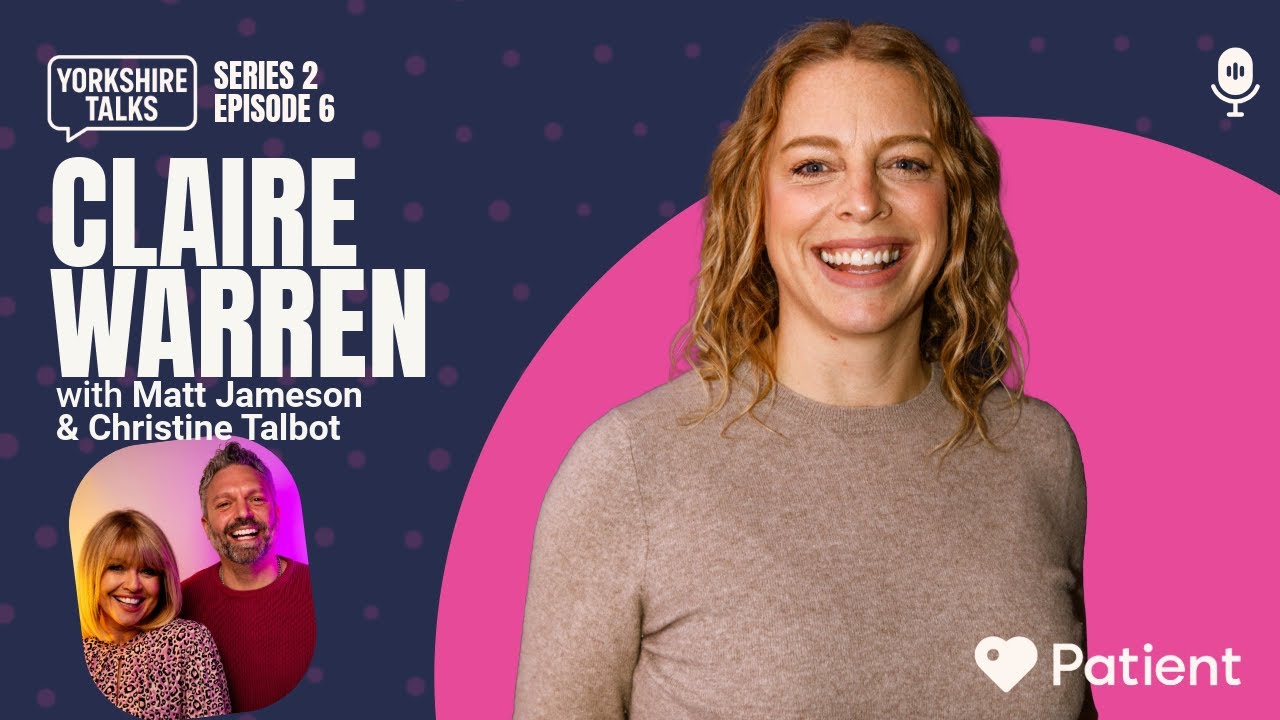
Yorkshire talks series 2
Claire Warren: Motherhood, Mum Guilt & Keeping It Real
She’s an award-winning content creator whose honest, hilarious take on motherhood has struck a chord with parents everywhere — earning her over half a million followers online. Meet Claire Warren, better known as My Kinda Mum on Instagram and Facebook. A former radio producer and PR manager, Claire joins Matt and Christine to chat about how she found her way into content creation, what really goes on behind the scenes, and why this completely unexpected career shift has transformed her life as a mum of two young children. 👶 From gentle parenting to mum guilt This refreshingly down-to-earth conversation dives into: The realities of modern motherhood Letting go of perfection (and the guilt that comes with it) The pressure to “do it all” — and why it’s okay not to Embracing the wonderfully British chaos of family life It’s honest, funny and deeply reassuring — the kind of chat that will have parents everywhere sighing with relief and thinking: “Thank goodness… this is normal.” 💬 You’ll laugh, nod along, and feel seen. Once you listen, trust us — you’ll be hooked. 🔗 Find Claire on Instagram & Facebook @MyKindaMum, or explore more of her work here: 👉 [https://www.mykindamum.com/links](https://www.mykindamum.com/links) 🔔 Don’t forget to like, subscribe and share with a fellow parent who needs this one. #ParentingPodcast #MyKindaMum #MumLife #MotherhoodUnfiltered #GentleParenting #yorkshiretalks 00:00:00 - From High-Flying Career to Motherhood's Unexpected Challenges 00:03:01 - Pivoting from Broadcast to Relatable Parenting Content 00:06:11 - Navigating Modern Parenting and Finding Comedy in Challenges 00:12:42 - The Power of Authenticity: Tackling Mum Guilt Online 00:16:34 - Balancing Family Life, Work, and Online Trolling 00:22:43 - The Art of Comedy and Addressing Motherhood's Deeper Issues 00:27:57 - From Merchandise to Innovative Underwear for Mums 00:32:41 - The Joy of Fan Encounters and Local Linguistic Quirks

Ectopic pregnancy
What does an ectopic pregnancy feel like?
Dr Sarah Jarvis MBE An ectopic pregnancy is a pregnancy which is not in the normal place (the womb). Ectopic means 'misplaced'. It occurs in about 11 in 1,000 pregnancies. For more information on ectopic pregnancy, go to [https://patient.info/health/ectopic-pregnancy-leaflet](https://patient.info/health/ectopic-pregnancy-leaflet)
by Dr Sarah Jarvis
Related patient information and medicines

Patient information leaflet
Find out if you are eligible for a free NHS flu vaccination
Open the flu jab Is the flu vaccine free for you this winter. The flu vaccine is free on the NHS for people most likely to get seriously ill from flu, and for those who could easily pass it on to someone at risk. Whether you qualify depends on your age, your health, and a few other things such as being pregnant or caring for someone. The groups.

Patient information leaflet
Albinism
Albinism is a rare inherited (genetic) condition which reduces the amount of of melanin pigment in the skin, hair and/or eyes. The genes for occulocutaneous albinism (OCA) are located on 'autosomal' chromosomes. These are the 22 pairs of chromosomes that contain genes for our general body characteristics, compared to the one pair of sex.

Patient information leaflet
Huntington's disease
Huntington's disease is a genetically inherited condition that causes parts of the brain and nervous system to stop working properly over time. It is a slowly progressive condition that interferes with the movements of your body, thinking and judgement, and can lead to a change in your behaviour. The symptoms occur because of damage and death of.
Patient information leaflet
Hepatitis A vaccine
You should consider vaccination against hepatitis A before you travel... Hepatitis A Hepatitis A is an illness caused by the hepatitis A virus. This leaflet is just about vaccination to help prevent hepatitis A infection. Close contacts of someone with hepatitis A Occasional outbreaks of hepatitis A occur in the UK within families or in.

Patient information leaflet
Retinoblastoma
Most commonly, it affects children aged under 2, including newborn babies. It is a tumour of the nerve layer of the retina, which is the light-sensitive membrane at the back of the eye. The tumour grows from t... Siblings of an affected child in a family in which no other family members have had the disease have only a small risk of disease. See.

Patient information leaflet
Immunisation for flu
The live attenuated flu vaccine comes as a nasal spray... Each year, the UK national flu vaccine programme gives instructions on which type of vaccine should be given to each group of people. Who is eligible for the flu jab. The Department of Health issues advice as to who should be immunised. This is reviewed each year. The aim is to protect.
Further reading and references
- collectin subfamily member 11; MedlinePlus, National Library of Medicine.
- Bayarri-Olmos R, Hansen S, Henriksen ML, Storm L, Thiel S, Garred P, Munthe-Fog L. Genetic variation of COLEC10 and COLEC11 and association with serum levels of collectin liver 1 (CL-L1) and collectin kidney 1 (CL-K1). PLoS One. 2015 Feb 24;10(2):e0114883. doi: 10.1371/journal.pone.0114883. eCollection 2015.
- Hansen SW, Ohtani K, Roy N, Wakamiya N. The collectins CL-L1, CL-K1 and CL-P1, and their roles in complement and innate immunity. Immunobiology. 2016 Oct;221(10):1058-67. doi: 10.1016/j.imbio.2016.05.012. Epub 2016 Jun 2.
- Henriksen ML, Brandt J, Andrieu JP, Nielsen C, Jensen PH, Holmskov U, Jorgensen TJ, Palarasah Y, Thielens NM, Hansen S. Heteromeric complexes of native collectin kidney 1 and collectin liver 1 are found in the circulation with MASPs and activate the complement system. J Immunol. 2013 Dec 15;191(12):6117-27. doi: 10.4049/jimmunol.1302121. Epub 2013 Oct 30.
- Ohtani K, Suzuki Y, Wakamiya N. Biological functions of the novel collectins CL-L1, CL-K1, and CL-P1. J Biomed Biotechnol. 2012;2012:493945. doi: 10.1155/2012/493945. Epub 2012 Apr 11.
- Rooryck C, Diaz-Font A, Osborn DP, Chabchoub E, Hernandez-Hernandez V, Shamseldin H, Kenny J, Waters A, Jenkins D, Kaissi AA, Leal GF, Dallapiccola B, Carnevale F, Bitner-Glindzicz M, Lees M, Hennekam R, Stanier P, Burns AJ, Peeters H, Alkuraya FS, Beales PL. Mutations in lectin complement pathway genes COLEC11 and MASP1 cause 3MC syndrome. Nat Genet. 2011 Mar;43(3):197-203. doi: 10.1038/ng.757. Epub 2011 Jan 23.
- Selman L, Hansen S. Structure and function of collectin liver 1 (CL-L1) and collectin 11 (CL-11, CL-K1). Immunobiology. 2012 Sep;217(9):851-63. doi: 10.1016/j.imbio.2011.12.008. Epub 2012 Feb 4.
- Venkatraman Girija U, Furze CM, Gingras AR, Yoshizaki T, Ohtani K, Marshall JE, Wallis AK, Schwaeble WJ, El-Mezgueldi M, Mitchell DA, Moody PC, Wakamiya N, Wallis R. Molecular basis of sugar recognition by collectin-K1 and the effects of mutations associated with 3MC syndrome. BMC Biol. 2015 Apr 17;13:27. doi: 10.1186/s12915-015-0136-2.
Share your thoughts or experiences with others in our patient communities.
Simple access to trusted treatments and health services online.
Common conditions
Get help with common conditions through the NHS, without a GP appointment.





Sign up to the Patient newsletter
Your weekly dose of clear, trustworthy health advice - written to help you feel informed, confident and in control.
By subscribing you accept our Privacy Policy. You can unsubscribe at any time. We never sell your data.