ectodysplasin A receptor
Last updated 18 Aug 2020
Meets Patient’s editorial guidelines
- DownloadDownload
- Share
- Language
- Discussion
- Audio Version
- Add to preferred sources on Google
The EDAR gene provides instructions for making a protein called the ectodysplasin A receptor. This protein is part of a signaling pathway that plays an important role in development before birth. Specifically, it is critical for interactions between two embryonic cell layers called the ectoderm and the mesoderm. In the early embryo, these cell layers form the basis for many of the body's organs and tissues. Ectoderm-mesoderm interactions are essential for the formation of several structures that arise from the ectoderm, including the skin, hair, nails, teeth, and sweat glands.
Normal function
The EDAR gene provides instructions for making a protein called the ectodysplasin A receptor. This protein is part of a signaling pathway that plays an important role in development before birth. Specifically, it is critical for interactions between two embryonic cell layers called the ectoderm and the mesoderm. In the early embryo, these cell layers form the basis for many of the body's organs and tissues. Ectoderm-mesoderm interactions are essential for the formation of several structures that arise from the ectoderm, including the skin, hair, nails, teeth, and sweat glands.
The ectodysplasin A receptor interacts with a protein called ectodysplasin A1 (produced from the EDA gene). On the cell surface, ectodysplasin A1 attaches to this receptor like a key in a lock. When these two proteins are connected, they trigger a series of chemical signals that affect cell activities such as division, growth, and maturation. Starting before birth, this signaling pathway controls the formation of ectodermal structures such as hair follicles, sweat glands, and teeth.
Studies suggest that common variations (polymorphisms) in the EDAR gene are associated with the thickness and straightness of scalp hair, particularly in East Asian populations. EDAR appears to be one of many genes that influence these hair traits.
Conditions referring to this gene or chromosome
Other names
DL
ectodysplasin 1, anhidrotic receptor
ectodysplasin A1 isoform receptor
ectodysplasin receptor
ED1R
ED3
ED5
EDA-A1R
EDA1R
EDA3
EDAR_HUMAN
Related patient information and medicines

Patient information leaflet
Can I take Alogliptin and Rybelsus together?
Taking alogliptin and Rybelsus (semaglutide) together can significantly increase the risk of your blood sugar dropping too low (hypoglycaemia). Additional... Why this happens Both drugs target the 'incretin' system. Alogliptin (a DPP-4 inhibitor) prevents the breakdown of natural hormones that lower blood sugar, while Rybelsus (a GLP-1 receptor.
Patient information leaflet
Alpha-blockers
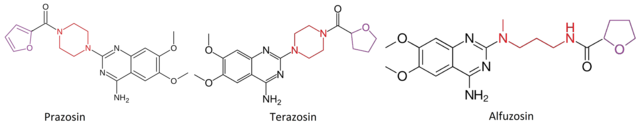
Alpha-blockers are medicines that are mainly used to treat high blood pressure (hypertension) and problems with passing urine in men who have enlargement of the prostate gland. Prostate gland enlargement is also called benign prostatic hyperplasia (BPH). What are alpha-blockers used for. In the past, some alpha-blockers were also used to treat.

Patient information leaflet
Breast cancer
Breast cancer develops from a cancerous (malignant) cell which develops in the lining of a duct or lobule in one of the breasts. Anatomy of the breasts Breast tissue is attached to muscle on the chest wall. A tail of breast tissue extends up into the armpit. Ducts. Types of breast cancer Carcinoma in situ Some people are diagnosed when the.

Patient information leaflet
Myasthenia gravis
Myasthenia gravis (MG) is a condition where muscles become easily tired and weak. It is due to a problem with how the nerves stimulate the muscles to tighten (contract). The muscles around the eyes are commonly affected first. This causes drooping eyelids and double vision. Treatment is usually effective. However, relapses are common and many.

Patient information leaflet
Can I take Chaga and Cordyceps together?
Caffeine Cordyceps may have mild stimulant properties and can interact with adenosine receptors. Combining it with caffeine (coffee, tea, ... Simply search for your medicines to see potential interactions and what to do about them. Disclaimer This information is for general educational purposes only and should not be relied upon as a substitute.

Patient information leaflet
Can I take Amlodipine and Rybelsus together?
Why this happens Amlodipine works by relaxing blood vessels to lower blood pressure. Rybelsus (a GLP-1 receptor agonist) can have mild effects on the cardiovascular system, including lowering blood pressure and increasing heart rate. Together, these effects can be additive, meaning they might lower your blood pressure more than either drug would.
Further reading and references
- ectodysplasin A receptor; MedlinePlus, National Library of Medicine.
- Arte S, Parmanen S, Pirinen S, Alaluusua S, Nieminen P. Candidate gene analysis of tooth agenesis identifies novel mutations in six genes and suggests significant role for WNT and EDA signaling and allele combinations. PLoS One. 2013 Aug 22;8(8):e73705. doi: 10.1371/journal.pone.0073705. eCollection 2013.
- Azeem Z, Naqvi SK, Ansar M, Wali A, Naveed AK, Ali G, Hassan MJ, Tariq M, Basit S, Ahmad W. Recurrent mutations in functionally-related EDA and EDAR genes underlie X-linked isolated hypodontia and autosomal recessive hypohidrotic ectodermal dysplasia. Arch Dermatol Res. 2009 Sep;301(8):625-9. doi: 10.1007/s00403-009-0975-1. Epub 2009 Jun 24.
- Bashyam MD, Chaudhary AK, Reddy EC, Reddy V, Acharya V, Nagarajaram HA, Devi AR, Bashyam L, Dalal AB, Gupta N, Kabra M, Agarwal M, Phadke SR, Tainwala R, Kumar R, Hariharan SV. A founder ectodysplasin A receptor (EDAR) mutation results in a high frequency of the autosomal recessive form of hypohidrotic ectodermal dysplasia in India. Br J Dermatol. 2012 Apr;166(4):819-29. doi: 10.1111/j.1365-2133.2011.10707.x. Epub 2012 Mar 5.
- Cluzeau C, Hadj-Rabia S, Jambou M, Mansour S, Guigue P, Masmoudi S, Bal E, Chassaing N, Vincent MC, Viot G, Clauss F, Maniere MC, Toupenay S, Le Merrer M, Lyonnet S, Cormier-Daire V, Amiel J, Faivre L, de Prost Y, Munnich A, Bonnefont JP, Bodemer C, Smahi A. Only four genes (EDA1, EDAR, EDARADD, and WNT10A) account for 90% of hypohidrotic/anhidrotic ectodermal dysplasia cases. Hum Mutat. 2011 Jan;32(1):70-2. doi: 10.1002/humu.21384.
- Monreal AW, Ferguson BM, Headon DJ, Street SL, Overbeek PA, Zonana J. Mutations in the human homologue of mouse dl cause autosomal recessive and dominant hypohidrotic ectodermal dysplasia. Nat Genet. 1999 Aug;22(4):366-9. doi: 10.1038/11937.
- Naeem M, Muhammad D, Ahmad W. Novel mutations in the EDAR gene in two Pakistani consanguineous families with autosomal recessive hypohidrotic ectodermal dysplasia. Br J Dermatol. 2005 Jul;153(1):46-50. doi: 10.1111/j.1365-2133.2005.06642.x.
- Wisniewski SA, Kobielak A, Trzeciak WH, Kobielak K. Recent advances in understanding of the molecular basis of anhidrotic ectodermal dysplasia: discovery of a ligand, ectodysplasin A and its two receptors. J Appl Genet. 2002;43(1):97-107.
- Wohlfart S, Hammersen J, Schneider H. Mutational spectrum in 101 patients with hypohidrotic ectodermal dysplasia and breakpoint mapping in independent cases of rare genomic rearrangements. J Hum Genet. 2016 Oct;61(10):891-897. doi: 10.1038/jhg.2016.75. Epub 2016 Jun 16.
- Wright JT, Grange DK, Fete M. Hypohidrotic Ectodermal Dysplasia. 2003 Apr 28 [updated 2025 Mar 20]. In: Adam MP, Bick S, Mirzaa GM, Wallace SE, Amemiya A, editors. GeneReviews(R) [Internet]. Seattle (WA): University of Washington, Seattle; 1993-2026. Available from http://www.ncbi.nlm.nih.gov/books/NBK1112/
- Wu S, Tan J, Yang Y, Peng Q, Zhang M, Li J, Lu D, Liu Y, Lou H, Feng Q, Lu Y, Guan Y, Zhang Z, Jiao Y, Sabeti P, Krutmann J, Tang K, Jin L, Xu S, Wang S. Genome-wide scans reveal variants at EDAR predominantly affecting hair straightness in Han Chinese and Uyghur populations. Hum Genet. 2016 Nov;135(11):1279-1286. doi: 10.1007/s00439-016-1718-y. Epub 2016 Aug 3.
- Zeng B, Zhao Q, Li S, Lu H, Lu J, Ma L, Zhao W, Yu D. Novel EDA or EDAR Mutations Identified in Patients with X-Linked Hypohidrotic Ectodermal Dysplasia or Non-Syndromic Tooth Agenesis. Genes (Basel). 2017 Oct 5;8(10):259. doi: 10.3390/genes8100259.
Join the conversation
Share your thoughts or experiences with others in our patient communities.

Ask, share, connect.
Browse discussions, ask questions, and share experiences across hundreds of health topics.
Sign up to the Patient newsletter
Your weekly dose of clear, trustworthy health advice - written to help you feel informed, confident and in control.
By subscribing you accept our Privacy Policy. You can unsubscribe at any time. We never sell your data.