coagulation factor XI
Last updated 18 Aug 2020
Meets Patient’s editorial guidelines
- DownloadDownload
- Share
- Language
- Discussion
- Ask Patient
- Audio Version
- Add to preferred sources on Google
The F11 gene provides instructions for making a protein called factor XI. This protein plays a role in the coagulation cascade, which is a series of chemical reactions that forms blood clots in response to injury. After an injury, clots seal off blood vessels to stop bleeding and trigger blood vessel repair.
Video picks for GenesVideo library
Normal function
The F11 gene provides instructions for making a protein called factor XI. This protein plays a role in the coagulation cascade, which is a series of chemical reactions that forms blood clots in response to injury. After an injury, clots seal off blood vessels to stop bleeding and trigger blood vessel repair.
Factor XI is made primarily by cells in the liver. The protein circulates in the bloodstream and is normally turned off (inactive) until the coagulation cascade is turned on (activated) by an injury that damages blood vessels. When factor XI is activated, it interacts with other coagulation factors, resulting in conversion of an important coagulation protein called prothrombin to its active form, thrombin. Thrombin then converts a protein called fibrinogen into fibrin, which is the material that forms blood clots.
Conditions referring to this gene or chromosome
Other names
coagulation factor XI preproprotein
FXI
plasma thromboplastin antecedent
PTA
Patient picks for Genes

Cancer
Breast cancer facts and risk factors
Most cases of breast cancer occur by chance. However, breast cancer does occur more often than usual in some families because of their genetic makeup.
by Dr Colin Tidy, MRCGP
Heart health and blood vessels
Dilated cardiomyopathy causes: what are the risk factors?
Having dilated cardiomyopathy means that your heart muscle is weakened, which affects how your heart pumps blood around your body. There are a wide range of dilated cardiomyopathy causes, including genetics, other health conditions, alcohol consumption and a poor diet. While we can't control some of these risk factors, we can make positive lifestyle changes to reduce our risk of developing dilated cardiomyopathy.
by Amberley Davis

Treatment and medication
What factors are causing antimicrobial resistance?
Following a recent study by health economists at the University of Manchester and the University of Southern Denmark, the tremendous pressure GPs are currently working under has been linked to increasing broad-spectrum antibiotic prescribing in England. Because excess antibiotic prescribing has been closely linked to antibiotic resistance, there are concerns that these higher prescribing levels may be contributing to antimicrobial resistance.
by Emily Jane Bashforth
Medicine
Xipamide tablets
Xipamide is a 'water tablet' (diuretic). It is best taken in the morning. Any side-effects are usually mild, but may include feeling sick (nausea) or dizzy.
by Michael Stewart, MRPharmS

Breast cancer types, detection and risks
What are the risk factors for breast cancer?
Dr Sarah Jarvis MBE Although breast cancer can develop for no apparent reason, there are certain risk factors which increase the chance that breast cancer will develop. [https://patient.info/health/breast-cancer-leaflet](https://patient.info/health/breast-cancer-leaflet)
by Dr Sarah Jarvis

Type 1 diabetes
Is type 1 diabetes hereditary?
Dr Partha Kar Although type 1 diabetes is not an inherited disease, there is some genetic factor. A first-degree relative (sister, brother, son, daughter) of someone with type 1 diabetes has about a 1 in 16 chance of developing type 1 diabetes. For more information on type 1 diabetes, go to [https://patient.info/health/type-1-diabetes](https://patient.info/health/type-1-diabetes)
by Dr Partha Kar, FRCP
Related patient information and medicines

Patient information leaflet
Blood clotting tests
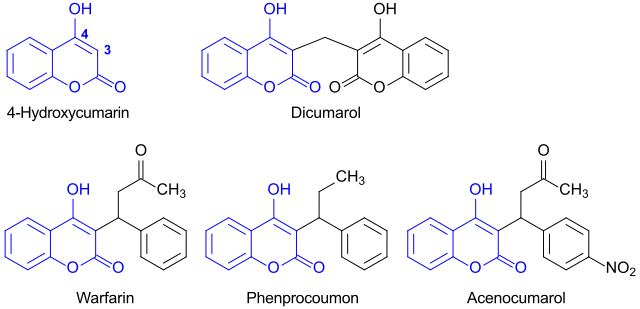
Blood clotting tests are used to diagnose and assess bleeding problems and to monitor people who take warfarin or other anticoagulant medicines. You may be advised to have blood clotting tests: If you h... These chemicals then react with other chemicals and proteins in the plasma, called clotting factors. There are 13 known clotting factors which.
Patient information leaflet
Anticoagulants
DOACs are much m... In 2021, the UK's National Institute for Health and Care Excellence (NICE) recommended that DOACs should be the preferred option for AF, instead of warfarin. Speak to your doctor if you'd like to consider changing your anticoagulant. These activated platelets and the damaged tissue release chemicals which react with other.

Patient information leaflet
Pre-eclampsia
The National Institute for Health and Care Excellence (NICE) recommends that women at increased risk of developing pre-eclampsia should take low-dose aspirin. NICE recommends 75-150 mg asp... The risk of complications is reduced if pre-eclampsia is diagnosed early and treated. A rare but serious complication is disseminated intravascular.

Patient information leaflet
Thrombophilia
The clotting cascade makes the blood solidify into a clot, which sticks to the injured part of the blood vessel. Small particles in the blood, called platelets, also help to form the clot. There are also natural chemicals in the blood which act against the clotting system, to stop the blood clotting too much. Thrombophilia occurs if the normal.

Patient information leaflet
Barrett's oesophagus
Barrett'. It typically affects people between the ages of 50 and 70 years. The coil then emits heat ene... Nearby normal cells then multiply and replace the destroyed abnormal cells. Argon plasma coagulation This treatment uses a jet of argon gas, together with an electric current, to burn away dysplastic cells. Endoscopic mucosal resection (EMR).

Patient information leaflet
Piles
Banding treatment (rubber band ligation) Banding is the most commonly used piles treatment, especially for grade 2 and 3 piles. Infrared coagulation/photocoagulation This method of piles treatment uses infrared light to burn and cut off the circulation to the haemorrhoid, which causes it to shrink in size. It may be as effective as banding.
Further reading and references
- coagulation factor XI; MedlinePlus, National Library of Medicine.
- Duga S, Salomon O. Congenital factor XI deficiency: an update. Semin Thromb Hemost. 2013 Sep;39(6):621-31. doi: 10.1055/s-0033-1353420. Epub 2013 Aug 8.
- Duga S, Salomon O. Factor XI Deficiency. Semin Thromb Hemost. 2009 Jun;35(4):416-25. doi: 10.1055/s-0029-1225764. Epub 2009 Jul 13.
- Emsley J, McEwan PA, Gailani D. Structure and function of factor XI. Blood. 2010 Apr 1;115(13):2569-77. doi: 10.1182/blood-2009-09-199182. Epub 2010 Jan 28.
- Gomez K, Bolton-Maggs P. Factor XI deficiency. Haemophilia. 2008 Nov;14(6):1183-9. doi: 10.1111/j.1365-2516.2008.01667.x. Epub 2008 Feb 27.
- He R, Chen D, He S. Factor XI: hemostasis, thrombosis, and antithrombosis. Thromb Res. 2012 May;129(5):541-50. doi: 10.1016/j.thromres.2011.11.051. Epub 2011 Dec 22.
- Peretz H, Salomon O, Mor-Cohen R, Usher S, Zucker M, Zivelin A, Seligsohn U. Type I mutation in the F11 gene is a third ancestral mutation which causes factor XI deficiency in Ashkenazi Jews. J Thromb Haemost. 2013 Apr;11(4):724-30. doi: 10.1111/jth.12137.
- Puy C, Rigg RA, McCarty OJ. The hemostatic role of factor XI. Thromb Res. 2016 May;141 Suppl 2(Suppl 2):S8-S11. doi: 10.1016/S0049-3848(16)30354-1.
Share your thoughts or experiences with others in our patient communities.
Simple access to trusted treatments and health services online.
Common conditions
Get help with common conditions through the NHS, without a GP appointment.





Sign up to the Patient newsletter
Your weekly dose of clear, trustworthy health advice - written to help you feel informed, confident and in control.
By subscribing you accept our Privacy Policy. You can unsubscribe at any time. We never sell your data.