coagulation factor XIII A chain
Last updated 18 Aug 2020
Meets Patient’s editorial guidelines
- DownloadDownload
- Share
- Language
- Discussion
- Ask Patient
- Audio Version
- Add to preferred sources on Google
The F13A1 gene provides instructions for making one part, the A subunit, of a protein called factor XIII. This protein is part of a group of related proteins called coagulation factors that are essential for normal blood clotting. They work together as part of the coagulation cascade, which is a series of chemical reactions that forms blood clots in response to injury. After an injury, clots seal off blood vessels to stop bleeding and trigger blood vessel repair. Factor XIII acts at the end of the cascade to strengthen and stabilize newly formed clots, preventing further blood loss.
Video picks for GenesVideo library
Normal function
The F13A1 gene provides instructions for making one part, the A subunit, of a protein called factor XIII. This protein is part of a group of related proteins called coagulation factors that are essential for normal blood clotting. They work together as part of the coagulation cascade, which is a series of chemical reactions that forms blood clots in response to injury. After an injury, clots seal off blood vessels to stop bleeding and trigger blood vessel repair. Factor XIII acts at the end of the cascade to strengthen and stabilize newly formed clots, preventing further blood loss.
Factor XIII in the bloodstream is made of two A subunits (produced from the F13A1 gene) and two B subunits (produced from the F13B gene). When a new blood clot forms, the A and B subunits separate from one another, and the A subunit is cut (cleaved) to produce the active form of factor XIII (factor XIIIa). The active protein links together molecules of fibrin, the material that forms the clot, which strengthens the clot and keeps other molecules from breaking it down.
Studies suggest that factor XIII has additional functions, although these are less well understood than its role in blood clotting. Specifically, factor XIII is likely involved in other aspects of wound healing, immune system function, maintaining pregnancy, bone formation, and the growth of new blood vessels (angiogenesis).
Conditions referring to this gene or chromosome
Other names
bA525O21.1 (coagulation factor XIII, A1 polypeptide)
coagulation factor XIII A chain precursor
coagulation factor XIII, A polypeptide
coagulation factor XIII, A1 polypeptide
coagulation factor XIIIa
F13A
factor XIIIa
fibrin stabilizing factor, A subunit
fibrinoligase
FSF, A subunit
protein-glutamine gamma-glutamyltransferase A chain
TGase
transglutaminase A chain
transglutaminase. plasma
Patient picks for Genes
General health
Medical negligence
Most people receive good care from healthcare professionals. Sometimes, people receive poor care. If this happens, they may wish to make a complaint. If sub-standard care has led to avoidable harm, they may also wish to make a claim for compensation for medical negligence.
by Dr Doug McKechnie, MRCGP

Cancer
Breast cancer facts and risk factors
Most cases of breast cancer occur by chance. However, breast cancer does occur more often than usual in some families because of their genetic makeup.
by Dr Colin Tidy, MRCGP

Full body strength & conditioning exercises
Russian Kettlebell Swing
Improve hip power and glute strength with the Russian Kettlebell Swing. This exercise combines a hip hinge and swing motion, engaging your posterior chain muscles.

Podcasts
Me and myself
In this episode, Clare and Aileen turn their attention to what they describe as the primary relationship - the relationship we have with ourselves - and why it is so often the one we neglect, misunderstand or actively sideline.
by Thomas Andrew Porteus, MBCS
Heart health and blood vessels
Dilated cardiomyopathy causes: what are the risk factors?
Having dilated cardiomyopathy means that your heart muscle is weakened, which affects how your heart pumps blood around your body. There are a wide range of dilated cardiomyopathy causes, including genetics, other health conditions, alcohol consumption and a poor diet. While we can't control some of these risk factors, we can make positive lifestyle changes to reduce our risk of developing dilated cardiomyopathy.
by Amberley Davis

Chest and lungs
Viral cough
Most coughs are caused by viral infections and usually soon go. This leaflet gives some tips on what to do and discusses which symptoms may indicate a more serious illness. Viral infections commonly affect the throat (larynx), the main airway (trachea), or the airways going into the lungs (bronchi). These infections are sometimes called laryngitis, tracheitis, or bronchitis. Cough is often the main symptom.
by Dr Surangi Mendis, MRCGP
Related patient information and medicines

Patient information leaflet
Blood clotting tests
Blood clotting tests are used to diagnose and assess bleeding problems and to monitor people who take warfarin or other anticoagulant medicines. You may be advi... These chemicals then react with other chemicals and proteins in the plasma, called clotting factors. There are 13 known clotting factors which are called by their Roman numbers - factor.
Patient information leaflet
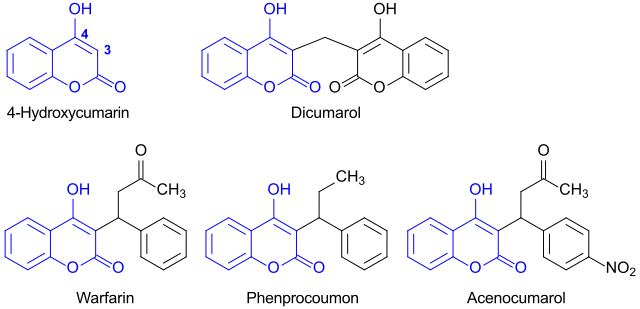
Anticoagulants
How do anticoagulants work. These activated platelets and the damaged tissue release chemicals which react with other chemicals and proteins in the blood, called clotting factors. There are 13 known clotting factors which are called by their Roman numbers - factor I to factor XIII. A complex cascade of chemical reactions involving these clotting.

Patient information leaflet
Antiphospholipid syndrome
It is a disease that affects the blood and makes it more likely to clot than normal - a thrombophilia. The presence of the antiphospholipid antibodies causes the increased tendency of the blood to clot - they can trigger the coagulation cascade. The coagulation cascade is a chain reaction of events or chemical reactions that occur in the blood,.
Patient information leaflet
Thrombophilia
The body has a natural clotting process in the blood, which is altered in thrombophilia. Thrombophilia refers to a group of conditions where the blood clots more easily than normal. When a blood vessel is injured, the clotting process is triggered. It is a chain reaction of different chemicals in the blood which are called clotting factors. The.

Patient information leaflet
Barrett's oesophagus
What is Barrett's oesophagus. Barrett's oesophagus Barrett's Oesophagus Barrett's oesophagus is a condition which affects the lower gullet (oesophagus). It is named after the doctor who first described it. In Barrett's oesophagus, the cells lining the affected area of oesophagus become changed. The cells of the inner lining (epithelium) of a.

Patient information leaflet
Can I take Apixaban and Rybelsus together?
There ... These two medicines work in different ways and do not typically interfere with how the other is absorbed, broken down, or removed from the body. Why this happens Apixaban is an anticoagulant (blood thinner) that works by blocking a clotting factor called Factor Xa. Rybelsus is a GLP-1 receptor agonist used for type 2 diabetes that mimics.
Further reading and references
- coagulation factor XIII A chain; MedlinePlus, National Library of Medicine.
- Bagoly Z, Koncz Z, Harsfalvi J, Muszbek L. Factor XIII, clot structure, thrombosis. Thromb Res. 2012 Mar;129(3):382-7. doi: 10.1016/j.thromres.2011.11.040. Epub 2011 Dec 24.
- Biswas A, Ivaskevicius V, Seitz R, Thomas A, Oldenburg J. An update of the mutation profile of Factor 13 A and B genes. Blood Rev. 2011 Sep;25(5):193-204. doi: 10.1016/j.blre.2011.03.001. Epub 2011 Jun 2.
- Biswas A, Ivaskevicius V, Thomas A, Oldenburg J. Coagulation factor XIII deficiency. Diagnosis, prevalence and management of inherited and acquired forms. Hamostaseologie. 2014;34(2):160-6. doi: 10.5482/HAMO-13-08-0046. Epub 2014 Feb 7.
- Hethershaw EL, Cilia La Corte AL, Duval C, Ali M, Grant PJ, Ariens RA, Philippou H. The effect of blood coagulation factor XIII on fibrin clot structure and fibrinolysis. J Thromb Haemost. 2014 Feb;12(2):197-205. doi: 10.1111/jth.12455.
- Levy JH, Greenberg C. Biology of Factor XIII and clinical manifestations of Factor XIII deficiency. Transfusion. 2013 May;53(5):1120-31. doi: 10.1111/j.1537-2995.2012.03865.x. Epub 2012 Aug 28.
- Muszbek L, Bereczky Z, Bagoly Z, Komaromi I, Katona E. Factor XIII: a coagulation factor with multiple plasmatic and cellular functions. Physiol Rev. 2011 Jul;91(3):931-72. doi: 10.1152/physrev.00016.2010.
- Schroeder V, Kohler HP. Factor XIII deficiency: an update. Semin Thromb Hemost. 2013 Sep;39(6):632-41. doi: 10.1055/s-0033-1353392. Epub 2013 Aug 8.
Share your thoughts or experiences with others in our patient communities.
Simple access to trusted treatments and health services online.
Common conditions
Get help with common conditions through the NHS, without a GP appointment.





Sign up to the Patient newsletter
Your weekly dose of clear, trustworthy health advice - written to help you feel informed, confident and in control.
By subscribing you accept our Privacy Policy. You can unsubscribe at any time. We never sell your data.