coagulation factor XIII B chain
Last updated 18 Aug 2020
Meets Patient’s editorial guidelines
- DownloadDownload
- Share
- Language
- Discussion
- Ask Patient
- Audio Version
- Add to preferred sources on Google
The F13B gene provides instructions for making one part, the B subunit, of a protein called factor XIII. This protein is part of a group of related proteins called coagulation factors that are essential for normal blood clotting. They work together as part of the coagulation cascade, which is a series of chemical reactions that forms blood clots in response to injury. After an injury, clots seal off blood vessels to stop bleeding and trigger blood vessel repair. Factor XIII acts at the end of the cascade to strengthen and stabilize newly formed clots, preventing further blood loss.
Video picks for GenesVideo library
Normal function
The F13B gene provides instructions for making one part, the B subunit, of a protein called factor XIII. This protein is part of a group of related proteins called coagulation factors that are essential for normal blood clotting. They work together as part of the coagulation cascade, which is a series of chemical reactions that forms blood clots in response to injury. After an injury, clots seal off blood vessels to stop bleeding and trigger blood vessel repair. Factor XIII acts at the end of the cascade to strengthen and stabilize newly formed clots, preventing further blood loss.
Factor XIII in the bloodstream is made of two A subunits (produced from the F13A1 gene) and two B subunits (produced from the F13B gene). The role of the B subunits is to carry and stabilize the A subunits, protecting them from being broken down. When a new blood clot forms, the A and B subunits separate from one another, and the A subunits are cut (cleaved) to produce the active form of factor XIII (factor XIIIa). The active protein links together molecules of fibrin, the material that forms the clot, which strengthens the clot and keeps other molecules from breaking it down.
Studies suggest that factor XIII has additional functions, although these are less well understood than its role in blood clotting. Specifically, factor XIII is likely involved in other aspects of wound healing, immune system function, maintaining pregnancy, bone formation, and the growth of new blood vessels (angiogenesis).
Conditions referring to this gene or chromosome
Other names
coagulation factor XIII B chain precursor
coagulation factor XIII, B polypeptide
fibrin-stabilizing factor B subunit
FXIIIB
protein-glutamine gamma-glutamyltransferase B chain
TGase
transglutaminase B chain
Patient picks for Genes

Cancer
Breast cancer facts and risk factors
Most cases of breast cancer occur by chance. However, breast cancer does occur more often than usual in some families because of their genetic makeup.
by Dr Colin Tidy, MRCGP
Heart health and blood vessels
Dilated cardiomyopathy causes: what are the risk factors?
Having dilated cardiomyopathy means that your heart muscle is weakened, which affects how your heart pumps blood around your body. There are a wide range of dilated cardiomyopathy causes, including genetics, other health conditions, alcohol consumption and a poor diet. While we can't control some of these risk factors, we can make positive lifestyle changes to reduce our risk of developing dilated cardiomyopathy.
by Amberley Davis

Full body strength & conditioning exercises
Russian Kettlebell Swing
Improve hip power and glute strength with the Russian Kettlebell Swing. This exercise combines a hip hinge and swing motion, engaging your posterior chain muscles.

Infections
6-in-1 vaccine
The 6-in-1 vaccine is part of routine childhood immunisations and protects babies against six different serious illnesses. Three doses are given. Further boosters without all six components are given at other times later in childhood and in adult life. The 6-in-1 vaccine used to be given as the 3-in-1 vaccine DTaP along with the polio vaccine which was given by mouth, but has gradually been extended so that it now protects against even more diseases. It is given in one single injection into the thigh from one single syringe. This leaflet explains when this vaccine is given and why. It also explains which components of the 6-in-1 vaccine are given later in the UK immunisation schedule as the 4-in-1, 3-in-1 etc.
by Dr Philippa Vincent, MRCGP

Treatment and medication
What factors are causing antimicrobial resistance?
Following a recent study by health economists at the University of Manchester and the University of Southern Denmark, the tremendous pressure GPs are currently working under has been linked to increasing broad-spectrum antibiotic prescribing in England. Because excess antibiotic prescribing has been closely linked to antibiotic resistance, there are concerns that these higher prescribing levels may be contributing to antimicrobial resistance.
by Emily Jane Bashforth

Breast cancer types, detection and risks
What are the risk factors for breast cancer?
Dr Sarah Jarvis MBE Although breast cancer can develop for no apparent reason, there are certain risk factors which increase the chance that breast cancer will develop. [https://patient.info/health/breast-cancer-leaflet](https://patient.info/health/breast-cancer-leaflet)
by Dr Sarah Jarvis
Related patient information and medicines
Patient information leaflet
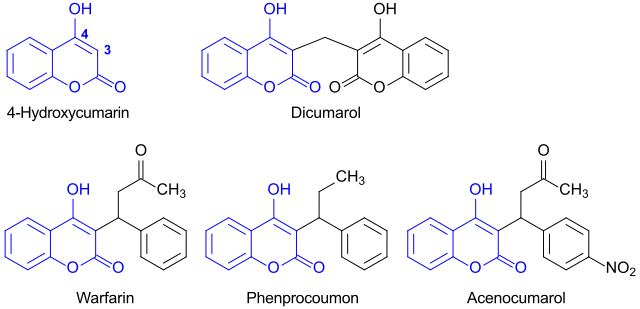
Anticoagulants
These activated platelets and the damaged tissue release chemicals which react with other chemicals and proteins in the blood, called clotting factors. There are 13 known clotting factors which are called by their Roman numbers - factor I to factor XIII. A complex cascade of chemical reactions involving these clotting factors, called the clotting.

Patient information leaflet
Blood clotting tests
Blood clotting tests are used to diagnose and assess bleeding problems and to monitor people who take warfarin or other anticoagulant medicines. You may be advi... These chemicals then react with other chemicals and proteins in the plasma, called clotting factors. There are 13 known clotting factors which are called by their Roman numbers - factor.

Patient information leaflet
Thrombophilia
The normal clotting process is called haemostasis. It helps to stop bleeding if you have an injury such as a cut. When a blood vessel is injured, the clotting process is triggered. This is called the clotting cascade. It is a chain reaction of different chemicals in the blood which are called clotting factors. The clotting cascade makes the blood.

Patient information leaflet
Antiphospholipid syndrome
However, most people now say 'APS with or without associated rheumatic disease'. What causes antiphospholipid syndrome. The presence of the antiphospholipid antibodies causes the increased tendency of the blood to clot - they can trigger the coagulation cascade... The coagulation cascade is a chain reaction of events or chemical reactions that.

Patient information leaflet
Pre-eclampsia
The risk of complica... The risk of complications is reduced if pre-eclampsia is diagnosed early and treated. A rare but serious complication is disseminated intravascular coagulation, which can occur if a woman has had to have many blood transfusions. For the mother Serious complications are uncommon but include the following: Eclampsia. Liver,.
Patient information leaflet
Can I take Apixaban and Bisoprolol together?
There is no direct interaction between apixaban and bisoprolol. They work in different ways and do not interfere with how the body processes each other. Why this happens Apixaban is an anticoagulant (blood thinner) that works by blocking a clotting factor called Factor Xa. Bisoprolol is a beta-blocker that slows the heart rate and lowers blood.
Further reading and references
- coagulation factor XIII B chain; MedlinePlus, National Library of Medicine.
- Bagoly Z, Koncz Z, Harsfalvi J, Muszbek L. Factor XIII, clot structure, thrombosis. Thromb Res. 2012 Mar;129(3):382-7. doi: 10.1016/j.thromres.2011.11.040. Epub 2011 Dec 24.
- Biswas A, Ivaskevicius V, Seitz R, Thomas A, Oldenburg J. An update of the mutation profile of Factor 13 A and B genes. Blood Rev. 2011 Sep;25(5):193-204. doi: 10.1016/j.blre.2011.03.001. Epub 2011 Jun 2.
- Biswas A, Ivaskevicius V, Thomas A, Oldenburg J. Coagulation factor XIII deficiency. Diagnosis, prevalence and management of inherited and acquired forms. Hamostaseologie. 2014;34(2):160-6. doi: 10.5482/HAMO-13-08-0046. Epub 2014 Feb 7.
- Hethershaw EL, Cilia La Corte AL, Duval C, Ali M, Grant PJ, Ariens RA, Philippou H. The effect of blood coagulation factor XIII on fibrin clot structure and fibrinolysis. J Thromb Haemost. 2014 Feb;12(2):197-205. doi: 10.1111/jth.12455.
- Levy JH, Greenberg C. Biology of Factor XIII and clinical manifestations of Factor XIII deficiency. Transfusion. 2013 May;53(5):1120-31. doi: 10.1111/j.1537-2995.2012.03865.x. Epub 2012 Aug 28.
- Muszbek L, Bereczky Z, Bagoly Z, Komaromi I, Katona E. Factor XIII: a coagulation factor with multiple plasmatic and cellular functions. Physiol Rev. 2011 Jul;91(3):931-72. doi: 10.1152/physrev.00016.2010.
- Schroeder V, Kohler HP. Factor XIII deficiency: an update. Semin Thromb Hemost. 2013 Sep;39(6):632-41. doi: 10.1055/s-0033-1353392. Epub 2013 Aug 8.
Share your thoughts or experiences with others in our patient communities.
Simple access to trusted treatments and health services online.
Common conditions
Get help with common conditions through the NHS, without a GP appointment.





Sign up to the Patient newsletter
Your weekly dose of clear, trustworthy health advice - written to help you feel informed, confident and in control.
By subscribing you accept our Privacy Policy. You can unsubscribe at any time. We never sell your data.