fukutin related protein
Last updated 3 Apr 2025
Meets Patient’s editorial guidelines
- DownloadDownload
- Share
- Language
- Discussion
- Ask Patient
- Audio Version
- Add to preferred sources on Google
The FKRP gene provides instructions for making a protein called fukutin-related protein (FKRP). This protein is present in many of the body's tissues but is particularly abundant in the brain, heart (cardiac) muscle, and muscles used for movement (skeletal muscles). Within cells, FKRP is found in a specialized structure called the Golgi apparatus, where newly produced proteins are modified.
Video picks for GenesVideo library
Normal function
The FKRP gene provides instructions for making a protein called fukutin-related protein (FKRP). This protein is present in many of the body's tissues but is particularly abundant in the brain, heart (cardiac) muscle, and muscles used for movement (skeletal muscles). Within cells, FKRP is found in a specialized structure called the Golgi apparatus, where newly produced proteins are modified.
FKRP is involved in a process called glycosylation. Through this chemical process, sugar molecules are added to certain proteins. In particular, FKRP adds a molecule called ribitol 5-phosphate to the chain of sugars attached to a protein called alpha (α)-dystroglycan. Glycosylation is critical for the normal function of α-dystroglycan.
The α-dystroglycan protein helps anchor the structural framework inside each cell (cytoskeleton) to the lattice of proteins and other molecules outside the cell (extracellular matrix). In skeletal muscles, glycosylated α-dystroglycan helps stabilize and protect muscle fibers. In the brain, it helps direct the movement (migration) of nerve cells (neurons) during early development.
Conditions referring to this gene or chromosome
Other names
FKRP_HUMAN
LGMD2I
MDC1C
MDDGA5
MDDGB5
MDDGC5
Patient picks for Genes

Diet and nutrition
How much protein do you need to build muscle?
If you wish to build muscle, there is no escaping the importance of protein. Why do we need protein to build muscle, and how much protein intake do we need to maximise muscle gain?
by Amberley Davis

Diet and nutrition
How a protein-packed breakfast can boost your health
When we think of breakfast, we often picture a bowl of cornflakes with milk. While it’s a classic morning staple, it might not be the most effective way to start your day, as it lacks protein. Adding more protein to your breakfast can boost your energy levels and help keep you feeling full for longer.
by Victoria Raw

Diet and nutrition
10 sources of plant-based protein for bone health
Plant-based diets are growing in popularity. People choose this way of eating for various reasons - to boost their health, help animals, and protect the environment. But switching to a plant-based diet may mean you're missing out on vital, bone-friendly nutrients. One of these is protein.
by Victoria Raw

Diet and nutrition
Plant-based proteins could help prevent high blood pressure
Eating a greater amount of minimally processed plant-based proteins - such as beans, nuts and lentils - may lower your chance of developing high blood pressure, according to new research.
by Laura Williamson
Healthy living
Natural protein verses protein powder: which is better for strength training?
Consuming enough protein is essential for building strong muscles. Protein powder shakes are not a complete replacement for natural protein sources found in your food. However, you may consider supplementing your diet and strength-training regime with protein shakes. Before you decide if this is right for you, there are several benefits and considerations to take into account.
by Amberley Davis
Healthy living
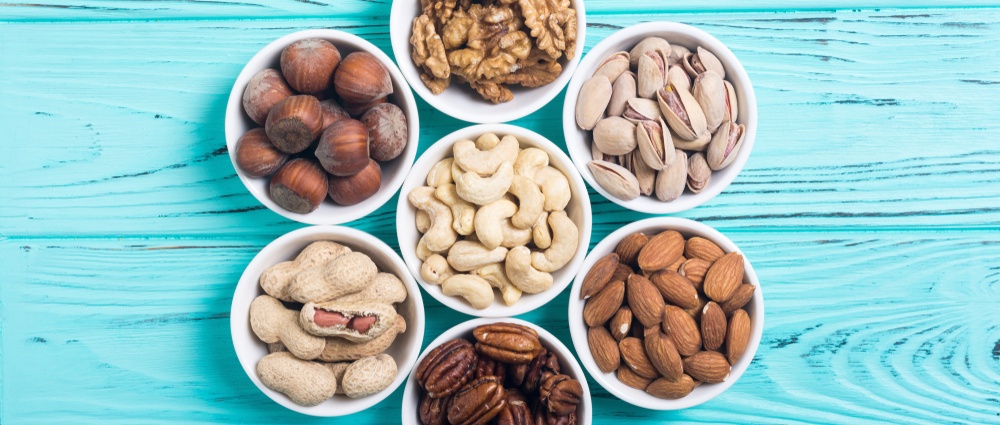
8 high-protein nuts to boost your strength
Packed with protein, delicious, easy to eat, and versatile - nuts are a great source of fuel for people building their fitness and strength. But not all nuts are created equal, which is why we count down the top eight nuts you should eat while strength training and serve these up with tasty recipe ideas.
by Lynn Stephen
Related patient information and medicines

Patient information leaflet
5:2 diet
The 5:2 diet is a calorie-restricted diet that involves eating 'normally' for five days out of seven and then 'fasting' on the other two days out of seven. The proposed health effects of the 5:2 diet include weight loss, improvement in life expectancy, protection against certain cancers and protection against dementia. However, the evidence.

Patient information leaflet
Albinism
Albinism is a rare inherited (genetic) condition which reduces the amount of of melanin pigment in the skin, hair and/or eyes. People with albinism are often pale, with light-coloured irises. However, there are many types of albinism and people can be affected to different degrees. What is albinism. Albinism is an inherited condition that leads to.

Patient information leaflet
Weight gain
Weight gain is rarely caused by simply eating more, or being less active, it is often more complicated than this. There are many possible causes of weight gain, and often a number of factors play a part. These may be social, cultural, societal, psychological or medical. What causes weight gain. Most simply, it might be due to taking in more.

Patient information leaflet
Nephrotic syndrome
Nephrotic syndrome is a condition where the 'filters' in the kidney become 'leaky' and large amounts of protein leak from the blood into the urine. The main symptom is fluid retention (oedema) which is mainly due to the low protein level in the blood. Various diseases can cause nephrotic syndrome, some more serious than others. Treatment and.

Patient information leaflet
Liver function tests
If the liver is swollen, through inflammation or disease, it can swell out from under the ribs and make your tummy swollen. Liver function Liver function The liver is a factory for the production and breakdown of carbohydrates, fats, proteins, hormones and other essential body chemicals, and helps dispose of waste products. This work is mainly.

Patient information leaflet
Cataracts
However, some people may develop a cloudy layer behind the ... This can be easily treated with a quick laser procedure to restore clear vision. Can you prevent cataracts. You can’t always prevent cataracts, as they’re often linked to ageing. However, protecting your eyes from UV light, eating a healthy diet rich in antioxidants, not smoking, and.
Further reading and references
- fukutin related protein; MedlinePlus, National Library of Medicine.
- Beltran-Valero de Bernabe D, Voit T, Longman C, Steinbrecher A, Straub V, Yuva Y, Herrmann R, Sperner J, Korenke C, Diesen C, Dobyns WB, Brunner HG, van Bokhoven H, Brockington M, Muntoni F. Mutations in the FKRP gene can cause muscle-eye-brain disease and Walker-Warburg syndrome. J Med Genet. 2004 May;41(5):e61. doi: 10.1136/jmg.2003.013870. No abstract available.
- Boito CA, Melacini P, Vianello A, Prandini P, Gavassini BF, Bagattin A, Siciliano G, Angelini C, Pegoraro E. Clinical and molecular characterization of patients with limb-girdle muscular dystrophy type 2I. Arch Neurol. 2005 Dec;62(12):1894-9. doi: 10.1001/archneur.62.12.1894.
- Esapa CT, Benson MA, Schroder JE, Martin-Rendon E, Brockington M, Brown SC, Muntoni F, Kroger S, Blake DJ. Functional requirements for fukutin-related protein in the Golgi apparatus. Hum Mol Genet. 2002 Dec 15;11(26):3319-31. doi: 10.1093/hmg/11.26.3319.
- Esapa CT, McIlhinney RA, Blake DJ. Fukutin-related protein mutations that cause congenital muscular dystrophy result in ER-retention of the mutant protein in cultured cells. Hum Mol Genet. 2005 Jan 15;14(2):295-305. doi: 10.1093/hmg/ddi026. Epub 2004 Dec 1.
- Gerin I, Ury B, Breloy I, Bouchet-Seraphin C, Bolsee J, Halbout M, Graff J, Vertommen D, Muccioli GG, Seta N, Cuisset JM, Dabaj I, Quijano-Roy S, Grahn A, Van Schaftingen E, Bommer GT. ISPD produces CDP-ribitol used by FKTN and FKRP to transfer ribitol phosphate onto alpha-dystroglycan. Nat Commun. 2016 May 19;7:11534. doi: 10.1038/ncomms11534.
- Kanagawa M, Kobayashi K, Tajiri M, Manya H, Kuga A, Yamaguchi Y, Akasaka-Manya K, Furukawa JI, Mizuno M, Kawakami H, Shinohara Y, Wada Y, Endo T, Toda T. Identification of a Post-translational Modification with Ribitol-Phosphate and Its Defect in Muscular Dystrophy. Cell Rep. 2016 Mar 8;14(9):2209-2223. doi: 10.1016/j.celrep.2016.02.017. Epub 2016 Feb 25.
- Kava M, Chitayat D, Blaser S, Ray PN, Vajsar J. Eye and brain abnormalities in congenital muscular dystrophies caused by fukutin-related protein gene (FKRP) mutations. Pediatr Neurol. 2013 Nov;49(5):374-8. doi: 10.1016/j.pediatrneurol.2013.06.022.
- Trovato R, Astrea G, Bartalena L, Ghirri P, Baldacci J, Giampietri M, Battini R, Santorelli FM, Fiorillo C. Elevated serum creatine kinase and small cerebellum prompt diagnosis of congenital muscular dystrophy due to FKRP mutations. J Child Neurol. 2014 Mar;29(3):394-8. doi: 10.1177/0883073812474951. Epub 2013 Feb 17.
- Willer T, Inamori K, Venzke D, Harvey C, Morgensen G, Hara Y, Beltran Valero de Bernabe D, Yu L, Wright KM, Campbell KP. The glucuronyltransferase B4GAT1 is required for initiation of LARGE-mediated alpha-dystroglycan functional glycosylation. Elife. 2014 Oct 3;3:e03941. doi: 10.7554/eLife.03941.
Share your thoughts or experiences with others in our patient communities.
Simple access to trusted treatments and health services online.
Common conditions
Get help with common conditions through the NHS, without a GP appointment.





Sign up to the Patient newsletter
Your weekly dose of clear, trustworthy health advice - written to help you feel informed, confident and in control.
By subscribing you accept our Privacy Policy. You can unsubscribe at any time. We never sell your data.