G protein subunit alpha i3
Last updated 18 Aug 2025
Meets Patient’s editorial guidelines
- DownloadDownload
- Share
- Language
- Discussion
- Ask Patient
- Audio Version
- Add to preferred sources on Google
The GNAI3 gene provides instructions for making one part, the GNAI3 inhibitory alpha subunit, of a protein complex called a guanine nucleotide-binding protein (G protein). G proteins are composed of three protein subunits: alpha, beta, and gamma. Each of these subunits is produced from a different gene.
Video picks for GenesVideo library
Normal function
The GNAI3 gene provides instructions for making one part, the GNAI3 inhibitory alpha subunit, of a protein complex called a guanine nucleotide-binding protein (G protein). G proteins are composed of three protein subunits: alpha, beta, and gamma. Each of these subunits is produced from a different gene.
Through a process called signal transduction, G proteins trigger a complex network of signaling pathways within cells. These pathways help transmit information from the outside of the cell to the inside of the cell. Specifically, G proteins that are made with the GNAI3 inhibitory alpha subunit reduce (inhibit) the activity of an enzyme called adenylyl cyclase. This enzyme is important for transmitting information within cells. By influencing many cell activities, G protein signaling helps cells grow and divide or take on specialized functions.
Studies suggest that G protein signaling that involves the GNAI3 inhibitory alpha subunit contributes to the development of the first and second pharyngeal arches. During early development, these structures develop into the bones and tissues of the head and face, including the jawbones, facial muscles, and inner and outer ears.
Conditions referring to this gene or chromosome
Other names
87U6
ARCND1
ARCODS
guanine nucleotide binding protein (G protein), alpha inhibiting activity polypeptide 3
guanine nucleotide binding protein, alpha-inhibiting activity polypeptide 3
guanine nucleotide-binding protein G(k) subunit alpha
HG1A
Patient picks for Genes

Diet and nutrition
How much protein do you need to build muscle?
If you wish to build muscle, there is no escaping the importance of protein. Why do we need protein to build muscle, and how much protein intake do we need to maximise muscle gain?
by Amberley Davis

Diet and nutrition
How a protein-packed breakfast can boost your health
When we think of breakfast, we often picture a bowl of cornflakes with milk. While it’s a classic morning staple, it might not be the most effective way to start your day, as it lacks protein. Adding more protein to your breakfast can boost your energy levels and help keep you feeling full for longer.
by Victoria Raw
Healthy living
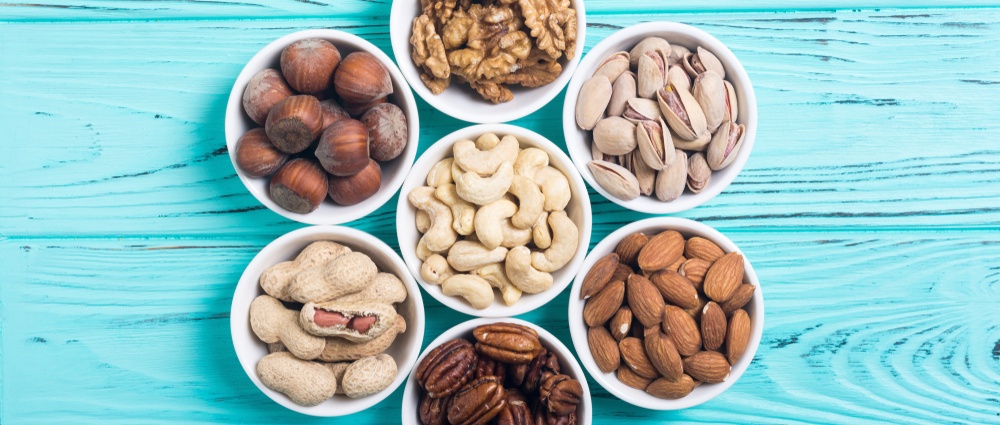
8 high-protein nuts to boost your strength
Packed with protein, delicious, easy to eat, and versatile - nuts are a great source of fuel for people building their fitness and strength. But not all nuts are created equal, which is why we count down the top eight nuts you should eat while strength training and serve these up with tasty recipe ideas.
by Lynn Stephen

Kidney and urinary tract
Proteinuria
Proteins are molecules that are found in almost every part of the body, including in the blood. The kidneys normally have a filter which stops protein from entering the urine, except in very tiny amounts; however, kidney problems can cause higher levels of protein to be found in the urine.
by Dr Doug McKechnie, MRCGP
Healthy living
Natural protein verses protein powder: which is better for strength training?
Consuming enough protein is essential for building strong muscles. Protein powder shakes are not a complete replacement for natural protein sources found in your food. However, you may consider supplementing your diet and strength-training regime with protein shakes. Before you decide if this is right for you, there are several benefits and considerations to take into account.
by Amberley Davis

Diet and nutrition
10 sources of plant-based protein for bone health
Plant-based diets are growing in popularity. People choose this way of eating for various reasons - to boost their health, help animals, and protect the environment. But switching to a plant-based diet may mean you're missing out on vital, bone-friendly nutrients. One of these is protein.
by Victoria Raw
Related patient information and medicines
Patient information leaflet
Primary liver cancer
Weight loss Unintentional. Many people who develop primary liver cancer will already have symptoms associated with scarring of the liver (cirrhosis). If you already have cirrhosis and your health becomes worse quite quickly, the cause may be a liver cancer which has developed. Everyone with cirrhosis should be having regular monitoring with an.

Patient information leaflet
Liver function tests
What are the main liver function tests. The usual liver function tests typically include the following: Bilirubin. Albumin. Total protein. Transferases (AST or SGOT and ALT or SGPT). Gamma GT. Creatine kinase. Immunoglobulins (antibodies made in response to various challenges including allergies Allergies , infections, some blood disorders and.

Patient information leaflet
Dukan diet
The final two phases involve re-introduction of foods with an aim to help dieters. There is no calorie restriction and you are permitted to eat as much of the allowed foods as you like. For every stage of the Dukan diet, you are required to eat a limited portion of oat bran daily. The four phases of the Dukan diet 1. Attack phase The attack phase.

Patient information leaflet
Nephrotic syndrome
Nephrotic syndrome is a condition where the 'filters' in the kidney become 'leaky' and large amounts of protein leak from the blood into the urine. The main symptom is fluid retention (oedema) which is mainly due to the low protein level in the blood. Various diseases can cause nephrotic syndrome, some more serious than others. Treatment and.

Patient information leaflet
Down's syndrome screening
This is so that you can have the combined test which is the recommended screening strategy in the first trimester of pre... What Down's syndrome screening tests are available? 10-14 weeks - combined test The standard test for Down's syndrome includes a combination of a nuchal translucency scan ( also called the NT scan - more details below) and a.
Patient information leaflet
Can I take Rivaroxaban and Tamsulosin together?
However, both medicines can occasionally cause dizziness or lightheadedness,... Taking them together might slightly increase the chance of feeling faint. Why this happens Rivaroxaban is an anticoagulant (blood thinner) and tamsulosin is an alpha-blocker used for prostate symptoms. They are processed by different pathways in the liver and do not.
Further reading and references
- G protein subunit alpha i3; MedlinePlus, National Library of Medicine.
- Baron B, Fernandez MA, Toledo F, Le Roscouet D, Mayau V, Martin N, Buttin G, Debatisse M. The highly conserved Chinese hamster GNAI3 gene maps less than 60 kb from the AMPD2 gene and lacks the intronic U6 snRNA present in its human counterpart. Genomics. 1994 Nov 15;24(2):288-94. doi: 10.1006/geno.1994.1618.
- Blatt C, Eversole-Cire P, Cohn VH, Zollman S, Fournier RE, Mohandas LT, Nesbitt M, Lugo T, Jones DT, Reed RR, et al. Chromosomal localization of genes encoding guanine nucleotide-binding protein subunits in mouse and human. Proc Natl Acad Sci U S A. 1988 Oct;85(20):7642-6. doi: 10.1073/pnas.85.20.7642.
- Gordon CT, Vuillot A, Marlin S, Gerkes E, Henderson A, AlKindy A, Holder-Espinasse M, Park SS, Omarjee A, Sanchis-Borja M, Bdira EB, Oufadem M, Sikkema-Raddatz B, Stewart A, Palmer R, McGowan R, Petit F, Delobel B, Speicher MR, Aurora P, Kilner D, Pellerin P, Simon M, Bonnefont JP, Tobias ES, Garcia-Minaur S, Bitner-Glindzicz M, Lindholm P, Meijer BA, Abadie V, Denoyelle F, Vazquez MP, Rotky-Fast C, Couloigner V, Pierrot S, Manach Y, Breton S, Hendriks YM, Munnich A, Jakobsen L, Kroisel P, Lin A, Kaban LB, Basel-Vanagaite L, Wilson L, Cunningham ML, Lyonnet S, Amiel J. Heterogeneity of mutational mechanisms and modes of inheritance in auriculocondylar syndrome. J Med Genet. 2013 Mar;50(3):174-86. doi: 10.1136/jmedgenet-2012-101331. Epub 2013 Jan 12.
- Li Q, Jiang Z, Zhang L, Cai S, Cai Z. Auriculocondylar syndrome: Pathogenesis, clinical manifestations and surgical therapies. J Formos Med Assoc. 2023 Sep;122(9):822-842. doi: 10.1016/j.jfma.2023.04.024. Epub 2023 May 17.
- Rieder MJ, Green GE, Park SS, Stamper BD, Gordon CT, Johnson JM, Cunniff CM, Smith JD, Emery SB, Lyonnet S, Amiel J, Holder M, Heggie AA, Bamshad MJ, Nickerson DA, Cox TC, Hing AV, Horst JA, Cunningham ML. A human homeotic transformation resulting from mutations in PLCB4 and GNAI3 causes auriculocondylar syndrome. Am J Hum Genet. 2012 May 4;90(5):907-14. doi: 10.1016/j.ajhg.2012.04.002.
- Romanelli Tavares VL, Zechi-Ceide RM, Bertola DR, Gordon CT, Ferreira SG, Hsia GS, Yamamoto GL, Ezquina SA, Kokitsu-Nakata NM, Vendramini-Pittoli S, Freitas RS, Souza J, Raposo-Amaral CA, Zatz M, Amiel J, Guion-Almeida ML, Passos-Bueno MR. Targeted molecular investigation in patients within the clinical spectrum of Auriculocondylar syndrome. Am J Med Genet A. 2017 Apr;173(4):938-945. doi: 10.1002/ajmg.a.38101.
Share your thoughts or experiences with others in our patient communities.
Simple access to trusted treatments and health services online.
Common conditions
Get help with common conditions through the NHS, without a GP appointment.





Sign up to the Patient newsletter
Your weekly dose of clear, trustworthy health advice - written to help you feel informed, confident and in control.
By subscribing you accept our Privacy Policy. You can unsubscribe at any time. We never sell your data.