glypican 3
Last updated 18 Aug 2020
Meets Patient’s editorial guidelines
- DownloadDownload
- Share
- Language
- Discussion
- Ask Patient
- Audio Version
- Add to preferred sources on Google
The GPC3 gene provides instructions for making a protein called glypican 3. This protein is one of several glypicans in humans, each of which consists of a core protein attached to long sugar molecules called heparan sulfate chains. Glypicans are anchored to the outer cell membrane, where they interact with a variety of other proteins outside the cell. Glypicans appear to play important roles in development before birth. These proteins are involved in numerous cell functions, including regulating cell growth and division (cell proliferation) and cell survival.
Video picks for GenesVideo library
Normal function
The GPC3 gene provides instructions for making a protein called glypican 3. This protein is one of several glypicans in humans, each of which consists of a core protein attached to long sugar molecules called heparan sulfate chains. Glypicans are anchored to the outer cell membrane, where they interact with a variety of other proteins outside the cell. Glypicans appear to play important roles in development before birth. These proteins are involved in numerous cell functions, including regulating cell growth and division (cell proliferation) and cell survival.
Several studies have found that glypican 3 interacts with other proteins at the surface of cells to restrain cell proliferation. Specifically, glypican 3 blocks (inhibits) a developmental pathway called the hedgehog signaling pathway. This pathway is critical for cell proliferation, cell specialization, and the normal shaping (patterning) of many parts of the body during embryonic development.
Researchers believe that in some cell types, glypican 3 may act as a tumour suppressor, which is a protein that prevents cells from growing and dividing in an uncontrolled way to form a cancerous tumour. Glypican 3 may also cause some types of cells to self-destruct (undergo apoptosis) when they are no longer needed, which can help keep growth in check.
Although glypican 3 is known primarily as an inhibitor of cell growth and cell division, in some tissues it appears to have the opposite effect. Research suggests that in certain types of cells, such as cells in the liver, glypican 3 may interact with proteins called growth factors to promote cell growth and cell division.
Conditions referring to this gene or chromosome
Other names
DGSX
glypican proteoglycan 3
glypican-3
GPC3_HUMAN
GTR2-2
Intestinal protein OCI-5
MXR7
OCI-5
SGBS1
Patient picks for Genes

Mental health
Eat Your Way to Calm - Foods That Fight Stress and Anxiety
Discover how incorporating magnesium-rich greens, zinc-packed foods, vitamin C sources, omega-3 fatty acids, fiber, and probiotics into your diet can support mental wellbeing and help manage stress and anxiety.

Contraceptive pills and patches
How effective is the birth control patch?
Dr Rosemary Leonard The patch sticks to the skin. If used correctly, it is a very effective form of contraception. Between 3-90 women in 1,000 using the contraceptive patch will become pregnant each year. It is about as effective as the COC pill. For more information on the contraceptive patch, go to [https://patient.info/health/hormone-pills-patches-and-rings/contraceptive-patch](https://patient.info/health/hormone-pills-patches-and-rings/contraceptive-patch)
by Dr Rosemary Leonard MBE, MRCGP

Diabetes
How do you get tested for type 2 diabetes?
Dr Partha Kar A simple dipstick test may detect sugar (glucose) in a sample of urine. However, this is not sufficient to make a definite diagnosis of diabetes. Therefore, a blood test is needed to make the diagnosis. [https://patient.info/health/type-2-diabetes#nav-3](https://patient.info/health/type-2-diabetes#nav-3)

Vulvar itch
How to stop vulvar itch?
Dr Sarah Jarvis MBE Infections are caused by germs such as bacteria, viruses and fungi. Infections in the vagina are common and these infections can also affect your vulva. [https://patient.info/health/vulval-problems-leaflet#nav-3](https://patient.info/health/vulval-problems-leaflet#nav-3)
by Dr Sarah Jarvis

Brain and nerves
When do I need to seek medical advice about a headache?
Dr Sarah Jarvis MBE Most headaches don't have a serious underlying cause. However, healthcare professionals are trained to ask you about the signs and symptoms that might suggest your headache needs further investigation, just to make sure it's nothing serious. The things which would suggest to your doctor and nurse that your headache might need further investigation include the following. They do not mean that your headache is serious or sinister, but they mean that the doctor or nurse might wish to do some further checks to be sure. [https://patient.info/health/headache-leaflet#nav-3](https://patient.info/health/headache-leaflet#nav-3)
by Dr Sarah Jarvis

How do you know if you're intolerant to dairy?
How do you know if you're intolerant to dairy?
Rose Constantine-Smith You may get bloating, or stomach pains. Excessive burping or passing a lot of wind can occur. You may also get watery diarrhoea, and itching around your bottom (anus). These symptoms tend to develop from one to several hours after milk, dairy products or any food containing lactose. [https://patient.info/health/food-allergy-and-intolerance/lactose-intolerance#nav-3](https://patient.info/health/food-allergy-and-intolerance/lactose-intolerance#nav-3)
by Rose Constantine Smith, ANutr
Related patient information and medicines

Patient information leaflet
Immunisation for flu
The live attenuated flu vaccine comes as a nasal spray... Each year, the UK national flu vaccine programme gives instructions on which type of vaccine should be given to each group of people. Who is eligible for the flu jab. The Department of Health issues advice as to who should be immunised. This is reviewed each year. The aim is to protect.

Patient information leaflet
Measles
And, if necessary, you may be offered immediate immunisation or a protecting injection of antibody (immunoglobulin). This is called 'post-exposure prophylaxis'. See the guidelines from the UK Health Security Agency (UKHSA) cited at the end under 'Further Reading and References'. How do you diagnose measles. Your doctor will usually be able to.

Patient information leaflet
Subdural haematoma
A subdural haematoma is a collection of clotting blood that forms in the subdural space. This is the space between two of the meninges, which form the protective lining that covers the brain. It usually occurs because of a head injury. It is a serious condition and emergency treatment may be needed. A CT scan can show a subdural haematoma. An.

Patient information leaflet
Telogen effluvium
Telogen effluvium (hair loss) is a condition where more than normal amounts of hair fall out. There is a general 'thinning' of the hair. Many other medications have been linked to telogen effluvium, but some of the most common are beta-blockers; retinoids, including excess vitamin A (often used for skin problems); anticoagulants (often called.
Patient information leaflet
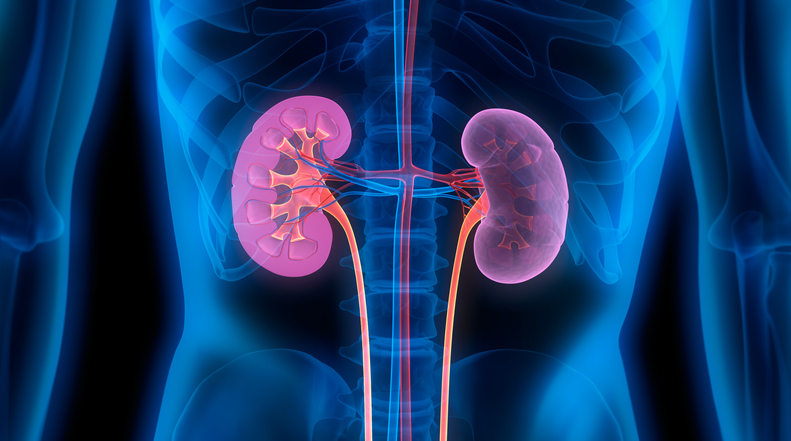
Chronic kidney disease
After an acute kidney injury, blood tests should be done regularly for at least three years to check the kidney function. Having only one functioning kidney. Even though most people with a single kidney do not have any problems, the kidney function should be monitored once a year. This list is not complete and there are many other causes. What are.

Patient information leaflet
Breast pain
Most women develop breast pain (mastalgia) at some stage in life. In most cases the pain develops in the days just before a period. In some cases the pain is not related to periods. The pain is often mild but in some women it is more severe and can affect quality of life. If needed, treatment options include pain reliever and rub-on (topical).
Further reading and references
- glypican 3; MedlinePlus, National Library of Medicine.
- Capurro MI, Xu P, Shi W, Li F, Jia A, Filmus J. Glypican-3 inhibits Hedgehog signaling during development by competing with patched for Hedgehog binding. Dev Cell. 2008 May;14(5):700-11. doi: 10.1016/j.devcel.2008.03.006.
- Cottereau E, Mortemousque I, Moizard MP, Burglen L, Lacombe D, Gilbert-Dussardier B, Sigaudy S, Boute O, David A, Faivre L, Amiel J, Robertson R, Viana Ramos F, Bieth E, Odent S, Demeer B, Mathieu M, Gaillard D, Van Maldergem L, Baujat G, Maystadt I, Heron D, Verloes A, Philip N, Cormier-Daire V, Froute MF, Pinson L, Blanchet P, Sarda P, Willems M, Jacquinet A, Ratbi I, Van Den Ende J, Lackmy-Port Lis M, Goldenberg A, Bonneau D, Rossignol S, Toutain A. Phenotypic spectrum of Simpson-Golabi-Behmel syndrome in a series of 42 cases with a mutation in GPC3 and review of the literature. Am J Med Genet C Semin Med Genet. 2013 May;163C(2):92-105. doi: 10.1002/ajmg.c.31360. Epub 2013 Apr 18.
- Davoodi J, Kelly J, Gendron NH, MacKenzie AE. The Simpson-Golabi-Behmel syndrome causative glypican-3, binds to and inhibits the dipeptidyl peptidase activity of CD26. Proteomics. 2007 Jun;7(13):2300-10. doi: 10.1002/pmic.200600654.
- Nisbet AF, Hathaway ER, Kalish JM. Simpson-Golabi-Behmel Syndrome Type 1. 2006 Dec 19 [updated 2024 Nov 14]. In: Adam MP, Bick S, Mirzaa GM, Wallace SE, Amemiya A, editors. GeneReviews(R) [Internet]. Seattle (WA): University of Washington, Seattle; 1993-2026. Available from http://www.ncbi.nlm.nih.gov/books/NBK1219/
- Sakazume S, Okamoto N, Yamamoto T, Kurosawa K, Numabe H, Ohashi Y, Kako Y, Nagai T, Ohashi H. GPC3 mutations in seven patients with Simpson-Golabi-Behmel syndrome. Am J Med Genet A. 2007 Aug 1;143A(15):1703-7. doi: 10.1002/ajmg.a.31822.
- Schmidt J, Hollstein R, Kaiser FJ, Gillessen-Kaesbach G. Molecular analysis of a novel intragenic deletion in GPC3 in three cousins with Simpson-Golabi-Behmel syndrome. Am J Med Genet A. 2017 May;173(5):1400-1405. doi: 10.1002/ajmg.a.38188. Epub 2017 Mar 29.
- Veugelers M, Cat BD, Muyldermans SY, Reekmans G, Delande N, Frints S, Legius E, Fryns JP, Schrander-Stumpel C, Weidle B, Magdalena N, David G. Mutational analysis of the GPC3/GPC4 glypican gene cluster on Xq26 in patients with Simpson-Golabi-Behmel syndrome: identification of loss-of-function mutations in the GPC3 gene. Hum Mol Genet. 2000 May 22;9(9):1321-8. doi: 10.1093/hmg/9.9.1321.
Share your thoughts or experiences with others in our patient communities.
Simple access to trusted treatments and health services online.
Common conditions
Get help with common conditions through the NHS, without a GP appointment.





Sign up to the Patient newsletter
Your weekly dose of clear, trustworthy health advice - written to help you feel informed, confident and in control.
By subscribing you accept our Privacy Policy. You can unsubscribe at any time. We never sell your data.