G protein-coupled receptor 143
Last updated 18 Aug 2020
Meets Patient’s editorial guidelines
- DownloadDownload
- Share
- Language
- Discussion
- Ask Patient
- Audio Version
- Add to preferred sources on Google
The GPR143 gene, also known as OA1, provides instructions for making a protein that is involved in the coloring (pigmentation) of the eyes and skin. This protein is made in the light-sensitive tissue at the back of the eye (the retina) and in skin cells. The GPR143 protein is part of a signaling pathway that controls the growth and maturation of melanosomes, which are cellular structures that produce and store a pigment called melanin. Melanin is the substance that gives skin, hair, and eyes their colour. In the retina, this pigment also plays a critical role in normal vision.
Video picks for GenesVideo library
Normal function
The GPR143 gene, also known as OA1, provides instructions for making a protein that is involved in the coloring (pigmentation) of the eyes and skin. This protein is made in the light-sensitive tissue at the back of the eye (the retina) and in skin cells. The GPR143 protein is part of a signaling pathway that controls the growth and maturation of melanosomes, which are cellular structures that produce and store a pigment called melanin. Melanin is the substance that gives skin, hair, and eyes their colour. In the retina, this pigment also plays a critical role in normal vision.
Conditions referring to this gene or chromosome
Other names
GP143_HUMAN
OA1
ocular albinism 1 (Nettleship-Falls)
ocular albinism type 1 protein
Patient picks for Genes

Kidney and urinary tract
Proteinuria
Proteins are molecules that are found in almost every part of the body, including in the blood. The kidneys normally have a filter which stops protein from entering the urine, except in very tiny amounts; however, kidney problems can cause higher levels of protein to be found in the urine.
by Dr Doug McKechnie, MRCGP

Diet and nutrition
How a protein-packed breakfast can boost your health
When we think of breakfast, we often picture a bowl of cornflakes with milk. While it’s a classic morning staple, it might not be the most effective way to start your day, as it lacks protein. Adding more protein to your breakfast can boost your energy levels and help keep you feeling full for longer.
by Victoria Raw

Diet and nutrition
10 sources of plant-based protein for bone health
Plant-based diets are growing in popularity. People choose this way of eating for various reasons - to boost their health, help animals, and protect the environment. But switching to a plant-based diet may mean you're missing out on vital, bone-friendly nutrients. One of these is protein.
by Victoria Raw
Healthy living
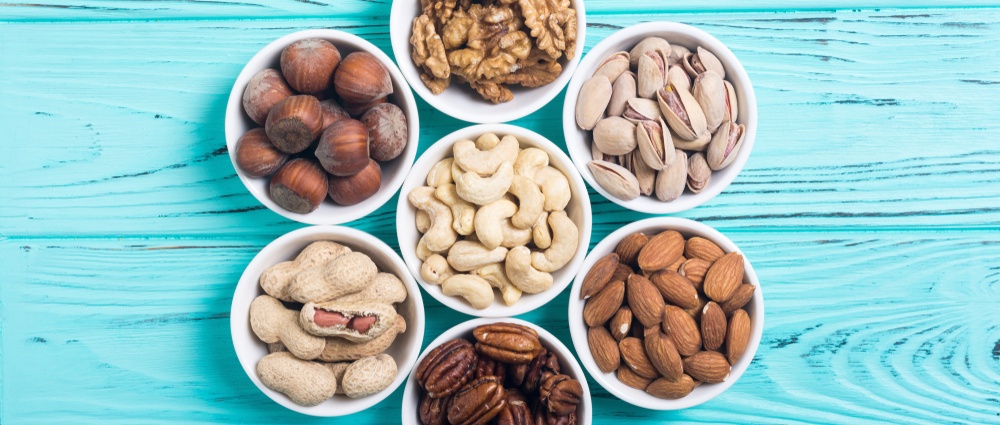
8 high-protein nuts to boost your strength
Packed with protein, delicious, easy to eat, and versatile - nuts are a great source of fuel for people building their fitness and strength. But not all nuts are created equal, which is why we count down the top eight nuts you should eat while strength training and serve these up with tasty recipe ideas.
by Lynn Stephen
Healthy living
Natural protein verses protein powder: which is better for strength training?
Consuming enough protein is essential for building strong muscles. Protein powder shakes are not a complete replacement for natural protein sources found in your food. However, you may consider supplementing your diet and strength-training regime with protein shakes. Before you decide if this is right for you, there are several benefits and considerations to take into account.
by Amberley Davis
Diet and nutrition
Plant-based proteins could help prevent high blood pressure
Eating a greater amount of minimally processed plant-based proteins - such as beans, nuts and lentils - may lower your chance of developing high blood pressure, according to new research.
by Laura Williamson
Related patient information and medicines

Patient information leaflet
Breast cancer
...://patient.info/health/breast-cancer-leaflet](https://patient.info/health/breast-cancer-leaflet) Follow Patient: Website: [https://patient.info/](https://patient.info/) Facebook: [https://www.facebook.com/patient](https://www.facebook.com/patient) Twitter: [https://twitter.com/patient](https://twitter.com/patient) Pinterest:.

Patient information leaflet
Throat cancer
(The throat is usually sprayed ... Dr Krishna Vakharia, 16th October 2023 The National Institute for Health and Care Excellence (NICE) has recommended that a person should receive a diagnosis or ruling out of cancer within 28 days of being referred urgently by their GP for suspected cancer. The same instrument has a light source similar to a nasal.

Patient information leaflet
Diabetic kidney disease
Diabetic kidney disease (diabetic nephropathy) is a complication that occurs in some people with diabetes. Diabetic kidney disease is one of the causes of chronic kidney disease Chronic kidney disease , a long-term condition where the kidneys do not work as well as they should. In diabetic kidney disease, the filters of the kidneys, the glomeruli,.

Patient information leaflet
Nephrotic syndrome
Nephrotic syndrome is a condition where the 'filters' in the kidney become 'leaky' and large amounts of protein leak from the blood into the urine. The main symptom is fluid retention (oedema) which is mainly due to the low protein level in the blood. Various diseases can cause nephrotic syndrome, some more serious than others. A syndrome is a set.

Patient information leaflet
Can I take Chaga and Cordyceps together?
Taking chaga and cordyceps together may increase the risk of bruising or bleeding. Caffeine Cordyceps may have mild stimulant properties and can interact with adenosine receptors. ...inesOur Medicines Interaction Checker helps you check whether your prescriptions, over-the-counter medicines, and supplements are safe to take together. Disclaimer.

Patient information leaflet
Can I take Apixaban and Rybelsus together?
These two medicines work in different ways and do not... Why this happens Apixaban is an anticoagulant (blood thinner) that works by blocking a clotting factor called Factor Xa. Rybelsus is a GLP-1 receptor agonist used for type 2 diabetes that mimics a natural hormone to lower blood sugar. They are processed by different pathways in the liver and.
Further reading and references
- G protein-coupled receptor 143; MedlinePlus, National Library of Medicine.
- Camand O, Boutboul S, Arbogast L, Roche O, Sternberg C, Sutherland J, Levin A, Heon E, Menasche M, Dufier J, Abitbol M. Mutational analysis of the OA1 gene in ocular albinism. Ophthalmic Genet. 2003 Sep;24(3):167-73. doi: 10.1076/opge.24.3.167.15605.
- Cortese K, Giordano F, Surace EM, Venturi C, Ballabio A, Tacchetti C, Marigo V. The ocular albinism type 1 (OA1) gene controls melanosome maturation and size. Invest Ophthalmol Vis Sci. 2005 Dec;46(12):4358-64. doi: 10.1167/iovs.05-0834.
- Innamorati G, Piccirillo R, Bagnato P, Palmisano I, Schiaffino MV. The melanosomal/lysosomal protein OA1 has properties of a G protein-coupled receptor. Pigment Cell Res. 2006 Apr;19(2):125-35. doi: 10.1111/j.1600-0749.2006.00292.x.
- Lewis RA. Ocular Albinism, X-Linked - RETIRED CHAPTER, FOR HISTORICAL REFERENCE ONLY. 2004 Mar 12 [updated 2015 Nov 19]. In: Adam MP, Bick S, Mirzaa GM, Wallace SE, Amemiya A, editors. GeneReviews(R) [Internet]. Seattle (WA): University of Washington, Seattle; 1993-2026. Available from http://www.ncbi.nlm.nih.gov/books/NBK1343/
- Mayeur H, Roche O, Vetu C, Jaliffa C, Marchant D, Dollfus H, Bonneau D, Munier FL, Schorderet DF, Levin AV, Heon E, Sutherland J, Lacombe D, Said E, Mezer E, Kaplan J, Dufier JL, Marsac C, Menasche M, Abitbol M. Eight previously unidentified mutations found in the OA1 ocular albinism gene. BMC Med Genet. 2006 Apr 28;7:41. doi: 10.1186/1471-2350-7-41.
- Oetting WS. New insights into ocular albinism type 1 (OA1): Mutations and polymorphisms of the OA1 gene. Hum Mutat. 2002 Feb;19(2):85-92. doi: 10.1002/humu.10034.
- Schiaffino MV, Tacchetti C. The ocular albinism type 1 (OA1) protein and the evidence for an intracellular signal transduction system involved in melanosome biogenesis. Pigment Cell Res. 2005 Aug;18(4):227-33. doi: 10.1111/j.1600-0749.2005.00240.x.
- Shen B, Samaraweera P, Rosenberg B, Orlow SJ. Ocular albinism type 1: more than meets the eye. Pigment Cell Res. 2001 Aug;14(4):243-8. doi: 10.1034/j.1600-0749.2001.140403.x.
Share your thoughts or experiences with others in our patient communities.
Simple access to trusted treatments and health services online.
Common conditions
Get help with common conditions through the NHS, without a GP appointment.





Sign up to the Patient newsletter
Your weekly dose of clear, trustworthy health advice - written to help you feel informed, confident and in control.
By subscribing you accept our Privacy Policy. You can unsubscribe at any time. We never sell your data.