inositol 1,4,5-trisphosphate receptor type 1
Last updated 11 Apr 2023
Meets Patient’s editorial guidelines
- DownloadDownload
- Share
- Language
- Discussion
- Ask Patient
- Audio Version
- Add to preferred sources on Google
The ITPR1 gene provides instructions for making a protein that is part of a channel that controls the flow of positively charged calcium atoms (calcium ions) within cells. Four ITPR1 protein molecules join together in a complex (a homotetramer) to form the channel. In response to certain signals, the ITPR1 channel releases calcium ions from storage in a cell structure called the endoplasmic reticulum into the surrounding cell fluid (the cytoplasm). Proper regulation of calcium ion concentration inside cells is important for the development and function of various tissues and organs.
Video picks for GenesVideo library
Normal function
The ITPR1 gene provides instructions for making a protein that is part of a channel that controls the flow of positively charged calcium atoms (calcium ions) within cells. Four ITPR1 protein molecules join together in a complex (a homotetramer) to form the channel. In response to certain signals, the ITPR1 channel releases calcium ions from storage in a cell structure called the endoplasmic reticulum into the surrounding cell fluid (the cytoplasm). Proper regulation of calcium ion concentration inside cells is important for the development and function of various tissues and organs.
Conditions referring to this gene or chromosome
Other names
IP3R
IP3R1
Patient picks for Genes
Tests and investigations
Blood groups and types
ABO and rhesus are both types of antigens found on the surface of red blood cells. There are lots of other types but these are the most important.
by Dr Rosalyn Adleman, MRCGP
Diabetes
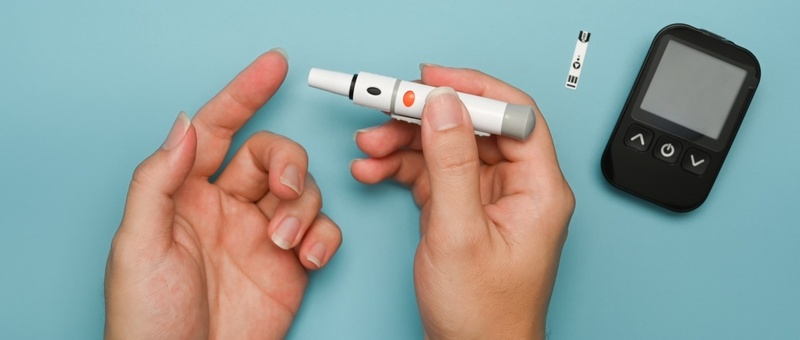
MHRA approves teplizumab to delay progression of type 1 diabetes
Teplizumab (Tzield) has been approved by the Medicines and Healthcare products Regulatory Agency (MHRA) to help delay the onset of Stage 3 type 1 diabetes (T1D). Read on to see what this means if you are prescribed teplizumab and what it does for you.
by Lawrence Higgins

Health and wellness video library
Type 2 diabetes videos
Our type 2 diabetes video hub features expert-led videos covering everything you need to know—from what causes type 2 diabetes and its common symptoms, to how it’s treated and the possible complications to watch out for. Whether you’re newly diagnosed or supporting someone with the condition, these videos are here to help you take control and live well.
by Lawrence Higgins

Diabetes
Slowdown in type 2 diabetes cases
Some countries have seen a fall in new cases of type 2 diabetes according to a new review of the current evidence.
by Milly Evans

Diabetes
Continuous glucose monitoring in type 1 diabetes
Type 1 and type 2 diabetes are both potentially serious conditions which should always be taken seriously. They’re both diagnosed on the basis of high blood sugar. But in other respects they are very, very different. Type 2 is largely down to lifestyle – getting type 1 is absolutely nothing to do with whether you eat too much sugar, carry excess weight or don’t exercise enough. People with type 2 diabetes often never need insulin – those with type 1 need it from day one. Many people with type 2 diabetes never need treatment that carries a risk of disabling low blood sugar (hypoglycaemia) – people with type 1 live with this risk every day. As a result, many people with type 2 never need to check their blood sugar several times a day – for people with type 1, it’s a highly unwelcome occupational hazard.
by Dr Sarah Jarvis

Diabetes
Video: What's the difference between type 1 and type 2 diabetes?
While they're both technically under the umbrella of diabetes, type 1 and type 2 are very different conditions which require a distinct set of treatments. We've looked at some of the main questions people have around each.
by Dr Sarah Jarvis
Related patient information and medicines

Patient information leaflet
Peripheral vasodilators
Peripheral vasodilators are medicines that are used to treat conditions that affect blood vessels in outer (peripheral) parts of the body such as the arms and legs. Inositol nicotinate and pentoxifylline are not considered effective for PAD. Cilostazol Cilostazol tablets and inositol nicotinate work by widening the arteries that supply blood to.
Patient information leaflet
Myasthenia gravis
Myasthenia gravis (MG) is a condition where muscles become easily tired and weak. It is due to a problem with how the nerves stimulate the muscles to tighten (contract). The muscles around the eyes are commonly affected first. Treatment is usually effective. However, relapses are common and many people with myasthenia gravis have long-term.

Patient information leaflet
Kidney cancer
Most cases of kidney cancer develop in people between the ages of 60 and 70 although it can affect any age group. The most common early symptom is blood in the urine. If kidney cancer is diagnosed at an early stage, there is a good chance of a cure. Renal cell cancer This type of cancer develops from a cell in a kidney tubule, which becomes.
Patient information leaflet
Familial hypercholesterolaemia
Familial hypercholesterolaemia is inherited high cholesterol. It is a condition where you have a very high cholesterol level in your blood. Dr Krishna Vakharia , 13th September 2024 The National Institute for Health and Care Excellence (NICE) is recommending evinacumab alongside diet and other low-density lipoprotein-cholesterol (LDL‑C) lowering.
Patient information leaflet
Blood groups and types
ABO and rhesus are both types of antigens found on the surface of red blood cells. There are lots of other types but these are the most important. The main reasons to know your blood group are if you need to have a blood transfusion or if you are pregnant. What is a blood group. Red blood cells (erythrocytes) have certain proteins on their.
Patient information leaflet
Mastocytosis and mast cell disorders
A mast cell is a type of white blood cell. There are several forms of mastocytosis. In one, there are too many mast cells in the body: in another the number of mast cells is normal but they are too active. What are mast cells. Mast cells are a type of white blood cell - together, our white blood cells play a major role in our immune system,.
Further reading and references
- inositol 1,4,5-trisphosphate receptor type 1; MedlinePlus, National Library of Medicine.
- Dentici ML, Barresi S, Nardella M, Bellacchio E, Alfieri P, Bruselles A, Pantaleoni F, Danieli A, Iarossi G, Cappa M, Bertini E, Tartaglia M, Zanni G. Identification of novel and hotspot mutations in the channel domain of ITPR1 in two patients with Gillespie syndrome. Gene. 2017 Sep 10;628:141-145. doi: 10.1016/j.gene.2017.07.017. Epub 2017 Jul 8.
- Gerber S, Alzayady KJ, Burglen L, Bremond-Gignac D, Marchesin V, Roche O, Rio M, Funalot B, Calmon R, Durr A, Gil-da-Silva-Lopes VL, Ribeiro Bittar MF, Orssaud C, Heron B, Ayoub E, Berquin P, Bahi-Buisson N, Bole C, Masson C, Munnich A, Simons M, Delous M, Dollfus H, Boddaert N, Lyonnet S, Kaplan J, Calvas P, Yule DI, Rozet JM, Fares Taie L. Recessive and Dominant De Novo ITPR1 Mutations Cause Gillespie Syndrome. Am J Hum Genet. 2016 May 5;98(5):971-980. doi: 10.1016/j.ajhg.2016.03.004. Epub 2016 Apr 21.
- Hall HN, Williamson KA, FitzPatrick DR. The genetic architecture of aniridia and Gillespie syndrome. Hum Genet. 2019 Sep;138(8-9):881-898. doi: 10.1007/s00439-018-1934-8. Epub 2018 Sep 22.
- McEntagart M, Williamson KA, Rainger JK, Wheeler A, Seawright A, De Baere E, Verdin H, Bergendahl LT, Quigley A, Rainger J, Dixit A, Sarkar A, Lopez Laso E, Sanchez-Carpintero R, Barrio J, Bitoun P, Prescott T, Riise R, McKee S, Cook J, McKie L, Ceulemans B, Meire F, Temple IK, Prieur F, Williams J, Clouston P, Nemeth AH, Banka S, Bengani H, Handley M, Freyer E, Ross A; DDD Study; van Heyningen V, Marsh JA, Elmslie F, FitzPatrick DR. A Restricted Repertoire of De Novo Mutations in ITPR1 Cause Gillespie Syndrome with Evidence for Dominant-Negative Effect. Am J Hum Genet. 2016 May 5;98(5):981-992. doi: 10.1016/j.ajhg.2016.03.018. Epub 2016 Apr 21.
Share your thoughts or experiences with others in our patient communities.
Simple access to trusted treatments and health services online.
Common conditions
Get help with common conditions through the NHS, without a GP appointment.





Sign up to the Patient newsletter
Your weekly dose of clear, trustworthy health advice - written to help you feel informed, confident and in control.
By subscribing you accept our Privacy Policy. You can unsubscribe at any time. We never sell your data.