KCNQ1 opposite strand/antisense transcript 1
Last updated 3 Dec 2021
Meets Patient’s editorial guidelines
- DownloadDownload
- Share
- Language
- Discussion
- Ask Patient
- Audio Version
- Add to preferred sources on Google
The KCNQ1OT1 gene is located within another gene, KCNQ1. Because the two genes share a region of overlapping DNA, the KCNQ1OT1 gene is also known as KCNQ1 overlapping transcript 1 or KCNQ1 opposite strand/antisense transcript 1. The DNA sequence of two genes is "read" in opposite directions, and the genes have very different functions. Unlike the KCNQ1 gene, which provides instructions for making a protein that acts as a potassium channel, the KCNQ1OT1 gene does not contain instructions for making a protein. Instead, a molecule called a noncoding RNA (a chemical cousin of DNA) is produced from the KCNQ1OT1 gene. This RNA helps regulate genes that are essential for normal growth and development before birth.
Video picks for GenesVideo library
Normal function
The KCNQ1OT1 gene is located within another gene, KCNQ1. Because the two genes share a region of overlapping DNA, the KCNQ1OT1 gene is also known as KCNQ1 overlapping transcript 1 or KCNQ1 opposite strand/antisense transcript 1. The DNA sequence of two genes is "read" in opposite directions, and the genes have very different functions. Unlike the KCNQ1 gene, which provides instructions for making a protein that acts as a potassium channel, the KCNQ1OT1 gene does not contain instructions for making a protein. Instead, a molecule called a noncoding RNA (a chemical cousin of DNA) is produced from the KCNQ1OT1 gene. This RNA helps regulate genes that are essential for normal growth and development before birth.
People inherit one copy of most genes from their mother and one copy from their father. Both copies are typically active, or "turned on," in cells. However, the activity of the KCNQ1OT1 gene depends on which parent it was inherited from. Only the copy inherited from a person's father (the paternally inherited copy) is active; the copy inherited from the mother (the maternally inherited copy) is not active. This sort of parent-specific difference in gene activation is caused by a phenomenon called genomic imprinting.
The KCNQ1OT1 gene is part of a cluster of genes on the short (p) arm of chromosome 11 that undergo genomic imprinting. KCNQ1OT1 and several other genes in this cluster that are thought to help regulate growth are controlled by a nearby region of DNA known as imprinting center 2 (IC2) or KvDMR. The IC2 region undergoes a process called methylation, which is a chemical reaction that attaches small molecules called methyl groups to certain segments of DNA. Methylation, which occurs during the formation of an egg or sperm cell, is a way of marking or "stamping" the parent of origin. The IC2 region is normally methylated only on the maternally inherited copy of chromosome 11.
Conditions referring to this gene or chromosome
Other names
FLJ41078
KCNQ1 opposite strand/antisense transcript 1 (non-protein coding)
KCNQ1 overlapping transcript 1
KCNQ1 overlapping transcript 1 (non-protein coding)
KCNQ1-AS2
KCNQ10T1
KvDMR1
KvLQT1-AS
LIT1
long QT intronic transcript 1
Patient picks for Genes

Preventative health
Side Step With Crossover Reach
The Side Step with Crossover Reach is a coordination and mobility exercise that targets the legs, shoulders, and core while improving flexibility and balance. Step your right foot out to the side and tap your toe lightly on the floor as you reach your right arm across your body to the left. Return to the center, then repeat on the opposite side, moving in a smooth and controlled rhythm. This exercise enhances coordination, balance, and functional mobility through cross-body movement.

Preventative health
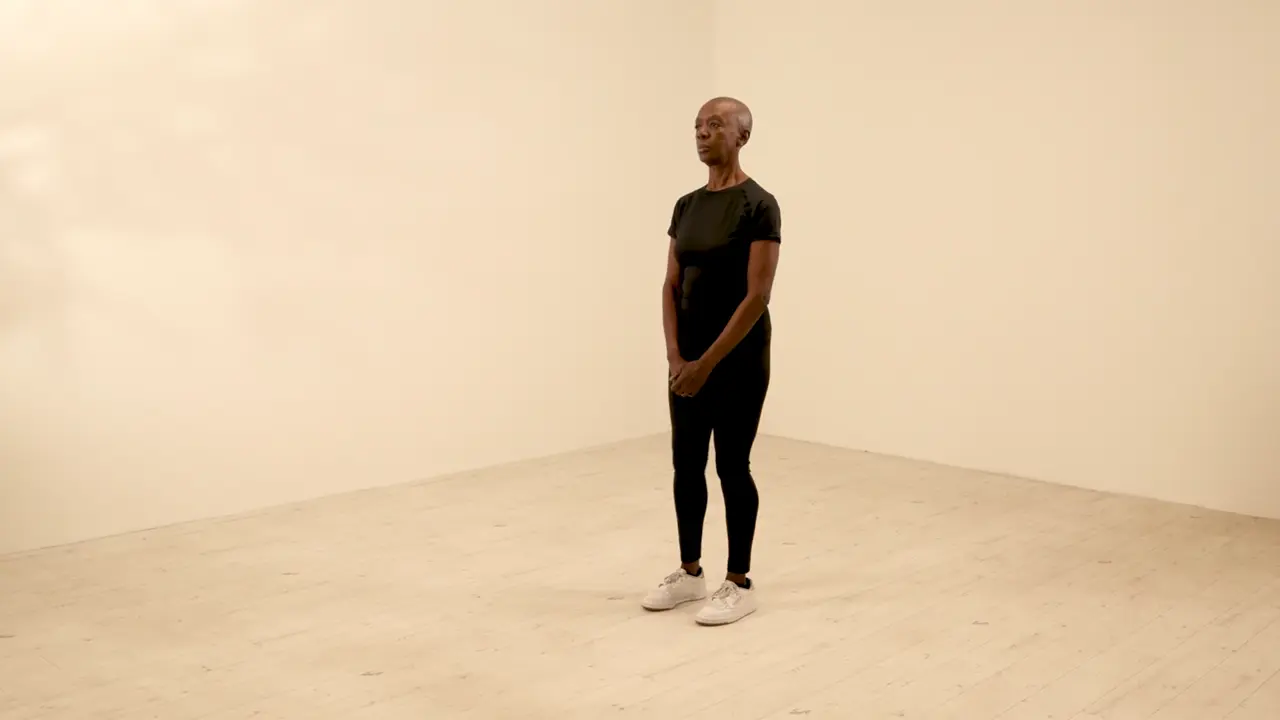
Windmill Stretch
The Windmill Stretch enhances core and hamstring flexibility. Stand with your feet apart and bend at your waist while reaching towards your opposite foot. This exercise stretches your hamstrings and core.
Preventative health
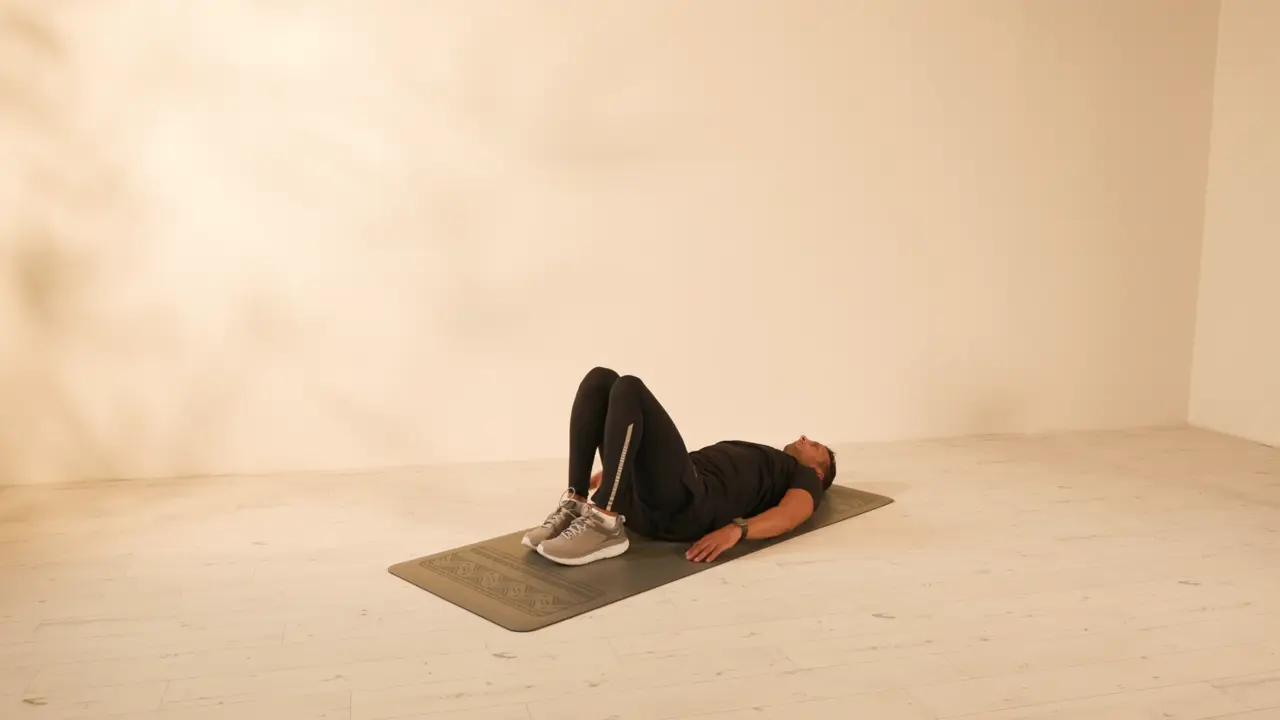
March In Place With Knee Tap
The March in Place with Knee Tap is a coordination and mobility exercise that engages the legs, hips, and core while improving rhythm and balance. March in place with high knees, tapping each knee with the opposite hand as it lifts. Maintain an upright posture and a steady, controlled rhythm throughout. This exercise enhances coordination, balance, and core engagement through dynamic movement.
Preventative health
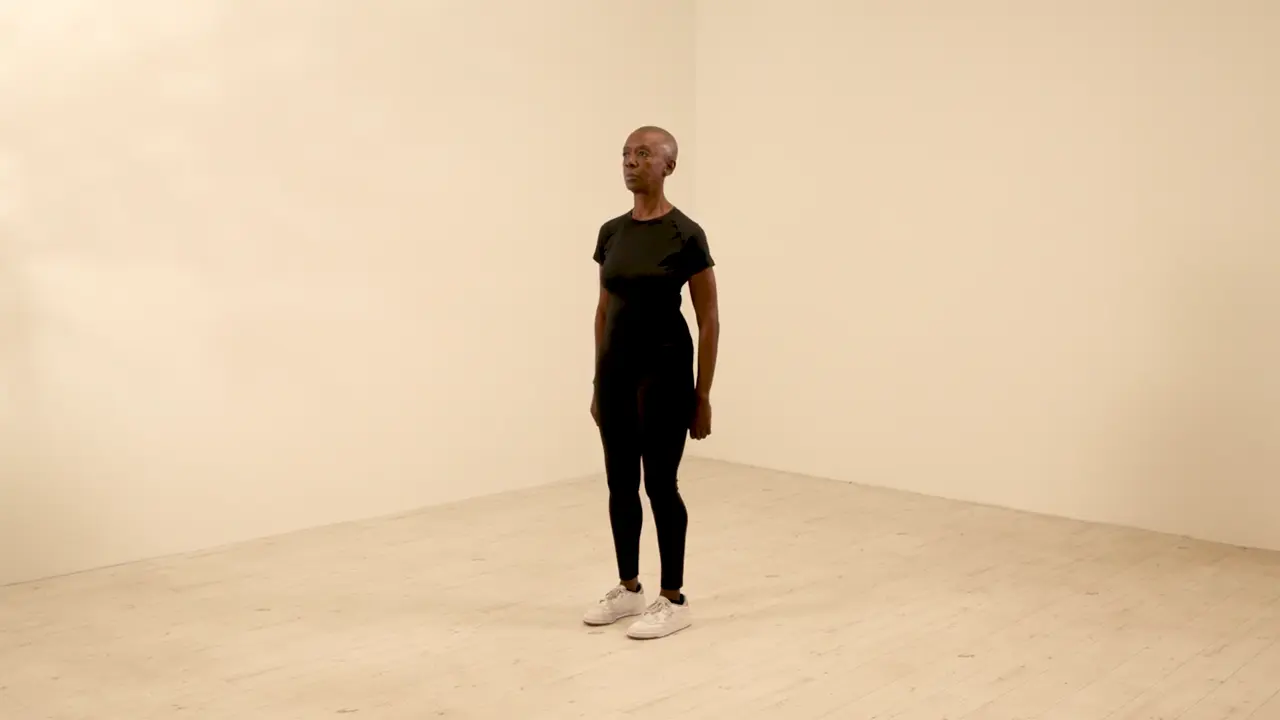
Lying Supine Lower Back Stretch with Double Knee Drop
Lie on your back with your knees bent and feet flat on the ground. Drop both knees to one side while keeping your shoulders on the ground allowing your head and neck to rotate to the opposite side. This stretch eases tension in the lower back.
Preventative health
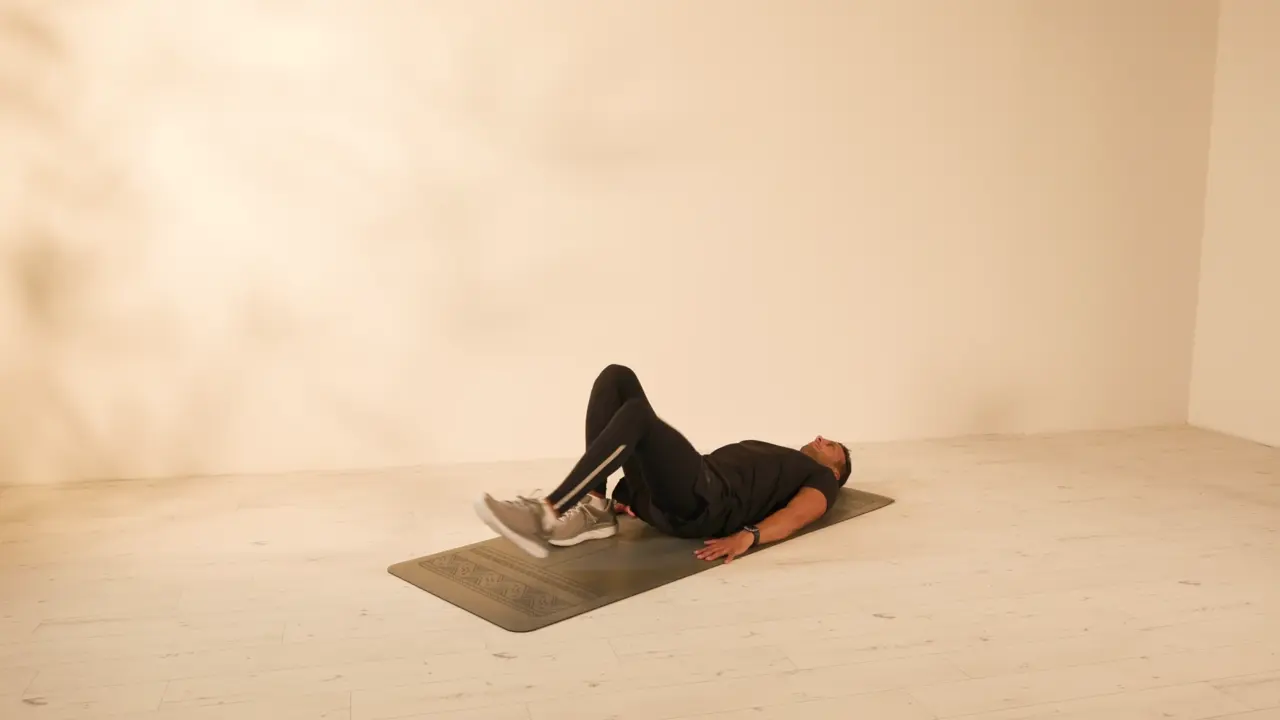
Side Step With Arm Raise
The Side Step with Arm Raise is a coordination and mobility exercise that engages the legs, shoulders, and core while improving rhythm and balance. Begin by stepping side to side in a steady rhythm—step to the right, then to the left. Once comfortable, add arm movement by swinging one arm straight forward and up as you step with the opposite leg. Continue alternating sides in a smooth, controlled motion. This exercise enhances coordination, upper and lower-body control, and overall functional movement.
Preventative health
Lying Supine Glute Across Body Stretch
Gently lie down with one leg bent and the other leg extended. Take your hand across the body to the opposite thigh and gently ease the leg down to the floor. You will feel a deep stretch through the glutes and a gentle stretch through the back.
Related patient information and medicines

Patient information leaflet
Lupus
Lupus is the short name for the condition called systemic lupus erythematosus (SLE). It can cause various symptoms, the most common being joint pains, skin rashes and tiredness. Problems with kidneys and other organs can occur in severe cases. (Antibodies are small proteins that are part of the immune system.). Another antibody called.

Patient information leaflet
Sickle cell trait
If you inherit a gene from one of your parents, called a sickle cell gene, you have a condition called sickle cell trait. If you inherit a sickle cell gene from both parents, you get a double dose of the sickle cell gene. This causes a condition called sickle cell d... What is sickle cell trait. Sickle cell trait means having one gene for a.

Patient information leaflet
Genetic testing
Note : the information below is a general guide only. The arrangements, and the way tests are performed, may vary between different hospitals. Always follow the instructions given by your doctor or local hospital. What are DNA, genes and chromosomes. Your body is made up of millions of tiny cells. Different types of cells form the different.

Patient information leaflet
CT scan
Note : the information below is a general guide only. The arrangements, and the way tests are performed, may vary between different hospitals. Always follow the instructions given by your doctor or local hospital. What is a CT scan. A CT scan is a specialised X-ray test. It can give quite clear pictures of the inside of your body. In particular,.

Patient information leaflet
Find out if you are eligible for a free NHS flu vaccination
Open the flu jab Is the flu vaccine free for you this winter. The flu vaccine is free on the NHS for people most likely to get seriously ill from flu, and for those who could easily pass it on to someone at risk. Whether you qualify depends on your age, your health, and a few other things such as being pregnant or caring for someone. The groups.

Patient information leaflet
Blood clotting tests
Blood clotting tests are used to diagnose and assess bleeding problems and to monitor people who take warfarin or other anticoagulant medicines. You may be advised to have blood clotting tests: If you have a suspected bleeding disorder. For example, if you bleed a lot after cuts, or if you bruise easily. If you have certain liver diseases that can.
Further reading and references
- KCNQ1 opposite strand/antisense transcript 1; MedlinePlus, National Library of Medicine.
- Bliek J, Maas SM, Ruijter JM, Hennekam RC, Alders M, Westerveld A, Mannens MM. Increased tumour risk for BWS patients correlates with aberrant H19 and not KCNQ1OT1 methylation: occurrence of KCNQ1OT1 hypomethylation in familial cases of BWS. Hum Mol Genet. 2001 Mar 1;10(5):467-76. doi: 10.1093/hmg/10.5.467.
- Chiesa N, De Crescenzo A, Mishra K, Perone L, Carella M, Palumbo O, Mussa A, Sparago A, Cerrato F, Russo S, Lapi E, Cubellis MV, Kanduri C, Cirillo Silengo M, Riccio A, Ferrero GB. The KCNQ1OT1 imprinting control region and non-coding RNA: new properties derived from the study of Beckwith-Wiedemann syndrome and Silver-Russell syndrome cases. Hum Mol Genet. 2012 Jan 1;21(1):10-25. doi: 10.1093/hmg/ddr419. Epub 2011 Sep 14.
- Du M, Zhou W, Beatty LG, Weksberg R, Sadowski PD. The KCNQ1OT1 promoter, a key regulator of genomic imprinting in human chromosome 11p15.5. Genomics. 2004 Aug;84(2):288-300. doi: 10.1016/j.ygeno.2004.03.008.
- Kanduri C. Functional insights into long antisense noncoding RNA Kcnq1ot1 mediated bidirectional silencing. RNA Biol. 2008 Oct-Dec;5(4):208-11. doi: 10.4161/rna.7113. Epub 2008 Oct 3.
- Kanduri C. Kcnq1ot1: a chromatin regulatory RNA. Semin Cell Dev Biol. 2011 Jun;22(4):343-50. doi: 10.1016/j.semcdb.2011.02.020. Epub 2011 Feb 21.
- Pandey RR, Mondal T, Mohammad F, Enroth S, Redrup L, Komorowski J, Nagano T, Mancini-Dinardo D, Kanduri C. Kcnq1ot1 antisense noncoding RNA mediates lineage-specific transcriptional silencing through chromatin-level regulation. Mol Cell. 2008 Oct 24;32(2):232-46. doi: 10.1016/j.molcel.2008.08.022.
- Thakur N, Tiwari VK, Thomassin H, Pandey RR, Kanduri M, Gondor A, Grange T, Ohlsson R, Kanduri C. An antisense RNA regulates the bidirectional silencing property of the Kcnq1 imprinting control region. Mol Cell Biol. 2004 Sep;24(18):7855-62. doi: 10.1128/MCB.24.18.7855-7862.2004.
- Weksberg R, Nishikawa J, Caluseriu O, Fei YL, Shuman C, Wei C, Steele L, Cameron J, Smith A, Ambus I, Li M, Ray PN, Sadowski P, Squire J. Tumor development in the Beckwith-Wiedemann syndrome is associated with a variety of constitutional molecular 11p15 alterations including imprinting defects of KCNQ1OT1. Hum Mol Genet. 2001 Dec 15;10(26):2989-3000. doi: 10.1093/hmg/10.26.2989.
Share your thoughts or experiences with others in our patient communities.
Simple access to trusted treatments and health services online.
Common conditions
Get help with common conditions through the NHS, without a GP appointment.





Sign up to the Patient newsletter
Your weekly dose of clear, trustworthy health advice - written to help you feel informed, confident and in control.
By subscribing you accept our Privacy Policy. You can unsubscribe at any time. We never sell your data.