laminin subunit alpha 3
Last updated 12 Apr 2023
Meets Patient’s editorial guidelines
- DownloadDownload
- Share
- Language
- Discussion
- Ask Patient
- Audio Version
- Add to preferred sources on Google
The LAMA3 gene provides instructions for making one part (subunit) of a protein called laminin 332 (formerly known as laminin 5). This protein is made up of three subunits, called alpha, beta, and gamma. The LAMA3 gene carries instructions for the alpha subunit; the beta and gamma subunits are produced from other genes. Three versions of the alpha subunit, called alpha-3a, alpha-3b1, and alpha-3b2, are produced from the LAMA3 gene.
Video picks for GenesVideo library
Normal function
The LAMA3 gene provides instructions for making one part (subunit) of a protein called laminin 332 (formerly known as laminin 5). This protein is made up of three subunits, called alpha, beta, and gamma. The LAMA3 gene carries instructions for the alpha subunit; the beta and gamma subunits are produced from other genes. Three versions of the alpha subunit, called alpha-3a, alpha-3b1, and alpha-3b2, are produced from the LAMA3 gene.
Laminins are a group of proteins that regulate cell growth, cell movement (motility), and the attachment of cells to one another (adhesion). They are also involved in the formation and organisation of basement membranes, which are thin, sheet-like structures that separate and support cells in many tissues. Laminin 332 has a particularly important role in the basement membrane that underlies the top layer of skin (the epidermis). This membrane gives strength and resiliency to the skin and creates an additional barrier between the body and its surrounding environment. Laminin 332 is a major component of fibers called anchoring filaments, which connect the two layers of the basement membrane and help hold the skin together.
Studies suggest that laminin 332 also has several other functions. This protein appears to be important in the formation of early wound-healing tissues. Additionally, researchers have proposed roles for laminin 332 in the clear outer covering of the eye (the cornea) and in the development of tooth enamel.
The alpha subunit produced from the LAMA3 gene is also part of two other laminin proteins, laminin 311 and laminin 321. These laminins also appear to provide strength to the skin, although they do not play as big a role as laminin 332. In addition, laminin 311 is involved in cell signaling in the lungs and other tissues.
Conditions referring to this gene or chromosome
Other names
BM600
BM600 150kD subunit
BM600-150kDa
E170
epiligrin
epiligrin 170 kda subunit
epiligrin alpha 3 subunit
kalinin 165kD subunit
kalinin-165kDa
LAM5, alpha-3 subunit
LAMA3_HUMAN
lama3a
laminin 5, alpha-3 subunit
laminin A3
laminin alpha 3
laminin alpha 3 subunit
laminin, alpha 3
laminin, alpha-3
laminin-5 alpha 3 chain
LAMNA
LOCS
nicein 150kD subunit
nicein-150kDa
Patient picks for Genes
Treatment and medication
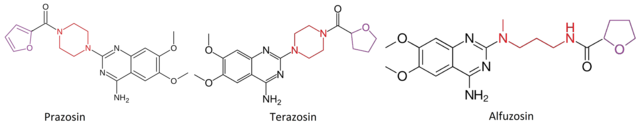
Alpha-blockers
Alpha-blockers are medicines that are mainly used to treat high blood pressure (hypertension) and problems with passing urine in men who have enlargement of the prostate gland. Prostate gland enlargement is also called benign prostatic hyperplasia (BPH).
by Dr Doug McKechnie, MRCGP

Children's health
Alpha-1 antitrypsin deficiency
Alpha-1 antitrypsin deficiency is an inherited genetic condition. A genetic condition is one that can be passed on from parents through genes. In alpha-1 antitrypsin deficiency the result of a genetic abnormality leads to lung and, in some people, liver damage. Lung symptoms are the most common and include shortness of breath, cough and wheezing. Symptoms can worsen over time. At present, there is no cure for alpha-1 antitrypsin deficiency. Treatment aims at slowing down the progression of the disease.
by Dr Philippa Vincent, MRCGP

Medicine
Indoramin - an alpha-blocker
Indoramin is prescribed for two different medical conditions: 20 mg strength tablets are prescribed for men with prostate problems, and 25 mg strength tablets are prescribed for people with high blood pressure. You are advised not to drink alcohol while you are on indoramin. Do not drive and do not use tools or machines if you feel tired or dizzy.
by Michael Stewart, MRPharmS
Medicine
Phenoxybenzamine - an alpha-blocker
Adults will normally start with one capsule a day. This dose may then be increased over the next few days. It is common to feel dizzy or light-headed initially. This should soon settle. You may be given other medicines to take alongside phenoxybenzamine.
by Michael Stewart, MRPharmS

Medicine
Alfacalcidol capsules and drops
Alfacalcidol is a type of vitamin D. You will need to have regular blood tests while you are taking the medicine so that your doctor can adjust your dose. Make sure you know the symptoms of too much calcium in your blood - these are losing your appetite, feeling thirsty, being sick (vomiting), feeling tired and losing weight. Please let your doctor know if you develop these symptoms.
by Michael Stewart, MRPharmS

Medicine
Prazosin - an alpha-blocker
Your first dose of prazosin may make you feel dizzy or faint, or start sweating. Take your first dose at bedtime and remain lying down until these symptoms have completely passed. Prazosin can cause dizziness which may affect your ability to drive. Make sure your reactions are normal before you drive and before you use tools or machines.
by Michael Stewart, MRPharmS
Related patient information and medicines

Patient information leaflet
Polymorphic light eruption
Polymorphic light. It looks like reddened skin with raised red spots or small blisters. It is generally itchy and uncomfortable. I... Various other treatments have been tried, and might have a role in helping PMLE, although they are not standard treatment at present. These are: Special sunscreens with high UVA protection. Cream containing.

Patient information leaflet
Testicular cancer
Testicular cancer is a cancer that arises from a testicle (testis). Around half of all cases occur in men aged under 35 but testicular cancer rarel... Another useful test is the marker blood test. The tumour markers commonly tested for are alpha-fetoprotein (AFP), beta human chorionic gonadotrophin (beta-hCG), lactic dehydrogenase (LDH) and.
Patient information leaflet
Psoriatic arthritis
In this pattern usually. A common situation is for one large joint to be affected (for example, a knee) plus a few small joints in the fingers or toes. Symmetrical polyarthritis This pattern is also quite common. Symmetrical means that, if a joint is affected on the right side of the body (such as a right elbow), the same joint on the left side is.
Patient information leaflet
Biological medicines for rheumatoid arthritis
Biological medicines are a newer type of medicine, used to ease the symptoms of rheumatoid arthritis and reduce the damaging effect of the disease on the joints. They are usually prescribed when you have tried older medicines called disease-modifying antirheumatic drugs (DMARDs) and these have not worked so well. If a biological medicine is going.

Patient information leaflet
Can I take Rivaroxaban and Tamsulosin together?
However, both medicines can occasionally cause dizziness or lightheadedness,... Taking them together might slightly increase the chance of feeling faint. Why this happens Rivaroxaban is an anticoagulant (blood thinner) and tamsulosin is an alpha-blocker used for prostate symptoms. They are processed by different pathways in the liver and do not.

Patient information leaflet
Liver function tests
What is a liver function test. Liver function tests are a type of blood test. A small amount of blood is taken from a vein in your arm. Liver function tests measure a series of chemicals which relate to the way the liver works. They include substances that are made in the liver or affected by the health of the liver cells, chemicals which are.
Further reading and references
- laminin subunit alpha 3; MedlinePlus, National Library of Medicine.
- Aumailley M, Bruckner-Tuderman L, Carter WG, Deutzmann R, Edgar D, Ekblom P, Engel J, Engvall E, Hohenester E, Jones JC, Kleinman HK, Marinkovich MP, Martin GR, Mayer U, Meneguzzi G, Miner JH, Miyazaki K, Patarroyo M, Paulsson M, Quaranta V, Sanes JR, Sasaki T, Sekiguchi K, Sorokin LM, Talts JF, Tryggvason K, Uitto J, Virtanen I, von der Mark K, Wewer UM, Yamada Y, Yurchenco PD. A simplified laminin nomenclature. Matrix Biol. 2005 Aug;24(5):326-32. doi: 10.1016/j.matbio.2005.05.006.
- Barzegar M, Mozafari N, Kariminejad A, Asadikani Z, Ozoemena L, McGrath JA. A new homozygous nonsense mutation in LAMA3A underlying laryngo-onycho-cutaneous syndrome. Br J Dermatol. 2013 Dec;169(6):1353-6. doi: 10.1111/bjd.12522.
- Hamill KJ, McLean WH. The alpha-3 polypeptide chain of laminin 5: insight into wound healing responses from the study of genodermatoses. Clin Exp Dermatol. 2005 Jul;30(4):398-404. doi: 10.1111/j.1365-2230.2005.01842.x.
- Hamill KJ, Paller AS, Jones JC. Adhesion and migration, the diverse functions of the laminin alpha3 subunit. Dermatol Clin. 2010 Jan;28(1):79-87. doi: 10.1016/j.det.2009.10.009.
- Hartwig B, Borm B, Schneider H, Arin MJ, Kirfel G, Herzog V. Laminin-5-deficient human keratinocytes: defective adhesion results in a saltatory and inefficient mode of migration. Exp Cell Res. 2007 May 1;313(8):1575-87. doi: 10.1016/j.yexcr.2007.02.003. Epub 2007 Feb 9.
- Kim CC, Liang MG, Pfendner E, Kimonis VE. What syndrome is this? Laryngo-onycho-cutaneous syndrome. Pediatr Dermatol. 2007 May-Jun;24(3):306-8. doi: 10.1111/j.1525-1470.2007.00408.x. No abstract available.
- McLean WH, Irvine AD, Hamill KJ, Whittock NV, Coleman-Campbell CM, Mellerio JE, Ashton GS, Dopping-Hepenstal PJ, Eady RA, Jamil T, Phillips R, Shabbir SG, Haroon TS, Khurshid K, Moore JE, Page B, Darling J, Atherton DJ, Van Steensel MA, Munro CS, Smith FJ, McGrath JA. An unusual N-terminal deletion of the laminin alpha3a isoform leads to the chronic granulation tissue disorder laryngo-onycho-cutaneous syndrome. Hum Mol Genet. 2003 Sep 15;12(18):2395-409. doi: 10.1093/hmg/ddg234. Epub 2003 Jul 15.
- Nakano A, Chao SC, Pulkkinen L, Murrell D, Bruckner-Tuderman L, Pfendner E, Uitto J. Laminin 5 mutations in junctional epidermolysis bullosa: molecular basis of Herlitz vs. non-Herlitz phenotypes. Hum Genet. 2002 Jan;110(1):41-51. doi: 10.1007/s00439-001-0630-1. Epub 2001 Nov 13.
- Schneider H, Muhle C, Pacho F. Biological function of laminin-5 and pathogenic impact of its deficiency. Eur J Cell Biol. 2007 Dec;86(11-12):701-17. doi: 10.1016/j.ejcb.2006.07.004. Epub 2006 Sep 26.
- Varki R, Sadowski S, Pfendner E, Uitto J. Epidermolysis bullosa. I. Molecular genetics of the junctional and hemidesmosomal variants. J Med Genet. 2006 Aug;43(8):641-52. doi: 10.1136/jmg.2005.039685. Epub 2006 Feb 10.
Share your thoughts or experiences with others in our patient communities.
Simple access to trusted treatments and health services online.
Common conditions
Get help with common conditions through the NHS, without a GP appointment.





Sign up to the Patient newsletter
Your weekly dose of clear, trustworthy health advice - written to help you feel informed, confident and in control.
By subscribing you accept our Privacy Policy. You can unsubscribe at any time. We never sell your data.