lamin B receptor
Last updated 18 Aug 2020
Meets Patient’s editorial guidelines
- DownloadDownload
- Share
- Language
- Discussion
- Ask Patient
- Audio Version
- Add to preferred sources on Google
The LBR gene provides instructions for making a protein called the lamin B receptor. Different regions (domains) of this protein give it two distinct functions.
Video picks for GenesVideo library
Normal function
The LBR gene provides instructions for making a protein called the lamin B receptor. Different regions (domains) of this protein give it two distinct functions.
One region of the protein, called the sterol reductase domain, gives the protein sterol reductase function (specifically Δ14-sterol reductase function). This function of the lamin B receptor plays an important role in the production (synthesis) of cholesterol. Cholesterol is a lipid (fat) that is obtained from foods that come from animals: eggs, meat, fish, and dairy products. The body also makes (synthesizes) its own cholesterol. During cholesterol synthesis, the sterol reductase function of the lamin B receptor allows the protein to perform one of several chemical reactions that convert a molecule called lanosterol to cholesterol.
The body needs cholesterol to develop and function normally. Before birth, cholesterol interacts with signaling proteins that control early development of the brain, limbs, genitals, and other structures. It is also an important component of cell membranes and myelin, the fatty covering that insulates nerve cells. Additionally, cholesterol is used to make certain hormones and is important for the production of acids used in digestion (bile acids).
Another region of the lamin B receptor, called the DNA-binding domain, attaches (binds) to chromatin, the complex of DNA and proteins that packages DNA into chromosomes. The lamin B receptor can be found in the membrane that surrounds the nucleus (the nuclear envelope). The protein's interaction with chromatin attaches it to the nuclear envelope and helps maintain the chromatin's structure. Proper interaction of chromatin with the nuclear envelope may play a role in several important cellular functions such as making new copies of DNA (replication), controlling the activity of genes, and regulating programmed cell death (apoptosis). The DNA-binding domain of the protein also plays a role in the formation of the nucleus within cells.
Conditions referring to this gene or chromosome
Other names
DHCR14B
integral nuclear envelope inner membrane protein
lamin-B receptor
LBR_HUMAN
LMN2R
PHA
TDRD18
Patient picks for Genes

Infections
6-in-1 vaccine
The 6-in-1 vaccine is part of routine childhood immunisations and protects babies against six different serious illnesses. Three doses are given. Further boosters without all six components are given at other times later in childhood and in adult life. The 6-in-1 vaccine used to be given as the 3-in-1 vaccine DTaP along with the polio vaccine which was given by mouth, but has gradually been extended so that it now protects against even more diseases. It is given in one single injection into the thigh from one single syringe. This leaflet explains when this vaccine is given and why. It also explains which components of the 6-in-1 vaccine are given later in the UK immunisation schedule as the 4-in-1, 3-in-1 etc.
by Dr Philippa Vincent, MRCGP

Medicine
Irbesartan - an angiotensin receptor blocker
Take irbesartan once each day. You can take the tablets before or after meals. Side-effects are usually mild. They include feeling dizzy and mild stomach upset. Keep your regular appointments with your doctor to have your blood pressure measured. Some painkillers interfere with irbesartan, so ask a pharmacist for advice before you buy any medicines.
by Michael Stewart, MRPharmS
Medicine
Losartan - an angiotensin receptor blocker
Take losartan once each day. You can take your doses either before or after a meal. Any side-effects are usually mild, and can include feeling dizzy or light-headed. Some painkillers can interfere with losartan and increase the risk of side-effects, so ask a pharmacist for advice before you buy any medicines 'over the counter'. Do not drink grapefruit juice whilst taking losartan. It can interact with the medicine and alter its effect.
by Michael Stewart, MRPharmS

Medicine
Telmisartan - an angiotensin receptor blocker
The usual dose is one tablet daily. You can take telmisartan before or after meals. Side-effects are usually mild. They include feeling dizzy and stomach upset. Keep your regular appointments with your doctor to have your blood pressure measured. Some painkillers interfere with telmisartan, so ask your pharmacist for advice before you buy any medicines.
by Michael Stewart, MRPharmS

Medicine
Valsartan - an angiotensin receptor blocker
You can take valsartan either before or after a meal. Any side-effects are usually mild. The most common side-effect is dizziness. Some painkillers may interfere with valsartan and increase the risk of side-effects, so ask a pharmacist for advice before you buy any medicines.
by Michael Stewart, MRPharmS
Medicine
Olmesartan - an angiotensin receptor blocker
Take olmesartan once each day. You can take your doses either before or after a meal. Keep your regular appointments with your doctor to have your blood pressure measured. Some painkillers can interfere with olmesartan and increase the risk of side-effects, so ask a pharmacist for advice before you buy any medicines 'over the counter'.
by Michael Stewart, MRPharmS
Related patient information and medicines

Patient information leaflet
Can I take Bisoprolol and Trimbow together?
It also makes the formoterol ... Why this happens Bisoprolol is a 'beta-blocker' and formoterol (in Trimbow) is a 'beta-agonist'. They compete for the same receptors in the lungs. Bisoprolol blocks these receptors, which can cause the bronchial tubes to tighten and prevents the inhaler from working properly. Important precautions Acute breathing.

Patient information leaflet
Dilated cardiomyopathy
One estimate is that between 1 in every 2,500, to 1 in every 1,250 people have it; however, this might be an under-estimate, as it can take some time before it's diagnosed, and some people may have the early stages of the condition without any symptoms. It can affect children and adults. It is most common in middle-aged men. What causes dilated.

Patient information leaflet
Beta-blockers
Beta-blockers are medicines that are used to treat a variety of conditions. Their full correct name is beta-adrenoceptor blocking medicines (or beta-adrenergic blocking agents), but they are commonly just called beta-blockers. How do beta-blockers work. Beta-blockers work by blocking the transmission of certain nerve impulses. The ends of some.
Patient information leaflet
Alpha-blockers
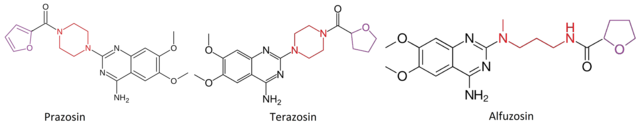
Alpha-blockers are medicines that are mainly used to treat high blood pressure (hypertension) and problems with passing urine in men who have enlargement of the prostate gland. Prostate gland enlargement is also called benign prostatic hyperplasia (BPH). What are alpha-blockers used for. In the past, some alpha-blockers were also used to treat.

Patient information leaflet
Can I take Codeine and Morphine together?
Taking codeine and morphine together significantly increases the risk of serious side effects, including extreme sleepiness, dizziness, and dangerous breathing problems. Why this happens Both codeine and morphine work by attaching to the same receptors in the brain and spinal cord to block pain. Additionally, the body naturally converts a portion.

Patient information leaflet
Coronary artery bypass graft
C oronary artery bypass grafting (CABG) is a type of heart surgery to treat coronary artery disease. The standard surgery requires open heart surgery and stopping of the heart temporarily. Coronary artery bypass grafting, called CABG for short (pronounced 'cabbage'), is a heart operation. It is also called coronary artery bypass surgery. A CABG is.
Further reading and references
- lamin B receptor; MedlinePlus, National Library of Medicine.
- Clayton P, Fischer B, Mann A, Mansour S, Rossier E, Veen M, Lang C, Baasanjav S, Kieslich M, Brossuleit K, Gravemann S, Schnipper N, Karbasyian M, Demuth I, Zwerger M, Vaya A, Utermann G, Mundlos S, Stricker S, Sperling K, Hoffmann K. Mutations causing Greenberg dysplasia but not Pelger anomaly uncouple enzymatic from structural functions of a nuclear membrane protein. Nucleus. 2010 Jul-Aug;1(4):354-66. doi: 10.4161/nucl.1.4.12435. Epub 2010 May 21.
- Duband-Goulet I, Courvalin JC. Inner nuclear membrane protein LBR preferentially interacts with DNA secondary structures and nucleosomal linker. Biochemistry. 2000 May 30;39(21):6483-8. doi: 10.1021/bi992908b.
- Hoffmann K, Dreger CK, Olins AL, Olins DE, Shultz LD, Lucke B, Karl H, Kaps R, Muller D, Vaya A, Aznar J, Ware RE, Sotelo Cruz N, Lindner TH, Herrmann H, Reis A, Sperling K. Mutations in the gene encoding the lamin B receptor produce an altered nuclear morphology in granulocytes (Pelger-Huet anomaly). Nat Genet. 2002 Aug;31(4):410-4. doi: 10.1038/ng925. Epub 2002 Jul 15.
- Oosterwijk JC, Mansour S, van Noort G, Waterham HR, Hall CM, Hennekam RC. Congenital abnormalities reported in Pelger-Huet homozygosity as compared to Greenberg/HEM dysplasia: highly variable expression of allelic phenotypes. J Med Genet. 2003 Dec;40(12):937-41. doi: 10.1136/jmg.40.12.937. No abstract available.
- Silve S, Dupuy PH, Ferrara P, Loison G. Human lamin B receptor exhibits sterol C14-reductase activity in Saccharomyces cerevisiae. Biochim Biophys Acta. 1998 Jun 15;1392(2-3):233-44. doi: 10.1016/s0005-2760(98)00041-1.
- Tseng LC, Chen RH. Temporal control of nuclear envelope assembly by phosphorylation of lamin B receptor. Mol Biol Cell. 2011 Sep;22(18):3306-17. doi: 10.1091/mbc.E11-03-0199. Epub 2011 Jul 27.
- Waterham HR, Koster J, Mooyer P, Noort Gv Gv, Kelley RI, Wilcox WR, Wanders RJ, Hennekam RC, Oosterwijk JC. Autosomal recessive HEM/Greenberg skeletal dysplasia is caused by 3 beta-hydroxysterol delta 14-reductase deficiency due to mutations in the lamin B receptor gene. Am J Hum Genet. 2003 Apr;72(4):1013-7. doi: 10.1086/373938. Epub 2003 Feb 28.
Share your thoughts or experiences with others in our patient communities.
Simple access to trusted treatments and health services online.
Common conditions
Get help with common conditions through the NHS, without a GP appointment.





Sign up to the Patient newsletter
Your weekly dose of clear, trustworthy health advice - written to help you feel informed, confident and in control.
By subscribing you accept our Privacy Policy. You can unsubscribe at any time. We never sell your data.