luteinizing hormone/choriogonadotropin receptor
Last updated 27 Oct 2023
Meets Patient’s editorial guidelines
- DownloadDownload
- Share
- Language
- Discussion
- Ask Patient
- Audio Version
- Add to preferred sources on Google
The LHCGR gene provides instructions for making a receptor protein called the luteinizing hormone/chorionic gonadotropin receptor. Receptor proteins have specific sites into which certain other proteins, called ligands, fit like keys into locks. Together, ligands and their receptors trigger signals that affect cell development and function.
Video picks for GenesVideo library
Normal function
The LHCGR gene provides instructions for making a receptor protein called the luteinizing hormone/chorionic gonadotropin receptor. Receptor proteins have specific sites into which certain other proteins, called ligands, fit like keys into locks. Together, ligands and their receptors trigger signals that affect cell development and function.
The protein produced from the LHCGR gene acts as a receptor for two ligands: luteinizing hormone and a similar hormone called chorionic gonadotropin. The receptor allows the body to respond appropriately to these hormones. In males, chorionic gonadotropin stimulates the development of cells in the testes called Leydig cells, and luteinizing hormone triggers these cells to produce androgens. Androgens, including testosterone, are the hormones that control male sexual development and reproduction. In females, luteinizing hormone triggers the release of egg cells from the ovaries (ovulation); chorionic gonadotropin is produced during pregnancy and helps maintain conditions necessary for the pregnancy to continue.
Conditions referring to this gene or chromosome
Other names
FLJ41504
HHG
LCGR
LGR2
LH/CG-R
LH/CGR
LHR
LHRHR
LSH-R
LSHR_HUMAN
luteinizing hormone/choriogonadotropin receptor precursor
lutropin/choriogonadotropin receptor
ULG5
Patient picks for Genes
Hormones
Pituitary gland disorders
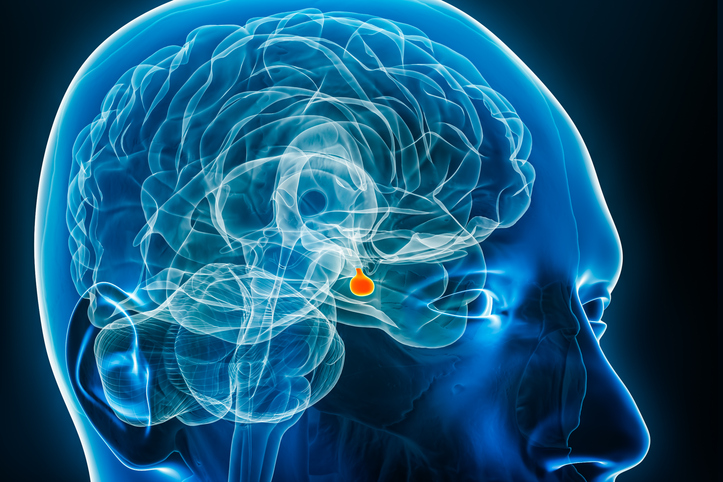
This leaflet gives a brief overview of the pituitary gland and the hormones it makes. The pituitary gland is found at the base of the brain and is 'pea-sized'. The pituitary gland is an overall controller of a number of other glands in the body, overseeing the function of these organs through hormones.
by Dr Hayley Willacy, FRCGP
Hormones
Insulin resistance: the common thread linking metabolic conditions
You may have come across the term “insulin resistance” - particularly if you’ve been having conversations about weight and metabolic health - but be a little unclear about what it actually is. Whilst it’s easy to think insulin resistance just means reduced glucose control, it’s actually far more complex than that. Dr Nienke Lees, Women's Health Service Lead, Genwell UK, explains what it means and how it connects conditions including type 2 diabetes, fatty liver disease, cardiovascular disease, and PCOS.
by Dr Nienke Lees

Hormones
Do you need a hormone imbalance test?
If your hormones are out of balance, your body may show certain symptoms or changes. The best way to check for a hormone imbalance is by talking to your doctor, who may recommend you for a test. In this article, we look at what a hormone imbalance test involves, the common symptoms, and explore potential health issues linked to hormonal imbalances.
by Victoria Raw

Men's health
Is 'male menopause' real?
Menopause is a natural stage of life that women go through as they age. During this time, their reproductive hormone levels fluctuate and gradually decline, causing a range of physical and emotional symptoms. But can men experience something similar? Often referred to as ‘male menopause’, hormonal changes as men get older can also affect their health and wellbeing. We explore the symptoms, causes, and science behind 'male menopause' and why it deserves more attention.
by Victoria Raw

Digestive health
Acute pancreatitis
Acute pancreatitis is an inflammation of the pancreas that develops quickly. The main symptom is abdominal pain. It usually settles in a few days but sometimes it becomes severe and very serious. The most common causes of acute pancreatitis are gallstones and drinking alcohol above recommended limits.
by Dr Philippa Vincent, MRCGP

Drug interactions checker
Can I take Estradot and Hormone replacement together?
Estradot is a brand name for a type of Hormone Replacement Therapy (HRT) containing oestradiol. Taking Estradot alongside other HRT medications that contain oestrogen is essentially taking a double dose of the same medication. This can lead to an overdose of oestrogen, causing side effects like breast tenderness, nausea, headaches, and an increased risk of blood clots.
Related patient information and medicines

Patient information leaflet
Infertility treatments
The process of... These are made in a gland just under the brain (the pituitary gland) Pituitary gland disorders. A gonadotrophin is a hormone that stimulates the activity of the gonads (the ovaries in women and the testicles in men). The main gonadotrophins made by the pituitary gland are called follicle-stimulating hormone (FSH) and luteinising.
Patient information leaflet
Pituitary gland disorders
This leaflet gives a brief overview of the pituitary gland and the hormones it makes. The pituitary gland is found at the base of the brain and is 'pea-sized'. The pituitary gland is an overall controller of a number of other glands in the body, over... It also helps to heal injuries and it promotes your immune system. Luteinising hormone (LH).

Patient information leaflet
Polycystic ovary syndrome
Polycystic ovary syndrome (PCOS) is a metabolic condition that affects how the ovaries work. Tests will be done to measure the male hormone testosterone and another hormone cal... Other tests looking at luteinising hormone (LH) and prolactin will often be tested but these are not used to diagnose PCOS; they may help to rule out other conditions..

Patient information leaflet
Klinefelter's syndrome
Klinefelter's syndrome is a genetic condition that only affects males. Affected males have an extra X chromosome. For example, if you have KS, t... Other hormone levels - luteinising hormone and follicle-stimulating hormone - tend to be higher than normal. Klinefelter's syndrome treatment If you have KS, you will usually be referred to a hormone.

Patient information leaflet
Natural family planning methods
This leaflet does not. It gives basic background informati... Dr Rosemary Leonard Natural family planning is a method of preventing pregnancy that does not involve medicines or devices. They both measure hormone levels. One measures them in your urine and the other measures them in your saliva: The urine-based kit detects the increase, or surge,.

Patient information leaflet
Breast cancer
...er-leaflet](https://patient.info/health/breast-cancer-leaflet) Follow Patient: Website: [https://patient.info/](https://patient.info/) Facebook: [https://www.facebook.com/patient](https://www.facebook.com/patient) Twitter: [https://twitter.com/patient](https://twitter.com/patient) Pinterest:.
Further reading and references
- luteinizing hormone/choriogonadotropin receptor; MedlinePlus, National Library of Medicine.
- Kossack N, Simoni M, Richter-Unruh A, Themmen AP, Gromoll J. Mutations in a novel, cryptic exon of the luteinizing hormone/chorionic gonadotropin receptor gene cause male pseudohermaphroditism. PLoS Med. 2008 Apr 22;5(4):e88. doi: 10.1371/journal.pmed.0050088.
- Qiao J, Han B, Liu BL, Chen X, Ru Y, Cheng KX, Chen FG, Zhao SX, Liang J, Lu YL, Tang JF, Wu YX, Wu WL, Chen JL, Chen MD, Song HD. A splice site mutation combined with a novel missense mutation of LHCGR cause male pseudohermaphroditism. Hum Mutat. 2009 Sep;30(9):E855-65. doi: 10.1002/humu.21072.
- Themmen AP, Verhoef-Post M. LH receptor defects. Semin Reprod Med. 2002 Aug;20(3):199-204. doi: 10.1055/s-2002-35384.
- Wu SM, Chan WY. Male pseudohermaphroditism due to inactivating luteinizing hormone receptor mutations. Arch Med Res. 1999 Nov-Dec;30(6):495-500. doi: 10.1016/s0188-4409(99)00074-0.
- Wu SM, Leschek EW, Rennert OM, Chan WY. Luteinizing hormone receptor mutations in disorders of sexual development and cancer. Front Biosci. 2000 Mar 1;5:D343-52. doi: 10.2741/wu.
Share your thoughts or experiences with others in our patient communities.
Simple access to trusted treatments and health services online.
Common conditions
Get help with common conditions through the NHS, without a GP appointment.





Sign up to the Patient newsletter
Your weekly dose of clear, trustworthy health advice - written to help you feel informed, confident and in control.
By subscribing you accept our Privacy Policy. You can unsubscribe at any time. We never sell your data.