leucine rich repeat kinase 2
Last updated 17 Jul 2023
Meets Patient’s editorial guidelines
- DownloadDownload
- Share
- Language
- Discussion
- Ask Patient
- Audio Version
- Add to preferred sources on Google
The LRRK2 gene provides instructions for making a protein called dardarin. The LRRK2 gene is active in the brain and other tissues throughout the body.
Video picks for GenesVideo library
Normal function
The LRRK2 gene provides instructions for making a protein called dardarin. The LRRK2 gene is active in the brain and other tissues throughout the body.
One segment of the dardarin protein is called a leucine-rich region because it contains a large amount of a protein building block (amino acid) known as leucine. Proteins with leucine-rich regions appear to play a role in activities that require interactions with other proteins, such as transmitting signals or helping to assemble the cell's structural framework (cytoskeleton). Other parts of the dardarin protein are also thought to be involved in protein-protein interactions.
Additional studies indicate that dardarin has an enzyme function known as kinase activity. Proteins with kinase activity assist in the transfer of a phosphate group (a cluster of oxygen and phosphorus atoms) from the energy molecule ATP to amino acids in certain proteins. This phosphate transfer is called phosphorylation, and it is an essential step in turning on and off many cell activities. Dardarin also has a second enzyme function referred to as a GTPase activity. This activity is associated with a region of the protein called the ROC domain. The ROC domain may help control the overall shape of the dardarin protein.
Conditions referring to this gene or chromosome
Other names
DRDN
leucine-rich repeat kinase 2
LRRK2_HUMAN
PARK8
RIPK7
ROCO2
Patient picks for Genes

Healthy living
Walk, jog, repeat: what is Jeffing?
No, it’s not about perfecting your best Jeff Goldblum impression, and it’s not a quirky new social media challenge either. Jeffing is actually a fitness method created in the 1970s by Olympian Jeff Galloway. Also known as the run-walk-run method, Jeffing combines running with short walking breaks to make exercise easier and more manageable. We spoke with an expert to break down what it’s all about and if it’s actually good for your health and fitness.
by Victoria Raw

Diet and nutrition
7 iron rich foods to add to your diet
If you remember the cartoon character Popeye, you’ll know he was famous for eating spinach to boost his strength. Many of us believe this was because spinach is rich in iron - a nutrient that supports muscle growth. However, relying on spinach alone wouldn’t have done the trick. In reality, there are many other foods with even higher iron content that can better support your body’s needs.
by Victoria Raw

Preventative health
Settling Breath
Bring the feet hip distance wide. The arms are by your side, palms facing out. As you inhale your arms float up to your side and overhead. As you exhale, palms face down towards the earth and you draw your arms and hands down in front of the body. You repeat this three times and each time your intention changes. The first time you are clearing out what no longer serves you from the form of your body, the sedond time you are filling with energy and intention and the third time you are sealing what you filled into your body.

Preventative health
Drawing Bow & Arrow Fly
Settle into horse stance, feet wide and knees softly bent. Bring the hands into gentle fists in front of the chest, elbows relaxed. Extend the left arm and open the hand into an “L” shape with the thumb and index finger while the other three fingers curl inward. The left arm reaches out as though holding the bow. Keeping the knees bent, let the right fist remain in front of the chest, then draw the right elbow straight back along a clean line, as if pulling a bowstring. Turn the head and gaze through the space between the left thumb and index finger. With a steady exhale, “release” the arrow. Repeat to the other side, maintaining the rootedness of the legs and the spaciousness of the chest. Traditionally, this form is said to regulate the Wood, Metal, and Fire elements, supporting the Liver, Lungs, and Heart meridians. It helps open the chest, strengthen the back and legs, and cultivate clear focus—beneficial for vision, direction, and the sense of moving toward one’s aims.
Nutrition and diet
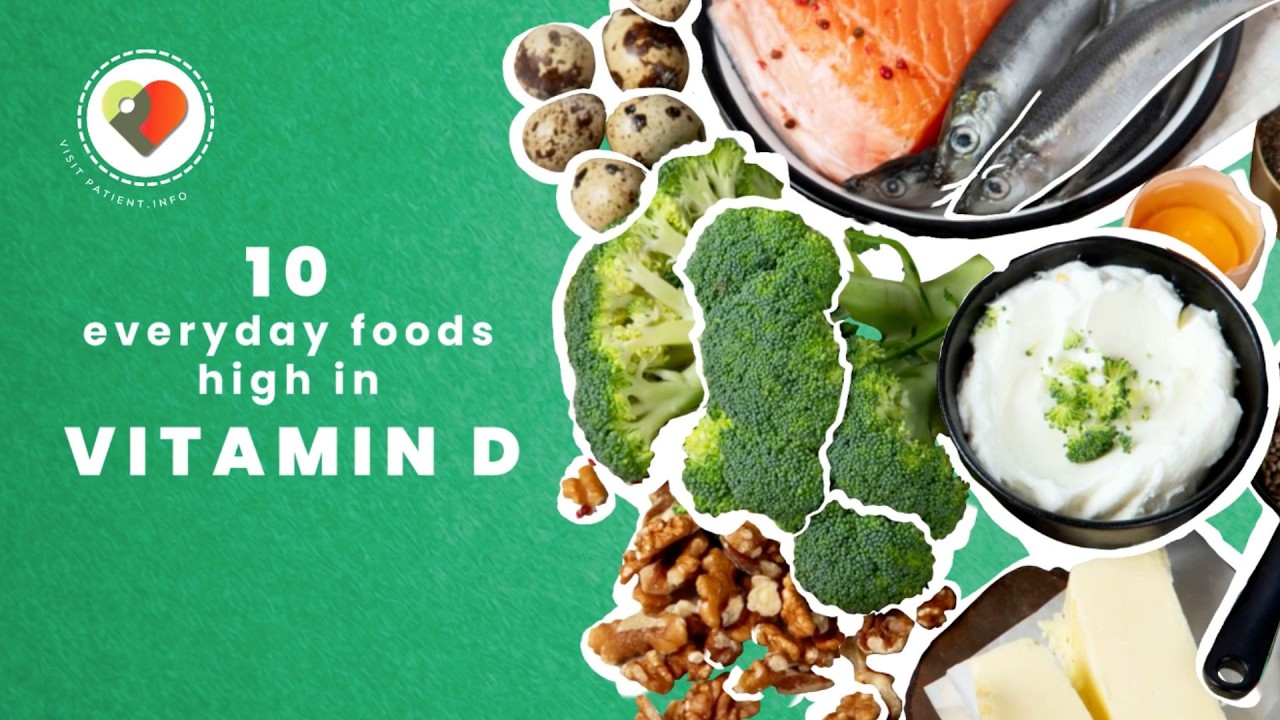
10 everyday foods high in vitamin D
Sunlight is our main source of vitamin D, but during the darker months, we may not get enough. That’s why a daily vitamin D supplement is recommended in winter, alongside vitamin D-rich foods to boost your intake: [https://patient.info/features/diet-and-nutrition/foods-high-in-vitamin-d](https://patient.info/features/diet-and-nutrition/foods-high-in-vitamin-d) *Visuals: Ben Hudson* *Audio: Victoria Raw* #VitaminD #WinterWellness #NutritionTips #HealthyEating #ImmuneHealth #NutritionEducation #Wellbeing #PatientInfo

Diet and nutrition
Vitamin A-rich foods could protect against skin cancer
People who consume foods rich in vitamin A are 17% less likely to develop a common form of skin cancer, according to experts at Brown University.
by Ashwin Bhandari
Related patient information and medicines

Patient information leaflet
Ectopic pregnancy
Rarely, an ectopic pregnancy occurs in other places such as in the ov... Also rarely, a pregnancy can develop in the womb at the same time as an ectopic pregnancy outside the womb (a heterotopic pregnancy). The rest of this leaflet deals only with tubal ectopic pregnancy. What increases the risk of an ectopic pregnancy. The chance is higher than.

Patient information leaflet
Mastocytosis and mast cell disorders
Triggers for mastocytosis symptoms Although not strictly speaking the cause of mastocytosis, a number. If the condition is severe, surgery to remove the spleen (splenecto... Dr Sarah Jarvis , 28th September 2021 Midostaurin for treating advanced systemic mastocytosis The National Institute for Health and Care Excellence (NICE) has brought out new.

Patient information leaflet
Pompholyx
Pompholyx is a type of eczema where there are itchy blisters on the hands and feet, followed by inflamed and dry skin. The condition is usually long-term, with symptoms that come and go at various times. The first step in mana... In some cases it has been shown to be helpful for the treatment of pompholyx. Janus Kinase (JAK) inhibitors : these.

Patient information leaflet
Liver function tests
Liver function tests are also used for monitoring in cases of known liver inflammation, injury or disease. What are the main liver function tests. Low levels of total protein can sometimes be seen in se... What does an abnormal ALT (SGPT), AST (SGOT) or creatine kinase level mean. These substances are also called transferases. Abnormal liver.

Patient information leaflet
Chronic myeloid leukaemia
Treatment for the initial chronic phase The aim of treatment is to control the disease process, to ease any symptoms and to prevent (or delay) the progress... You may be advised to have one or more of the following treatments: Imatinib tablets. This medicine is known as a tyrosine kinase inhibitor. The chemical tyrosine kinase is made by the.

Patient information leaflet
Endometrial hyperplasia
Some women may have an unusual vaginal discharge. In some women there may be no symptoms, and the hyperplasia may be picked up whilst having tests for other reasons. ServiceUpsellPlaceholder What causes endometrial hyperplasia. Endometrial hyperplasia is caused by an excess of the hormone oestrogen, which is not balanced by the progesterone.
Further reading and references
- leucine rich repeat kinase 2; MedlinePlus, National Library of Medicine.
- Bonifati V. LRRK2 low-penetrance mutations (Gly2019Ser) and risk alleles (Gly2385Arg)-linking familial and sporadic Parkinson's disease. Neurochem Res. 2007 Oct;32(10):1700-8. doi: 10.1007/s11064-007-9324-y. Epub 2007 Apr 18.
- Cookson MR. The role of leucine-rich repeat kinase 2 (LRRK2) in Parkinson's disease. Nat Rev Neurosci. 2010 Dec;11(12):791-7. doi: 10.1038/nrn2935. Epub 2010 Nov 19.
- Di Fonzo A, Rohe CF, Ferreira J, Chien HF, Vacca L, Stocchi F, Guedes L, Fabrizio E, Manfredi M, Vanacore N, Goldwurm S, Breedveld G, Sampaio C, Meco G, Barbosa E, Oostra BA, Bonifati V; Italian Parkinson Genetics Network. A frequent LRRK2 gene mutation associated with autosomal dominant Parkinson's disease. Lancet. 2005 Jan 29-Feb 4;365(9457):412-5. doi: 10.1016/S0140-6736(05)17829-5.
- Gilks WP, Abou-Sleiman PM, Gandhi S, Jain S, Singleton A, Lees AJ, Shaw K, Bhatia KP, Bonifati V, Quinn NP, Lynch J, Healy DG, Holton JL, Revesz T, Wood NW. A common LRRK2 mutation in idiopathic Parkinson's disease. Lancet. 2005 Jan 29-Feb 4;365(9457):415-6. doi: 10.1016/S0140-6736(05)17830-1.
- Guo L, Wang W, Chen SG. Leucine-rich repeat kinase 2: relevance to Parkinson's disease. Int J Biochem Cell Biol. 2006;38(9):1469-75. doi: 10.1016/j.biocel.2006.02.009. Epub 2006 Mar 2.
- Kumar A, Cookson MR. Role of LRRK2 kinase dysfunction in Parkinson disease. Expert Rev Mol Med. 2011 Jun 13;13:e20. doi: 10.1017/S146239941100192X.
- Lesage S, Durr A, Tazir M, Lohmann E, Leutenegger AL, Janin S, Pollak P, Brice A; French Parkinson's Disease Genetics Study Group. LRRK2 G2019S as a cause of Parkinson's disease in North African Arabs. N Engl J Med. 2006 Jan 26;354(4):422-3. doi: 10.1056/NEJMc055540. No abstract available.
- Mata IF, Wedemeyer WJ, Farrer MJ, Taylor JP, Gallo KA. LRRK2 in Parkinson's disease: protein domains and functional insights. Trends Neurosci. 2006 May;29(5):286-93. doi: 10.1016/j.tins.2006.03.006. Epub 2006 Apr 17.
- Ozelius LJ, Senthil G, Saunders-Pullman R, Ohmann E, Deligtisch A, Tagliati M, Hunt AL, Klein C, Henick B, Hailpern SM, Lipton RB, Soto-Valencia J, Risch N, Bressman SB. LRRK2 G2019S as a cause of Parkinson's disease in Ashkenazi Jews. N Engl J Med. 2006 Jan 26;354(4):424-5. doi: 10.1056/NEJMc055509. No abstract available.
- Ross OA, Soto-Ortolaza AI, Heckman MG, Aasly JO, Abahuni N, Annesi G, Bacon JA, Bardien S, Bozi M, Brice A, Brighina L, Van Broeckhoven C, Carr J, Chartier-Harlin MC, Dardiotis E, Dickson DW, Diehl NN, Elbaz A, Ferrarese C, Ferraris A, Fiske B, Gibson JM, Gibson R, Hadjigeorgiou GM, Hattori N, Ioannidis JP, Jasinska-Myga B, Jeon BS, Kim YJ, Klein C, Kruger R, Kyratzi E, Lesage S, Lin CH, Lynch T, Maraganore DM, Mellick GD, Mutez E, Nilsson C, Opala G, Park SS, Puschmann A, Quattrone A, Sharma M, Silburn PA, Sohn YH, Stefanis L, Tadic V, Theuns J, Tomiyama H, Uitti RJ, Valente EM, van de Loo S, Vassilatis DK, Vilarino-Guell C, White LR, Wirdefeldt K, Wszolek ZK, Wu RM, Farrer MJ; Genetic Epidemiology Of Parkinson's Disease (GEO-PD) Consortium. Association of LRRK2 exonic variants with susceptibility to Parkinson's disease: a case-control study. Lancet Neurol. 2011 Oct;10(10):898-908. doi: 10.1016/S1474-4422(11)70175-2. Epub 2011 Aug 30.
- Smith WW, Pei Z, Jiang H, Moore DJ, Liang Y, West AB, Dawson VL, Dawson TM, Ross CA. Leucine-rich repeat kinase 2 (LRRK2) interacts with parkin, and mutant LRRK2 induces neuronal degeneration. Proc Natl Acad Sci U S A. 2005 Dec 20;102(51):18676-81. doi: 10.1073/pnas.0508052102. Epub 2005 Dec 13.
- Tan EK, Zhao Y, Skipper L, Tan MG, Di Fonzo A, Sun L, Fook-Chong S, Tang S, Chua E, Yuen Y, Tan L, Pavanni R, Wong MC, Kolatkar P, Lu CS, Bonifati V, Liu JJ. The LRRK2 Gly2385Arg variant is associated with Parkinson's disease: genetic and functional evidence. Hum Genet. 2007 Feb;120(6):857-63. doi: 10.1007/s00439-006-0268-0. Epub 2006 Sep 30.
- West AB, Moore DJ, Biskup S, Bugayenko A, Smith WW, Ross CA, Dawson VL, Dawson TM. Parkinson's disease-associated mutations in leucine-rich repeat kinase 2 augment kinase activity. Proc Natl Acad Sci U S A. 2005 Nov 15;102(46):16842-7. doi: 10.1073/pnas.0507360102. Epub 2005 Nov 3.
- Zimprich A, Biskup S, Leitner P, Lichtner P, Farrer M, Lincoln S, Kachergus J, Hulihan M, Uitti RJ, Calne DB, Stoessl AJ, Pfeiffer RF, Patenge N, Carbajal IC, Vieregge P, Asmus F, Muller-Myhsok B, Dickson DW, Meitinger T, Strom TM, Wszolek ZK, Gasser T. Mutations in LRRK2 cause autosomal-dominant parkinsonism with pleomorphic pathology. Neuron. 2004 Nov 18;44(4):601-7. doi: 10.1016/j.neuron.2004.11.005.
Share your thoughts or experiences with others in our patient communities.
Simple access to trusted treatments and health services online.
Common conditions
Get help with common conditions through the NHS, without a GP appointment.





Sign up to the Patient newsletter
Your weekly dose of clear, trustworthy health advice - written to help you feel informed, confident and in control.
By subscribing you accept our Privacy Policy. You can unsubscribe at any time. We never sell your data.